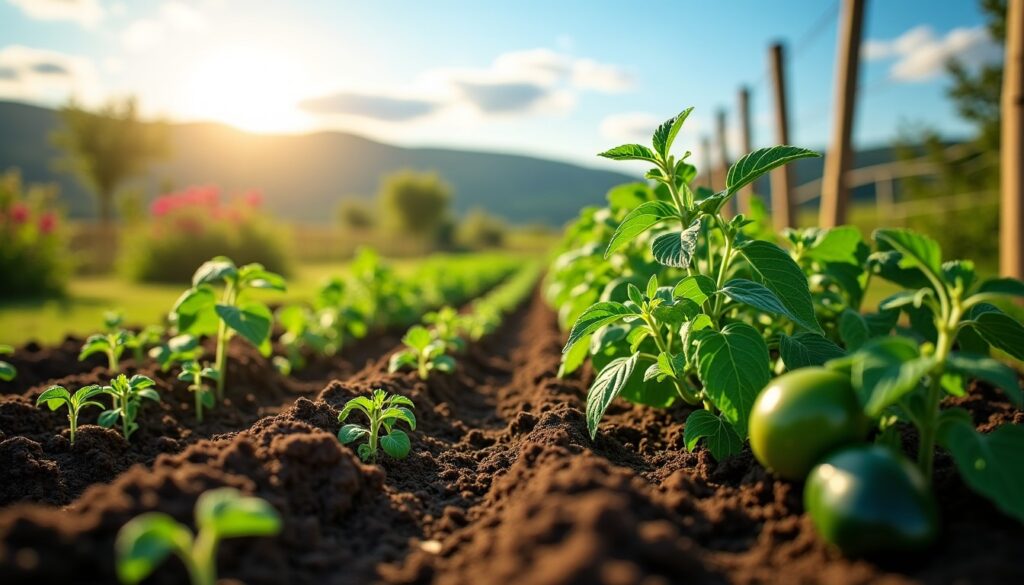
With the arrival of spring, the savvy gardener knows that every day counts to establish a flourishing vegetable garden by summer. Don’t miss the boat: planting the essential vegetables before April is the key to enjoying rich and varied summer harvests. Spring gardening intensifies as temperatures stabilize and daylight hours increase. It is during this pivotal period that nature awakens, offering a unique opportunity for vegetable garden enthusiasts to prepare their vegetable seedlings under optimal conditions. The pace is steady, and early action is necessary to ensure good development of early crops, maximize production, and avoid disappointments linked to late climatic hazards.
Several factors explain the imperative to plant before the end of April. First, soil temperature plays a crucial role in the germination and rooting of young plants. Secondly, starting seedlings early allows not only to advance the harvest by several weeks but also to consider a second crop on the same plot. In a context where demand for fresh local products continues to grow, it becomes essential to adopt the right reflexes and carefully select the varieties best suited to this schedule.
Experienced gardeners strongly advise not to be distracted by the abundance of seeds and plants offered at garden centers, but rather to target the essential vegetables that will surely flourish when started before April. The associated conditions, such as soil preparation, the choice of seedlings under greenhouse or in open ground, as well as maintenance techniques, are all levers to guarantee an abundant harvest. This comprehensive guide invites you to explore the indispensable tips and know-how to turn spring 2026 into an almost perfect spring gardening season.
- 1 Why “don’t miss the boat”: the ideal timing to plant before April
- 2 The essential vegetables to plant under greenhouse before the end of April for an exceptional summer harvest
- 3 Rustic vegetables to sow directly outdoors before the end of April
- 4 Preparing the soil to succeed in your vegetable sowing: essential spring gardening steps
- 5 Common mistakes to avoid to guarantee an abundant and healthy harvest
Why “don’t miss the boat”: the ideal timing to plant before April
The vegetable garden sowing calendar is much more than a simple gardening tradition. It reflects a millennial observation of climatic and biological cycles that structure the life of vegetables. In 2026, thanks to recent data compiled by Météo-France, it is known that the period before the end of April is a real window of opportunity for effective sowing.
In spring, the balance between the risk of night frosts and the gradual rise of daytime temperatures is a determining factor. Planting too early exposes young plants to the cold snaps that can damage them, while waiting too late reduces the adaptability margin of summer crops. In France, the end of April often corresponds to a critical threshold: most regions see their soils warm sustainably, reaching a minimum temperature between 10 and 15 °C, essential for seed germination. Before this date, the ground remains too cold, resulting in delays or failures in sowing.
Let’s take the example of the gardener Pierre, in the Southwest. In 2026, he planted his tomato and pepper seedlings as early as mid-April, benefiting from soil warmed earlier than average thanks to record sunshine in March. This anticipation allowed him to harvest two weeks before his neighbors who had waited until May. Meanwhile, his plants developed enough vigor to resist common diseases such as downy mildew, usually problematic in this region during summer storms.
Thus, not missing the April planting boat means ensuring several advantages: sturdier plants once transplanted outdoors, an early and abundant harvest, as well as better natural resistance of crops. It is also the guarantee to optimize every square meter of the vegetable garden by fully taking advantage of the beautiful season. These benefits are enhanced by the practice of sowing under greenhouse or cold frame, which protects early crops at the start of the cycle.
The essential vegetables to plant under greenhouse before the end of April for an exceptional summer harvest
In the vegetable garden, some crops require warmth and protection to start their growth. The greenhouse or cold frame allows anticipating these needs and placing seedlings in a favorable environment. This choice is particularly relevant for essential vegetables with highly appreciated summer flavors.
Tomatoes, the true star of the vegetable garden, must be sown six to eight weeks before being transplanted outdoors. Under cover, they benefit from a germination and growth period that guarantees their vigor. In 2026, the market availability of hybrid varieties resistant to diseases such as downy mildew or fusarium strengthened the reliability of these early sowings.
Peppers and chili peppers, very sensitive to cold, can only be planted if their germination begins in an atmosphere maintained above 18 °C. Under greenhouse, they gradually develop their foliage to better withstand the shock of outdoor transplantation. Their more demanding cultivation rewards the patient gardener with generous harvests and fleshy fruits.
Courgettes and cucumbers benefit from individual cell planting under cover. This method preserves root integrity and avoids the stress of late transplanting. Once the frost risk diminishes, the plants can be transplanted outdoors and produce quickly.
Finally, eggplants and melons are among the essential vegetables to start under greenhouse. Their slow growth and extreme heat requirements require early sowing, the key to sufficient maturity in summer. Maintaining a stable temperature above 18 °C, as well as a moderate humidity rate, are ideal conditions. Many gardeners in the Île-de-France region have seen their melon harvests significantly improved thanks to these practices in 2026.
- Tomatoes: sow 6-8 weeks before planting
- Peppers and chili peppers: require a start under warm cover
- Courgettes and cucumbers: sow in individual cells
- Eggplants: slow growth requiring early sowing
- Melons: maintain above 18°C to encourage germination
Rustic vegetables to sow directly outdoors before the end of April
Beyond protected sowings, some vegetables benefit from tolerance to cold and cool soil that allows them to be planted directly in place. This early cropping strategy gives them a significant growth advantage to achieve an abundant and regular harvest during the summer slot.
Carrots, radishes, and beets belong to this hardy category. Sown from the end of April, they fully exploit the gradual temperature rise and the soil’s emerging warming. A well-rooted carrot plant benefiting from these conditions develops a sweet and nicely sized root, particularly appreciated during the summer season.
Green beans are another example: their direct sowing conditioned by soil temperature above 12 °C promotes rapid emergence and allows anticipating production before intense heat. The Contender variety is recommended for its precocity and proven hardiness in several regions of France.
Finally, leafy vegetables such as spinach, arugula, lettuce, and lamb’s lettuce easily acclimate to early open-ground sowings. They quickly fill the vegetable garden, bringing freshness and variety to the summer menu. Winter lettuce planted at the end of April even offers a staggered harvest throughout the season, ideal for family meals.
| Vegetable | Suitable Variety | Main Advantage |
|---|---|---|
| Carrots | Nantaise | Good heat tolerance and crunchiness |
| Radish | French Breakfast | Rapid emergence, mild taste |
| Green beans | Contender | Precocity and hardiness |
| Spinach | Matador | Cold resistance and pronounced flavor |
| Lettuce | Reine de mai | High tolerance to sun and cold |
Those who don’t miss the boat and decide to sow their essential vegetables directly outdoors before the end of April maximize their chances of obtaining a rich and balanced harvest. By combining these rustic crops with greenhouse sowings, they obtain a varied summer vegetable garden, ready to delight all palates.
Preparing the soil to succeed in your vegetable sowing: essential spring gardening steps
The soil is the foundation of all gardening success. To not miss the boat with vegetable sowings, it is essential to dedicate time to preparing the land before any planting. In 2026, many amateur and professional gardeners agree on a rigorous method, allowing optimization of soil nutrition and structure.
Soil work begins with deep digging or forking to 20-30 cm. This step aims to aerate the soil, break up compact surface layers, and facilitate water infiltration. However, overly worked soil can lose its humus; therefore, finesse and respect for beneficial microorganisms must be balanced. Adding mature compost – about 3 to 5 kg per square meter – enriches the soil with essential nutrients and stimulates biological activity.
Once this mix is incorporated, the gardener smooths the surface using a rake to create a smooth and homogeneous seedbed. This fine preparation ensures better adhesion of the seeds and facilitates their germination. Checking the soil pH, ideally between 6 and 7, is also recommended to ensure optimal nutrient availability.
Beyond nutrient inputs, soil moisture management is crucial for sowing. Too dry soil prevents germination and slows growth. Conversely, overly wet soil promotes seed rot and damping-off, a dreaded fungal disease among gardeners. The technique to apply consists of slightly moistening the plot the day before sowing with a gentle watering to achieve a balance between dry and moist surface.
- Dig or fork the soil to 20-30 cm
- Incorporate mature compost at 3-5 kg/m²
- Smooth the soil with a rake to create a regular seedbed
- Check pH and adjust if necessary
- Slightly moisten the surface the day before sowing
Common mistakes to avoid to guarantee an abundant and healthy harvest
In spring gardening, several pitfalls can compromise the success of sowing essential vegetables. Identifying these common mistakes helps avoid them and ensures optimal crop development, thus favoring abundant summer harvests.
First, sowing too deep is a classic mistake. Generally, sowing depth should correspond to twice the diameter of the seed. An overly deeply buried seedling will struggle to break the surface, delaying development and increasing the risk of rot.
The next mistake concerns overcrowding of cells or rows. Sow too densely, and seedlings compete for light, water, and nutrients, which weakens overall growth. This competition creates a favorable environment for disease development.
Another frequent oversight is the lack of clear labeling during sowing. Without precise markers, the gardener loses track of each variety, complicating management, especially during thinning or transplanting. Rigorous organization beforehand ensures easy and effective follow-up.
Excessive watering is often the primary cause of the notorious “damping-off,” a fungal disease that causes seedling disappearance. It is best to prioritize moderate and regular watering, fostering a healthy and balanced environment.
Finally, exposing young plants prematurely to cold, before the risk of frost is over, weakens the young shoots. Hardening off plants by gradually placing them outdoors for a few hours a day neutralizes this risk and facilitates their acclimatization to the outside.
- Sow at the appropriate depth (2x seed diameter)
- Do not overload cells or sowing spaces
- Clearly label each sowing
- Avoid excessive watering to prevent damping-off
- Proceed with gradual hardening before transplanting outdoors
Special attention to thinning and transplanting will significantly improve root development and the vigor of young plants. Removing weak plants to keep only the most vigorous ensures homogeneous growth and also limits disease appearance. Sowing before the end of April, combined with rigorous maintenance, will go hand in hand with an abundant and quality harvest throughout the summer.