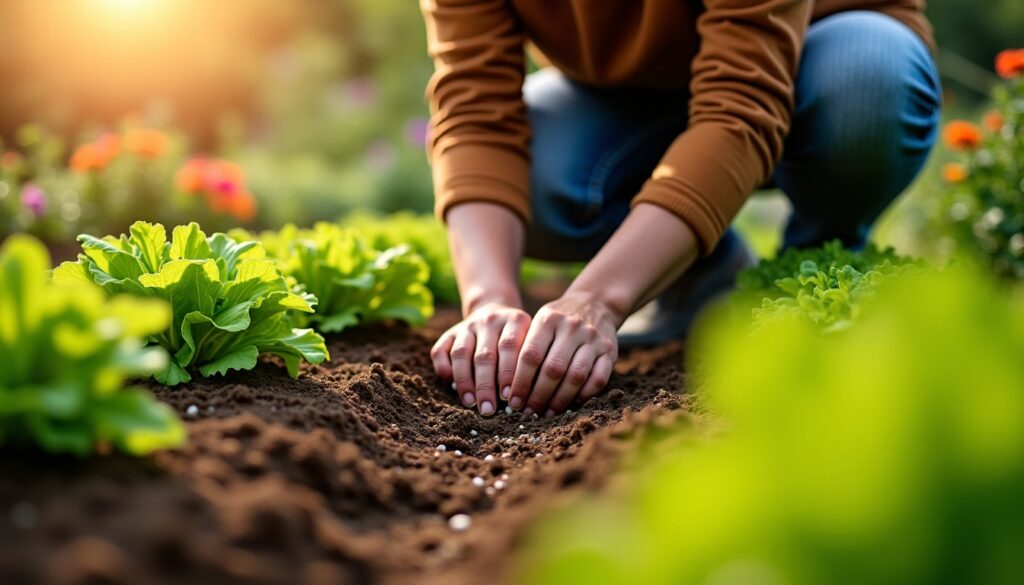
Every spring, the gardener must seize a narrow and precise climatic-agricultural window to achieve a satisfactory harvest. In particular, two essential vegetables — spinach and peas — must be sown before the end of April, under penalty of certain disappointment once the harvest arrives. These so-called cool-season vegetables are sensitive to rising temperatures and day length as soon as May begins. Slowed germination, premature bolting, or poor fruiting are all risks involved. While gardening experiences a resurgence of interest in 2026 with an increasingly food-quality and self-sufficiency conscious public, understanding why and how to sow these vegetables within this timeframe becomes fundamental. Why this race against the clock in the vegetable garden? Which varieties to prioritize? And how to maximize the chances of success with proper preparation? Follow our gardening advice to turn your efforts into abundant and tasty harvests.
- 1 Hurry to sow spinach and peas before the end of April: understanding the climate challenge
- 2 Choosing the right varieties to avoid a disappointing harvest: focus on suitable spinach and peas
- 3 Properly preparing the soil to maximize the success of spring spinach and pea sowing
- 4 Sowing techniques and care until harvest to avoid a disappointing crop
- 5 What to do if you missed the sowing window before the end of April? Solutions and tips
Hurry to sow spinach and peas before the end of April: understanding the climate challenge
The timing of planting directly determines the success of a vegetable crop, especially for so-called cool-season vegetables. Spinach and peas share an aura of climatic fragility that must not be underestimated. These two vegetables prefer a temperate climate, with temperatures ideally between 10 and 15 °C for germination, and below 20 °C for active growth. In this context, the period between March and April offers a perfect combination: soil warmed just enough to start germination, days lengthening without excess, and moderate heat.
Beyond April, the context changes drastically. With the arrival of May, rising temperatures and longer days disrupt these crops. Spinach, sensitive, quickly begins to bolt, a phenomenon called “bolture,” which drastically reduces the quality and quantity of harvested leaves. For their part, peas suffer from the heat affecting flowering, causing aborted flowers and empty or weak pods. This heat stress also favors disease development and weakens the natural resistance of the plant. Each day ignored in April thus equals reducing the chances of a flourishing harvest.
To illustrate, the experience of an amateur gardener from Picardy in 2025 clearly demonstrated that those who sowed after April 30 achieved on average 40% less yield, with patchy and far less tasty harvests. The phenomenon of premature bolting leaves little room for maneuver. That is why we hear everywhere today: hurry to sow!
The rhythm of spring gardening: a tight schedule
Gardening follows a natural rhythm that is crucial to respect. Unlike summer vegetables which tolerate delays better, spinach and peas require a precise timing depending on local climate and soil nature. Beyond temperature, soil quality and moisture contribute to the rapid development of seeds. The savvy gardener therefore plans sowing based on weather forecasts, day length, and soil composition.
Indeed, early planting promotes the establishment of a strong root system that will better withstand heat and summer sun stresses. It is often this premise that makes the difference between a disappointing harvest and a generous vegetable garden. Respecting this rhythm is at the heart of sustainable and traditional vegetable gardening practices, much appreciated in 2026.
Choosing the right varieties to avoid a disappointing harvest: focus on suitable spinach and peas
Varietal selection is a fundamental lever to optimize the harvest, especially when dealing with a short and precise window such as that for sowing between March and April. Not all spinach varieties are equal regarding bolting; some tolerate thermal constraints better and allow late sowing without sacrificing too much quality.
Spinach varieties to prioritize for late April sowing
To secure the crop and hasten planting, here are some varieties recognized for their robustness against heat stress:
- Monstrueux de Viroflay: appreciated for its large fleshy leaves and generous productivity, this cultivar better withstands fluctuating temperatures.
- Géant d’hiver: as hardy as possible, it faces thermal variations with remarkable tolerance, ideal for late sowing.
- Matador: an old variety, it stands out by its slow bolting, a precious asset for the last spring plantings.
Pea varieties suitable for sowing before the end of April
Priority for peas is earliness. These varieties mature faster, thus avoiding the summer heat at the end of the cycle. The table below summarizes three relevant choices:
| Variety | Type | Days to harvest |
|---|---|---|
| Douce Provence | Dwarf, early | 60 to 65 days |
| Merveille de Kelvedon | Dwarf, early | 65 to 70 days |
| Téléphone | Climbing, mid-early | 75 to 80 days |
Choosing these varieties helps anticipate the negative effects of premature heat and ensures the harvest is not too late. The judicious choice of variety complements the calendar requirement and opens the way to a successful crop and wise anticipation by the gardener.
Properly preparing the soil to maximize the success of spring spinach and pea sowing
Before sowing, it is essential to ensure that the soil offers the most favorable conditions for these delicate vegetables. The success of a vegetable crop largely depends on soil preparation, which promotes germination and vigorous growth of young plants.
Loose, well-drained, and moderately fertile soil
Spinach and peas do not require very rich soil. Excess nitrogen, on the contrary, is harmful: it overly develops pea foliage at the expense of seed formation and forces premature bolting in spinach. The ideal soil must be well-aerated, with good drainage and balanced moisture.
For this, a series of simple but essential actions are required:
- Digging deeply to 20-25 cm to aerate the topsoil layer and facilitate rooting.
- Incorporating mature compost in small amounts, to strengthen microbial life without excess nitrogen.
- Avoiding fresh nitrogenous fertilizers like un-composted manure, which destabilizes fertility.
- Controlling pH, ideally between 6.5 and 7.0, to optimize nutrient availability.
Moisture, key to germination
Soil moisture before sowing must not be neglected. Dry soil strongly hinders seed swelling and slows emergence. If spring is particularly dry, light watering the day before sowing is highly recommended. It creates essential capillary moisture, thereby increasing the chances of rapid and uniform germination.
Sowing techniques and care until harvest to avoid a disappointing crop
Sowing on time is indispensable, but planting method and subsequent vigilance also make the difference between success and a poor harvest. Here are precise guidelines to maximize your yields.
Sowing adapted to each vegetable’s characteristics
For spinach, the method involves sowing in tight rows, outdoors. Rows should be spaced 25 to 30 cm apart, with seeds placed every 3 to 4 cm, at a depth of 1 centimeter. Quickly, as seedlings grow (5 cm), thinning should occur to leave 10 cm between plants. This avoids competition for light and nutrients.
Peas benefit from double-row sowing, where two parallel lines are sown 15 cm apart, with a wider gap (about 60 cm) between double rows. Seeds, buried 3-4 cm deep, are placed every 5 cm. This arrangement facilitates staking and optimizes space.
Monitoring and maintenance for sustainable cultivation
Regular visits to the vegetable garden are imperative. Here are the essential actions after sowing:
- Regular but moderate watering to keep the soil fresh without excess, especially during the first weeks.
- Early weeding to reduce competition with aggressive weeds.
- Installing stakes for peas as soon as tendrils appear, helping to structure the plant.
- Aphid monitoring as they can quickly colonize and weaken young plants, requiring prompt intervention.
It is also important to spot warning signs: yellowing leaves may reveal overwatering or deficiency, while stems elongating too fast in spinach is a clear symptom of imminent bolting. In such cases, harvest should be anticipated.
What to do if you missed the sowing window before the end of April? Solutions and tips
Despite necessary rigor, gardeners sometimes cannot sow their vegetables on time. The season may have accelerated or personal obligations delayed planting. Faced with this situation, it is possible to limit the consequences.
Adaptation and alternatives for May sowing
If you absolutely must sow starting in May, a few tips help preserve a harvest, even if reduced:
- Choose very early and heat-resistant varieties, those that better tolerate high temperatures late in the cycle.
- Use light shade cloths to ward off heat peaks that stress young plants.
- Water late in the day to maintain lasting soil freshness during long hot hours.
- Accept a later and possibly lower quality harvest, as conditions are no longer ideal.
Anticipate success for the next season with autumn sowing
The safest method never to miss this precious window remains anticipation. Many conscientious gardeners keep a planting calendar in a notebook to respect key moments year after year. Some have even adopted autumn spinach sowing, ensuring rapid emergence at the end of winter and a very early spring harvest without relying on a warm spring.
This last example clearly shows how much the vegetable garden rewards discipline and perseverance. Nature imposes its rules and it is the fine knowledge of these rhythms that allows turning a simple patch of earth into a rich, productive, and pleasurable vegetable garden. Ultimately, hurry up to sow your spinach and peas on time, as each day gained in April is a promise of a better harvest and assured satisfaction at picking time.