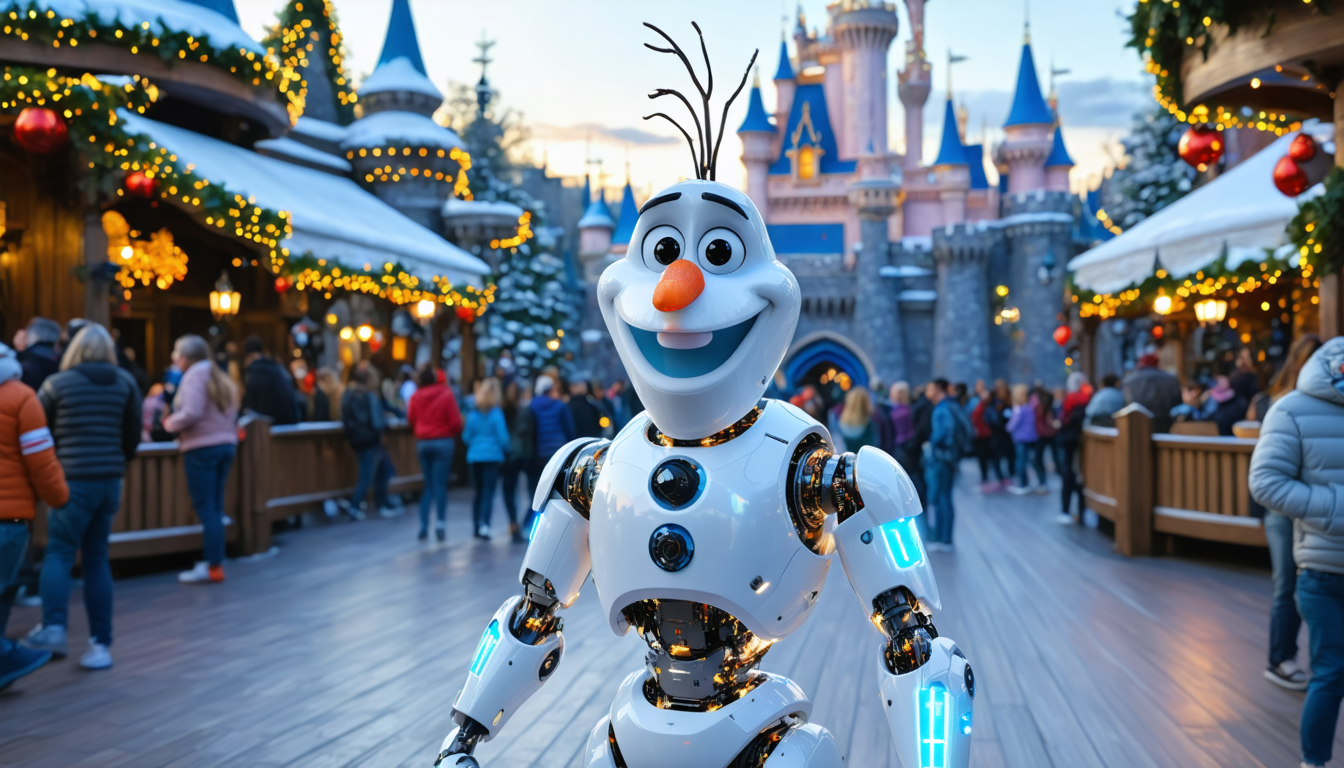
In the bustling universe of Disneyland Paris, a new technological era opens with the presentation of Olaf, the famous snowman from Frozen, in a novel form: a robot equipped with artificial intelligence. This innovation, which combines magic, interactive technology, and robotic animation, promises to shake up the traditional codes of the amusement park. The character is no longer just a simple static figure or puppet; he becomes a real actor capable of moving freely and interacting in real time with the audience in an immersive show. This feat is made possible notably by the surprising use of a Steam Deck, a gaming console usually reserved for gamers, which here serves as a remote control to pilot Olaf. This unprecedented alliance between Disney, NVIDIA, and cutting-edge robotic technologies announces a revolution in how visitors will experience the park. Through this article, let’s explore in detail the multiple facets of this major innovation and what it heralds for the future of theme parks.
- 1 A revolution in robotic animation: how Olaf becomes a true AI robot at Disneyland Paris
- 2 The unexpected role of the Steam Deck in piloting the Olaf robot: a simple tool at the service of complex technology
- 3 Behind the scenes of robotic creation: advanced learning and simulation thanks to NVIDIA Omniverse
- 4 Olaf in show: a unique immersive experience at the heart of the new Disney Adventure World
- 5 The impact of this innovation on the amusement park industry and consumer robotics
- 6 A promising future: towards full autonomy of AI robots in Disney parks
- 7 The human dimension at the heart of Olaf’s performance: the modern puppeteer
- 8 Future perspectives and challenges for artificial intelligence in theme parks
A revolution in robotic animation: how Olaf becomes a true AI robot at Disneyland Paris
The transformation of Olaf into an AI robot is not just a staging but a true revolution in the field of robotic animation. Unlike classic animatronics often limited to pre-programmed movements from a fixed location, the new Olaf can move without being tethered, without rails or cables, and interact in real time with his environment.
This robot carries an NVIDIA Jetson chip, a specialized computing platform that allows Olaf to manage his balance, movements, and dynamic adaptation within the park’s physical space. Thanks to this, he gives the illusion of a truly living presence, adjusting, for example, his gestures and animating his face with great flexibility. This level of autonomy moves the robot far beyond the old standards where animation was often rigid and mechanical.
But this technological advance is not limited to a simple technical success. It also disrupts the connection with the public. The AI robot Olaf can evolve within the live show, making him capable of responding to visitors’ reactions and creating a truly immersive experience. This real-time interaction capability marks a crucial step in scenography and live entertainment within Disneyland Paris.
The design of this robot required close collaboration between Disney Imagineering engineers, NVIDIA robotics experts, and artificial intelligence specialists. Together, they used advanced simulation tools to train Olaf to master complex skills like walking and balancing, with an unprecedented realism for a theme park character.
This controlled autonomy also opens the door to better adaptation in varied environments, since Olaf can move even on shifting surfaces, such as a boat reproduced in the Arendelle bay setting. Robotic animation thus enters a new dimension where artistic creativity and advanced technology combine to reinvent Disney magic.
The unexpected role of the Steam Deck in piloting the Olaf robot: a simple tool at the service of complex technology
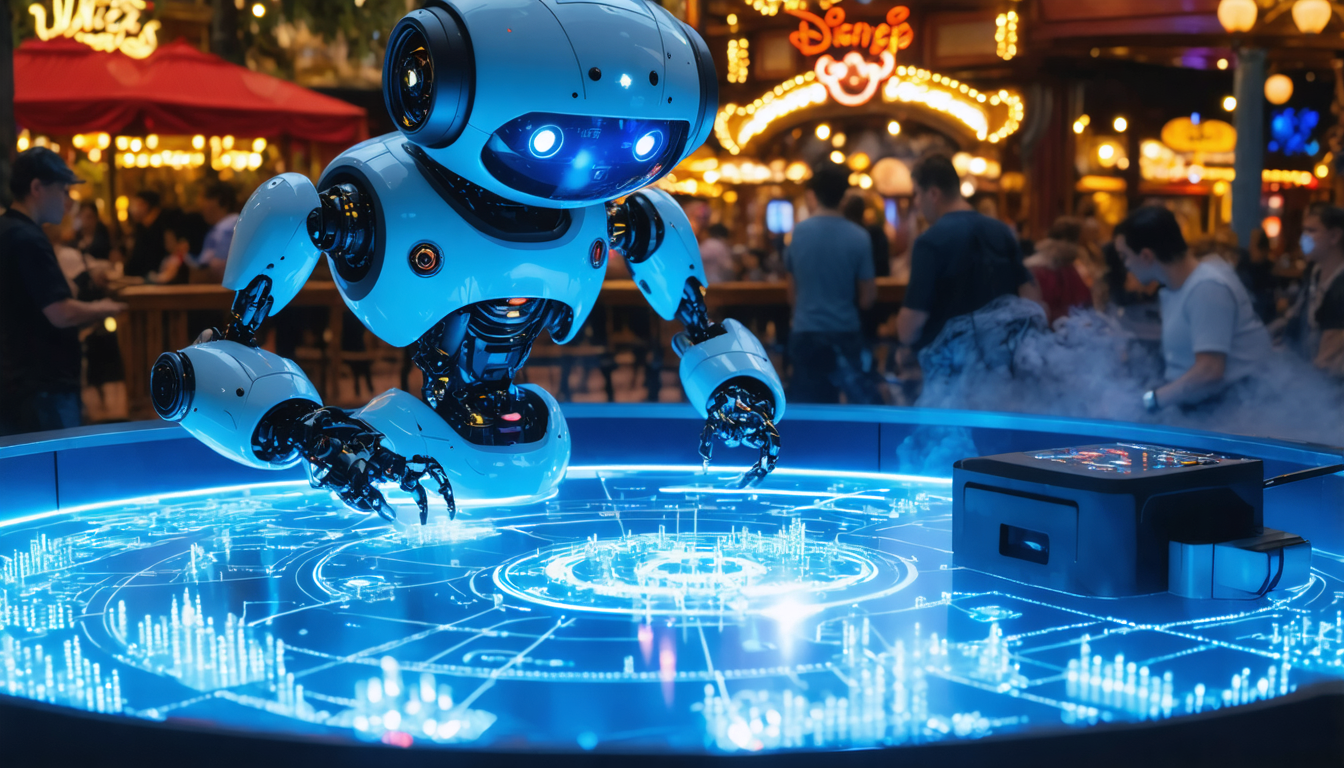
While artificial intelligence is often synonymous with total autonomy, the case of the Olaf robot at Disneyland Paris incorporates a vital hybrid control notion for the success of the show. Indeed, behind this robotic feat lies human intervention orchestrated remotely thanks to a modified Steam Deck console.
This choice might surprise: why would a video game console, created for gamers, be appropriate to manipulate a robot with such sophisticated animation? The answer lies in the flexibility and mobility that this technology offers. The Steam Deck allows the human operator to direct Olaf in real time, adjusting his movements, expressions, and interactions with remarkable precision.
The operator, installed remotely, thus has an intuitive interface combining touch controls with physical commands, which facilitates smooth and natural piloting. This method provides essential responsiveness to adapt to the unpredictability of the live show, whether it’s spontaneous interaction with a visitor or a change in the rhythm of the performance.
This system demonstrates that artificial intelligence and human control can cooperate harmoniously: if the AI manages the complex aspects related to movement and balance, the human ensures the staging and emotions, preserving the magic and credibility of the character. The Steam Deck thus becomes a high-tech tool, simple to handle yet effective, symbolizing a new paradigm in robotic animation.
In addition to ease of use, the mobile aspect of the Steam Deck allows the operator to move within the park, offering a unique perspective to adjust Olaf’s movements in different spaces. This freedom of action is a key element to maintain the illusion and energize the immersive experience offered.
This hybrid model, mixing automation and human intervention via a surprising console, could well pave the way for future developments in shows at Disneyland Paris and beyond. The integration of the Steam Deck, a symbol of contemporary gaming culture, also illustrates Disney’s willingness to draw on the best accessible technological innovations to reinvent its attractions.
Behind the scenes of robotic creation: advanced learning and simulation thanks to NVIDIA Omniverse
The design of Olaf as an advanced AI robot was not made by chance or a simple stroke of genius. It results from a long process combining research, simulation, and machine learning. One of the key elements of this innovation is the use of the open-source framework Newton and the internal simulator called Kamino, developed with technological support from NVIDIA.
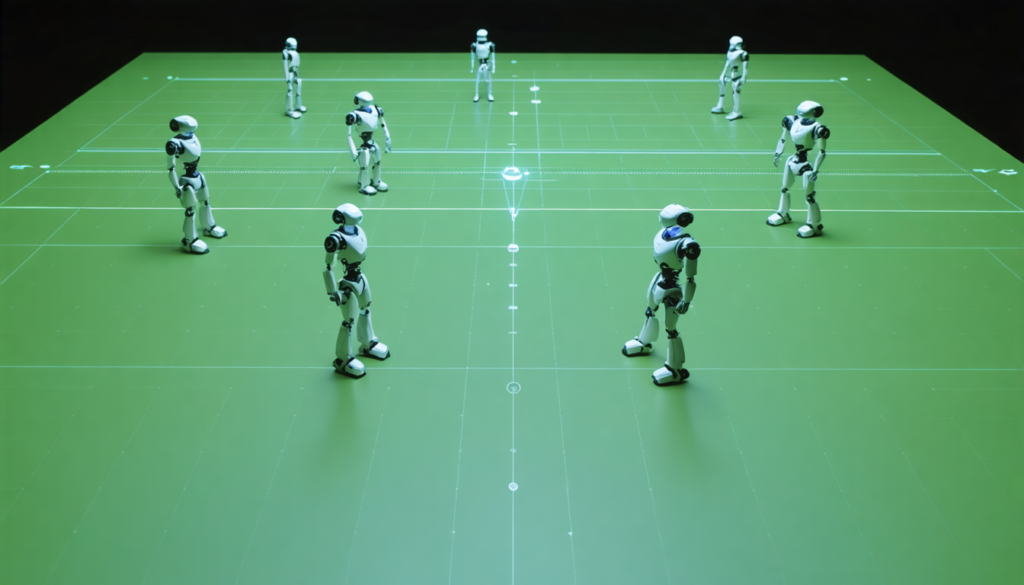
These tools allowed the development of several thousand virtual versions of Olaf that operated in parallel to perfect the robot’s walking and balance. This reinforcement learning process was able to simulate thousands of scenarios so that the AI mastered the ideal behavior to adopt in various situations, including the most complex, such as moving on a shifting boat.
Without this recourse to advanced simulation, training such a sophisticated robot would have required months, even years, of physical testing with a single prototype. This virtual method not only saves precious time but optimizes performance through massive data collection and continuous analysis of the robot’s reactions.
In fact, the technological investigation behind this project has opened major perspectives for all future robots integrated into Disney attractions. The ability to simulate and train a robot on a large scale, even before its manufacture, is a decisive step in the park’s modernization.
But the impact does not stop there. These simulations are also used to guarantee Olaf’s safety and reliability in real conditions. By anticipating the robot’s behaviors toward visitors and the environment, Disney limits the risk of errors that could harm the immersive experience.
Finally, this automated learning constitutes a solid foundation for the next generation of AI robots capable of evolving more autonomously, with better understanding of their environment, thanks notably to ongoing research on world models. To date, Olaf remains human-controlled, but the future foresees a more independent and intelligent deployment.
Olaf in show: a unique immersive experience at the heart of the new Disney Adventure World
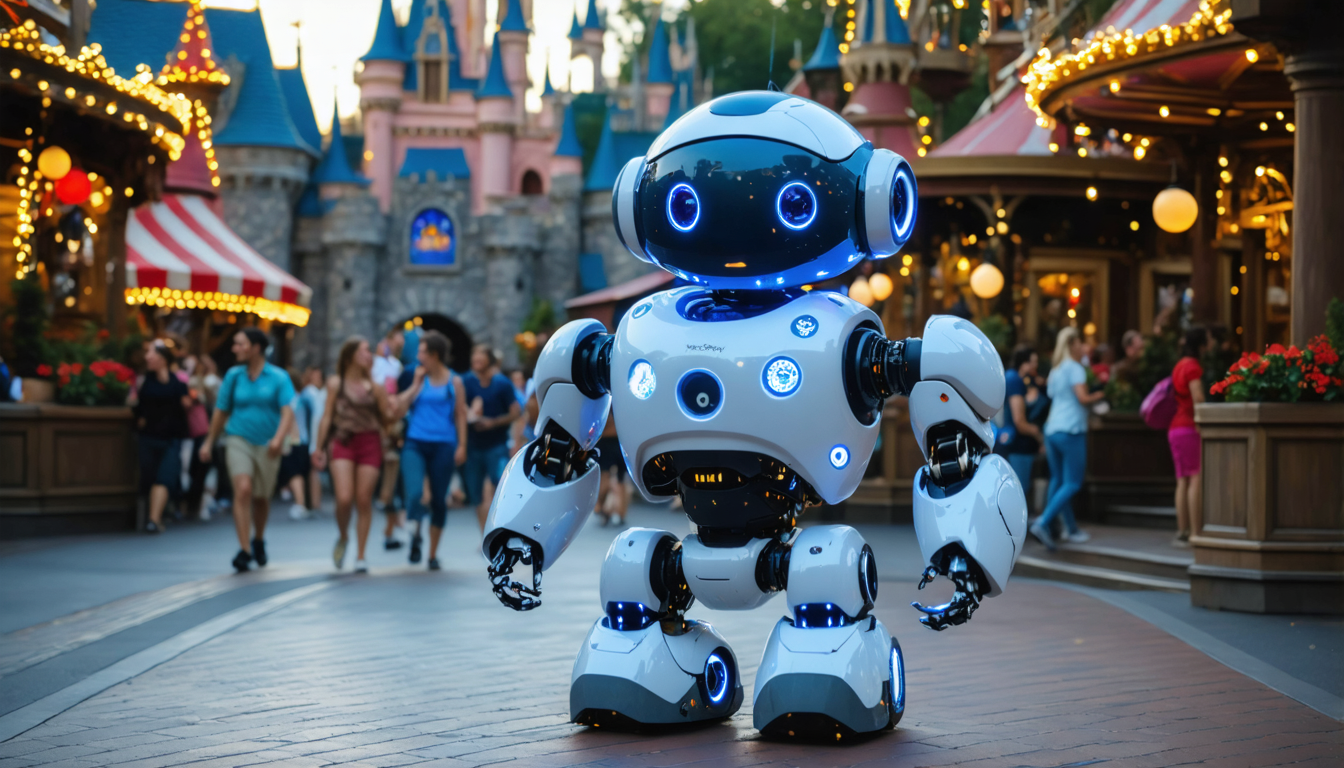
The staging of Olaf is not limited to the technological aspect; it is part of a much larger framework with the creation of Celebration in Arendelle, a daily show integrated into the Disney Adventure World park. The result of a colossal investment of two billion euros, this immersive zone aims to transport visitors into the magical universe of Frozen.
This show highlights Olaf as a true living character, capable of exchanging with the public and adapting throughout the performance. The combination of the interactive AI robot technology and live human control offers a fluidity and credibility never seen before in a Disney attraction. The audience is thus immersed in a dynamic dialogue, where Olaf’s reactions can vary depending on interactions.
Moreover, the robot’s mobility in an unstructured space greatly broadens the possibilities for staging. Instead of being confined to a fixed stage, Olaf moves within his environment, creating moments of surprise and complicity with visitors. These interactions fully contribute to the overall spectacular effect.
This immersive experience relies on meticulous orchestration between robotic animation, music, dialogue synchronization, and visual effects. Each performance is unique, the result of advanced technology that allows events to be adapted in real time, reinforcing the impression of being plunged into a truly magical universe.
In terms of impact, this innovative show expands visitor expectations for modern theme parks. They now expect not only nostalgic evocations of characters but also living encounters that use the best of technology and interactive animation.
| Aspect | Description | Impact on experience |
|---|---|---|
| Free mobility | Olaf moves without cables or rails in a wide environment | Enhanced coherence and immersion, surprise for visitors |
| Hybrid control | AI manages balance, human controls interactions via Steam Deck | Instant responsiveness, avoids synchronization errors |
| Advanced simulation | Virtual training of thousands of Olaf units to refine movements | Robot robustness, smooth gestures in the real world |
| Daily show | Integration into Celebration in Arendelle at Disney Adventure World | Engaged audience, unique and renewed experience at each show |
The impact of this innovation on the amusement park industry and consumer robotics
The presentation of the robotized Olaf by Disneyland Paris is not limited to a local or thematic contribution. It resonates as a strong signal in the entire amusement park, robotics, and broader interactive technologies industry. This AI robot marks a crucial step towards livelier, more immersive, and personalized experiences.
By combining artificial intelligence, robotic animation, and human control, Disney offers a hybrid model that balances performance and reliability, two major criteria for park and show operators. This choice illustrates a pragmatic progression, far from experimental full autonomy promises, while showing the way towards more interactive and credible environments.
The leverage effect on consumer robotics could be considerable. Indeed, this technology developed for professional and artistic use could inspire applications in domestic or commercial sectors, where robotic mobility combined with a simple control interface is a major challenge.
Moreover, the collaboration between major players like Disney and NVIDIA highlights the importance of the technological ecosystem in innovation. Advanced simulation tools and the development of intelligent algorithms are now at the heart of robotic design, transforming the way future robots are created and invented.
Through this symbolic first step, the Disneyland Paris park positions itself as a pioneer in immersive robotics, and this success opens the door to a new generation of animations where technology and emotion merge to create unforgettable experiences.
A promising future: towards full autonomy of AI robots in Disney parks
While the robotized Olaf is still controlled today by an operator via the Steam Deck, the future points toward an ever deeper integration of autonomous artificial intelligence. Disney, in partnership with NVIDIA, is working to develop what are called world models: platforms allowing robots to understand and interpret their environment in real time, making adapted decisions without constant human intervention.
These advances in AI and simulation open the way for characters capable of improvising, reacting to unexpected situations, and adjusting their actions to offer truly personalized interactions to visitors. This evolution would profoundly transform the nature of shows and encounters in parks, giving rise to even more captivating and natural experiences.
However, achieving full autonomy remains a complex challenge. It is necessary to guarantee not only visitor safety but also narrative and artistic coherence. Human intervention, at least in supervision, therefore remains crucial in the near future. Olaf’s mixed model is a perfect illustration: the AI ensures the technical foundation while the human brings the extra soul.
In this respect, the experience accumulated with Olaf serves as a learning ground to imagine new processes and tools capable of giving robots a true spatial and social awareness. The progress made at Disney could thus extend to other fields such as service robotics, interactive games, and even education.
This vision of a future where AI robots become active partners, not just simple automatons, invites a profound rethinking of how we conceive human-machine interaction in a playful and artistic environment.
The human dimension at the heart of Olaf’s performance: the modern puppeteer
Beyond technological sophistication, the immersive experience offered by Olaf also relies on the presence of a human operator, a true conductor of the performance. Using his Steam Deck, this modern puppeteer controls the character’s gestures, expressions, and words in real time, offering a fluidity that exceeds what full autonomy could provide.
This human role resembles that of traditional puppets, but with modernized tools and constraints. The operator acts as an emotional interface between the machine and the audience, responsible for preserving the character’s credibility and the magic of the moment. His responsiveness allows establishing a true complicity with visitors, adapting responses to maintain a lively and personalized dynamic.
This pragmatic approach illustrates how essential human control remains to guarantee a quality experience in such a complex context as a dynamic amusement park. The Steam Deck, with its ergonomic controls, thus represents much more than a simple gadget: it is a full artistic creation tool.
This collaboration between artificial intelligence and human sensitivity undoubtedly foreshadows the future models of robotic animation in live entertainment, where technology supports creativity but does not replace it. It is this dialogue between man and machine that makes this Disney innovation a real turning point in the history of amusement parks.
Future perspectives and challenges for artificial intelligence in theme parks
The implementation of the AI robot Olaf at Disneyland Paris marks a significant milestone, but also the beginning of a path filled with opportunities and challenges in the field of immersive artificial intelligences applied to theme parks. Several aspects will have to be deeply considered to optimize this technology and maximize its public acceptance.
First, the question of safety remains paramount. Even if Olaf is designed to move in a controlled way, coexistence between human visitors and mobile robots imposes strict protocols to avoid any incident. This technical challenge requires innovations in obstacle detection, real-time decision-making, and management of unforeseen interactions.
Second, the robot’s emotional performance requires advanced affective intelligence. Visitors expect a level of spontaneity and authenticity coming from the character, which pushes developers to work not only on mechanics but also on programming responses adapted to human emotions.
Third, the economic and logistical integration of these robots into the daily operation of parks is another crucial issue. Their maintenance, operator training, and adaptation according to show evolutions require sustained organization and constant investment.
Finally, reflection on societal impact is also essential. These AI robots, by embodying such endearing characters, redefine the relationship between technology and the public. It is about ensuring that magic and emotion remain at the heart of the experience while making the best use of innovations.
- Ensure secure and smooth interaction between robots and visitors.
- Develop AI modules capable of perceiving and responding to emotions.
- Implement continuous training for human operators.
- Optimize technical maintenance for maximum availability.
- Guarantee a coherent and captivating immersive experience in every performance.