
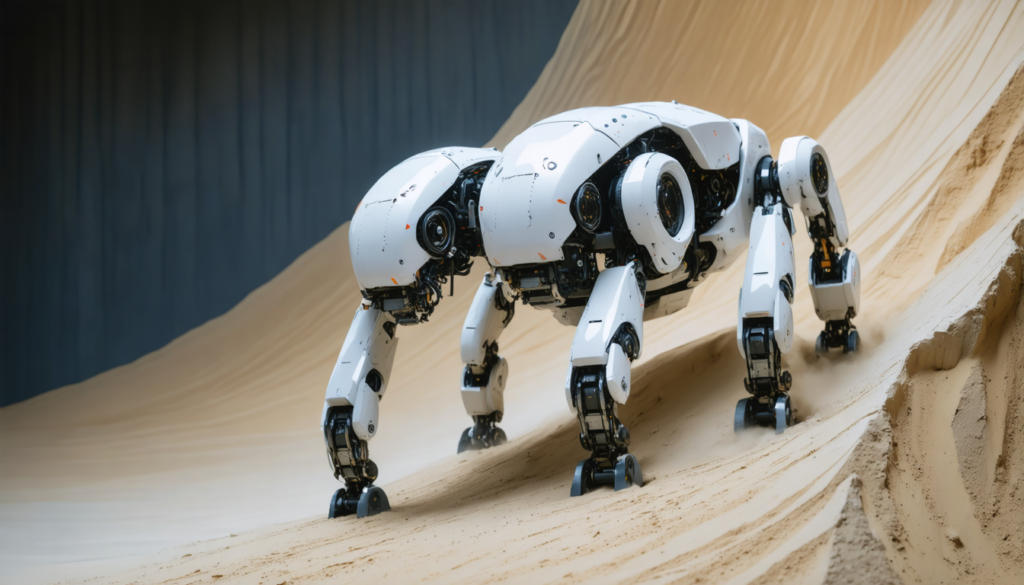
In the field of robotics, mastering robotic mobility and improving the agility of machines are increasingly ambitious goals. The emergence of quadruped robots represents a revolution, offering machines a movement capability close to that of wild animals. In 2026, a notable breakthrough was achieved thanks to a technological advancement named DreamWaQ++, developed by researchers at KAIST, which enables an intelligent quadruped robot to embrace the natural flexibility and natural movements observed in four-legged creatures in their habitat. This system exploits artificial intelligence and biomimicry to create a machine capable of observing, analyzing, and adapting in real time to unpredictable environments with remarkable fluidity.
This AI technology does not just imitate the gaits of wild animals; it elevates quadruped robotics by combining advanced sensory analysis and immediate reactions, thus avoiding obstacles even before touching them. The robot gains a sixth sense that renews the experience of robotic mobility in natural or rugged environments. This innovation opens exciting prospects in many sectors, from the inspection of industrial sites to emergency management, and even forestry and agriculture. Biomimicry applied through machine learning reveals the full potential of today’s and tomorrow’s technologies.
- 1 How DreamWaQ++ revolutionizes quadruped robot mobility through artificial intelligence
- 2 The key role of multi-source sensors in ground perception and dynamic adaptation
- 3 Multifaceted reinforcement learning for natural and flexible movements
- 4 Unprecedented agility and endurance performances in quadruped robotics
- 5 Concrete applications of intelligent quadruped robots in various sectors
- 6 Challenges and prospects for future intelligent quadruped robots
- 7 Biomimicry: a source of inspiration for the natural flexibility of quadruped robots
- 8 Deployment prospects of intelligent quadruped robots in the real world
How DreamWaQ++ revolutionizes quadruped robot mobility through artificial intelligence
One of the major limitations of traditional quadruped robots was limited reactivity to unforeseen events. Before the arrival of DreamWaQ++, machines moved relying almost exclusively on their internal sensors – joint encoders and inertial measurement units. This allowed a certain autonomy to avoid falls but with a noticeable delay, as the robot only detected obstacles upon contact. This lack of foresight limited its ability to operate in complex and changing environments.
The DreamWaQ++ technology has deeply changed this paradigm. At the core of this innovation is an intelligent control system that integrates different sources of information simultaneously: cameras, LiDAR, and onboard sensors. This combination continuously captures details of the surrounding terrain to anticipate difficulties. The quadruped robot then becomes capable of adjusting each step with fine precision, avoiding falls and instantly adapting its balance. This process, based on reinforcement learning, improves energy management by reducing the load on the motors through minimizing unnecessary movements.
Researchers emphasize that DreamWaQ++ allows the robot to spontaneously adopt several gaits – walking, trotting, stotting – depending on the context. These natural gait changes, reflecting behaviors observed in wild animals, confer the robot an unprecedented flexibility. The system can even pause its progress to “study” the terrain, a behavior curiously reminiscent of quadrupeds in nature when approaching an unfamiliar situation.
If quadruped robotics had until now sometimes given an impression of a heavy or rigid machine, this new AI-based approach offers extremely fluid robotic mobility, capable of overcoming obstacles while carrying loads without compromising balance. It is no longer just about running or climbing, but doing so with animal grace. The combination of advanced artificial intelligence and biomimicry changes the game.
The key role of multi-source sensors in ground perception and dynamic adaptation
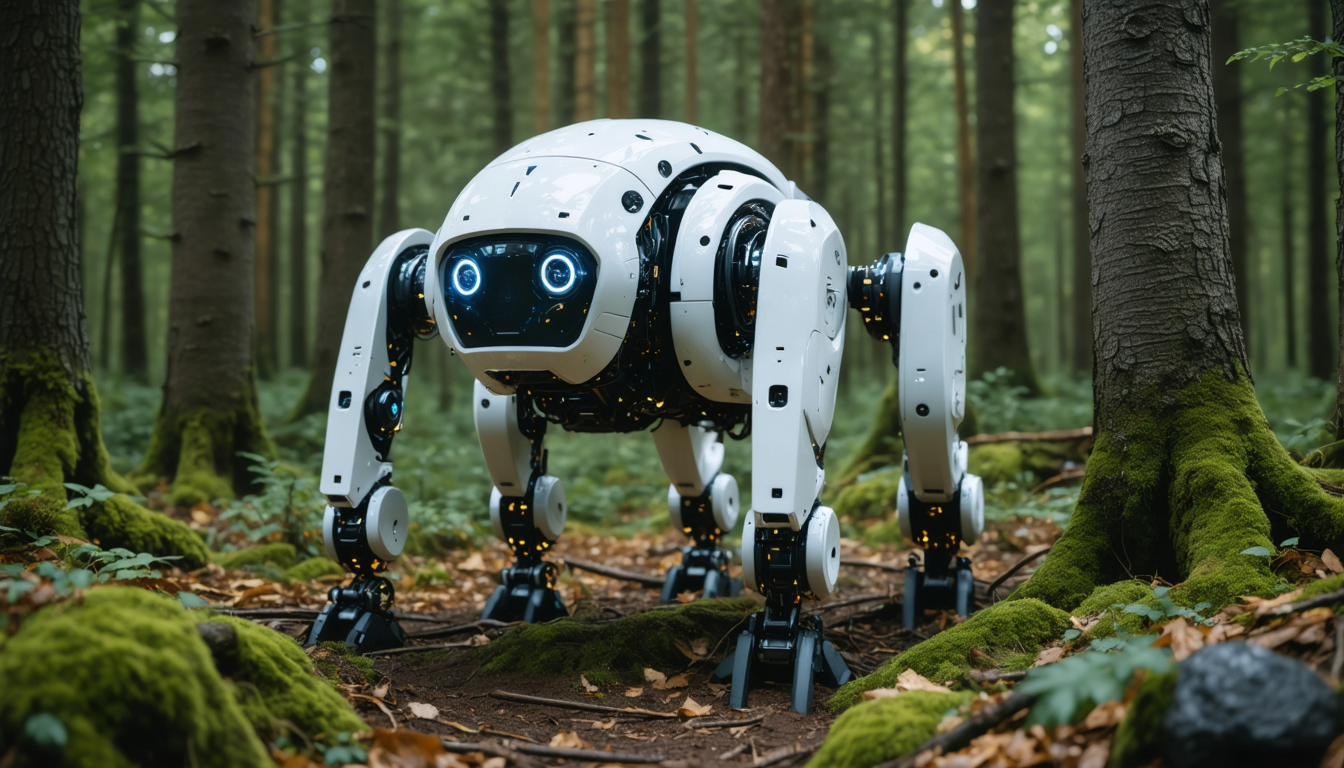
The effectiveness of DreamWaQ++ technology relies largely on the fusion of data from different types of sensors, allowing the intelligent robot to perceive its environment like a true wild animal. Cameras provide a precise vision of what is in front of the machine, while LiDAR accurately measures distances to objects and provides a topographic map of the terrain. Onboard sensors complete this vision with information about the posture and dynamics of the legs in contact with the ground.
This sensory synergy gives the quadruped robot a considerable advantage: it can anticipate terrain irregularities such as roots, stones, or steep slopes, and choose the best trajectory to cross them without losing balance. The challenge is all the more important as, unlike wild animals, a robot has a limited effort capacity due to its motorization and energy autonomy. AI technology therefore optimizes its movements to minimize consumption while ensuring stability.
It is essential to emphasize that this system does not rely on a fixed pre-recording of paths but on real-time analysis. This means that even in disaster zones where the terrain changes abruptly, the intelligent robot can redefine its path without human intervention. This autonomous behavior is made possible thanks to a control algorithm continuously fed by sensory data. Each step thus becomes a thoughtful and perfectly adjusted act.
By comparison, the first quadruped robots, although innovative, could hardly evolve outside controlled environments. Moving through forests, rugged industrial areas, or mountainous terrain was both risky and energy-consuming. Today, DreamWaQ++ offers new robustness, combined with behavioral finesse, confirming that the biomechanics observed in animals is an intelligent source of inspiration for modern robotics.
List of main sensors used by DreamWaQ++ and their functions
- RGB-D Cameras: capturing three-dimensionality of obstacles and visual nuances of the ground.
- LiDAR: precise distance measurement, real-time 3D mapping.
- Accelerometers and gyroscopes: dynamic tracking of the robot’s orientation and balance.
- Touch sensors on legs: precise contact detection with the ground and measurement of applied force.
- Joint encoders: information on the exact position of the robot’s limbs.
Thanks to this array, every movement of the robot fits within a logic of immediate adaptation. The machine anticipates what wild animals instinctively perform, reproducing this natural flexibility thanks to the capabilities offered by AI technology.
Multifaceted reinforcement learning for natural and flexible movements
Machine learning, and more precisely reinforcement learning, is at the heart of the DreamWaQ++ quadruped robot’s ability to perform movements that mimic those of wild animals. This training mode allows the robot to receive continuous feedback on its actions in the environment, gradually favoring increasingly effective and safe behaviors.
The challenges for the researchers lay in the complexity of real-time processing of a large amount of heterogeneous data – images, distance measurements, exerted forces – without overloading embedded computing capacities. They had to design an algorithm capable of managing this information simultaneously to choose the next optimal action.
The success of DreamWaQ++ demonstrates that this system can also change its sensory strategy if a sensor fails. For example, if a camera is obstructed, the robot can favor data from LiDAR and tactile sensors to maintain its stability. This flexibility is essential in intelligent robotics as it ensures continuous operation under real conditions.
In practice, this means the robot no longer follows a predetermined route but continuously builds its trajectory. This process allows it to face unknown obstacles, step over barriers taller than itself, or climb slopes exceeding 35 degrees, well beyond what it was initially trained for. This performance testifies to a form of emerging intelligence, inspired by the natural flexibility of wild animals.
The impacts of this advancement go beyond the simple framework of the quadruped robot. The KAIST team already considers transposing it to other robots, notably humanoid or wheeled ones, which could benefit from similar dynamic adaptation, thus amplifying the versatility of intelligent machines.
Unprecedented agility and endurance performances in quadruped robotics
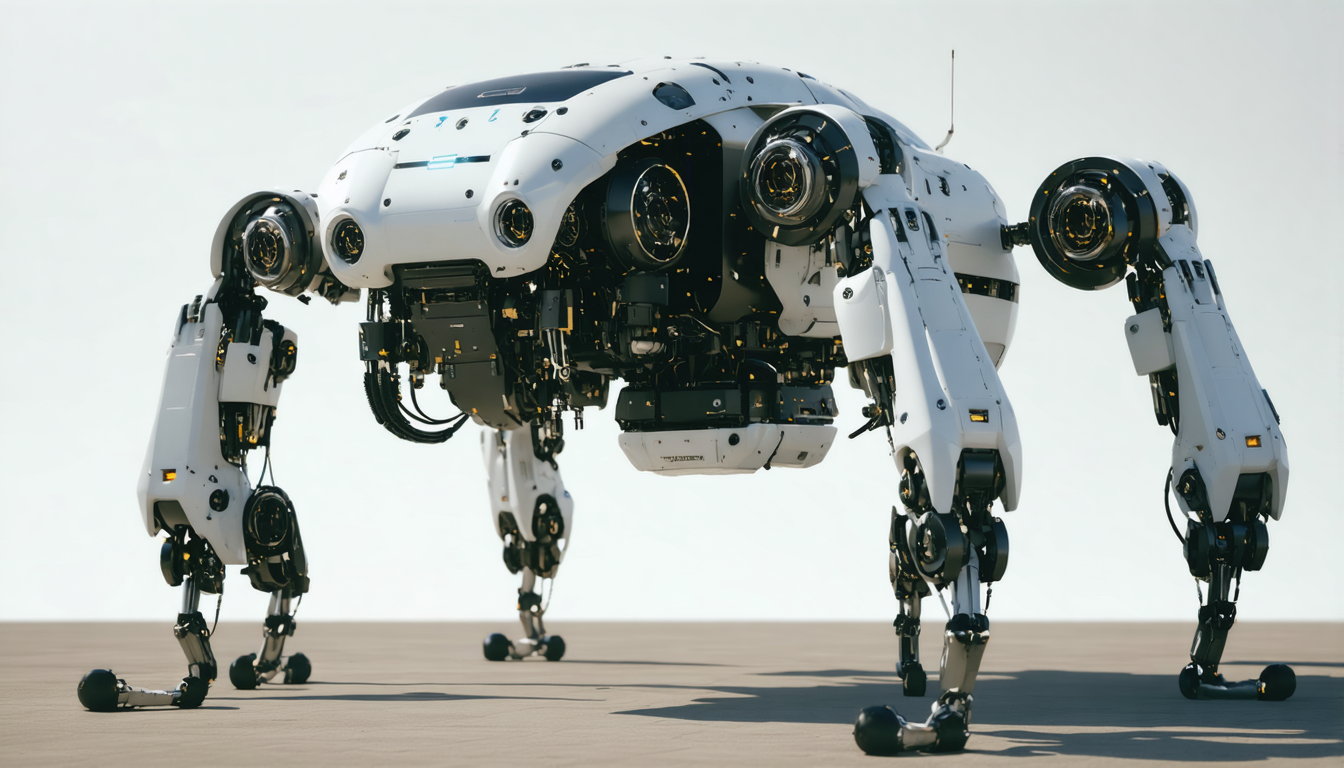
Practical tests speak louder than a thousand words: DreamWaQ++ climbed a 50-step staircase in barely 35 seconds – a feat combining power, stability, and speed in a very short time. The horizontal distance traveled exceeds 30 meters while the vertical ascent reaches more than 7 meters, demonstrating remarkable endurance. These figures are significant for a robot of this category, whose motorization is limited by energy constraints.
To illustrate the natural flexibility of the quadruped robot, researchers subjected the machine to steep terrains with slopes at 35 degrees. Without the assistance of an external operator, this intelligent robot climbed the inclines with surprising ease, confirming the robustness of sensory adaptation algorithms. These results demonstrate that robotic mobility has reached an important milestone, bringing machines closer to the abilities observed in certain wild animals such as dogs, deer, or cats.
Regarding carried load, the robot proved capable of transporting an additional weight while overcoming obstacles taller than itself. This implies an extremely precise balance and a fine management of support at each moment. Thanks to continuous dynamic adjustment, the quadruped robot perfectly controls its gestures and its center of gravity.
| Criterion | DreamWaQ++ Performance | Classic quadruped robot Performance |
|---|---|---|
| 50-step staircase ascent speed | 35 seconds | More than 60 seconds |
| Horizontal distance covered | 30 meters | 20 meters |
| Maximum slope climbed | 35° | 20° |
| Additional load capacity | 10 kg | less than 5 kg |
| Obstacle sensitivity before contact | Yes | No |
These results mark a milestone in the history of quadruped robotics. The natural flexibility of wild animals, whether in a fast gait or a controlled jump, becomes accessible to the intelligent machine, extending its range of applications beyond initial forecasts. This adaptive capacity directly contributes to operational safety and the longevity of robots deployed in the field.
Concrete applications of intelligent quadruped robots in various sectors
The astounding capabilities offered by the quadruped robot equipped with DreamWaQ++ pave the way for main innovative uses. Starting with the inspection of industrial infrastructures often inaccessible or dangerous for humans. Enhanced robotic mobility allows these machines to explore disaster zones, narrow ducts, or unstable environments safely, thus avoiding accidents.
In the agricultural sector, biomimicry inspires a new generation of quadruped robots that inspect plots, identify soil pathogens, or transport heavy loads on uneven terrain, reducing human labor hardship while increasing intervention precision. This approach optimizes farm management thanks to the intelligent robot’s ability to adapt its movements according to soil and vegetation conditions.
Forestry also benefits from these robots due to their agility, allowing them to quickly traverse dense forests while avoiding natural obstacles like low branches, stumps, or ravines. They can thus collect data for ecosystem preservation, mapping, or fire prevention without requiring heavy infrastructure.
Finally, and perhaps most importantly, their deployment in emergency operations represents a true turning point. These intelligent quadruped robots can be deployed in disaster zones caused by natural catastrophes — earthquakes, floods, or fires — to locate victims, assess damages, and prepare human interventions. Their ability to change gait in real time according to obstacles or terrain fragility increases their efficiency and safety.
List of main application sectors for DreamWaQ++ technology
- Industrial inspection: monitoring dangerous or inaccessible areas
- Precision agriculture: traversing complex terrains with soil adaptation
- Forestry: agile navigation in natural environments and data collection
- Emergency interventions: rapid assistance in disaster zones
- Security and surveillance: patrols in varied environments
- Exploration: missions in unknown or extreme environments
The variety of potential applications illustrates how integrating a natural flexibility derived from wild animals into quadruped robots is a fundamental change. Biomimicry here lays the foundations for an AI technology capable of adapting in all circumstances.
Challenges and prospects for future intelligent quadruped robots
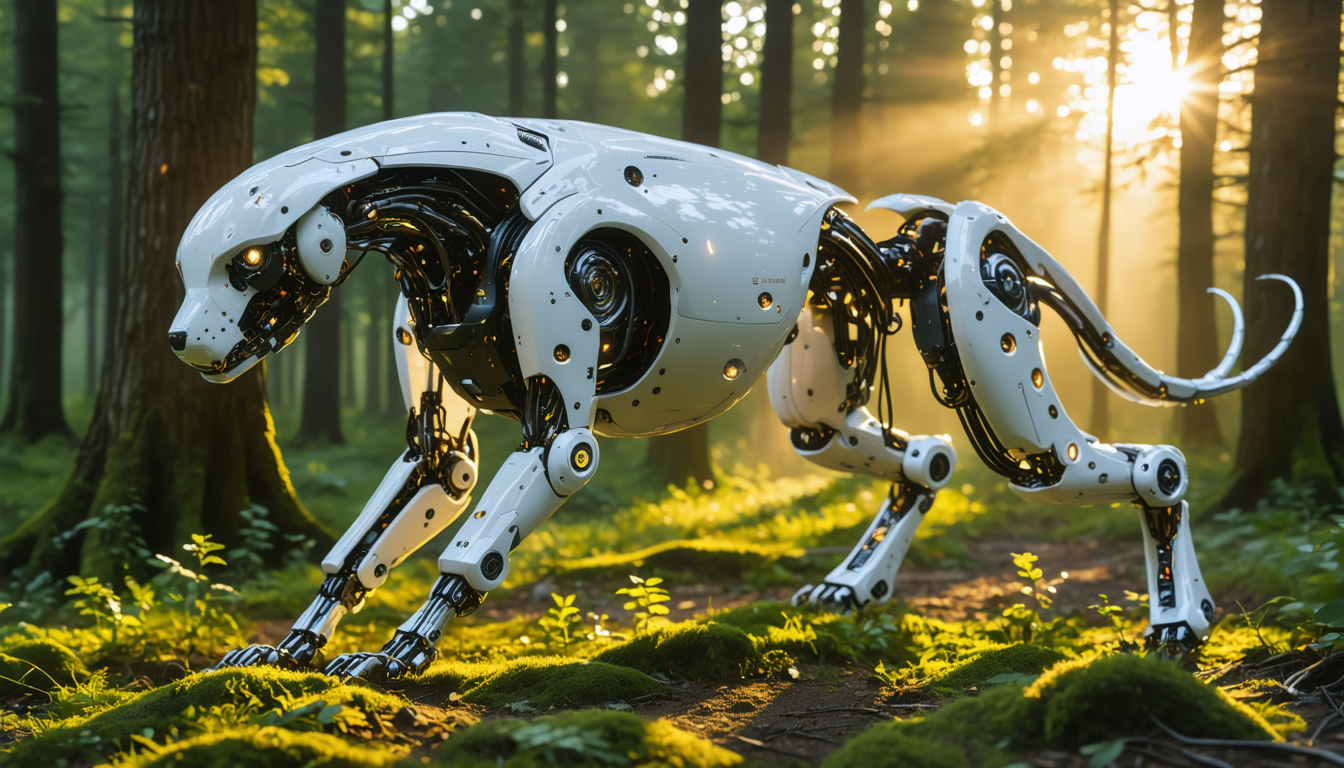
Despite the impressive advances of DreamWaQ++ technology, several challenges remain to ensure its sustainability and extend its use in quadruped robotics. Miniaturization of sensors, optimization of energy consumption, and improved robustness against extreme environments are priority areas.
Real-time processing of large volumes of data also requires increasingly powerful processors, while respecting the robot’s weight and size constraints. A delicate balance between power and energy autonomy is crucial, as robotic mobility must remain efficient without excessive consumption.
In terms of machine learning, broader adaptation capabilities must be considered, allowing quadruped robots to operate in entirely new environments without prior training phases. Research in artificial intelligence is moving toward systems capable of contextual memory and skill transfer, gradually recreating the flexibility observed in wild animals.
Moreover, integrating these robots into society raises ethical and regulatory questions, particularly regarding surveillance and liability in case of malfunction. Users and designers will need to collaborate to establish safety rules, ensuring harmonious cohabitation between humans and intelligent robots.
List of main challenges and improvement paths for the future
- Reduction in size and weight for greater maneuverability
- Increase in energy autonomy thanks to more efficient batteries
- Reinforcement of learning capacities notably via contextual artificial intelligence
- Optimization of robustness against extreme conditions (cold, humidity, dust)
- Ethical and regulatory framework for responsible use
Progressive innovations in these areas will pave the way for a new generation of ever smarter quadruped robots, capable of adapting to the diversity of situations as wild animals do in nature.
Biomimicry: a source of inspiration for the natural flexibility of quadruped robots
At the heart of this robotics revolution lies biomimicry, which consists of drawing inspiration from evolutionary strategies developed by wild animals to optimize mobility. Researchers have studied in detail the locomotion of dogs, felines, deer, and other quadrupeds to understand how these creatures manage to combine power, finesse, and balance in their movements.
Thanks to these observations, robotics has benefited from natural models exploitable via artificial intelligence to create machines capable of reproducing natural movements and fluid flexibility. Dynamic gait adjustments, instant adaptation to ground irregularities, and even the ability to unconsciously choose a safe trajectory are all characteristics assimilated by the intelligent robot.
Biomimicry also endows quadruped robots with a form of behavioral autonomy: by imitating not only mechanical aspects but also environmental reactions, these machines learn to adapt like a wild animal facing uneven terrain or an unexpected obstacle. This natural realism in movements offers harmonious interaction between machine and environment, with a positive impact on equipment durability and performance.
By combining biomechanics with AI technology, engineers pursue the ambition to narrow the gap between robots and living animals, thus opening the way to even smarter and more agile quadruped robots capable of fully participating in demanding missions while respecting the environment.
Deployment prospects of intelligent quadruped robots in the real world
The technology developed by KAIST and called DreamWaQ++ represents only one of many milestones in a series of advances in quadruped robotics. Large-scale deployment of intelligent quadruped robots in industrial, agricultural, or emergency rescue contexts is now conceivable.
The current global context, with its environmental and economic challenges, requires machines capable of working in varied conditions while reducing risk for humans. Intelligent quadruped robots embody this promise, combining robotic mobility, adaptability, and energy efficiency.
The market is also opening to civil and commercial uses, such as autonomous delivery in hard-to-access rural areas, monitoring of protected natural areas, or even assistance for people with reduced mobility through mobile support devices. These prospects highlight the need for collaboration among researchers, industry players, and authorities to accompany this technological transformation in a responsible and sustainable manner.
In short, the evolution of intelligent quadruped robots, nourished by biomimicry and driven by AI technology, illustrates a silent yet major revolution in the industrial and social landscape. It is reasonable to expect that, in the years to come, these machines will become indispensable allies in multiple fields of activity.




