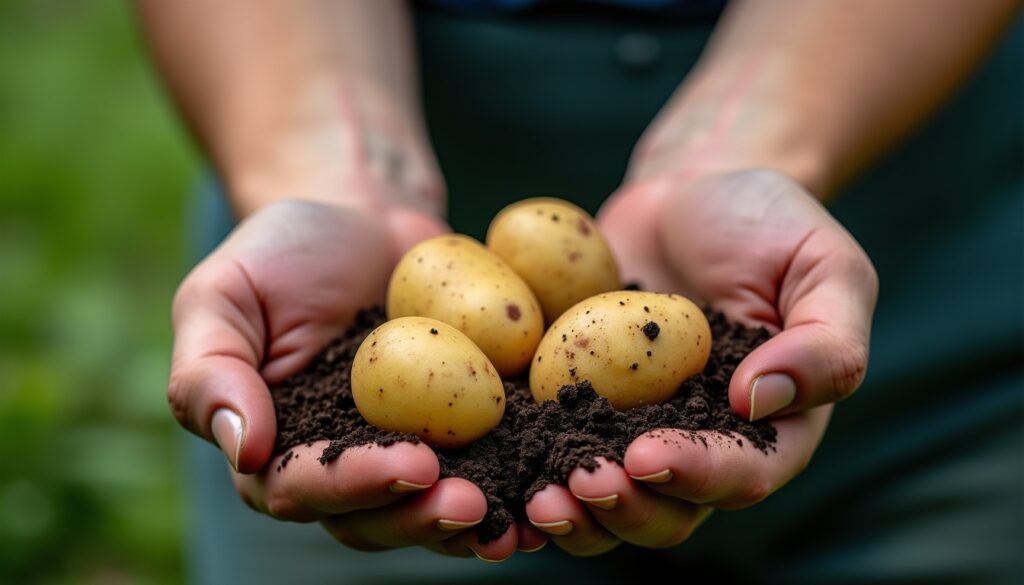
Each spring, the planting of potatoes livens up family gardens and urban spaces dedicated to agriculture. This crop, both popular and accessible, can nevertheless hold its share of surprises depending on the technique adopted. Far more than a simple agricultural gesture, the way of planting significantly influences the quality of the harvest, garden management, and the effort the gardener must provide. Faced with variable soils, cultivation spaces ranging from large plots to smaller balconies, and an ever-growing desire for simplified cultivation, three distinct methods emerge. These techniques respond as much to physical constraints as to gardeners’ expectations in terms of gardening tips and guaranteed results. Through these approaches, from traditional planting to container cultivation and innovative mulching, each gardener will find those that adapt to their environment and facilitate plant maintenance.
At the heart of these practices is a shared goal: transforming the vegetable garden into a productive space without multiplying unnecessary efforts. Urban agriculture is now at the center of these innovations, allowing for potato cultivation even in small spaces. While some favor the ancestral row technique, others explore lighter and more ecological alternative methods. These three paths to success also reveal subtleties to know in order to avoid classic mistakes and optimize each step, from planting to harvest. Discover how to choose and implement these cultivation methods tailored for all gardener profiles in 2026.
- 1 The fundamentals of traditional row planting for controlled potato cultivation
- 2 Mulching: the ecological method revolutionizing simplified potato cultivation
- 3 Container cultivation: the essential trick for urban agriculture in 2026
- 4 Choosing the ideal planting method according to your environment and gardening experience
- 5 Optimizing the harvest and extending potato storage after cultivation
The fundamentals of traditional row planting for controlled potato cultivation
The row technique, inherited from classical agricultural practices, remains an essential reference in the world of vegetable gardening. It is based on a precise organization of plants, allowing optimal control over their growth and targeted maintenance. One key aspect of this method is the meticulous soil preparation. By digging furrows about fifteen centimeters deep, the gardener creates an environment conducive to tuber development, thus limiting water stagnation or disease risks.
A telling example is Caroline, an experienced gardener in the Drôme region, who has been cultivating her potatoes in rows for over ten years. She emphasizes the importance of respecting distances between tubers – 30 to 35 cm – and between rows – at least 60 cm. This organization ensures not only good soil aeration but also facilitates the hilling operation, essential in this method. Hilling involves bringing soil around the stems when they reach 15 to 20 cm in height, then repeating this operation three weeks later. This technique preserves tubers from light, preventing greening, and stimulates their growth by providing additional soil.
The amateur gardener finds in this method a rigorous framework that promotes a generous harvest, but is also exposed to more significant maintenance: digging, weeding, regular watering, and monitoring diseases such as late blight. Nevertheless, row planting offers direct control over each step, a major advantage for those who like to master every detail of their garden.
For large areas, this method proves particularly effective, as it takes advantage of the soil’s natural resources while ensuring easy garden management. Far from being an outdated method, it remains an essential foundation that helps understand the fundamental principles of gardening and potato planting techniques.
Mulching: the ecological method revolutionizing simplified potato cultivation
Mulching establishes itself as an increasingly popular method, especially among gardeners seeking gardening tips that promote simplified cultivation and soil respect. Unlike traditional planting, this technique consists of placing tubers directly on the soil or slightly buried, then covering them with a thick layer of organic matter, such as straw, dead leaves, or wood chips. This protective layer can sometimes reach 30 cm in thickness, playing a vital role similar to that of usual packed soil.
The advantages are multiple. For example, in the Loire Valley, Marc has adopted this method for several years, and he testifies to doubling the reduction in his maintenance time. The mulch prevents weed growth, retains soil moisture longer, making it an ideal solution during dry periods. Moreover, over time, the organic matter decomposes and naturally enriches the soil, improving its structure and fertility. A benefit both for the soil and local biodiversity, since this mulching shelters a multitude of beneficial organisms, from earthworms to pollinating insects.
However, this method depends on a significant amount of biomass, which can be a constraint in some gardens where organic resources are limited. Also, in rainy or very humid regions, it requires increased vigilance regarding water management to avoid rot and fungal problems on the tubers. Despite these limits, mulching suits small spaces and gardens requiring a more natural cultivation, with simplified maintenance that respects the rhythm of the modern gardener.
The practice of mulching deeply changes the classic gardening approach by proposing a gentler and ecological alternative, perfectly in line with current expectations for responsible and environmentally respectful production.
Container cultivation: the essential trick for urban agriculture in 2026
With the rise of urban agriculture, where every square meter counts, growing potatoes in containers or grow bags offers an innovative and efficient solution. This method even allows city dwellers without gardens to grow their tubers on a balcony, terrace, or even a spacious windowsill. Beyond this space-saving advantage, it also facilitates managing soil constraints and diseases.
To illustrate, Sarah, a Parisian resident, produces up to 5 kg of potatoes each year in a rectangular 60-liter container on her balcony. She uses a mix of potting soil and compost, waters regularly, and ensures drainage is optimal to avoid water stagnation. This cultivation mode also offers the possibility of more easily choosing varieties adapted to the space and tuber size, thus tailoring the harvest according to her desires.
Here is a comparative table of different containers adapted for potatoes:
| Container type | Recommended volume | Number of plants | Estimated yield |
|---|---|---|---|
| Classic pot | 30 to 40 liters | 1 plant | 1 to 2 kg |
| Rectangular container | 50 to 80 liters | 2 to 3 plants | 3 to 5 kg |
| Grow bag | 50 to 100 liters | 2 to 4 plants | 4 to 7 kg |
Container cultivation requires particular attention to several factors:
- Watering: regular but moderate to keep the soil moist without soaking it.
- Fertilization: the substrate depletes quickly; a compost supply is essential.
- Drainage: essential to avoid rot; pots must have holes at the bottom.
This technique offers increased control over cultivation conditions, limiting diseases and favoring plant maintenance adapted to urban rhythms. In 2026, it establishes itself as an essential trend in the multiplication of urban vegetable gardens, meeting a growing demand for accessible food autonomy, even without natural space.
Choosing the ideal planting method according to your environment and gardening experience
The choice of a potato planting technique should not rely solely on personal preference but take into account a set of parameters specific to your environment and goals. The beginner gardener will find, for instance, in mulched cultivation a way to minimize effort while remaining effective. Conversely, a more experienced gardener will favor the traditional row method for its control and potential maximum yields.
It is crucial to evaluate in advance:
- Available space: spacious gardens, balconies, or small urban vegetable patches require different approaches.
- Soil type: clayey, sandy, or silty, each type supports certain methods better.
- Time devoted to maintenance: some methods require more weekly investment.
- Local climate: notably rainfall frequency and seasonal temperatures.
- Desired yield: production for self-consumption may prioritize ease.
Based on these criteria, it is possible to steer the choice toward the most suitable method. For example:
- Cold and wet climate: raised row planting improves drainage.
- Hot and dry climate: mulching optimizes moisture retention.
- Temperate urban spaces: container cultivation offers perfect control of conditions.
Since harvests occur between 70 and 120 days after planting, it is also essential to anticipate post-harvest management, a step often underestimated but decisive to preserve the quality and storage life of potatoes.
Optimizing the harvest and extending potato storage after cultivation
Successfully cultivating potatoes does not stop at the plant but extends through attentive harvesting and appropriate storage, sometimes neglected but equally vital. The ideal time to harvest is determined by observing the foliage: when it yellows and dries, the tubers have reached full maturity, a sign it is time to extract them from the soil.
For gardeners who enjoy early potatoes, it is possible to harvest earlier, from the appearance of flowers. In any case, it is advised to let the tubers dry in the open air for a few hours before storing them to limit mold risks.
Storage requires a precise environment to prolong the life of potatoes:
- Cool: ideally between 4 and 8 °C to slow aging.
- Dry: without excess humidity, to avoid rot.
- Dark: to prevent greening and toxic solanine production.
- Ventilated: to prevent humidity buildup and fungal proliferation.
Many gardeners use cellars, garages, or unheated pantries that naturally provide these conditions. Regular sorting of tubers also allows quickly removing those showing signs of deterioration to protect the overall harvest.
Thanks to these well-managed final steps, the production can be stored for several months, ensuring lasting autonomy and prolonged enjoyment of the vegetable garden. Mastering planting, monitoring, and storage is therefore the key to complete success in potato cultivation.