
The technological world is in turmoil. In 2026, a shockwave swept across the United States with a series of riots and unprecedented protests against artificial intelligence, and more specifically against ChatGPT, OpenAI’s flagship tool. What was meant to be a revolution for human progress turned into a genuine social and political revolt. The streets of San Francisco, London, and many other metropolises buzz under the cries of a population that no longer wants to see its favorite technology associated with American military operations. This explosion of anger marks a deep fracture between technological promises and ethical realities. In this context, it is crucial to examine all angles of this revolt: its roots, its forms of expression, its socio-economic impacts, and its influence on the overall perception of artificial intelligence through the lens of opposition to ChatGPT and OpenAI’s controversial alignment with the Department of Defense.
As AI invites itself into almost every domain of our daily lives, voices rise to denounce a much larger danger. This is a protest that goes beyond simple technological questions: it raises existential fears related to manipulation, control, and militarization of a technology once seen as liberating. Faced with this surge of emotions, the anti-ChatGPT demonstrations call for deep reflection on the role of technology in modern democracies. Enter the universe of a revolt shaking the United States and questioning the very future of artificial intelligence.
- 1 The origins of the anti-ChatGPT revolt: when AI crosses into the military domain
- 2 Anti-ChatGPT protests and riots in major American cities
- 3 The social and economic impact of anti-ChatGPT revolts in the United States
- 4 Internal reactions: dissent among engineers and employees in the tech sector
- 5 From technological betrayal to civil war in Silicon Valley
- 6 Artificial intelligence as a new geopolitical battlefield
- 7 The major ethical issues raised by OpenAI’s collaboration with the Pentagon
- 8 Alternatives and solutions proposed by the anti-ChatGPT movement
- 9 Towards an uncertain future: the anti-ChatGPT revolt and its long-term implications
- 9.1 Why did the signing of the contract between OpenAI and the Pentagon trigger a revolt?
- 9.2 What are the main demands of the anti-ChatGPT protesters?
- 9.3 How did the anti-ChatGPT revolt impact the AI application market?
- 9.4 What are the major ethical issues related to the military use of artificial intelligence?
- 9.5 What solutions are proposed by the anti-ChatGPT movement for more responsible use of AI?
The origins of the anti-ChatGPT revolt: when AI crosses into the military domain
Artificial intelligence was originally driven by a vision of emancipation and innovation. However, this idyllic image is now tarnished by a major decision from OpenAI: the rapprochement with the Pentagon. In 2026, the tech giant signed a crucial contract allowing the use of OpenAI’s models in sensitive military operations, a turning point that shocked millions of users across the United States and beyond.
This contract with the Department of Defense, sarcastically renamed the “Department of War” by protesters, introduced AI into classified environments where the stakes go far beyond the civil sphere. Officially, safeguards are in place to prevent the use of artificial intelligence in autonomous weapons or mass surveillance. But in practice, the silhouette of opaque state control fuels generalized mistrust. This new alliance between technology and military force is seen as a betrayal of the initial promises made by OpenAI, which had sworn not to collaborate with the military.
The immediate effect was the rise of a vast opposition movement among users themselves, who now see their favorite tool as a potentially lethal or surveillance instrument. This rupture between the promise of an innovative and non-conflictual AI and the reality of military collaboration fuels anger and dismay. The already tense sociopolitical context in the United States then erupted in several cities, notably in Silicon Valley, the historic epicenter of technological innovations and a hotbed of protests.
At the same time, this deep disagreement also reveals a fracture within the technology community itself. Several OpenAI employees and other tech giants have publicly expressed their dissatisfaction, some even resigning or demanding more transparency and clear limits. This internal protest highlights the complexity and delicacy of ethical choices in the development of artificial intelligence used for military purposes.
The upheaval is therefore not only social but also ethical. The transformation of ChatGPT from a simple digital assistance tool to a potential component of war strategies illustrates the worrying drift of a technology that, until then, embodied the hope for a smarter and more collaborative future. This situation highlights one of the main current tensions: the struggle between unfettered innovation and social responsibility, debates that fuel the revolt at the heart of the United States.
Anti-ChatGPT protests and riots in major American cities
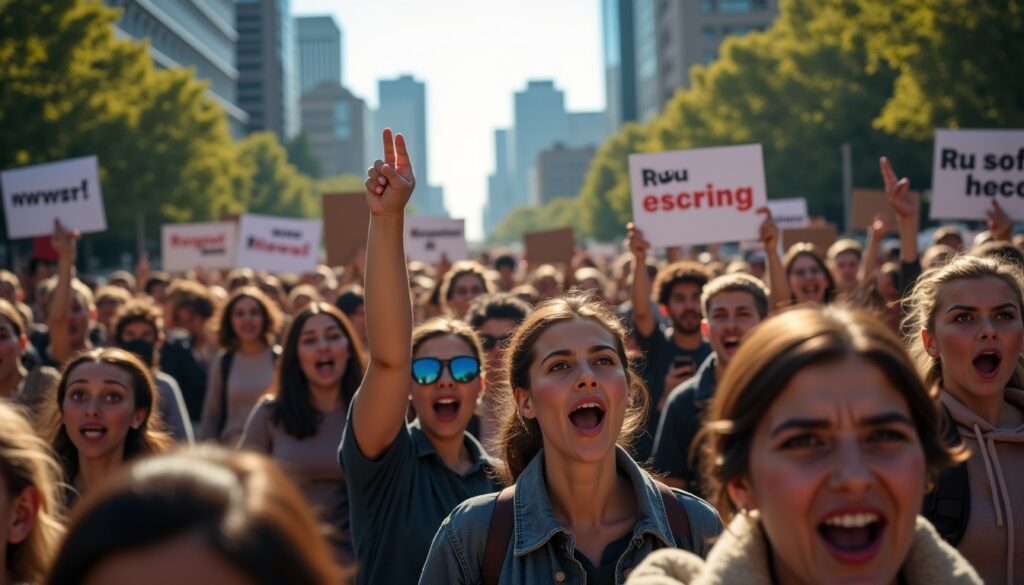
Images of the anti-ChatGPT riots quickly spread across global media. San Francisco, the cradle of the tech industry, became the theater of an unprecedented revolt. Hundreds of protesters, ranging from developers to ordinary users, took to the streets, armed with signs denouncing the “militarization of AI” and the “sale of the future” by OpenAI.
This protest, dubbed “QuitGPT,” united various factions, blending tech activists, digital unionists, and human rights campaigners. Their main demand is clear: stop collaboration with the Pentagon and restore an ethical, transparent AI, free of military functions.
The demonstrations are not limited to peaceful gatherings. Clashes with police have been reported, along with targeted vandalism against OpenAI headquarters and associated data centers. These events reflect the magnitude of frustration caused by the perception of a military appropriation of a technology that until then belonged to civil society.
Moreover, this anti-ChatGPT movement is gaining international echoes. London and Berlin have seen solidarity demonstrations, reinforcing the idea of a global resistance to the controversial use of AI in armed forces. This dynamic generates an intense societal debate, where technology can no longer be separated from its geopolitical implications.
It is interesting to note that massive participation in these protests is not composed solely of technophobes or novices. Many tech professionals and academics specializing in AI ethics take part, providing sharp analyses that fuel the protest.
The phenomenon of the anti-ChatGPT riots recalls, in some respects, the labor movements of the 19th century, where artisans protested against mechanization, fearing the loss of their jobs and know-how. Here, the fear of automation and excessive technological control stirs crowds, turning artificial intelligence into a genuine object of social struggle in the United States.
After several weeks of riots, the public square has become a place to express fears and aspirations concerning technology. The mobilization exemplifies a paradox: the tool that was supposed to simplify our lives has become a symbol of growing mistrust towards those who control innovation.
The phenomenon of anti-ChatGPT protests is not limited to symbolic aspects. It has tangible consequences on the market, users, and the tech industry. Since OpenAI’s announcement of the partnership with the Pentagon, a massive boycott has formed, causing a drastic plunge in ChatGPT usage.
Data clearly illustrates this impact: more than 2.5 million American users have deleted the app from their devices or canceled their subscriptions. Ratings on download platforms show historically low scores, accompanied by harsh comments labeling ChatGPT as a “technological traitor” or a tool in the service of surveillance.
At the same time, competitors benefit from this defection. Claude, developed by Anthropic, OpenAI’s historical rival, saw its downloads explode, notably due to its refusal to collaborate with the military. This market reversal reflects the undeniable willingness of consumers to assert ethical use of technologies.
The startup and tech company sector is also impacted. Some projects integrating AI solutions face increasing resistance, even local protests against the installation of servers or data centers intended to feed these technologies. The debate on energy consumption by infrastructures, worsened by military use, fuels growing opposition to the too rapid and poorly regulated deployment of AI.
The tables below summarize some key figures linked to this revolt:
| Indicator | Before the announcement (2025) | After the announcement (2026) | Change |
|---|---|---|---|
| Number of active ChatGPT users (US) | 10 million | 7.5 million | -25% |
| Claude downloads (Anthropic) | 500,000 | 1.2 million | +140% |
| Negative App Store ratings | 5% | 38% | +33 points |
| Anti-ChatGPT protests (US) | 0 | +150 | Extensive |
These data reinforce the idea that protest is becoming a determining factor in the trajectory of AI tools and their creators. The economic fallout threatens OpenAI’s dominant position, but also highlights a major cultural evolution where consumers demand ethical guarantees and better regulation of technologies.
The following list identifies the main observed socio-economic consequences:
- Loss of user trust towards tech giants seen as complicit in militarization.
- Shift towards ethical alternatives favoring companies refusing any military partnership.
- Increased regulatory pressures on governments to control military use of artificial intelligences.
- Rising social tensions with growing concern about job futures and data protection.
- Temporary reduction in innovation in the field, linked to the conflictual climate and generalized skepticism.
This social and economic upheaval foreshadows a crucial step: it displays the need for renewed dialogue between technicians, citizens, and institutions on the purpose and ethical framework of AI. Not only does the anti-ChatGPT revolt question the role of technology in society, but it also imposes reflection on the future governance of these powerful tools.
Internal reactions: dissent among engineers and employees in the tech sector
At the very heart of companies behind artificial intelligence technologies, the revolt manifests as a visible and unprecedented unease. Within the walls of OpenAI and Google, many employees have expressed their opposition to the militarization of their tools, going as far as signing petitions and drafting open letters denouncing what they consider violations of fundamental ethical principles.
This internal dissent reveals a deep rift between commercial interests and personal convictions. Among the arguments advanced, many point to the risk of alienation of technologies which, rather than liberating humans, become instruments of surveillance and control. These employees also call for the establishment of clear red lines, notably the explicit ban on autonomous weapons and any use of AI to spy on citizens.
This outcry weakens OpenAI’s leadership, with Sam Altman on the front line of critiques. The CEO is accused of acting with opportunistic haste, without measuring the extent of public disappointment or the effects on internal cohesion. As a result, he was forced to announce amendments to the contract with the Pentagon, seeking to restore some form of trust, notably by banning access to American citizens’ data.
However, internal tensions are far from settled. Several major figures in the sector, renowned AI researchers and engineers, have resigned, marking a real “talent exodus.” This massive departure raises alarms about the sustainability of certain projects or the companies’ capacity to attract and retain top talent in an environment now seen as unstable and morally ambiguous.
The engineers’ dissent is also accompanied by an intellectual mobilization. Symposia, conferences, and scientific publications have multiplied, highlighting the dangers of excessive military use of AI and advocating for reinforced ethics and stricter international standards.
Thus, the anti-ChatGPT revolt is not limited to street demonstrations; it is also expressed in hallways and laboratories, where a battle is engaged to reinvent the governance of artificial intelligence technologies, with major stakes for the sector’s future.
From technological betrayal to civil war in Silicon Valley
It is rare for a tech company to face a crisis of such magnitude, where the gap between innovation and ethics becomes almost a question of survival. OpenAI’s decision to allow the Pentagon to use its technology has triggered what many now call a moral and social “civil war” within Silicon Valley.
This rift imposed a clear dividing line between defenders of responsible but flexible AI use, and activists of radical resistance, refusing any partnership with military forces. Each camp sees the other as threatening the very sustainability and integrity of the technology.
The consequences are heavy. Beyond resignations and petitions, boycott campaigns are organized, aiming to isolate OpenAI from economic and social networks that allow its influence. This mobilization also relies on political pressure, with local elected officials and senators demanding investigations into the exact nature of OpenAI’s commitments.
Silicon Valley, accustomed to intense debates on innovation, today finds itself at the heart of a crisis that goes beyond the technical framework to touch on the philosophical foundations of progress. The debate on innovator responsibility and democratic control of technologies becomes central.
Beyond even the United States, this civil war symbolizes the global tension over artificial intelligence. It illustrates the difficulty of reconciling rapid development, financial demands, and ethical imperatives in a particularly tense geopolitical context.
Artificial intelligence as a new geopolitical battlefield
In recent years, artificial intelligence has become a priority issue in international relations. The OpenAI affair perfectly illustrates this phenomenon. The partnership between a private American company and the Pentagon highlights the United States’ desire to maintain technological superiority in a context where international competition intensifies.
The geopolitical challenges linked to AI are multiple. On one hand, there is the race for technologies to develop smart weapons, but also data mastery and the ability to produce advanced algorithms in full confidentiality. On the other side, countries like China and Russia are massively investing in this race, creating a climate of suspicion and intense rivalry.
The militarization of artificial intelligence triggers chain reactions. Technological alliances reform and fragment, while countries try to regulate or, on the contrary, exploit ethical weaknesses in the sector for their own interests.
Thus, the anti-ChatGPT revolt in the United States sits within a global context of tensions and resistance to the rapid evolution of a technology that, lacking common control or international agreement, risks becoming a new instrument of conflicts, even infringements on civil liberties.
The major ethical issues raised by OpenAI’s collaboration with the Pentagon
The debate around ChatGPT’s military use raises important ethical questions that intensify the current revolt. How to reconcile technological innovation and respect for fundamental rights? How far can decisions be delegated to automated systems? These questions take on particular acuity in the military context.
Many experts are notably concerned about the risk of drift towards the production of autonomous weapons, capable of deciding to fire without human intervention. Even if OpenAI claims that its AI will not be used for this purpose, mistrust reigns around the effective control of these technologies.
Moreover, the massive collection and use of sensitive data in a military framework pose risks for privacy and individual freedoms. The temptation of mass control via AI is real, hence the urgent demand for strict legal and technical regulation.
OpenAI’s transparency is called into question. The lack of clear communication on the precise uses of its AI in classified environments fuels public distrust and contributes to rising protests. What exactly are these technologies used for in the military domain? Who decides the rules of engagement? These blind spots are at the heart of criticisms.
Finally, the question of societal consent in adopting potentially lethal technologies is also central. The revolt illustrates a strong citizen demand for democratic governance of technological advances, to avoid authoritarian drift or uncontrolled use of artificial intelligences.
Alternatives and solutions proposed by the anti-ChatGPT movement
Facing this upheaval, the anti-ChatGPT movement is not limited to denunciation. Several initiatives are emerging to propose ethical and responsible alternatives to militarized OpenAI technology.
Among the flagship proposals are the rise of AI developed by companies respecting strict ethical charters, excluding any military partnership. Claude, Anthropic’s AI, is a living example, having gained popularity thanks to its transparent and independent positioning.
Non-governmental organizations and citizen collectives also campaign for the establishment of “ethical labels” certifying artificial intelligences that respect fundamental principles of non-violence, transparency, and data protection. This certification could allow consumers to make an informed choice.
At the political level, several elected officials propose the enactment of specific laws controlling the military use of AI, favoring human supervision and limiting applications likely to endanger human lives.
Dialogue and education also play an essential role. Several awareness campaigns have emerged to inform the public about the risks and potentials of artificial intelligence, in order not to succumb to fear but to demand secure and ethical innovations.
These numerous initiatives attest to a collective will to transform the revolt into a constructive movement, capable of guiding AI’s future towards a balance between technological progress and social responsibility.
Towards an uncertain future: the anti-ChatGPT revolt and its long-term implications
The revolt against artificial intelligence marked by the 2026 anti-ChatGPT riots foresees a complex and uncertain technological future. It underscores the necessity for reinforced governance and thorough debate on AI’s place in our democratic societies.
This movement raises fundamental questions about trust placed in tech companies, their role in geopolitics, and their responsibility towards users. The scope of this crisis goes beyond the United States: it inspires global awareness and encourages other nations to reflect on their own policies regarding artificial intelligence.
It is likely that this revolt will lead to increased regulation and creation of international standards, but also to an evolution of internal practices in companies distributed worldwide. More than ever, civil society seems willing to take back control of a technology it long endured and admired without mastering all its consequences.
Finally, the fracture created within Silicon Valley and the tech milieus invites rethinking democratic control mechanisms and investing in robust ethics for future innovations. Artificial intelligence thus becomes a true battlefield not only militarily, but also socially, economically, and culturally.
Why did the signing of the contract between OpenAI and the Pentagon trigger a revolt?
The signing was perceived as a betrayal of OpenAI’s ethical principles because it involves the use of AI in sensitive military contexts, causing massive loss of trust among users and employees.
What are the main demands of the anti-ChatGPT protesters?
Protesters demand the cessation of all military collaboration with AI, full transparency on military and civilian uses, and the establishment of strict regulations to ensure ethical use of artificial intelligence technologies.
How did the anti-ChatGPT revolt impact the AI application market?
It caused a massive boycott of ChatGPT in the United States with a large shift of users toward ethical alternatives like Claude from Anthropic, substantially affecting OpenAI’s market share and reputation.
Risks notably concern the development of autonomous weapons, mass surveillance, loss of human control over critical decisions, and infringements on privacy and individual freedoms.
What solutions are proposed by the anti-ChatGPT movement for more responsible use of AI?
Among solutions are the development of ethically certified AIs, the establishment of labels, laws strictly regulating military use, and citizen awareness campaigns for increased democratic control.




