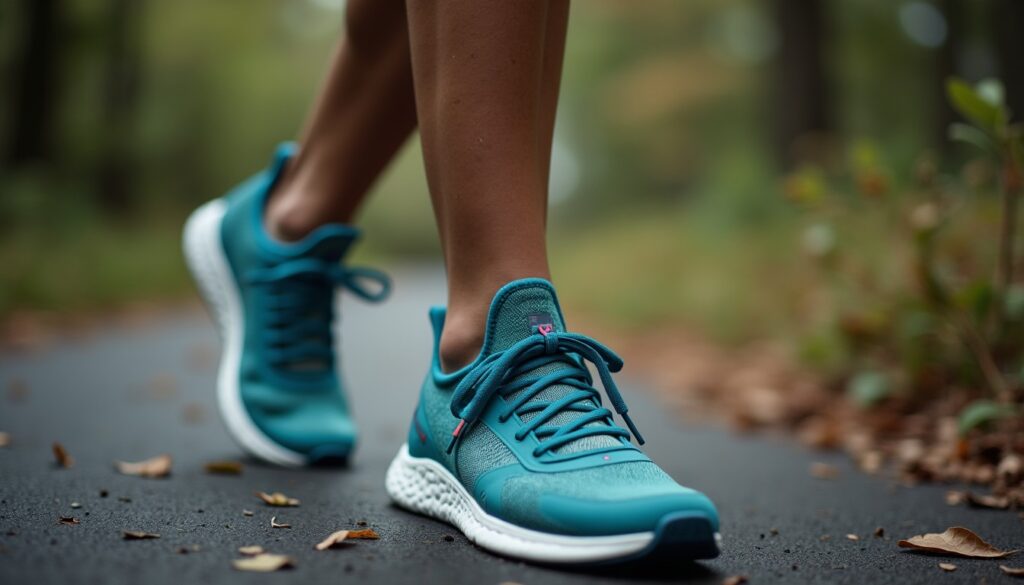
The rise of connected running shoes has profoundly transformed the runner’s experience, but it has also sparked intense debate about the reliability of the data provided. The Kiprun Kipnext Connect, launched by Decathlon in collaboration with the Kiprun brand, perfectly embodies this dynamic. Presented as a technological revolution capable of measuring in real time the wear of cushioning as well as various running metrics, it now raises fundamental questions about the trust that athletes can place in this type of innovation. Between promises of optimized performance, increased comfort, and injury protection, and frustrations linked to often contested measurements, this shoe symbolizes a delicate turning point. In an era where technology seeps into every stride, what are the real issues at play? How does data reliability impact equipment durability and athlete health? In this context, the Kiprun Kipnext Connect stands well beyond a simple product, becoming the center of a debate that redefines the codes of connected running.
- 1 The technological revolution serving running shoes: what the Kiprun Kipnext Connect offers
- 2 Data reliability in connected running: a critical issue and a fragile asset
- 3 Concrete consequences of questioned reliability: performance, health, and training strategy
- 4 User experience: between enthusiasm and skepticism around the Kiprun Kipnext Connect
- 5 Perspectives and challenges for the future of connected running shoes: between standardization and transparency
The technological revolution serving running shoes: what the Kiprun Kipnext Connect offers
The Kiprun Kipnext Connect is much more than a simple running shoe. Combining comfort, innovation, and technology, it incorporates a sophisticated sensor called SOLLO, the result of collaboration between Kiprun and the startup MOVMENTA. This innovative device measures with supposed precision the degradation of the sole’s cushioning, as well as several essential parameters related to the runner’s stride, such as cadence, ground contact time, vertical oscillation, and power. Transmitting this data via Bluetooth to a dedicated mobile application, the shoe aims to revolutionize training monitoring. Runners can thus adjust their planning, prevent injury, and better understand their performance.
Offered at a price significantly more affordable than some high-end competitors, the Kiprun Kipnext Connect democratizes access to technologies until now reserved for costly equipment. This promotes sports inclusion by allowing amateur athletes as well as regular runners to benefit from an intelligent tool to manage their progression. For example, a runner concerned about muscular durability can, thanks to real-time data, limit excessive impacts and thus prolong the usage duration of their shoes.
More concretely, the measurement of cushioning compression addresses a major issue in running: knowing precisely when a shoe has reached the end of its cushioning effectiveness. Traditionally, this assessment is based on general benchmarks or subjective feelings. Among its innovations, the Kiprun Kipnext Connect therefore ushers in an era where wear becomes not only visible but quantifiable. This opens new perspectives for injury prevention related to excessive wear, an argument often highlighted by the brand.
Yet, at the time of this advance, the shadow of reliability looms and the technology must be scrutinized rigorously, because the announced promises cannot compensate for imperfect or insufficiently validated data. This observation invites exploration of the complexity of trust in this rapidly expanding market.
Data reliability in connected running: a critical issue and a fragile asset
The connected objects sector dedicated to sport is experiencing rapid growth. From GPS watches to intelligent sensors in insoles, runners today are overwhelmed with an avalanche of information. However, this multiplication of data only translates into added value if their reliability is flawless. Yet, the credibility of measurements remains a sensitive matter, especially in a context where even a small deviation of a few percent can significantly impact a training program.
A fragile trust drives this relationship between users and manufacturers. Several points feed this distrust: first, the opacity of data processing algorithms, often protected by industrial secrecy, prevents any independent control. Then, no universal label or certification currently guarantees the precision of the integrated sensors. This lack of external validation casts doubt on the sole word of the brands.
Moreover, the difficulty for runners, even experienced ones, to verify themselves the coherence of their shoe data adds a dose of uncertainty. How to ensure that a cadence of 180 steps per minute detected by the Kiprun matches reality, without reference instruments? Faced with this opacity, the demand for transparency becomes one of the keys to restoring trust.
Finally, the lack of clear communication about tolerated margins of error adds a veil of misunderstanding and frustration. Without this framework, the user experience can quickly turn to disappointment, even rejection of the product. It is this collective vulnerability that today accelerates the debates around the Kiprun Kipnext Connect, which symbolizes these tensions on a market seeking maturity.
Concrete consequences of questioned reliability: performance, health, and training strategy
A discrepancy between the data provided by a connected shoe and reality translates into tangible risks, which are not limited to sports results. The runner’s actual performance can be affected, as well as their comfort and durability. A false metric often leads to inappropriate adjustments in intensity or session duration. For example, an overestimated cadence by 5 to 10% encourages the athlete to believe they are working within a comfort or efficiency zone, whereas they might actually be forcing their joints and muscles unnecessarily.
This situation also exposes to another major danger: a false sense of security. By relying on erroneous data, the runner may miss bodily warning signs, ignored in favor of blind trust in digital information. Over time, this can promote harmful muscular compensations or even lead to injuries that could have been avoided with more reliable monitoring.
Here is a table illustrating the recorded margins of error according to different key metrics as well as their potential impacts:
| Metric | Observed deviation (estimate) | Potential impact |
|---|---|---|
| Cadence | ± 5 to 8 % | Poor pace adjustment |
| Ground contact time | ± 10 to 15 % | Incorrect stride analysis |
| Running power | ± 8 to 12 % | Poorly assessed training load |
Beyond these direct impacts, training itself can suffer. Fluctuating data leads to a loss of benchmarks for runners relying on technology to challenge themselves intelligently. This disruption can also lead to premature abandonment of devices considered unreliable, slowing the transition toward a more connected sports approach.
This complexity is what drives some athletes to still favor classic or hybrid methods, combining sensations, human coaching, and technology, while waiting for a notable improvement in sensors.
User experience: between enthusiasm and skepticism around the Kiprun Kipnext Connect
The market reception is generally the most immediate reflection of the success or limits of an innovation. In the case of the Kiprun Kipnext Connect, opinions diverge sharply, digging a gap between different user profiles. On one side, occasional or semi-regular runners praise the value for money and ease of use. For them, these shoes bring undeniable added value in terms of comfort and minimal progress tracking. Some testimonials mention a strengthened sense of security thanks to the SOLLO sensor.
On the opposite side, more seasoned runners, often equipped with reference devices, express their frustration. They denounce recurring inaccuracies, calibration problems, a mobile app deemed unintuitive or even unstable, as well as customer service often perceived as insufficient in the face of technical anomalies. Many regret a “not fully realized” technological promise, which harms trust in the entire Kiprun brand.
The most frequent complaints include:
- Difficulty calibrating the shoe correctly according to the runner
- Instability of data depending on the terrain
- Mobile application with bugs and poor ergonomic interface
- Late or insufficient responses from customer service
- Feeling that the connected functionality is still experimental
These mixed opinions fuel not only a technical debate but also a broader dialogue on transparency and listening to users. The impact on the brand image is tangible, and Kiprun faces the challenge of restoring trust while continuing its commitment to more innovation.
Perspectives and challenges for the future of connected running shoes: between standardization and transparency
The experience of the Kiprun Kipnext Connect perfectly illustrates the challenges awaiting the market for running shoes integrating connected technologies. Currently, the absence of common reference standards hampers consumers’ ability to objectively compare products. In 2026, several players advocate for standardization of sensor measurement via international organizations such as ISO or recognized sports federations. This standardization could guarantee a reliable base, reinforced by independent certifications and a clear evaluation protocol.
Beyond standards, transparency appears as a true competitive lever. Brands willing to publish their margins of error, detail their testing methodologies, or offer accessible calibration tools could attract an audience looking primarily for clarity and trust. Such practices will strengthen relationships with users while contributing to establishing a constructive and evolving dialogue.
Several avenues can be considered to strengthen the credibility of the technology:
- Open publication of sensor validation protocols
- Transparent comparison with certified reference devices
- Regular updates of algorithms improving accuracy
- Creation of advanced user communities to gather feedback and adapt products
This framework cannot be dissociated from responsive after-sales service and honest communication about technical limits. The Kiprun Kipnext Connect, despite controversies, marks a crucial step in the quest for a reliable and high-performance connected running shoe. The future therefore relies on a combination of technical progress, scientific rigor, and respect for the user, in order to achieve technology that is useful, durable, and trustworthy.