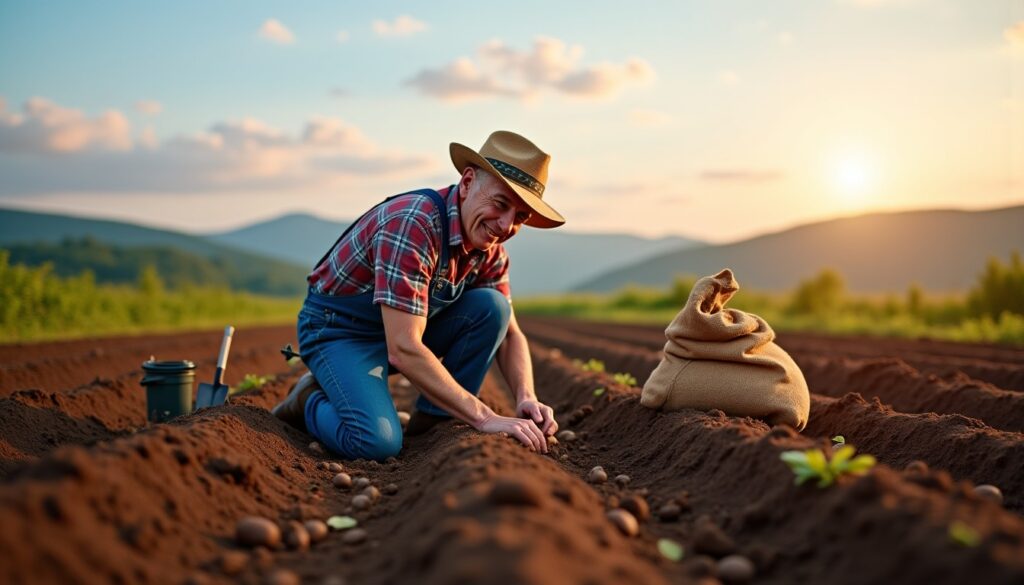
Growing potatoes in one’s vegetable garden remains a tradition appreciated by many amateur gardeners throughout France. However, despite common cultivation, it is frequent to observe disappointing harvests, well below the potential this root vegetable can offer. Indeed, throughout the chain — from choosing the varieties to the care given to the soil, through the planting methods and maintenance of the plants — each step holds vital importance. This practical guide will immerse you in the essential techniques and tips to properly select your potatoes, prepare your soil, and optimize planting to ensure a generous and tasty harvest.
Experienced gardeners know that the success of potato cultivation relies on conscious decisions and precise actions, combining science and know-how. In 2026, botanical innovations and feedback promote responsible and efficient gardening, adapted to climatic and ecological changes. Therefore, understanding the suitable varieties, preparing fertile and balanced soil, planting methodically, then maintaining the plants according to specific needs, are the pillars of any successful vegetable gardening. Immersive and comprehensive, this practical guide guides you to make the best use of your growing spaces, regardless of their size and exposure.
How to choose potato varieties to maximize your harvest
Before getting your hands in the soil, it is fundamental to master the main families of potato varieties in order to adapt your choice to your use, your climate, as well as your land conditions. The diversity of potatoes is vast, and each variety presents specific characteristics directly impacting the quality and quantity of your harvest.
The main families of potatoes according to their texture and use
To select well, you must first distinguish firm-fleshed varieties, which keep their shape when cooked, from those with a waxy texture, more suited for purees and gratins. For example, the Amandine, Charlotte, or Ratte varieties are perfect for salads and steaming because of their firmness and delicate flavor. Conversely, varieties like Bintje or Monalisa are ideal for making crispy fries or creamy purees.
Additionally, there are also early varieties, such as Roseval or Sirtema, which can be harvested precociously. Their interest lies in quick marketing and a mild flavor, ideal for starting the season. Finally, disease resistance is a criterion gaining importance, especially facing current climatic pressures. Varieties like Sarpo Mira or Désirée are known for their better tolerance to late blight and other ailments, a significant asset for sustainable gardening.
Choice according to the growing cycle: early, mid-season, or late varieties
The growing time is a key parameter often underestimated. Early varieties flourish quickly, with an average duration of 60 to 80 days, offering an advanced harvest on the calendar. For example, Sirtema and Ostara are among the best options for a vegetable garden benefiting from a short warm season.
Mid-season varieties require between 80 and 100 days, such as the popular Charlotte or the exquisite Amandine. They adapt well to most climates and are often preferred for their balance between yield and flavor. Finally, late varieties, such as Bintje or Désirée, demand 100 to 120 days of development. They allow very good storage of tubers over time, ideal for those wishing to stock their harvests for winter.
| Type of variety | Growing duration | Examples |
|---|---|---|
| Early | 60 to 80 days | Sirtema, Ostara |
| Mid-season | 80 to 100 days | Charlotte, Amandine |
| Late | 100 to 120 days | Bintje, Désirée |
The choice of variety should therefore always take into account both your seasonal planning and the local climate as well as the expected culinary use. This ensures that the production is perfectly adapted to your expectations and maximizes the potential of your plot.
Preparing the soil for planting potatoes: the keys to fertile and balanced ground
One of the fundamentals to maximize your harvest lies in the quality of the soil. The potato develops well in light, well-drained, and slightly acidic soil. Indeed, soil with a pH between 5.5 and 6.5 favors optimal tuber development while limiting disease risks.
Characteristics of soil suitable for potato cultivation
Sandy or silty soils are among the most suitable; they offer effective drainage and allow good rooting. Conversely, clayey soils, often too compact, will slow growth and can increase the risk of rot. In this case, it is crucial to improve the structure by regularly incorporating sand and compost to make the earth more friable.
As for calcareous soils, they should be avoided because this type of substrate can promote the appearance of common scab, a disease that very negatively affects the quality of tubers.
The importance of crop rotation to prevent diseases
Another often neglected aspect is crop rotation. It is not recommended to plant potatoes on the same plot more than once every four years. This practice aims to prevent the accumulation of pests and diseases specific to the solanaceae family, which includes potatoes, as well as tomatoes and peppers.
Thus, by alternating different crops, soil health is improved, nutrient reserves are preserved, and pest pressure is reduced. For example, introducing legumes or cereals alternately proves very beneficial.
Physical preparation and fertilization of the land before planting
To promote vigorous growth, the soil must be worked deeply. A plowing of about 30 to 40 cm, carried out in the autumn before planting, allows breaking up the earth, eliminating overwintering larvae, and properly incorporating organic matter.
Potatoes require a crop rich in potassium and phosphorus. To meet these needs, the incorporation of mature compost (3 to 4 kg per square meter) is essential, supplemented if necessary by wood ash, rich in natural potash. In case of poor soil, adding a balanced NPK fertilizer is recommended, while avoiding excess nitrogen which encourages dense foliage at the expense of tuber formation.
- Prepare the soil by deep plowing in autumn
- Amend with well-decomposed compost
- Add wood ash to supply potassium
- Avoid excessively rich nitrogen inputs
- Carry out crop rotation over at least 4 years
Well-prepared soil thus allows tubers to develop under optimal conditions, an essential factor for an abundant harvest.
Effective techniques for planting your potatoes and ensuring optimal growth
A successful planting is not limited to placing tubers in the soil: it requires precise know-how. Among the methods not to be overlooked is pre-sprouting, which promotes better soil grip and faster start.
Pre-sprouting, an advantage to advance the harvest
Often unknown, pre-sprouting (or vernalization) consists of germinating seed potatoes a few weeks before planting. By placing them in a bright and cool place, between 10 and 15 °C, for about 3 to 4 weeks, you obtain short and robust sprouts that will boost growth at the time of planting.
This process not only triggers a faster growth cycle but also reduces disease risks linked to weak tubers. For example, some amateur gardeners have observed that the harvest can be advanced by up to three weeks, which is a precious time gain in several regions.
Practical rules for planting: depth, spacing, and orientation
The depth of burying the tubers is decisive: they must be placed 10-15 cm deep, with sprouts facing upwards to facilitate vigorous growth. Regarding spacing, a gap of 30 to 35 cm between each tuber on a row is recommended, while the distance between rows should be between 60 and 75 cm. This arrangement allows good development of each plant and facilitates maintenance, especially earthing up.
The essential role of earthing up in root development
Earthing up, that is, bringing earth towards the base of the plants, must be done two to three times during the growth period. This practice protects tubers from light, which makes them green and unsuitable for consumption, while stimulating their formation by increasing the volume of soil around the roots.
Good spatial organization and attention to these simple actions ensure that your potatoes have the best conditions for healthy and abundant growth.
Maintaining your potato plants: watering, fertilization, and protection
Regular monitoring of the plants is essential to preserve crop health and achieve optimal yield. This involves careful water management, well-dosed fertilization, and effective protection against diseases and pests.
Appropriate watering for optimal tuber formation
Potatoes require consistent moisture, especially during tuber formation. A water deficit at this stage can cause hollow, deformed, or cracked tubers, reducing taste quality and storage life. Conversely, excess moisture often leads to late blight and rot. The goal is to keep the soil slightly moist without being waterlogged, requiring regular water supply and good soil structure promoting drainage.
Protecting your crop against diseases and pests
Late blight remains the most feared disease, capable of decimating an entire harvest in a few days. Early warning signs, such as the appearance of brown spots on leaves, must be rapidly detected. Prevention often involves Bordeaux mixture treatment during humid periods and prophylactic measures.
The Colorado potato beetle, for its part, is a pest that can severely impact growth. Prioritizing manual collection of adults and larvae as soon as detected, coupled with planting companion plants that attract their natural predators, helps significantly reduce damage.
Recognizing the ideal time to harvest your potatoes
Harvesting at the right time represents a delicate balance. If pulled too early, tuber formation is incomplete, reducing yield. The most reliable sign remains the yellowing followed by the drying of the foliage. For storage varieties, it is advised to wait until the foliage is completely dry before harvesting, which ensures a firm, resistant skin and better storage longevity.
- Maintain regular moisture without excess
- Carefully observe signs of disease
- Preventively treat against late blight after observation
- Manually collect Colorado potato beetles and their larvae
- Choose the optimal harvest time based on foliage drying