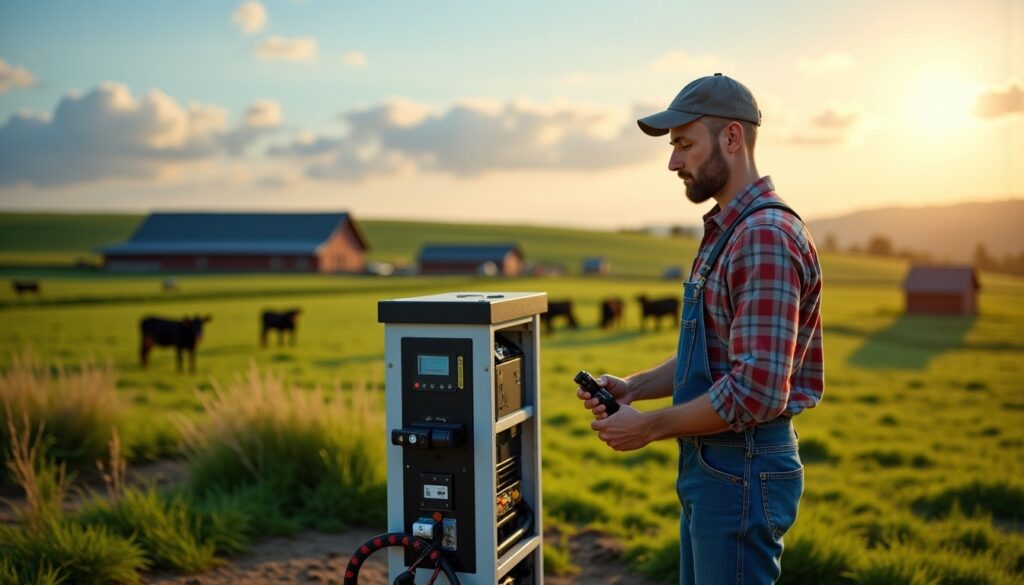
The installation of a milking robot in a dairy farm constitutes a major technological advancement, calling for careful preparation. Beyond simply taking technical and mechanical aspects into account, it is essential to adopt a comprehensive approach that integrates the electrical and geobiological dimensions of the site. Indeed, anomalies in these areas can seriously compromise the robot’s operation and negatively influence animal behavior, particularly affecting their well-being and voluntary attendance rate. These complex interactions between technology and environment are now at the heart of the concerns of innovative farmers. This article breaks down five essential checks to carry out before any automated milking system installation, to secure the setup and maximize equipment performance and animal tranquility.
Understanding the constraints related to the available electrical power, examining circuit safety, analyzing the influence of electromagnetic interference or geobiological disturbances, and considering the immediate environment of the building: these are all essential points that professionals in the sector recommend auditing rigorously. Experts in agricultural electricity and specialized geobiologists now assist farmers in this multifaceted approach, relying on precise measurements and thorough diagnostics. Their interventions help avoid many potential problems, both technically and ethically, by ensuring optimal conditions for the equipment and the animals. This awareness is increasingly imperative in the context of sustainable agriculture respectful of natural and technological balances.
- 1 Comprehensive analysis of electrical compatibility before any robotic installation
- 2 Essential checks of circuits and electrical safety devices
- 3 Assessment of risks related to electromagnetic interference
- 4 Influence of geobiology on animal behavior and health
- 5 Optimization of the physical environment around the milking robot installation
Comprehensive analysis of electrical compatibility before any robotic installation
Before installing a milking robot, it is crucial to assess the electrical compatibility of the building and its network. The equipment, depending on its specifications and options, typically requires a power between 5 and 10 kVA. However, it would be unwise to rely solely on the nominal subscribed power without verifying the actual capacity and quality of the supply delivered on site.
Available power and impact on system stability
The first point is to examine the power that the local transformer can provide, knowing that insufficiency or undersizing can cause voltage drops during peak hours or in simultaneous use of heavy machinery. These drops impair the operation of programmable controllers integrated into the milking robot, compromising the reliability and accuracy of milking cycles.
Voltage quality must also be analyzed, as fluctuations, whether dips or surges, have harmful effects on sensitive electronic components. Measurement must cover at least a 24 to 48-hour period to observe variations, the frequency of micro-outages, and the harmonic distortion rate generated notably by neighboring industrial installations.
Table of key electrical parameters to monitor
| Parameter | Acceptable value | Critical value |
|---|---|---|
| Nominal voltage | 230 V ± 5 % | Outside ±10 % |
| Total harmonic distortion (THD) | < 5 % | > 8 % |
| Micro-outages | Less than 3 per week | More than 10 per week |
If results are outside standards, installing a uninterruptible power supply (UPS) or a network conditioner becomes necessary to stabilize the supply and protect the equipment. Often forgotten in the initial budget, this device nevertheless represents an essential guarantee against unexpected stops of the milking system.
This preliminary analysis guarantees mechanical reliability, but assessing electrical safety devices remains imperative before commissioning.
Essential checks of circuits and electrical safety devices
An agricultural electrical installation must strictly comply with safety standards to protect equipment, animals, and personnel. Verifying grounding systems and differential protection is at the core of these procedures.
Grounding and impact on animal well-being
Grounding ensures the safe absorption of surges and prevents stray currents flowing through metallic structures. In a livestock environment, a grounding resistance that is too high — over 5 ohms — favors the presence of stray currents in the building. These currents, although undetectable to the naked eye, deeply affect cattle by causing constant stress felt through their hooves, which can lead to decreased attendance at the milking robot.
Differential devices adapted to the milking robot
Equipment now often includes frequency converters and switched-mode power supplies, potential sources of significant leakage currents. Using a standard differential circuit breaker (30 mA) can cause nuisance tripping. Therefore, installing type A or type B differential circuit breakers, suitable for these electronic loads, is recommended.
Additionally, type 2 surge protectors must be positioned on the main panel, and protections against surges integrated into communication and sensor circuits. These measures reduce the risk of failure while complying with the applicable electrical standards.
An intervention by a certified electrician, Consuel-certified, will be necessary to certify conformity before activating the robot. These checks ensure not only the electrical safety of the installation but also the sustainability of daily operations.
Seamless communication between the milking robot and its management IT system depends on a controlled electrical and electromagnetic environment. Electromagnetic interference (EMI) constitutes a threat not to be neglected, potentially generating unexpected malfunctions.
Identification of emission sources in the building
Several pieces of equipment are sometimes the source of disturbing electromagnetic fields: electric motors of slurry pumps, frequency converters of automatic feeding systems, power transformers nearby, or high voltage lines flying over or bordering the farm. These elements generate electric and magnetic fields that can interfere with the wireless and wired communications of the robots.
Measurement and mapping of electromagnetic fields
A specific diagnostic consists of creating a map of electric and magnetic field levels in the animal living area. Sensitive thresholds are identified: beyond 100 V/m for the electric field or 1 µT for the magnetic field, corrective action is necessary. Technical solutions such as insulation, shielding, or rerouting cables are often considered to reduce these harmful influences.
Careful control of these parameters ensures reliable data transmission from the robot, essential for proper control and real-time performance analysis. This point can make the difference between a functional installation and a series of inexplicable breakdowns.
Influence of geobiology on animal behavior and health
Beyond electrical constraints, geobiology plays a subtle but crucial role in animal well-being and, by extension, in the success of the milking robot installation. A site affected by geobiological disturbances can interfere with the natural behavior of cows.
Telluric networks and geobiologically disturbed zones
Telluric networks such as the Hartmann network, geological faults, or underground water veins are natural phenomena recognized in geobiology. These disturbances can cause in cattle a reduction in milk production, aversion to certain areas, or an increase in health disorders, especially in reproductive and mammary systems.
According to several farmer testimonials, the voluntary frequency of visits to the robot improves significantly when it is located in a geobiologically neutral or favorable zone. This observation illustrates that geobiology is not esoteric but is rooted in the scientific observation of animal behavior.
Intervention of a specialized geobiologist for a precise diagnosis
Before the final installation, a geobiological evaluation of the site is recommended to identify zones to avoid and those suitable. This diagnosis requires the expertise of a geobiologist specialized in livestock environments, able to detect invisible networks and disturbances.
This preventive approach optimizes the strategic positioning of the equipment, ensuring a peaceful environment for the animals — an indispensable condition for their acceptance of the robot, which remains an innovative element of modern milking.
Optimization of the physical environment around the milking robot installation
The final aspect of the checks concerns the immediate environment of the installation, from materials to sensory conditions. Every detail counts to create a favorable setting for both the machine and the animals.
Conductive materials and management of stray currents
Metallic structures, notably reinforced concrete slabs, can act as conductors of stray currents. These currents, circulating over long distances, are detected by the cows’ hooves and can generate psychophysiological stress.
An effective solution is to install an insulating floor covering in the milking robot waiting area. Additionally, metal water troughs, often insulated, must imperatively be connected to the building’s equipotential bonding to avoid any stray voltage.
Lighting, acoustics, and ventilation for optimal comfort
An appropriate sensory atmosphere directly influences cows’ willingness to use the robot. Lighting in the access area must be sufficient, ideally between 100 and 200 lux, without dazzling the animal. It is also essential to eliminate any noise nuisance, such as humming or clicking from faulty electrical equipment, which could generate apprehension.
Finally, effective ventilation prevents overheating, which can not only damage the robot’s electronic components but also disturb animal comfort, a factor often underestimated in preparation for installation.
- Install an insulating floor covering in the milking robot area
- Check the equipotential bonding of metallic elements, notably water troughs
- Optimize lighting to prevent dazzling
- Control noise disturbances and regulate ventilation
- Ensure consistent quality of the electrical and geobiological environment