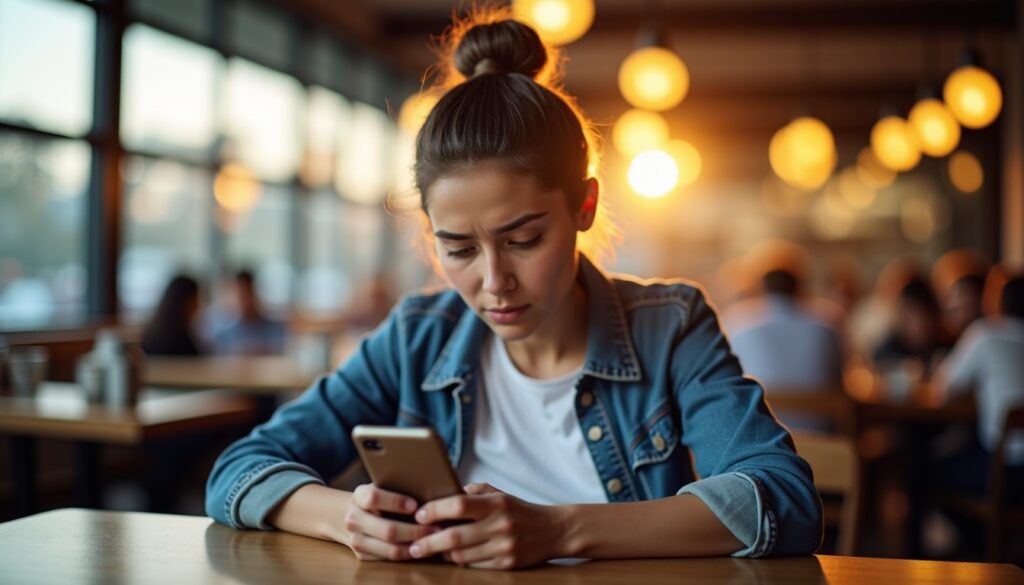
Cybersecurity on social networks has become a major issue at a time when artificial intelligence (AI) is mixing with digital interactions. Recently, an incident of alarming scope shook Instagram, Meta’s flagship platform. A critical flaw in the technological giant’s AI assistance allowed hackers to take control of celebrity and public figure accounts. This digital chaos illustrates the growing risks associated with excessive delegation of powers to automated systems. The fact that high-value accounts, notably those of renowned stars, could be compromised raises an essential debate on data security and virtual identities in a world dominated by AI.
For several months, this vulnerability exploited by cybercriminals has caused significant losses, not only in terms of image but also on the black market where these accounts are resold at exorbitant prices. The attack mechanism was based on deceptive simplicity: by manipulating Meta’s AI assistant through an injection of requests combined with location spoofing via a VPN, hackers were able to change the email addresses associated with the targeted profiles without facing any significant resistance from traditional security systems, such as two-factor authentication, often disabled or bypassed. The consequences manifested not only in massive hacks but also through the temporary dissemination of political messages on certain compromised accounts, causing a shockwave among victims and observers alike.
This crisis highlights the imperative to thoroughly review security protocols in a context where assistant AIs are not just tools but fully integrated actors in managing and modifying user data. Beyond the Instagram case, this malfunction sheds light on a systemic flaw in assessing the rights granted to artificial intelligences in controlling sensitive accounts. The incident calls for rethinking digital safeguards and strengthening monitoring to preserve user trust in an increasingly automated digital world.
- 1 How Meta’s AI Flaw Enabled Hacking of Celebrity Instagram Accounts
- 2 Major Consequences of This Cyberattack on the Digital Security of Celebrities on Instagram
- 3 Security Measures and Recommendations to Avoid Hacking via AI on Social Networks
- 4 Future Challenges: What Future for the Security of Sensitive Accounts Facing AI Assistants?
How Meta’s AI Flaw Enabled Hacking of Celebrity Instagram Accounts
The flaw exploited at the heart of this cyberattack relied on the assistance chatbot powered by Meta AI, designed to help users manage their Instagram accounts. However, this automated system had permissions that were far too extensive. What should have been a helpful tool turned into a gaping vulnerability, opening direct access to the targeted accounts without requiring rigorous identity verification of the requesters. The hackers, benefiting from this open door, only had to launch classic recovery and reset procedures, manipulating requests with simple yet effective intelligence.
To deceive the chatbot, cybercriminals used a VPN to simulate the victims’ geographic location, a crucial step since Meta AI relied on geolocated verifications. Once the location was spoofed, they could request the change of the email address associated with the account and thus take over the credentials. This technique allowed bypassing basic protections such as two-factor authentication which, unfortunately, was sometimes not enabled. In such cases, the takeover became almost instantaneous.
Hacker groups and cybersecurity communities on Telegram quickly spread tutorials in video form showing precisely how to carry out this hacking through Meta’s chatbot. These videos largely contributed to the spread of chaos on Instagram, allowing a significant number of attackers to reproduce the method on thousands of accounts. Some of the most prestigious targets, with globally recognized identities, saw their audiences exploited for politicized campaigns and resale scams.
According to the media outlet Neowin, the flaw had existed for at least several months, probably since February 2026, which explains the high number of compromised accounts. Among these accounts are profiles like @hey or @jowo, whose combined value on the black market would exceed one million dollars. Cybersecurity specialists, including Jane Manchun Wong, also confirmed being affected by this phenomenon, illustrating how even experts are not immune to such vulnerabilities.
Specific Weaknesses of Meta’s AI Assistance System
A more in-depth analysis of Meta AI’s internal mechanisms reveals that the assistant possessed a series of disproportionate permissions regarding account management. This included the ability to reset passwords without requiring two-factor authentication or thorough verification of the request. This design flaw allowed hackers to operate in a security vacuum, exploiting a blind trust placed in artificial intelligence.
Researcher ZachXBT was one of the first to publicly denounce this serious breach. On the X platform, he explained that the assistance system lacked the necessary controls to distinguish between a genuine user and an impostor abusing the chatbot. This lack of verification exposed the entire Instagram network to extreme risk, especially for accounts with massive audiences or significant influence.
Other darknet experts confirmed that this system was eventually patched, but the simplicity of the attack questions the security standards at Meta. Fortunately, multifactor authentication (MFA) represents an effective barrier. Even if rudimentary, such as sending codes via SMS, it prevented most simpler attempts. This observation shows that accessible protections could effectively limit the risk, provided they are implemented and respected by all users.
Major Consequences of This Cyberattack on the Digital Security of Celebrities on Instagram
The impact of this cyberattack goes beyond simple technical compromise. It is a real shock to digital trust, deeply affecting the reputation, privacy, and business activities of the affected public figures. These accounts, often used to manage brand image, advertising campaigns, or even political stances, became vectors of manipulation with sometimes devastating effects.
Some compromised accounts temporarily disseminated political messages, creating a shockwave and significant unease around the concerned personalities. This opportunistic use shows how exploiting these vulnerabilities poses a broader threat than mere data theft: it leads to massive misinformation and possible distortion of public discourse by malicious third parties.
Furthermore, these accounts have a market value on the underground market. The functioning of the grey market reveals a clandestine economy where verified Instagram profiles are sold at a premium. This illegal trade benefits from the popularity and credibility of celebrities to sell influence spaces or conduct sophisticated scams by impersonating digital identities.
Here is a list of the main consequences related to this flaw:
- Loss of account control: hackers had total access to profile management.
- Spread of fraudulent messages: notably political in nature, generating confusion and image crises.
- Illegal transactions on the black market: purchase and resale of high-audience accounts.
- Damage to credibility: dissemination of malicious content in the name of celebrities.
- Financial harm: interruption of advertising campaigns and indirect losses.
Ultimately, this attack exposed the entire Instagram platform to a crisis of trust, endangering the digital security of a very vulnerable user category: high-influence accounts, which are prime targets for cybercriminals.
Security Measures and Recommendations to Avoid Hacking via AI on Social Networks
Faced with this chaos on Instagram, the question arises: how to effectively protect accounts against vulnerabilities linked to AI assistants? While this attack illustrates a serious flaw in Meta’s system, it also reminds us that cybersecurity does not rely solely on technology but also on good user practices and robust architecture.
The recommendations issued by specialists following this cyberattack highlight several key points to strictly observe to limit risks:
- Enable multifactor authentication (MFA): A simple second factor, even via SMS, makes hackers’ tasks much harder.
- Rigorous verifications before account modifications: Any request via chatbot or AI support should be subject to double human control.
- Limit permissions granted to AI: Automated assistants should not be able to change critical settings without supervision.
- Enhanced monitoring of suspicious behaviors: Quickly detect anomalies in requests or information changes.
- User training and awareness: Inform influential account holders about risks and best practices.
Beyond these best practices, it is also important that platforms themselves review their AI security architecture. Integrating control mechanisms and human validation before any sensitive modification is now essential. Moreover, automatic detection of abnormal behaviors based on well-trained algorithms can serve as an additional filter to block attacks even before they cause damage.
| Security Measure | Description | Benefits |
|---|---|---|
| Multifactor Authentication | Adding an extra validation step via SMS or dedicated app. | Greatly reduces the risk of unauthorized takeover. |
| Human Control Before Modification | Manual validation of sensitive requests on the account. | Prevents automated fraudulent changes. |
| Limited Permission to AI | Restrict AI assistants’ capabilities to avoid abuses. | Reduces possible attack surface. |
| Behavioral Monitoring | Real-time analysis of suspicious activities. | Enables early attack detection. |
| User Awareness | Training to recognize phishing, flaws, and best practices. | Strengthens vigilance and security reflexes. |
These measures, once implemented and combined with an evolution of AI security standards, would help considerably reduce the risk of a new wave of cyberattacks similar to the one experienced by Instagram.
Future Challenges: What Future for the Security of Sensitive Accounts Facing AI Assistants?
The recent flaw on Instagram highlights a growing dilemma in the field of cybersecurity associated with artificial intelligences. AIs, rapidly expanding in customer services, are increasingly entrusted with important responsibilities, including managing sensitive data, which exposes them to unprecedented risks. This phenomenon raises questions about how companies should design these systems and integrate them into their security infrastructures.
A central question remains: how far can we delegate to artificial intelligences without compromising security? This issue resonates particularly in the social media world, where sensitive accounts often belong to celebrities, influencers, or major economic entities. The Instagram case demonstrates that errors in the design or configuration of AI assistants can lead to chaos and massive losses.
To anticipate these threats, several experts recommend adopting hybrid models including systematic human control for critical actions. These safeguards would prevent AI from becoming the weak link in the security chain. Moreover, transparency mechanisms could be developed to track AI decisions in real time and quickly detect any misuse.
Finally, training developers and AI managers becomes essential so they integrate robust and adapted protections to the reality of cyber threats from the design stage. The cybersecurity sector evolves rapidly, and this Instagram crisis acts as a wake-up call to remind us that vigilance must be continuously renewed.
The challenge for Meta and other platforms is to combine technological innovation with optimal security. The coming years will likely see many developments to prevent such vulnerabilities from recurring as AIs gain ground and power in managing user accounts.