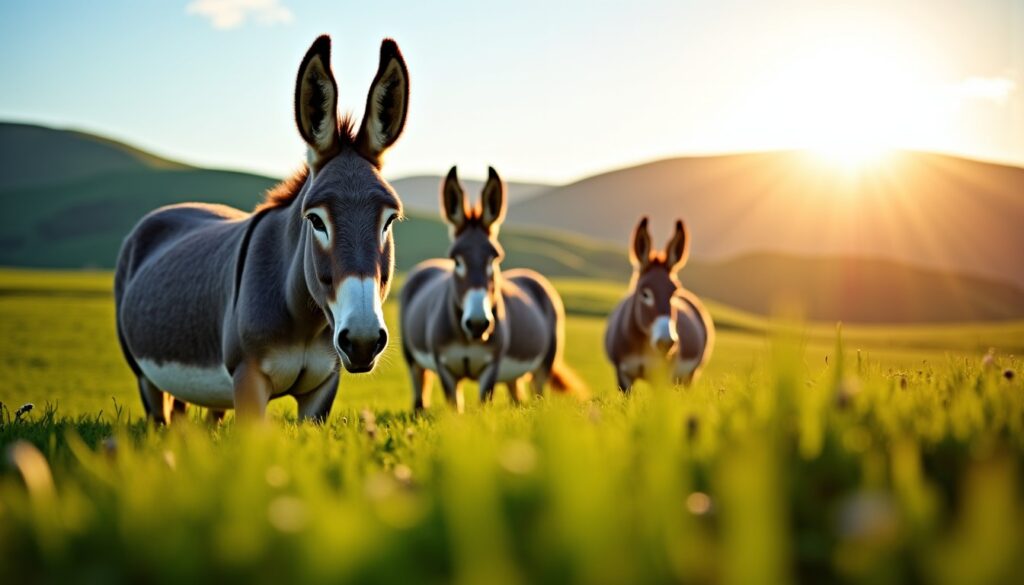
Within a setting where rural traditions and mental health concerns blend with rare authenticity, Asinerie Kuleni positions itself as a pioneering actor in animal preservation and therapeutic support. Located in Ponteilla, just minutes from Perpignan, this farm does not merely continue the breeding of Catalan donkeys, an emblematic but endangered species. It also offers a warm refuge where nature, farm animals, and animal mediation intertwine to promote relaxation, rejuvenation, and mental health. This place, a true sanctuary far from an increasingly hectic society, attracts both breeding enthusiasts and families or health professionals seeking innovative solutions for psychological well-being.
The specificity of Asinerie Kuleni lies in its ability to create a subtle balance between the respectful maintenance of a heritage breed of Catalan donkeys, known for their gentle character and high emotional intelligence, and the implementation of suitable therapeutic devices. These rely notably on animal-assisted therapy and animal mediation, disciplines increasingly recognized in the treatment of mental disorders such as depression, anxiety, or post-traumatic stress. The benevolent presence of the donkey, with its slow pace and sensitive listening ability, thus becomes a real lever for recovery and reconnection with oneself in a soothing natural environment. An analysis of a structure that has become a reference in this dual dynamic mixing breeding and care.
- 1 An exceptional natural setting to combine Catalan donkey breeding and well-being
- 2 Specificities of Catalan donkey breeding: traditions and respect for the animal
- 3 Animal mediation and benefits for mental health at Asinerie Kuleni
- 4 Organizing a visit to Asinerie Kuleni: practical advice for an optimal experience
An exceptional natural setting to combine Catalan donkey breeding and well-being
Asinerie Kuleni benefits from a geographical location particularly conducive to its two complementary missions. Situated only 5 minutes from Perpignan and 15 minutes from the Mediterranean shores, it offers a secluded natural environment guaranteeing visitors direct contact with nature, far from urban noise and frenetic pace. This context is fundamental, as relaxation and disconnection are at the heart of any mental health approach. The dense vegetation, meadows with wild grasses, shaded areas crossed by donkeys and hiking trails contribute to creating a serene and revitalizing atmosphere.
This type of environment allows a complete sensory immersion, essential to the success of animal mediation activities. For example, mindfulness workshops are organized outdoors, where the simplicity of the setting allows focusing on the present moment. Simply walking alongside a calm and patient Catalan donkey naturally slows the breathing rate and soothes nervous tensions. Several testimonies collected from participants reveal a noticeable improvement in their anxious state from the first sessions.
It is interesting to note that respect for nature and sustainable site management play a key role in Asinerie Kuleni’s overall approach. The choice of organic or near-natural farming practices to maintain enclosures and feed animals reinforces ecological harmony. Thus, this farm is not limited to conventional breeding: it reflects a deeply integrated vision of well-being, connecting care for the land, donkeys, and humans. These different levels of interaction promote holistic healing, involving both body and mind.
Specificities of Catalan donkey breeding: traditions and respect for the animal
The Catalan donkeys, or ase català, represent an ancient and emblematic breed of the Pyrenees. Longtime indispensable companions of farmers, their numbers drastically decreased with the agricultural mechanization of the 20th century. Today, they are recognized as an endangered living heritage, which gives their preservation major cultural and ecological value. Asinerie Kuleni’s mission is thus part of the safeguarding of a rustic species with a gentle temperament, adapted to animal mediation thanks to its behavioral particularities.
Catalan donkeys measure between 1.40 m and 1.60 m at the withers. Their coat is gray, adorned with light markings on the belly and muzzle, indisputable distinctive symbols. Their longevity can reach thirty-five years, provided they benefit from respectful breeding. The calm and endearing nature of this breed makes it particularly suited for zootherapy activities, where physical and emotional contact plays a fundamental role.
At Kuleni, breeding methods reflect this commitment to quality and animal welfare. Unlike standard intensive farms, where each donkey has less than 50 m² and is fed industrial pellets, the local philosophy favors semi-freedom and natural feeding. Each individual lives in extensive landscaped areas, with a surface area greater than 500 m², with local hay and natural pasture as the main diet. This way of life promotes not only the physical health of the animals but also their sociability and harmonious interaction with humans.
| Criterion | Standard intensive breeding | Kuleni breeding |
|---|---|---|
| Space per animal | Less than 50 m² | More than 500 m² |
| Feeding | Industrial pellets | Local hay and natural pasture |
| Daily human contact | Minimal | Systematic and gentle |
These breeding conditions prioritize serenity and mutual trust. They enable donkeys to acquire a precious aptitude for therapeutic mediation: attentive listening to their interlocutors and measured, never impulsive reactions. These animals are thus natural facilitators of emotional dialogue, helping to soothe sometimes very severe disorders.
An emblematic breed to preserve for regional biodiversity
The Catalan donkey is much more than a rustic companion; it is a living showcase of traditional Catalan and Pyrenean agricultural practices. Its disappearance affects not only the regional heritage but also biodiversity, as its way of life in a natural environment contributes to maintaining rural landscapes by promoting seed dispersal and ecological management of pastures. The maintenance of these animals therefore supports a dynamic of essential ecological balance, especially in the context of climate change.
Animal mediation and benefits for mental health at Asinerie Kuleni
Animal mediation, a rapidly growing discipline, is recognized for its multiple virtues in therapeutic support. Although dogs and horses often dominate the scene, the Catalan donkey brings major specificities. Its slowness, great sensitivity to human emotions, and total absence of judgment make it a particular mediator. This quality is precious for people suffering psychologically, anxious, depressive, or in situations of school dropout, who regularly attend Asinerie Kuleni.
Donkeys differentiate themselves by unique behaviors: they do not flee in the face of another’s fear or stress, as a horse might. This characteristic requires the person to adjust themselves, often by slowing their own pace, which can be a beneficial grounding exercise. This slowdown creates a space where mental calm is progressively built.
Then, the donkeys’ fine attention to human gestures and postures stimulates non-verbal communication, often altered in people with psychological distress. Physical contact with the donkey’s soft coat also produces a documented calming effect. These mechanisms contribute to deep work on emotional regulation.
- Grooming and care workshops to learn how to create a bond of trust
- Slow-paced pair walks promoting mindfulness
- Supervised animal mediation sessions with specialized psychotherapists
- Group workshops strengthening the sense of belonging and social bonds
Results observed by therapists and families often exceed initial expectations. Many people report better anxiety management, improved self-confidence, and a significant reduction of depressive symptoms. The experience at Asinerie Kuleni wonderfully illustrates how simple contact with a farm animal, in a nature-filled environment, can transform fragile life paths.
Organizing a visit to Asinerie Kuleni: practical advice for an optimal experience
Visiting Asinerie Kuleni, whether for a therapeutic workshop or a free discovery of Catalan donkey breeding, requires some organization to get the most benefits. Reservation is essential for therapeutic sessions and recommended for regular visits, especially during tourist seasons. The number of participants is deliberately limited to maintain the quality of reception and preserve the peaceful atmosphere essential to the well-being of donkeys and visitors.
Here are some tips to prepare your visit:
- Prefer comfortable clothes suitable for walking outdoors
- Wear closed shoes for safety on trails and in enclosures
- Avoid perfumes and scented products that may disturb the animals
- Respect the precise schedules of workshops to not disturb animal habits
- Plan at least a half-day to fully enjoy the activities offered
In terms of accessibility, the site is continuously improved to accommodate people with reduced mobility, although some natural areas remain partially difficult to access. Rates are adjusted according to profiles, with specific discounts for associative or medico-social groups.
This balance between respect for the animal, serenity of the natural setting, and rigor in human support makes Asinerie Kuleni a unique model, both for the preservation of animal heritage and for the promotion of mental health through nature and animals.