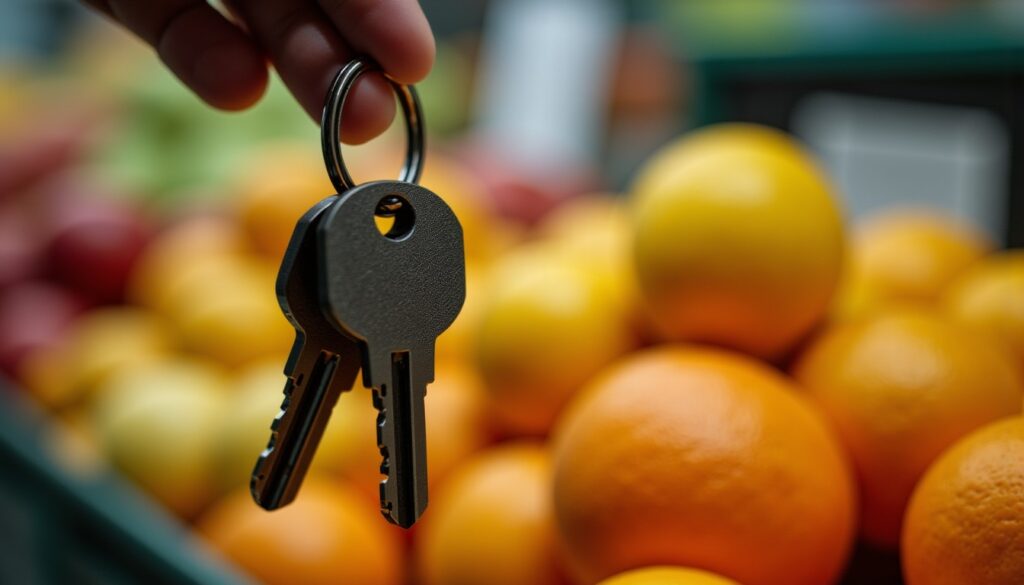
At the heart of supermarket fruit aisles, abundance and diversity can quickly become a source of hesitation. The stalls are overflowing with shiny, colorful products, yet so numerous that choosing a truly ripe and tasty fruit can be a challenge. For some time now, a simple trick has been circulating among savvy consumers: using a keyring, an everyday object always at hand, to quickly assess the quality of a fruit by comparing its weight. Simple and accessible, this method proves surprisingly effective, reinforcing the instinctive selection based on touch, sight, and smell. But beyond this weight reference, other sensory criteria complement this initial sorting and help avoid the traps of fruits that are too good to be true.
In a context where consumers are increasingly concerned about fresh products, this technique highlights a gesture that is both playful and practical to save time and ensure a smart purchase. By relying on this small metal accessory, the concept of freshness becomes tangible, and the choice of fruits transforms from a sometimes random act into a genuine perceptive know-how, accessible to everyone.
- 1 The keyring, a surprising tool to assess the weight and quality of fruits
- 2 Essential visual and tactile criteria to refine your fresh fruit selection
- 3 Using smell to detect freshness and ripeness among fruits in the aisle
- 4 Perfectly adapting this technique according to fruit families to succeed in all your selections
- 5 A simple and universal gesture to avoid waste and guarantee gustatory pleasure
The keyring, a surprising tool to assess the weight and quality of fruits
The principle seems simple, yet it is based on a precise and daily observation: a keyring weighs on average between 150 and 250 grams, depending on its composition. This standard weight can serve as an intuitive reference to compare the fruits offered in the fruit aisle. When you hold a fruit in your hand, you can mentally compare its weight sensation to what you know of the keyring. If it feels abnormally light, despite a large size, there is a good chance it lacks freshness or juice, two revealing signs of lower quality.
Thus, a heavy fruit is often synonymous with juiciness and freshness. For example, in the case of citrus fruits (oranges, lemons, grapefruits), a substantial weight generally indicates a high water content, which ensures a sweet taste and better preservation. This weight approximation trick is also very effective for melons and watermelons, where density is a key criterion, but also for apples, pears, mangoes, or avocados.
Imagine a scene in the supermarket: a customer hesitates between several apples of the same size. By weighing them one after the other in her hand and remembering the weight of her keyring, she immediately identifies the densest one. Without equipping her basket with a bulky scale, she thus has a reliable and instant indicator to avoid fruits that are too light, often hollow or dried out in their core.
This intuitive method naturally combines with other observations, because weight does not tell the whole story. It constitutes an effective first filter, a simple sensory marker that appeals to touch, allowing for better mastery of purchases with confidence.
Essential visual and tactile criteria to refine your fresh fruit selection
If weight compared to the keyring is an excellent indicator, it is advisable to combine it with a careful examination by eyes and hands. Indeed, the quality of a fruit also depends on several visual and tactile parameters that it is important to learn to read in order not to be mistaken. These include notably:
- The appearance of the skin: it should be smooth, without major spots or soft areas that would betray the beginning of spoilage.
- The color: uniform, bright, and consistent with the expected ripeness. For example, an orange must display a deep orange without greenish tint, while a ripe strawberry stands out by an intense red up to the stem.
- Firmness: which varies depending on the fruit. An apple should remain firm under finger pressure, whereas a peach should yield slightly to testify to its ripeness.
- The absence of serious imperfections: small scratches are normal, but bruises, deep cracks, or discolored areas should be avoided.
These visual and tactile criteria work in complement to weight. A fruit that is too light but has perfect skin remains suspicious, just as a heavy fruit presenting major defects may not be pleasant to eat.
To better visualize, here is a table summarizing these criteria:
| Type of fruit | Key visual criteria | Tactile vigilance points |
|---|---|---|
| Citrus fruits (orange, lemon) | Bright and homogeneous color, smooth skin | High weight, firm but slightly soft skin |
| Apples, pears | Shiny skin, no soft spots | Clear firmness, no hollows to the touch |
| Stone fruits (peach, apricot) | Warm color, pleasant aroma | Light softness when pressed |
| Melons, watermelons | Skin without cracks, possible cracking around the stem | High density, heavy sensation |
In addition to this, the importance of smell is often neglected in supermarkets but is crucial to judge the ripeness of a fruit.
Using smell to detect freshness and ripeness among fruits in the aisle
Smelling a fruit before placing it in your basket is a habit still too little widespread. Yet, this gesture offers precious information. A ripe fruit emits a sweet, soft aroma typical of its species, reassuring about its taste and freshness condition.
To proceed correctly, you must bring the fruit close to your nose and inhale near the stem or base, areas where aromas accumulate. For example, a melting peach releases a rich and sweet scent, whereas the absence of smell or a fresh and neutral odor often indicates premature harvesting. The latter will not ripen sufficiently after purchase, which will disappoint palates awaiting sweetness.
Moreover, a fermented, acidic, or unpleasant smell is an alarming indicator of degradation, signifying that the fruit is too old or has been poorly stored. This olfactory signal thus becomes a choice marker to discard less fresh fruits and avoid unpleasant surprises at home.
This olfactory assessment enriches the initial judgment obtained by the estimated weight of the keyring and the visual examination. Together, these three senses offer a complete and reassuring method for successful supermarket shopping.
Perfectly adapting this technique according to fruit families to succeed in all your selections
In 2026, supermarket fruit aisles offer an impressive variety, requiring adaptation of criteria according to the specific nature of each fruit. A single technique is not enough; one must adjust their approach to meet their particular sensory demands.
For pome fruits like apples and pears, firmness and uniform color are priorities. An ideal apple remains crunchy and presents a bright hue. These fruits must not yield to pressure, a sign of overripeness or prolonged storage.
Stone fruits such as peaches, apricots, or plums are much more sensitive to smell and soft touch. A sweet aroma and slight compressibility under the finger are the best indicators of ripeness. Unlike apples, these fruits need to yield slightly to guarantee tender and tasty flesh.
For citrus fruits, weight is an absolute priority. A heavy lemon ensures abundant juice and intense flavor, whereas a fruit that is too light feels dry. The skin must also remain intact, without soft spots or black stains.
Tropical fruits like mangoes or pineapples require combined analysis: rich and sometimes nuanced color, fragrant smell, and moderate softness. The ripening of these fruits is very variable but a pineapple ready to eat is also recognized by the ease with which one can pull off a central leaf.
By creating a repeated and specific sensory relationship with each type of fruit, everyone can refine their instinct and transform every supermarket visit into a pleasant and error-free selection moment.
A simple and universal gesture to avoid waste and guarantee gustatory pleasure
Beyond the immediate comfort offered by this original method based on a simple keyring, its impact on food consumption is far from negligible. In 2026, facing ecological and economic issues linked to waste, learning to choose ripe and tasty fruits becomes a priority for responsible consumers.
Using this familiar little object as a weight reference helps to buy only fruits that will provide real pleasure when tasting. It limits returns of unused or discarded products due to poor quality. This gesture thus contributes to reducing food waste while optimizing your budget.
Imagine a family carefully selecting their fruits thanks to these tips. They avoid recurring disappointments and can fully value their purchases, integrating a know-how that benefits everyone. This sensory tutorial, combining weight, sight, and smell, also encourages a more conscious consumption.
Here is a recap list of good practices to adopt in the fruit aisle:
- Touch and mentally weigh the fruits by referring to the weight of a keyring.
- Examine the skin: favor smooth, shiny, without major imperfections.
- Check the color: a bright and uniform hue is often a sign of freshness.
- Bring the fruit close to your nose to smell a fresh and sweet aroma.
- Adapt your criteria according to the type of fruit (pome, stone, citrus, exotic).
- Avoid fruits presenting fermented odors or suspicious soft textures.
By integrating these simple sensory markers, accessible to all, buying fruits at the supermarket becomes a renewed moment of pleasure, a guarantee of quality, and an intelligent way to shop. The keyring, humble daily companion, thus transforms into an unexpected ally to see through appearances and savor the best of nature.