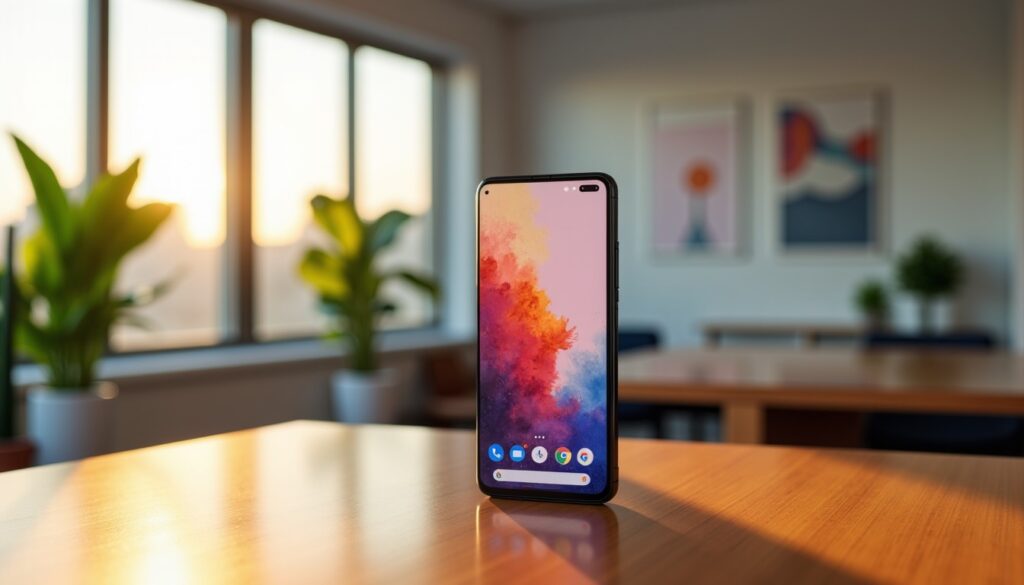
While fans of the Google brand eagerly await the next chapter in the Pixel series, the first revelations about the Google Pixel 11 are already capturing attention. This new smartphone is expected to embody a significant advancement in terms of technology, display, performance, and photographic capabilities. Four distinct versions are in preparation, each aiming to appeal to different market segments while adopting ambitious technical features. The classic Pixel 11, the Pixel 11 Pro, the Pixel 11 Pro XL, and the Pixel 11 Pro Fold promise to mark a turning point in the Android universe, blending hardware innovations and optimized user experiences. This in-depth analysis offers you a comprehensive overview of the possible novelties and improvements, from Google’s sharp choices regarding the processor to the potential redesign of screens and photographic systems.
What we know today is based on a leak revealed by the leaker Mystic Leaks, who details complete and credible technical specifications for the entire 2026 range. The Pixel 11 notably bets on the new generation of the Tensor G6 chip, manufactured with ultra-modern 2 nm lithography, offering recalibrated power to meet the demands of premium smartphones. Ambition is also strong in the OLED display field, with dynamic refresh rates and impressive brightness peaks. Not to mention photography, a major focus for Google, with the introduction of next-generation sensors. All these elements make the Pixel 11 a serious alternative to high-end phone leaders, while highlighting the progressive evolution of Android toward more integrated intelligence and energy efficiency.
- 1 The Google Pixel 11: A diversified range with four distinct models and their major technical specifications
- 2 Google Pixel 11 and the renewed power of the Tensor G6 chip: a 2 nm technological leap
- 3 Dynamic and bright OLED displays for an unparalleled visual experience on the Google Pixel 11
- 4 Photographic innovations in the Google Pixel 11 range: sensors, modules, and AI in the service of creativity
- 5 Impact of Google Pixel 11 technical specifications on performance and battery life
- 6 Google Pixel 11 Pro Fold: the foldable smartphone revolution between technological innovation and constraints
- 7 Android features integrated into the Google Pixel 11: when artificial intelligence and security make the perfect pair
The Google Pixel 11: A diversified range with four distinct models and their major technical specifications
Google is opting for a bold strategy by launching not one, but four models in the Pixel 11 range. This diversification will address both classic users and technology enthusiasts, with options going up to the innovative foldable. The enthusiastic geek will thus find satisfaction among these offerings. Here is a detailed overview of the different versions and their configurations according to the most recent leaks:
- Pixel 11 standard: a compact smartphone faithful to the Pixel philosophy;
- Pixel 11 Pro: enriched in features, especially in photography and RAM;
- Pixel 11 Pro XL: large-screen version for users favoring size and display quality;
- Pixel 11 Pro Fold: the ambitious foldable model, combining innovation and power.
These models are equipped with advanced technologies and all benefit from the same power base, reflected by the integration of the new Tensor G6 chip, spectacularly etched at 2 nanometers. This fine lithography offers gains in performance and energy consumption. Additionally, each phone integrates a Titan M3 security chip, strengthening the protection of personal data and transactions.
Let’s examine a concise comparative table highlighting the main technical characteristics of these four smartphones:
| Model | Display | Resolution | RAM | Battery (mAh) | Main Camera | Cooling / Security |
|---|---|---|---|---|---|---|
| Pixel 11 | 6.3″ OLED | 1080 x 2424 px | 8 or 12 GB | 4840 | 50 MP | Titan M3 |
| Pixel 11 Pro | 6.3″ OLED | 1280 x 2856 px | 12 or 16 GB | 4707 | Enhanced sensors | Titan M3 |
| Pixel 11 Pro XL | 6.8″ OLED | 1344 x 2992 px | 12 or 16 GB | 5000 | Enhanced sensors | Titan M3 |
| Pixel 11 Pro Fold | 6.7″ foldable OLED & 6.2″ external screen | 2076 x 2160 px & 1080 x 2342 px | 12 or 16 GB | 4658 | New camera module | Titan M3 |
Beyond the technical sheet, this segmentation reflects Google’s desire to broaden its user base while maintaining a high level of innovation. These four models should thus allow a suitable choice for a multitude of profiles, ranging from the average user concerned with a smooth experience to the demanding user seeking raw power and advanced features.
Google Pixel 11 and the renewed power of the Tensor G6 chip: a 2 nm technological leap
At the heart of the Google Pixel 11 range beats a chip that makes a difference: the Tensor G6. Manufactured using the 2-nanometer lithography technique by specialist TSMC, this chip represents a significant leap forward compared to the previous generation. This ultra-fine process not only improves raw performance but also optimizes energy consumption, a miraculous balance to meet the current expectations of mobile users.
The Tensor G6 chip features a recently revised architecture. Unlike previous versions with eight cores, it this time opts for seven specific cores, optimized as follows:
- 1 ARM C1-Ultra core at 4.11 GHz: the powerful main core for intensive tasks;
- 4 ARM C1-Pro cores at 3.38 GHz: to balance performance and responsiveness in multitasking use;
- 2 ARM C1-Pro cores at 2.65 GHz: dedicated to less demanding tasks to preserve battery life.
At first glance, the loss of a core may be surprising. However, this configuration is offset by a significant increase in clock speeds, far surpassing the previous Tensor G5, which had one core at 3.78 GHz, five cores at 3.05 GHz, and two at 2.25 GHz. This rise in frequency tends to offer a smoother user experience, with faster app launches, better management of integrated artificial intelligences, and improved multitasking.
Another fundamental aspect of this chip is the integration of a new unit dedicated to artificial intelligence (AI) tasks, strengthening the use of Android services based on machine learning, such as voice recognition, computational photography, and personalized recommendations. Furthermore, an improved image signal processor, called GXP, supports these features by enhancing image quality and the speed of photographic processing.
Additionally, the chip includes a PowerVR series C CXTP-48-1536 GPU. Although this graphics architecture dates back to 2021, it remains capable of easily managing current demands for video games and intensive applications. Finally, 5G connectivity is ensured by a MediaTek M90 modem, guaranteeing fast speeds and low latency.
It will be essential in upcoming tests to verify whether this strategy of reducing cores in favor of a higher frequency adequately meets market expectations, both from the standpoint of raw performance and thermal management and battery life. This technological bet could revive Google’s competitiveness in the highly competitive high-end Android smartphone market.
Dynamic and bright OLED displays for an unparalleled visual experience on the Google Pixel 11
The display constitutes one of the major pillars of the Google Pixel 11 range. Each model is distinguished by its OLED screen, emphasizing image quality, smoothness, and maximum brightness. This special attention places the Pixel 11 in the category of smartphones capable of competing with the best displays on the market, perfect for multimedia content and gaming.
The base Pixel 11 offers a compact 6.3-inch screen displaying a resolution of 1080 x 2424 pixels, adapted for comfortable one-handed use. The variable refresh rate ranges from 60 Hz to 120 Hz, ensuring smooth playback of animations and scrolling while saving energy when the content is static.
Regarding luminance, the standard Pixel 11 reaches an impressive 2,000 nits in constant brightness, with peaks that can reach 3,100 nits in intense conditions such as direct sunlight or for HDR content. These figures illustrate a remarkable ability to provide optimal visibility in almost all lighting situations.
For the Pro models, Google pushes this visual excellence even further. These versions feature a 6.3-inch OLED display for the Pro and 6.8 inches for the Pro XL. They display higher resolutions (1280 x 2856 px and 1344 x 2992 px respectively), combined with refresh rates that can drop to 1 Hz in some power-saving modes and rise up to 120 Hz during intense activity.
The brightness of the Pro screens reaches up to 2,450 nits in regular use and can climb to 3,600 nits at peak, offering an ultra-immersive experience even in direct light. These performances ensure not only excellent color rendering and perfect readability but also remarkable smoothness that meets the demands of the most demanding users.
Finally, the foldable Pro Fold variant features a dual screen: a large wider internal screen and a thinner external screen, adapted to foldable uses while maintaining excellent image quality. The brightness figures – 2,050 nits in constant brightness and 3,500 nits peak for the foldable screen, 2,450 nits and 3,600 nits for the external screen – underline the specific adaptation effort for this innovative format.
This technological advancement reflects Google’s will to offer a display in line with the latest trends, both energy-efficient and of exceptional visual quality, essential for making the most of the Android platform and its multimedia features.
Photographic innovations in the Google Pixel 11 range: sensors, modules, and AI in the service of creativity
Photography remains an essential strategic focus for the Google Pixel 11, which has built its reputation thanks to the exceptional quality of its integrated camera. For 2026, the American brand bets on a renewal and increased sophistication of camera modules, combined with artificial intelligence at the heart of its Android platform.
The standard model will feature a new main sensor estimated at 50 megapixels, a marked shift that promises more detailed shots with better light capture, notably in unfavorable conditions. This sensor will be associated with software optimizations leveraging the new tensor processing unit dedicated to AI for real-time photo enhancement, noise reduction, and unprecedented creative possibilities.
The Pro models raise the standards further with reinvented main sensors and telephoto lenses, offering better optical zoom, enhanced low-light performance, and optimized HDR rendering. This range also benefits from increased RAM, up to 16 GB, facilitating faster processing and simultaneous management of several professional photo applications.
The Pixel 11 Pro Fold itself integrates a brand new camera module specially designed to exploit the foldable screen, bringing a new approach in terms of framing and interactions, while being powered by the same Tensor G6 artificial intelligence. The battery capacity reduction observed on this model does not call into question Google’s commitment to a smartphone performing all day in photography.
Thanks to this synergy between hardware and software, the Pixel 11 should continue to attract users who are mobile photography enthusiasts, from simple family photos to more advanced uses requiring precision and versatility. These innovations also allow it to remain competitive in advanced feature offerings against fierce competition.
Impact of Google Pixel 11 technical specifications on performance and battery life
It is essential to evaluate the balance between power and battery life to judge the overall quality of a smartphone. The Google Pixel 11, with its four variants, displays clear but risky choices in this equation. The adoption of the 2 nm etched Tensor G6 chip is a major asset for performance, while adjustments to battery sizes could influence usage duration between charges.
Comparing battery capacities to the previous Pixel 10, a slight decrease is noticeable:
- The standard Pixel 11 announces a 4,840 mAh battery, compared to 4,970 mAh on its predecessor;
- The Pixel 11 Pro goes from 4,870 mAh to 4,707 mAh;
- The Pixel 11 Pro XL performs with 5,000 mAh, a drop compared to the 5,200 mAh of the Pixel 10 Pro XL;
- The Pixel 11 Pro Fold makes a similar jump, dropping to 4,658 mAh compared to 5,015 mAh previously.
This decrease may seem worrisome, especially since smartphones are gaining in power and energy-hungry features, notably due to brighter screens and more powerful chips. However, thanks to the lithography process’s fineness and strengthened Android software optimization management, this impact could be limited. Google also bets on an adaptable refresh rate that lowers frequency when less demanding activity is detected, helping preserve battery life.
The optimized performance of the Tensor G6 chip, with its high-frequency cores and PowerVR GPU, enhances usage smoothness and the rapid processing of multimedia and AI applications. Thus, the smartphone should provide a smooth user experience while maintaining acceptable battery life for a full day or more.
A simple example illustrates this compromise: a user shifting from intensive gaming sessions to reading or messaging activities will automatically benefit from an adjustment of the refresh rate and processor frequency, maximizing battery life.
This clever mix of power and endurance demonstrates Google’s attention to perfectly mastering the Android experience, with adaptive innovations that make a difference in a highly competitive universe.
Google Pixel 11 Pro Fold: the foldable smartphone revolution between technological innovation and constraints
The Pixel 11 Pro Fold embodies Google’s boldest ambition in its new range, combining the power of the Pro series with the foldable format. This model fits into the wave of devices seeking to redefine the interaction between user and smartphone through flexible screens, offering more display area without compromising portability.
This model is clearly differentiated by its dual screen:
- A 6.7-inch foldable internal screen with an impressive resolution of 2076 x 2160 pixels and brightness reaching 2,050 nits in stable mode, peaking at 3,500 nits for bright scenes;
- A 6.2-inch external screen, thinner with a resolution of 1080 x 2342 pixels, displaying up to 2,450 nits of constant brightness and 3,600 nits at peak.
These dimensions have slightly evolved compared to the previous generation. The internal screen has become slightly wider while the external screen has become slimmer with more discreet borders, enhancing ergonomics and design. However, this sophistication comes at a battery cost, as mentioned earlier, with a capacity reduction of more than 350 mAh compared to the previous version.
A new camera module also appears, adapted to the foldable structure, fully exploiting the screens to offer unprecedented ease of use, especially for taking photos and multimedia interactions.
In terms of security and interface, Google has decided to remove the thermometer present on the Pro models, replacing it with an RGB LED matrix called Pixel Glow, which promises more personalized and dynamic lighting effects. However, the Toscana project, which aimed to integrate infrared facial recognition comparable to Face ID, will not be available for this generation, postponing this innovation to a future model.
This model perfectly illustrates the challenges of the foldable smartphone market: how to combine brute power, good battery life, high display quality, and tactile innovation while overcoming energy and technical constraints. Google seems determined to make the Pixel 11 Pro Fold a major player in this category, combining technological novelties and improved ergonomics.
Android features integrated into the Google Pixel 11: when artificial intelligence and security make the perfect pair
Hardware power alone is not enough to distinguish a premium smartphone. In the case of the Google Pixel 11, the Android system plays a major role in optimizing the user experience thanks to its increasingly advanced artificial intelligence and security features.
Strongly backed by its new Tensor G6 chip, Android 16 is expected to introduce unprecedented optimizations to fully exploit the high capabilities of the processor. These advances notably include:
- Improvements in voice recognition, with finer understanding of complex commands and reduced response time;
- Enhanced computational photography, integrating AI treatments enabling instant photo correction, advanced HDR management, and renewed artistic effects;
- Better predictive app management to reduce energy consumption and increase responsiveness depending on usage;
- Advanced security features, notably thanks to the Titan M3 chip protecting sensitive data, banking transactions, and biometric data.
Furthermore, the RGB LED named Pixel Glow replaces the old thermometer on the Pro models, offering visual customization that can be used to notify the user or enhance the user experience with dynamic light effects depending on events.
Overall, the clever marriage between hardware and software technology positions the Google Pixel 11 as a showcase of innovation for the Android platform, with a promise of smoother, more secure, and personalized interaction, anchoring the smartphone in the expectations of modern consumers.