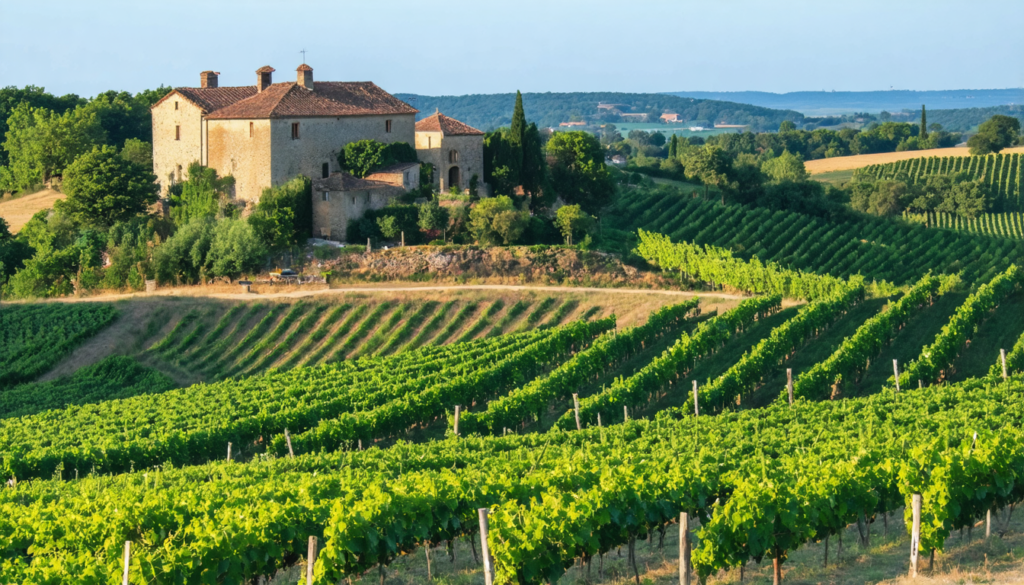
In the heart of Gers, a department rich in traditions and landscapes with Gascon accents, lies a unique village, recognized as the smallest fortified village in France. Larressingle, with its modest area of 1.65 hectares, imposes a rare historical presence that attracts more than 100,000 visitors every year eager for heritage and authenticity. This medieval treasure, nestled on a rocky hill, offers a unique panorama of the Gers hills and plunges anyone who visits it into a timeless atmosphere, between intact walls and cobbled streets. Listed among the Most Beautiful Villages of France, Larressingle exerts its discreet charm while offering a true journey into French history, where every stone evokes centuries past.
In this medieval enclave, tourism is rooted in a fierce commitment to preservation, where authenticity finely coexists with the needs of the contemporary traveler. Its intact ramparts, its majestic episcopal castle, and its Romanesque church of rare finesse testify to a distinctly lively feudal past, giving visitors a striking glimpse of French culture in the Middle Ages. Even architecture enthusiasts are not unmoved by this little gem, as its state of preservation often surpasses that of larger citadels. It is a place where the whisper of history blends with the gentle surrounding landscapes, offering a perfect harmony between built heritage and nature.
Larressingle, the smallest fortified village in Gers and its rich medieval heritage
With less than 200 inhabitants and a rampart perimeter of only 270 meters, Larressingle is a unique example of small-scale medieval defensive architecture. It is these reduced dimensions that give it its singular charm: here, visitors can walk through the entire fortified village in a few minutes, yet every square meter reveals a fascinating story. Founded in the 13th century under the impulse of Bishop Géraud de Monlezun, Larressingle was designed to protect its occupants while asserting the spiritual and temporal power of the bishops of Condom, the site’s owners. This dual function, military and residential, is reflected in the robustness of its ramparts and the finesse of its episcopal castle.
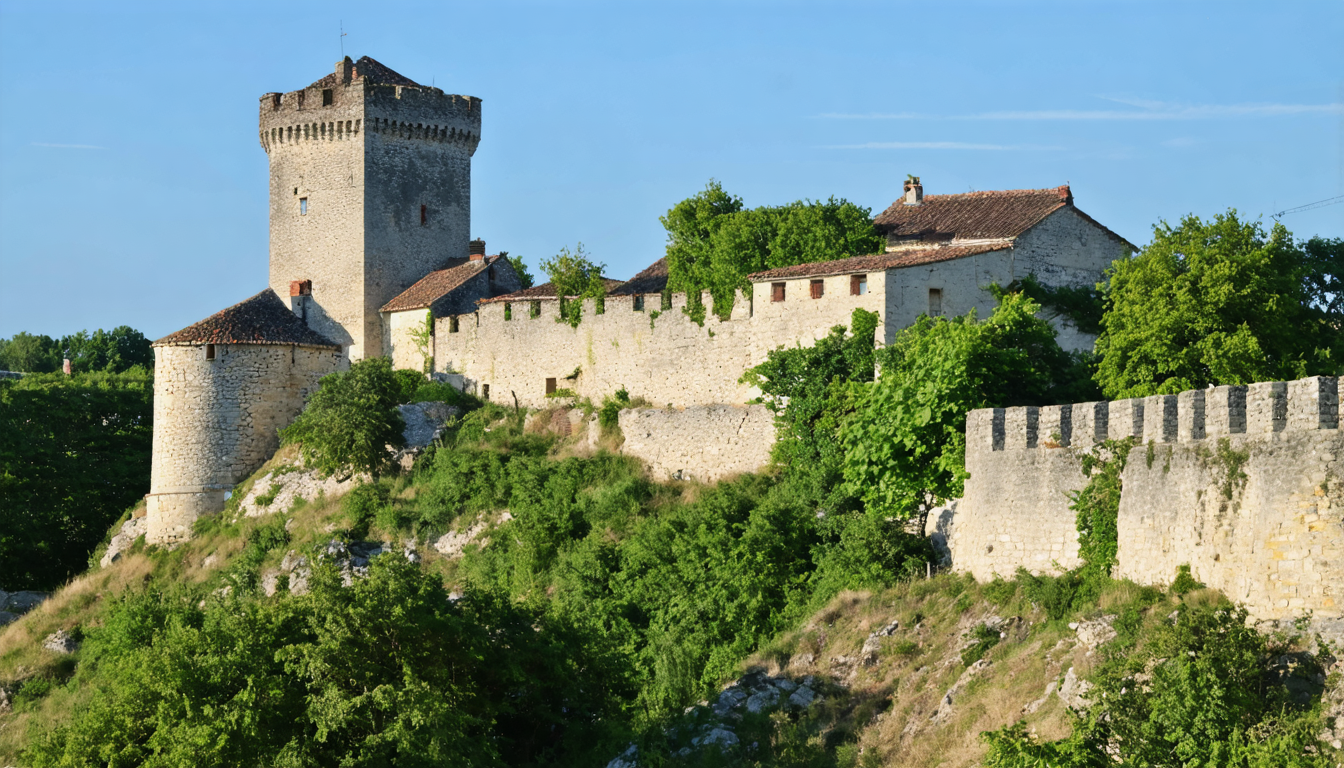
The ramparts, 6 to 8 meters high, are punctuated with circular and square towers, reminiscent of defensive techniques used at the end of the Middle Ages. The walkway, kept accessible to visitors, offers a complete tour around the village and allows admiration of panoramic views over the Gers and its verdant valleys. The initial strategic aspect of the fortifications now gives way to a site for discovery and strolling where serenity prevails. For example, the fortified entrance gate, with its restored drawbridge, remains an impressive entry point, bearing witness to the constant vigilance demanded by times long past.
Saint-Sigismond Church, a Romanesque jewel dating from the 13th century, completes the village’s architectural ensemble. Its elegant sobriety, typical of Gascon sacred art, as well as its medieval frescoes, offer valuable visual testimony on the spirituality and artistic crafts of the era. The episcopal castle, with its imposing square keep, asserts its presence overlooking the village, symbolizing the alliance of religious and military power in medieval Gers. By visiting Larressingle, one touches an era where every stone had a function and told a chapter of a much broader story – that of feudal France.
A unique immersion in culture and history through heritage tourism
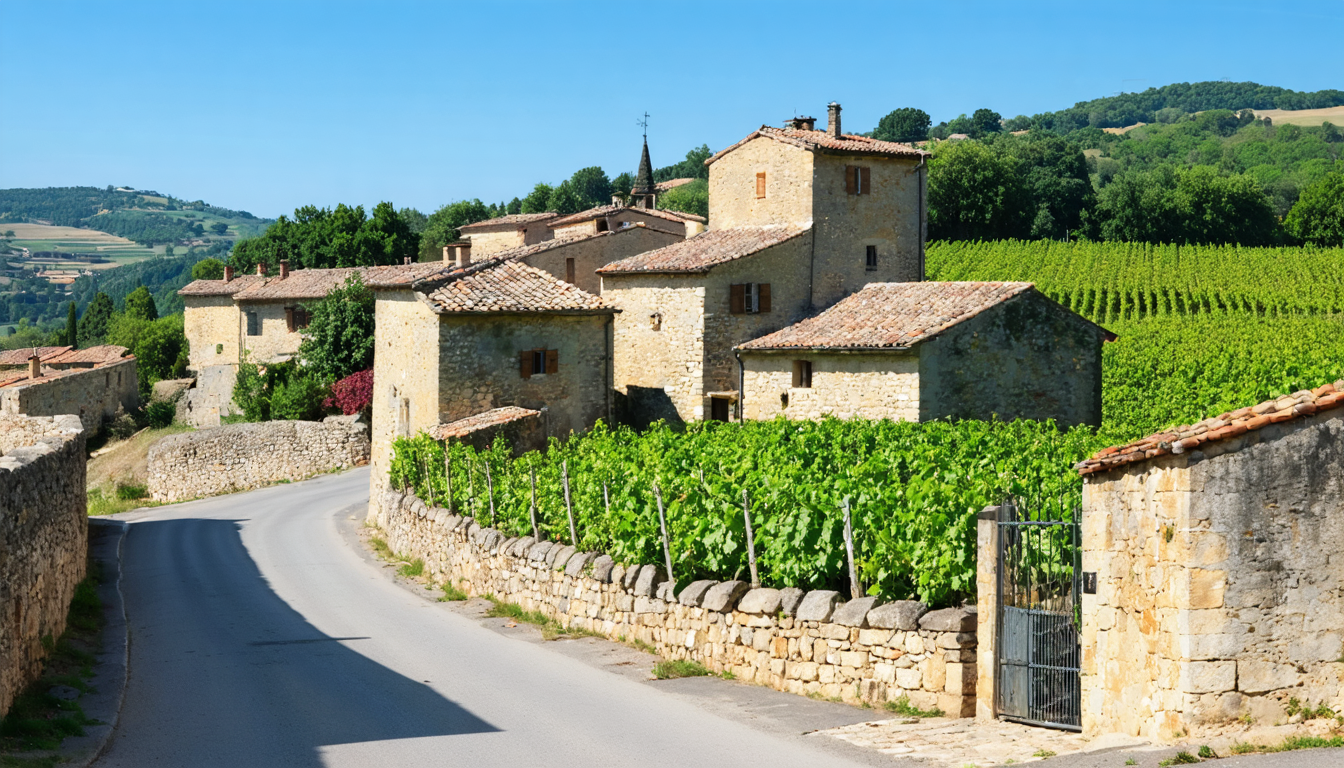
Larressingle represents much more than a simple fortified village; it is a true open-air museum inviting a complete immersion into medieval French culture. Each year, over 100,000 visitors stroll through the cobbled streets and discover its history-laden sites. The official protection of the site as a historic monument, combined with the prestigious label of Most Beautiful Villages of France, attests to a collective will to safeguard this patrimonial wealth. This dual label highlights the attention given to the careful conservation of buildings and the quality of the tourist experience offered.
Free and open access to the ramparts allows everyone to feel the historical strength emanating from this fortified enclosure. To go further, guided tours are organized focusing on specific themes such as defensive architecture, the daily life of inhabitants in the Middle Ages, or the restoration techniques recently employed to maintain the buildings. These visits greatly enrich the understanding of the village’s complexity and original purpose.
In summer, a medieval camp recreates life in the 13th century through demonstrations of crafts, armory, and combat, thus providing a playful and educational immersive experience. Visitors can thus project themselves into this bygone era, better understanding the historical and cultural stakes that shaped this part of Gers.
To facilitate discovery, the village offers a table summarizing the main characteristics of this fortified gem:
| Characteristic | Data |
|---|---|
| Fortified village area | 1.65 hectares |
| Permanent population | Approximately 190 inhabitants |
| Rampart length | 270 meters |
| Annual visitors | More than 100,000 |
Discover exceptional landscapes and nature activities around Larressingle
Beyond its remarkable historical and architectural character, the fortified village of Larressingle benefits from a natural environment imbued with serenity and beauty. The Gers countryside, famous for its gentle valleys and Armagnac vineyards, extends as far as the eye can see, offering visitors breathtaking panoramas, particularly from the top of the ramparts. The contrast between ancient stones and the bright green fields creates an exceptional setting, ideal for relaxation and contemplation.
Hiking enthusiasts will find several marked trails in the surroundings crossing forests, meadows, and riverbanks. Among them:
- The bastides circuit, a 12-kilometer route inviting discovery of medieval villages and wine-growing landscapes.
- The valley trail of the Osse, 8 kilometers long, running along the river and offering refuge to rich biodiversity.
- The Larressingle loop, a 5-kilometer itinerary arranged around the fortified village for a walk accessible to all.
- The pilgrims’ path to Saint-Jacques-de-Compostelle passing nearby, allowing visitors to immerse themselves in the tradition of major European cultural routes.
These routes combine built heritage and natural heritage, making each walk a complete sensory adventure. The diversity of landscapes and the quality of the air find a particular resonance in 2026, a period when interest in rural getaways and wellness experiences is strongly confirmed.
Along the paths, the fortunate may spot foxes, roe deer, and birds of prey, as well as typical flora blending ancient oaks, hedgerows, and Mediterranean plants. This natural richness, combined with Larressingle’s architectural heritage, creates a complete tourist destination, unique in the Gers.
Gers Gastronomy: essential flavors and traditions in Larressingle
Immerse yourself in the generous flavors that make Gers famous during your visit to Larressingle. The village and its surroundings are a true invitation to discover Gascon culinary specialties, recognized throughout France for their quality and authenticity. It is here that terroir and ancestral know-how meet, guaranteeing memorable gastronomic experiences.
Among the emblematic dishes and products of Gers, we find:
- Foie gras of duck or goose, a renowned specialty, carefully prepared on local farms.
- Confit and magret, often served in village restaurants, reflecting the richness of Gascon poultry.
- Armagnac, this brandy symbolizing the entire distillation tradition of the Gers terroir, perfect to conclude a meal.
- Floc de Gascogne, a sweet and fruity aperitif, a blend of grape must and Armagnac.
- Local farmhouse cheeses, reflecting the craftsmanship of the region’s artisanal producers.
- Apple croustade, a traditional dessert with a crispy pastry and a fruity center, loved by gourmands.
Various establishments in the village preserve these culinary traditions while offering often warm and convivial experiences. Nearby guest tables also allow immersion into local life, sharing anecdotes and recipes with the hosts. For enthusiasts, visiting the region’s markets, especially in Condom, enables direct contact with passionate producers who perpetuate these know-how.
The table below offers a simple overview of specialties not to be missed during a gastronomic stay in Gers:
| Specialty | Description |
|---|---|
| Foie gras | Emblematic product, often prepared traditionally in the region |
| Confit and magret | Duck meats with rich and deep flavors, Gascon specialties |
| Armagnac | Distilled brandy, symbol of regional heritage |
| Floc de Gascogne | Sweet aperitif made from grape and Armagnac |
| Farmhouse cheeses | Local artisanal products, varied according to the seasons |
| Apple croustade | Traditional dessert with a delicate and crunchy taste |