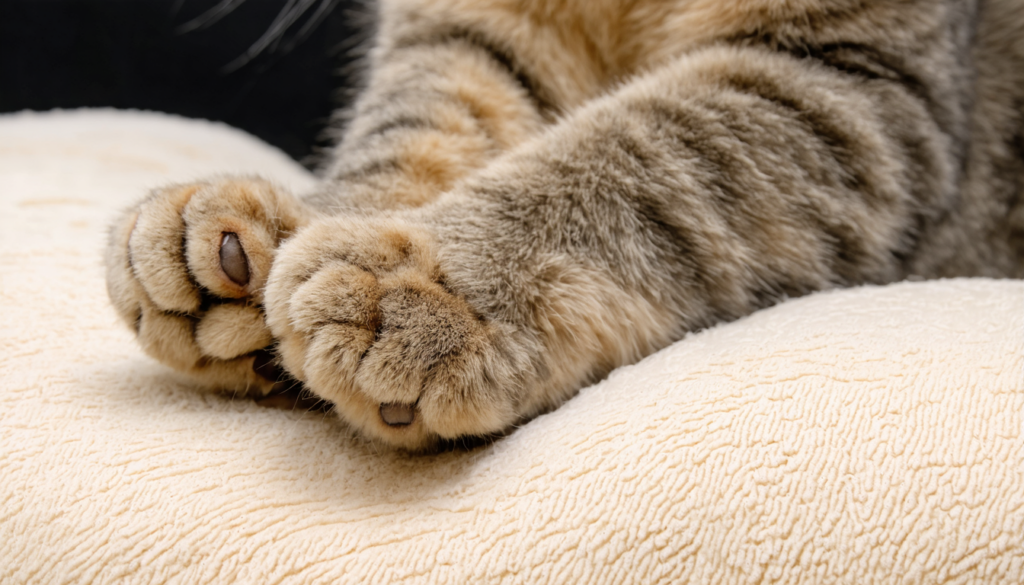
Watching a cat knead with its front paws is a spectacle both endearing and mysterious. Since the feline’s earliest infancy, this rhythmic movement of pressing on a soft surface expresses a behavior deeply rooted in its instinct. Whether on a soft blanket, the lap of its favorite human, or a plush cushion, this gesture seems to evoke a feeling of comfort and security in the cat. Far from being a mere reflex, kneading reflects a multifaceted form of nonverbal communication, appealing both to neonatal memories and emotional needs. Understanding this behavior, so natural in kittens yet persisting into adulthood, allows us to appreciate the full psychological richness of our feline companions and decode the messages of affection they send us.
From the first hours of life, this instinctive behavior accompanies the cat’s development. Kneading, through its alternating movements, rhythm, and the discreet extension of claws, reveals much more than the mere expression of a temporary state. It embodies a close connection to maternal comfort, a subtle territorial marker thanks to the pheromones left by the paw pads, and a true soothing mechanism during moments of relaxation. Often accompanied by purring, kneading stimulates a deep relaxation that is part of the cat’s overall well-being. Through this gesture that appeared in kittens to stimulate lactation, the adult continues to express its serenity and emotional attachment, thereby strengthening the bond with its owner. This ritual, sometimes instinctive, sometimes affectionate, perfectly illustrates the complex and sensitive nature of these domestic felines.
- 1 Cat kneading: an instinctive behavior embedded in its genes
- 2 The deep reasons for kneading in cats: comfort, territory, and affection
- 3 Kneading in kittens and its evolution towards adulthood: from survival to relaxation
- 4 The benefits of kneading: relaxation, muscle exercise, and strengthening the emotional bond
- 5 How to manage kneading in cats: practical advice and precautions
Cat kneading: an instinctive behavior embedded in its genes
Kneading in cats is a remarkable example of natural instinct anchored in the feline genetic heritage. From birth, kittens perform this movement of regular pressing with their front paws, enabling effective massage of their mother’s teats. This reflex facilitates the flow of milk, vital for survival during the first weeks. This behavior, universally observed in felines, requires no learning: it is innate and evidence of essential biological programming. Whether you have a European cat, a Siamese, or a Sphynx, all display this gesture with nuances reflecting their personality, but always with the same original meaning.
The physical characteristics of kneading are easily identifiable: the cat alternates the movement of its front paws by pressing on a soft surface to which it attributes comfort. The rhythmic pressure alternates with the extension and retraction of the claws which, though discreet, also contribute to the gesture’s effectiveness. A purring often accompanies this sequence, signaling the cat’s contentment and relaxation. The frequency and intensity of this behavior vary notably: some cats knead almost every day, expressing their need for comfort, while others adopt this ritual more sporadically, during specific situations such as a calm moment at home. This diversity reflects the richness of the feline character and its unique emotional responses.
The instinctive expression of kneading in cats also highlights a fundamental dimension: it is not a simple mechanical movement, but the manifestation of a deep bond between the animal and its environment. Indeed, through this gesture, the cat marks not only its personal well-being but also engages in a tacit communication process with its surroundings. The fact that it continues to perform this behavior throughout its life clearly indicates its lasting and multifunctional role. This instinctive expression thus becomes the gateway to better understanding the psychological motivations of the cat.
The deep reasons for kneading in cats: comfort, territory, and affection
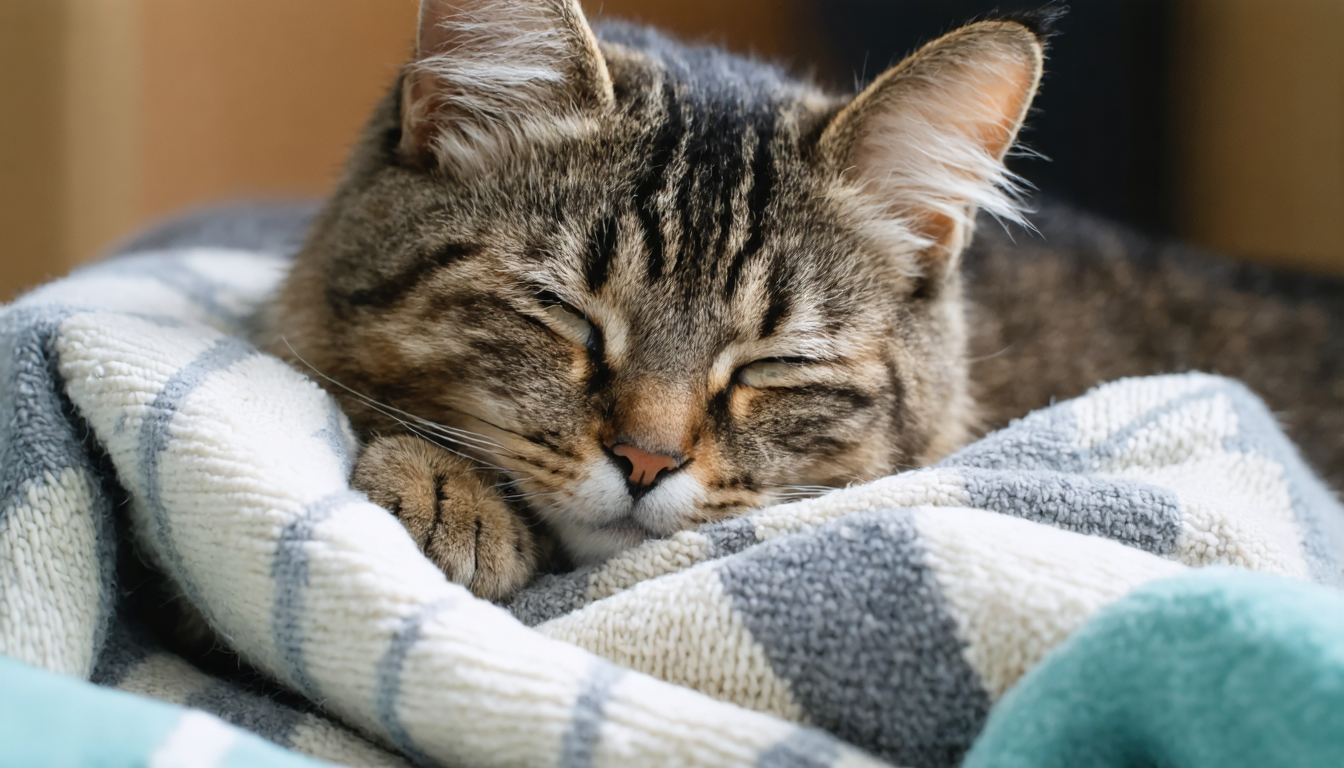
Beyond the primary instinct linked to nursing, adult cat kneading reveals multiple reasons, combining comfort, territorial marking, and affective expression. Far from trivial, this gesture is a sophisticated form of nonverbal communication that reflects a balanced state of mind in the feline.
A marker of ease and well-being
Kneading is above all an emblematic expression of serenity and satisfaction. When a cat kneads, it manifests its feeling of security in its living environment. This behavior is often associated with calm moments, when the animal feels fully relaxed and confident near its humans or in a familiar place. A common example is a cat gently kneading its owner’s lap, emitting soothing purrs: it thus expresses its comfort and sincere affection.
Subtle territorial marking through pheromones
Moreover, kneading plays a role in territorial marking. Located under the paw pads, the sebaceous glands release olfactory pheromones when the cat performs this repetitive gesture. These chemical substances deposited on the kneaded surface send a message imperceptible to humans but clear to other felines. This marking aims to establish an olfactory boundary, allowing the cat to feel at home and enrich its personal territory.
A preparatory ritual for rest
Animal behavior specialists also argue that kneading represents physical preparation for the resting area. This behavior would be inherited from wild felines who pressed grass to create a comfortable and secure nest before lying down. Thus, by kneading a blanket or cushion, the cat unconsciously recreates this same ancestral routine, reinforcing its feeling of security before fully relaxing.
Understanding these varied motives enriches the perception of kneading. It is not a mere past reflex but an adapted behavior expressing the emotional complexity of the cat and its strategies to ensure its daily well-being.
Kneading in kittens and its evolution towards adulthood: from survival to relaxation
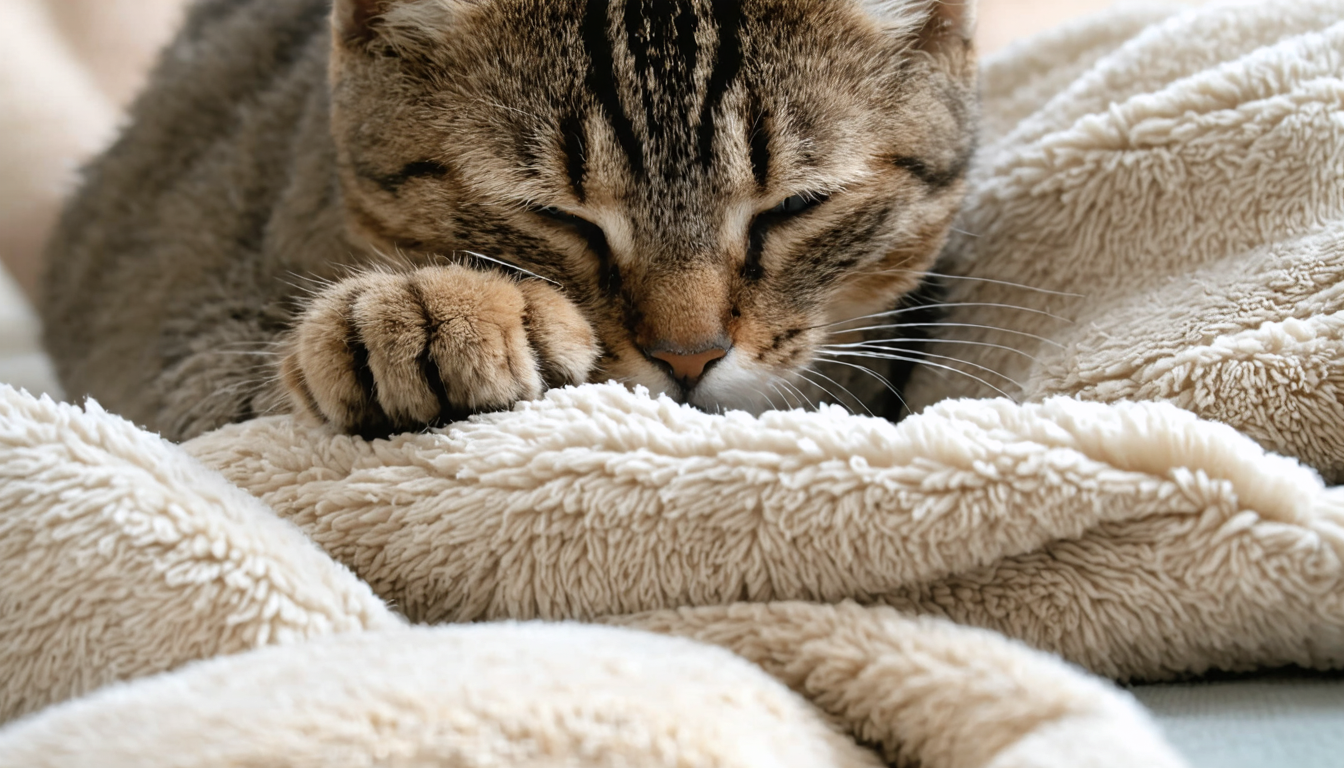
Kneading appears very early in a kitten’s life, playing a crucial role in its development. This instinctive action that stimulates lactation in the mother guarantees the newborn’s survival. Massaging the teats facilitates milk flow and effective feeding of the litter.
A table summarizes the intensity of kneading according to the different growth phases of the young feline:
| Kitten Age | Kneading Frequency | Main Context |
|---|---|---|
| 0-2 weeks | Very high | Exclusive nursing |
| 3-8 weeks | High | Nursing and the beginning of weaning |
| Adult age | Variable | Search for emotional comfort |
As the cat grows, the gesture loses its nutritive function to become a genuine mechanism of emotional consolation. Some cats, especially those weaned early or deprived of sufficient maternal contact, show more frequent and prolonged kneading. This reflects an increased need to regain a soothing sensation associated with security and parental warmth.
Adult kneading is therefore no longer a simple mechanical reflex but a behavior aimed at recreating an atmosphere of protection and well-being. This legacy from the kitten thus accompanies the feline throughout its life, signifying continuity between its infant past and adult life. Kneading then becomes a sort of autonomous ritual that soothes stress and cultivates an atmosphere of emotional comfort within the home.
The benefits of kneading: relaxation, muscle exercise, and strengthening the emotional bond
Kneading is not limited to a simple expression of affection; it also offers multiple benefits for the cat’s health and well-being.
A powerful factor of relaxation and stress management
By repeating this gesture, the cat stimulates the production of endorphins in its brain, thus providing a sensation of pleasure and well-being comparable to that experienced during nursing. This mechanism acts as a natural self-soothing that allows the cat to effectively manage its anxiety. For example, in new environments or facing changes, kneading becomes a reassuring recourse that helps calm the animal quickly.
A gentle and beneficial muscle exercise
Although discreet, this movement engages the muscles of the front paws as well as those of the shoulders. Indoor cats, who have few opportunities to fully expend themselves, benefit from this light muscle exercise as a way to maintain suppleness, agility, and tone. This prevents joint stiffness and contributes to overall physical balance.
A gesture that strengthens the bond with the owner
Kneading placed on the body or the master’s lap is exchanged as a sign of affection and trust. This privileged contact indicates that the cat recognizes the human figure as a source of comfort and security close to that of its mother. In return, the human can respond with gentle and reassuring petting, consolidating the emotional bond. This shared ritual becomes a precious moment of intimacy and harmony between the animal and its owner.
- Deep relaxation caused by the release of endorphins.
- Muscle exercise beneficial to maintaining mobility.
- Olfactory marking promoting the feeling of belonging.
- Expression of affection strengthening the human-cat relationship.
- Self-soothing mechanism in stressful situations.
How to manage kneading in cats: practical advice and precautions
Faced with this instinctive behavior, owners must know how to welcome kneading as a manifestation of love and trust. Repelling or ignoring it can disturb the animal and create a rift in the relationship. Accepting this feline ritual allows better understanding of the cat’s needs and emotions.
Kneading can sometimes cause problems when the cat’s claws scratch the skin or damage delicate fabrics. Several simple tips facilitate coexistence:
- Protect surfaces by placing a thick blanket or a resistant cushion on the lap or favorite areas of the cat.
- Trim claws regularly to limit the risk of accidental injuries.
- Use silicone claw caps, preventing tissue perforation while preserving the cat’s comfort.
- Redirect the cat to a specific and suitable surface for kneading, such as a dedicated cushion.
Recognizing and managing excessive kneading
Excessive, repetitive, and compulsive kneading may indicate a behavioral disorder or distress. When accompanied by intense fabric sucking, unusual vocalizations, or other signs of anxiety, a veterinary evaluation is recommended. In some cases, behavioral or therapeutic support is necessary to soothe the animal.
Differentiating kneading from other feline behaviors
It is essential to distinguish kneading from other actions sometimes confused:
| Behavior | Emotional State | Main Function |
|---|---|---|
| Kneading | Contentment and relaxation | Emotional comfort, olfactory marking |
| Scratching | Alertness or activity | Claw maintenance, visual marking |
| Nervous pacing | Stress or excitement | Tension release |