
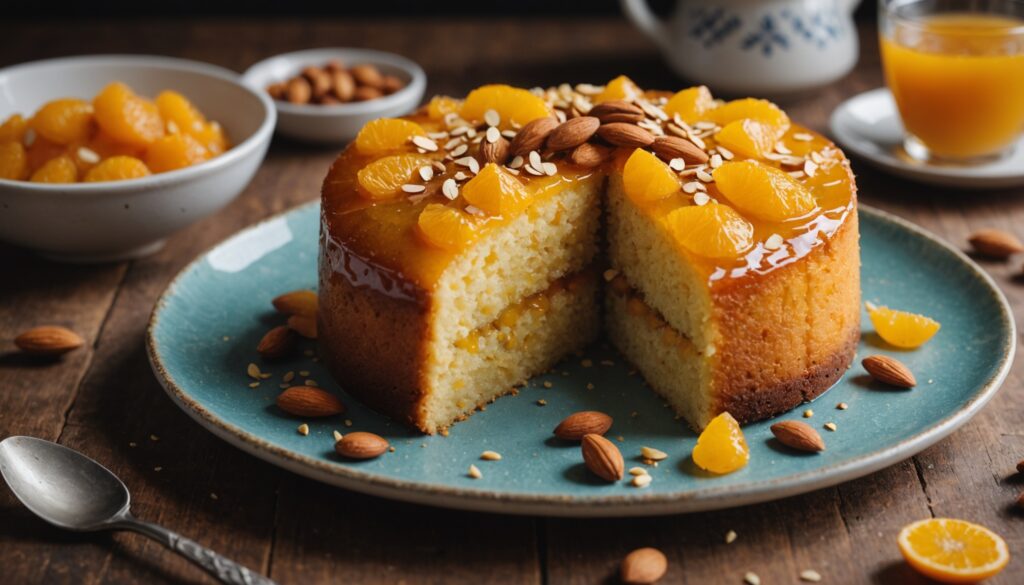
In the heart of the lively and fragrant alleys of Moroccan medinas rises a sweet tradition that captivates all generations: the Moroccan orange and almond cake. A true Moroccan delight, this dessert skillfully combines oriental flavors to offer a memorable tasting experience. Soft and delicately scented, this cake made with fine semolina is enriched with the natural sweetness of almonds and the tangy freshness of orange, before being generously coated with a syrup delicately flavored with cardamom. This combination subtly blends textures and aromas, making every bite an invitation to a sensory journey.
The use of simple ingredients and the accessibility of this recipe make it an easy pastry to prepare, even for budding cooks. It embodies the very essence of Moroccan pastry, renowned for its spice-rich desserts and ancestral preparation methods. This traditional recipe, inspired by basbousa, knows how to combine authenticity and modernity through a perfect balance between melting texture and spiced sweet topping. It is therefore an invitation to immerse oneself in Maghreb culinary traditions while enjoying a tender and fragrant cake.
- 1 The secrets of the soft Moroccan cake with semolina and almonds
- 2 Detailed steps to successfully make a Moroccan orange cake scented with cardamom
- 3 The place of the orange and almond cake in traditional Moroccan pastry
- 4 Gourmet pairings: mint tea and other accompaniments to enhance the Moroccan cake
- 5 Tips and variations to personalize your Moroccan orange and almond cake
The secrets of the soft Moroccan cake with semolina and almonds
The secret of this Moroccan cake lies in the use of fine semolina, an iconic ingredient of Maghreb cuisine, which gives a sandy and slightly grainy texture while remaining soft after baking. Unlike conventional flour, semolina imparts a unique character to the recipe, capable of perfectly absorbing the syrup without becoming soggy thanks to its coarser structure.
The presence of almond powder, on the other hand, contributes to the cake’s richness in flavor and its smooth sweetness. It balances the natural acidity of the orange, whose juice and zest bring freshness and liveliness to the batter. Mild olive oil is advantageously used instead of traditional butter, offering incomparable softness while adding a subtle Mediterranean aroma. During preparation, the precise mixing of dry and then wet ingredients, as well as the gradual incorporation of orange juice and zest, ensure a homogeneous and airy batter that holds perfectly after baking.
Particular attention is paid to baking: at 180 degrees Celsius with circulating heat, the cake develops a beautiful golden color with a slightly crispy crust thanks to the slivered almonds placed on top. These provide a crunch that deliciously contrasts with the soft interior. Controlling the baking is essential: a knife blade inserted in the center should come out dry or with just a few moist crumbs to ensure a cake that is both firm and tender.
Finally, this cake is distinguished by its cardamom syrup topping, a key element that makes it truly unique. This syrup is made from water, sugar, ground cardamom, honey, and orange blossom water. It is brought to a boil and then left to cool before being poured cold over the still warm cake. The thermal shock allows the syrup to deeply soak in, bringing an exotic flavor and a melting texture that enhances and elevates every bite. This process is crucial to prevent the cake from becoming soggy, an art mastered for generations by Moroccan pastry chefs.
Detailed steps to successfully make a Moroccan orange cake scented with cardamom
Mastering the preparation of this soft cake is a true culinary pleasure requiring precision and respect for traditional techniques. The starting point is making the syrup, a crucial step that demands patience and care. Begin by boiling water and sugar together to obtain a clear liquid. The addition of powdered cardamom gradually infuses the syrup with fragrant aromas, while honey and orange blossom water add complementary floral and sweet notes. This syrup must cool for several hours at room temperature before use, to avoid excessive soaking of the cake.
After that, the batter preparation resumes. It is important to thoroughly mix the semolina, almond powder, sugar, baking powder, and a pinch of salt to ensure even distribution. Freshly squeezed organic orange juice, combined with finely grated zest, promises an explosion of citrus flavors in the mouth. These zests, often macerated in the juice to release their essential oils, are a genuine natural flavor booster. The eggs beaten with mild olive oil add a smooth and light texture.
Once the batter is poured into a carefully oiled and lined mold, smooth the surface and sprinkle with slivered almonds. These provide extra crunch and a beautiful golden presentation after the 40-minute baking. Once the cake is still warm from the oven, proceed with the crucial syrup soaking step, which will transform the cake into a delicately scented and melting dessert. A resting time of at least two hours to absorb the syrup ensures an ideal texture, neither dry nor soggy.
Here is an essential checklist to not forget anything during preparation:
- Choose organic oranges for the quality of the zest.
- Prepare and let the syrup cool completely before use.
- Thoroughly moisten the mold to facilitate unmolding.
- Pour the syrup gradually for optimal absorption.
- Wait at least two hours to allow the cake to reach its perfect texture.
Table of key ingredients and their roles in the recipe
| Ingredients | Quantity | Role in the recipe |
|---|---|---|
| Fine semolina | 250g | Textured and soft base of the cake, absorbs the syrup |
| Almond powder | 150g | Provides sweetness, rich flavor, and softness |
| Fresh orange juice | 150ml | Gives freshness and acidity, hydrates the batter |
| Ground cardamom | 1 teaspoon | Fragrant spice that enhances the syrup |
| Syrup (water + sugar + honey + orange blossom) | About 400ml | Soaks the cake and adds a melting sweetness |
The place of the orange and almond cake in traditional Moroccan pastry
In Moroccan culinary culture, the orange and almond cake holds a privileged place. It perfectly illustrates the fusion of oriental flavors that characterize Maghreb desserts. Originating from an ancestral tradition, this cake belongs to the large family of semolina-based sweets, very popular in Morocco but also in Tunisia and Egypt with variations like basbousa or harissa. Each region adds its local touch, but the orange-almond pairing remains an timeless classic.
This dessert is often prepared for special occasions such as Eid, weddings, or to welcome guests around the traditional mint tea. Its cut into squares or diamonds and the presentation on finely engraved copper trays reveal the importance of sharing and hospitality in Moroccan culture. It is a true symbol of generosity and lifestyle art.
The choice of cardamom is no coincidence: this spice, originating from India, has become an essential ingredient in Moroccan pastries thanks to historic trade routes. Likewise, the use of orange blossom water, distilled in the country’s sunny orchards, adds that floral touch which characterizes oriental sweetness. Together, these aromas create a unique alchemy savored with every bite.
In 2026, this recipe continues to be a culinary landmark throughout Morocco but also in major European and North American cities where the Moroccan diaspora proudly perpetuates this tradition. Numerous pastry chefs are already revisiting this classic recipe by integrating modern techniques while respecting the authenticity of oriental flavors. Thus, the orange and almond cake asserts itself not only as a traditional dessert but also as a source of contemporary gastronomic inspiration.
Gourmet pairings: mint tea and other accompaniments to enhance the Moroccan cake
The Moroccan orange and almond cake is ideally enjoyed accompanied by freshly brewed mint tea, an emblematic drink of the Maghreb. The freshness of green tea deliciously contrasts with the enveloping sweetness of the soft cake, while the mentholated notes freshen the palate between bites. For authenticity, choose a quality gunpowder tea, infused with fresh mint leaves and lightly sweetened with sugar or honey. This tea ritual ensures perfect harmony between drink and dessert.
Gastronomic adventurers can also explore original pairings such as coffee flavored with cardamom, echoing the syrup coating the cake. Turkish coffee or an espresso sprinkled with a pinch of ground cardamom adds a subtle spicy flavor that goes perfectly with the orange and almond. For a sweet and milky alternative, almond milk flavored with orange blossom, served chilled, extends the exotic flavors and brings a welcome lightness.
Here are some recommended pairings to accompany this fragrant dessert:
- Green mint tea: classic freshness and natural digestif
- Coffee with cardamom: spicy intensity enhancing the syrup
- Almond milk with orange blossom: milky sweetness and floral exoticism
- Fresh orange juice: citrus reminder for the most indulgent
- Verbena infusion: soothing sweetness to finish the meal
Tips and variations to personalize your Moroccan orange and almond cake
To enrich this traditional recipe, there are several tips that reveal new taste dimensions while respecting the authenticity of this dessert. For example, adding a few drops of natural orange extract to the batter intensifies the citrus scent without weighing down the texture. Prolonging the maceration of the zest in the orange juice for about thirty minutes releases additional essential oils that enhance aromatic freshness.
Regarding the syrup, slightly reducing the amount of sugar while increasing the honey makes the sweetness more subtle and less intrusive, appreciated by modern palates seeking the perfect balance between indulgence and lightness. Some pastry chefs prefer to replace half of the fine semolina with medium semolina, to obtain a more rustic texture reminiscent of ancestral Moroccan preparations. This variation adds character while retaining the essential softness.
Finally, preparing this cake the day before significantly improves the flavors, as the time allows the syrup to soak in and the aromas to develop. This resting time is often recommended in the most respected culinary books of 2026, confirming that patience is a major key to achieving a perfect Moroccan delight.
A list of practical advice:
- Use organic ingredients to preserve the intensity of natural aromas.
- Let the orange zest macerate in the juice before incorporating.
- Experiment with semolina to adjust the texture according to your taste.
- Adjust the syrup sweetness with honey for a subtle balance.
- Prepare the cake one day in advance to optimize flavors and softness.




