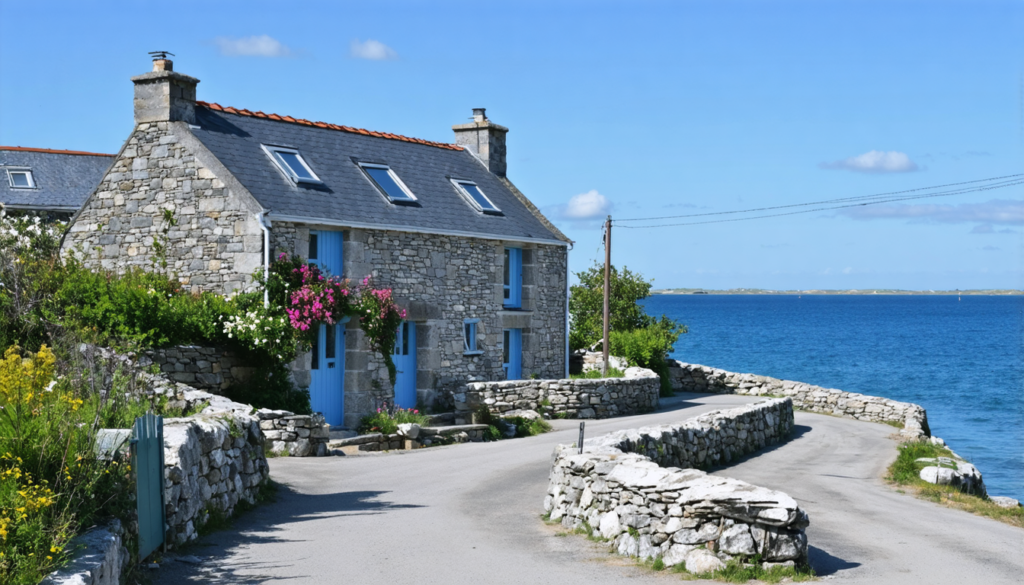
Because at the heart of Morbihan, a department where the sea dialogues with the countryside, a picturesque village reveals itself as a true gem still preserved from tourist bustle. This unique place, famous for its charming port lined with granite houses, embodies both the richness of heritage and Breton authenticity. Nestled on a peninsula accessible by a stone bridge, it offers visitors a journey through time where the beauty of traditional architecture blends with sumptuous maritime landscapes. Here, every stone tells an ancient story, bearing witness to the intimate bond between the inhabitants and the sea that has shaped their daily life for centuries.
Throughout the seasons, this village attracts enthusiasts of cultural and natural tourism eager to explore the real Brittany. Its cobbled alleys, granite houses with colorful shutters, and its port where fishing boats coexist with pleasure craft, offer a lively and soothing spectacle. The sea air, steeped in history, invites wandering and contemplation, while local traditions are perpetuated thanks to the commitment of residents and elected officials. Morbihan thus unfolds an exceptional setting, where this remarkable village perfectly embodies the harmony between nature, heritage, and the gentle way of life characteristic of the Breton coast.
- 1 Morbihan, a natural and cultural setting with many facets
- 2 Saint-Cado: a picturesque village and its charming port reveal the soul of Morbihan
- 3 Traditional granite architecture: a Breton building art for longevity
- 4 The charming port of Saint-Cado: a maritime life center at the heart of Morbihan
- 5 Activities, gastronomy and heritage around the picturesque village of Morbihan
Morbihan, a natural and cultural setting with many facets
Located in southern Brittany, Morbihan takes its name from the Breton “mor bihan” meaning “little sea,” referring to the gulf that shapes its coastline. This region is distinguished by a maritime landscape with varied reliefs, alternating rugged coasts, wild beaches, and a multitude of islands and islets scattered across its calm waters. The lush farmland punctuates this scenery and contributes to an atmosphere where nature remains omnipresent. The temperate oceanic climate, tempered yet humid, favors lush vegetation and a particularly pleasant microclimate on the coast. These conditions make Morbihan a privileged destination for stays combining discovery, rejuvenation, and adventure.
The department’s heritage is exceptionally rich, bearing witness to ancient human occupation revealed by numerous megalithic sites, including those of Carnac, famous worldwide. But beyond these prehistoric testimonies, Morbihan also houses many typical villages with traditional architecture, where Romanesque chapels, manor houses, and granite homes mingle. These rural and coastal communes testify to the exchanges between the sea, the land, and the people. Every stone, every alley tells a fragment of Breton history, from ancient times to the contemporary era, with remarkable preservation and a desire to transmit it to the present.
The numbers speak for themselves: the Morbihan coastline extends over nearly 900 km, bordered by more than 40 islands and islets hosting an agile and sensitive biodiversity. Among the local treasures, three villages are listed among the prestigious label “Les Plus Beaux Villages de France,” highlighting the exceptional quality of their built and natural heritage. More than 550 megalithic monuments complete this picture, making Morbihan a remarkable territory for enthusiasts of history, architecture, and exceptional landscapes.
- More than 900 km of coastline offering a unique natural setting between land and sea.
- More than 40 islands and islets for rare island discoveries.
- Three villages classified among the Most Beautiful Villages of France, attesting to exceptional heritage.
- More than 550 megalithic monuments testifying to historical richness.
Saint-Cado: a picturesque village and its charming port reveal the soul of Morbihan
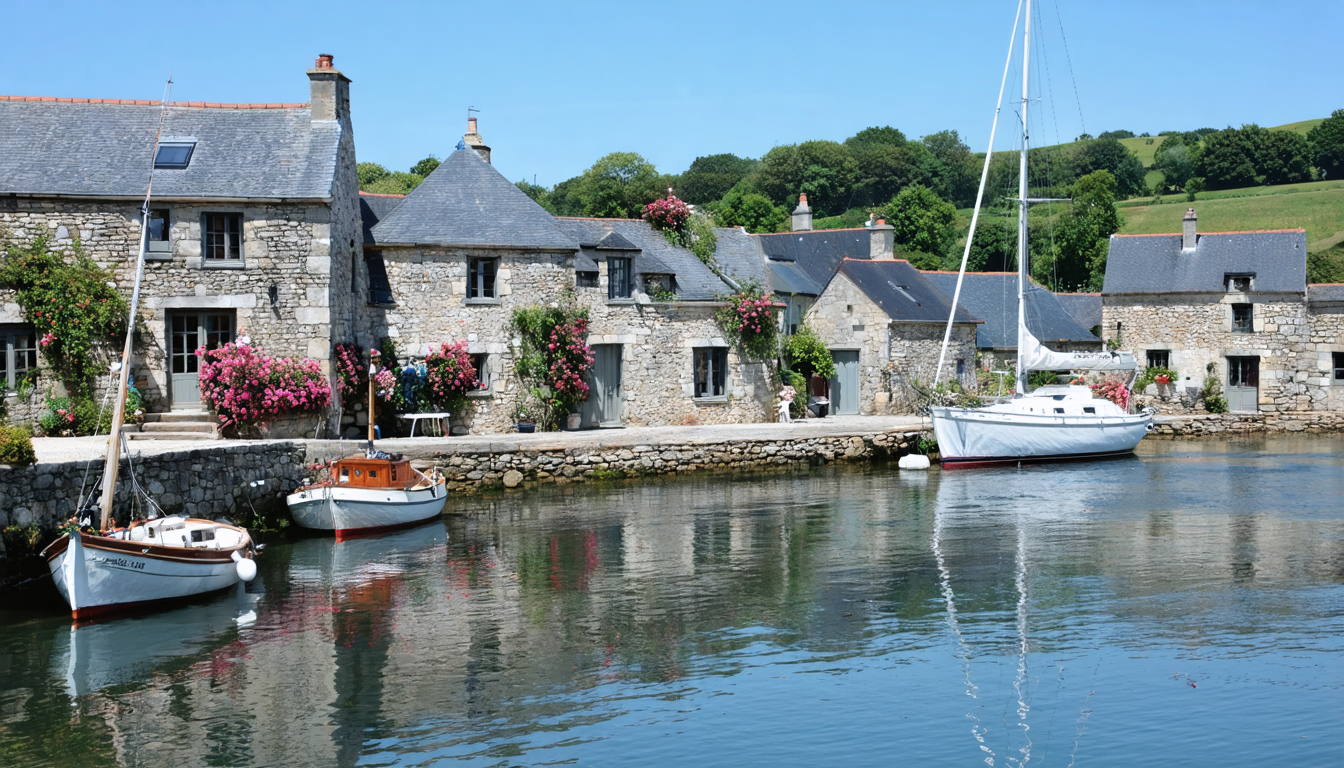
At the heart of Morbihan, the village of Saint-Cado stands out as one of the authentic jewels of the Breton coast. Situated on a peninsula of the Étel ria, this village combines remarkable architectural heritage with the striking charms of a preserved maritime environment. Here, granite houses with sturdy facades and brightly colored shutters line a charming port where traditional and modern boats mingle. Accessible only by a stone bridge dating from the 16th century, this enclave seems condemned to a sweetness frozen in time, a true out-of-the-ordinary journey for anyone wishing to immerse themselves in historic Brittany.
This architectural setting reflects perfect harmony between nature and human construction. The granite houses, typically Breton, withstand time and the harsh oceanic climate. Their construction bears witness to ancient know-how, using a local stone with shades ranging from light gray to soft pink. Each building tells a story: some dwellings still bear traces of fishermen’s homes, with their imposing chimneys and small gardens enclosed by granite walls. The port, tiny and authentic, is a place of life and exchange, where tranquility invites visitors to stroll along the paved quays while admiring the water reflections and legendary sunsets over the ria.
The preservation of this picturesque village is the fruit of a collective commitment. The inhabitants, deeply attached to their heritage, collaborate with local institutions to maintain the beauty and integrity of the site. This participatory dynamic is a guarantee of durability for the authenticity of the place. Wandering through the narrow streets, one also discovers a 16th-century calvary and a Romanesque chapel, precious remnants of a history still clearly readable in the finest architectural details.
Traditional granite architecture: a Breton building art for longevity
Granite, the emblematic stone of Brittany, is at the heart of the village’s architectural identity. For centuries, local builders have taken advantage of this natural material to create robust and aesthetically pleasing houses, perfectly adapted to the climatic conditions of the coast. Granite’s resistance to marine weather explains why these buildings have managed to withstand the ages almost intact, becoming living witnesses of a centuries-old tradition.
Granite houses feature several typical characteristics: thick walls of granite rubble ensure natural insulation of the dwellings against cold and humidity. Openings are deliberately modest to limit heat loss, while steep roofs covered with slate efficiently drain rain and snow. These slender but low architectures, often one story, reveal an intelligent adaptation to climatic constraints.
Several elements define the sober elegance of these homes:
- Exposed granite walls or sometimes lime-coated for a light and traditional finish.
- Door and window frames carved from granite, highlighting robustness and artisanal finesse.
- Painted wooden shutters often in bright colors, such as blue, red or green, bringing cheerfulness and contrast.
- Massive stone chimneys, the former heart of household life.
- Paved courtyards where granite reflects the light and testifies to ancestral craftsmanship.
The preservation of these buildings is essential to maintain the charm of the picturesque village and support sustainable tourism. These constructions offer a unique living environment and continue to inspire today’s architects and artisans of the territory, eager to perpetuate an aesthetic and functionality compatible with nature and heritage.
The charming port of Saint-Cado: a maritime life center at the heart of Morbihan
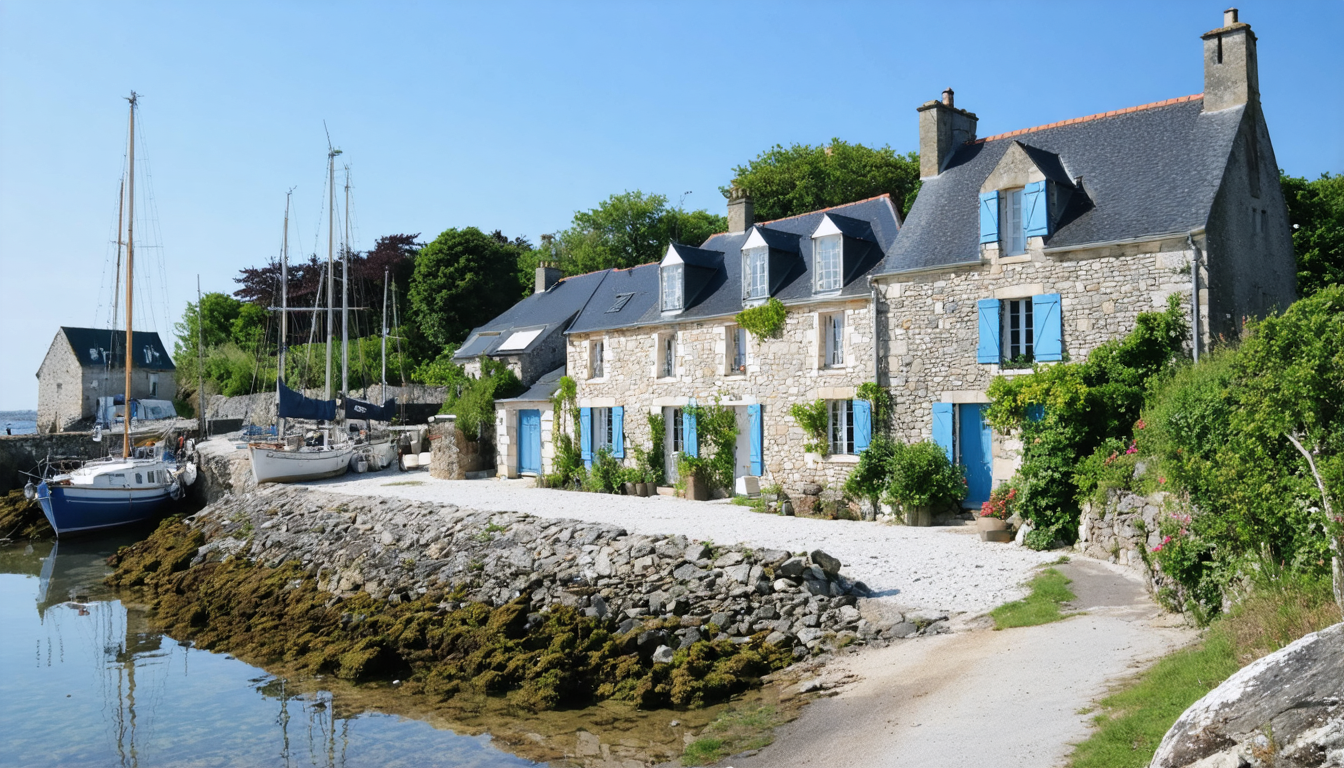
The port of this picturesque village is not only a mooring place; it is also the beating heart of the community. This small charming port, mixing traditional fishing boats and pleasure sailboats, embodies the authenticity and maritime life of Brittany. It maintains its historical role as a refuge for local fishing while welcoming an increasing flow of visitors attracted by its beauty and unique identity.
At low tide, the sight is impressive: the hulls rest on the sand, and the landscape becomes almost unreal, a living canvas where the deep blue of the water, the gray of the granites, and the silvery reflections of the boats mingle. The paved quays invite strolling and offer remarkable viewpoints on the open sea. This exceptional setting is conducive to contemplative walks, photo sessions, and even outdoor painting, activities frequently practiced by local artists and visitors.
Around the port, the old fishermen’s buildings now serve as second homes and small shops, contributing to a gentle animation of the village. The tranquility reigning there attracts calm and respectful tourism, seeking authentic experiences and cultural discoveries. The local gastronomy focuses on seafood products, with a remarkable offer of oysters, shellfish, and fresh fish, perfect for extending the visit with a gourmet moment in the heart of the village.
Activities, gastronomy and heritage around the picturesque village of Morbihan
Beyond its architecture and charming port, this village offers many opportunities for lovers of cultural and nature tourism. The coastal trail GR34 crosses the region, offering hikes through captivating maritime landscapes. Along the way, visitors discover ecological richness with species of seabirds and varied coastal vegetation, perfectly adapted to the oceanic climate.
The village also has a Romanesque chapel and a 16th-century calvary, precious witnesses of Breton religious and cultural traditions. These architectural monuments enrich the visit by providing historical stops that allow appreciation of the link between history, spirituality, and local daily life.
Water activities nicely complement the program: sea kayaking to gently explore the ria, sailing on dinghies or catamarans, shore fishing during low tides, or boat rides on traditional boats accompanied by passionate fishermen. These modes of exploration give an intimate glimpse of the maritime landscape and the surrounding traditions.
| Activity | Description | Offered experience |
|---|---|---|
| Hiking on the GR34 | Coastal path offering spectacular views | Discover panoramas of the Étel ria and the ocean |
| Sea kayaking | Peaceful exploration of the ria | Observation of marine fauna and flora |
| Traditional boat ride | Navigation with local fishermen | Immersion in Breton maritime culture |
| Shore fishing | Popular activity during high tides | Collection of shellfish and crustaceans |
The village’s gastronomy also deserves special attention. Morbihan enjoys first-class marine production, notably with the famous Étel oysters prized for their fine and iodized taste. Beyond shellfish, fresh fish of the day decorate markets and the menus of local restaurants. Alongside this marine wealth, traditional Breton dishes make the pride of residents and visitors. Crêpes and galettes, whether savory or sweet, as well as kouign-amann and far breton, are accompanied by farmhouse ciders with varied flavors, perfectly completing the gastronomic picture.
- Étel oysters: an essential seafood product.
- Buckwheat galettes: the quintessential Breton dish.
- Kouign-amann: traditional pastry made with butter and sugar.
- Farmhouse cider: refreshing and varied local drink.