
Generations that grew up in the 60s and 70s have a psychological profile shaped by a social, cultural, and technological context radically different from today’s. This era, marked by a world without smartphones, without instant access to information, and with stricter social rules, saw the development of exceptional mental strengths that are hard to find in younger generations. Between the patience imposed by the absence of immediate gratification, resourcefulness born from a lack of modern tools, and resilience forged by cultural questioning, these individuals built solid and lasting psychological resources.
In a hyperconnected world often overwhelmed by rapid consumption, these qualities have become rare, yet their rediscovery could offer valuable insights to enrich mental health and personal success. This article thoroughly explores these nine unique mental strengths of the 60-70s generations, providing examples, studies, and current psychological analyses.
- 1 Patience and tolerance for frustration: a timeless learning in the 60-70s generations
- 2 Resourcefulness and intellectual autonomy: how limited resources forged creativity
- 3 Adaptability: a cognitive intelligence forged by a changing world of the 60-70s
- 4 Independence and autonomous decision-making: a freedom envied by today’s children
- 5 Creativity and problem-solving in a context of limited resources
Patience and tolerance for frustration: a timeless learning in the 60-70s generations
At a time when new technologies were still in their infancy, waiting was an omnipresent notion in daily life. Whether it was to watch a show at a precise time on television, receive a letter several days after sending it, or save up for a long time to buy an object, instant gratification simply did not exist.
This constraint, far from being just a difficulty, truly shaped in these individuals a rare ability to delay gratification. Studies in developmental psychology show that this type of patience contributes to:
- Better emotional regulation in adulthood, with balanced management of frustrations and disappointments.
- The development of long-term planning skills, favoring thoughtful choices over impulsive decisions.
- Superior resistance to failure, thanks to a calm and realistic perspective on obstacles.
- A healthier relationship with consumption, where desire is tempered by reflection and patience.
This ability is now severely tested with the widespread use of smartphones, social media, and apps that provide instant answers or rewards. Understanding how this mental strength was built helps reconsider educational methods to cultivate better self-discipline among younger people.
For example, Marc, born in 1968, recounts how he saved for over a year to buy a bicycle. This long wait, far from being frustrating, taught him to appreciate the fruit of his efforts and to develop a patience that still accompanies him in his professional life today, especially when managing long-term projects.
Resourcefulness and intellectual autonomy: how limited resources forged creativity
Before easy access to the Internet and smartphones, information and solutions did not fall from the sky. Children of the 60s and 70s had to learn to turn to indirect sources: books, encyclopedias, or the advice of their parents and teachers. This necessity nurtured a remarkable form of intellectual autonomy, accompanied by ingenuity that is often lacking today.
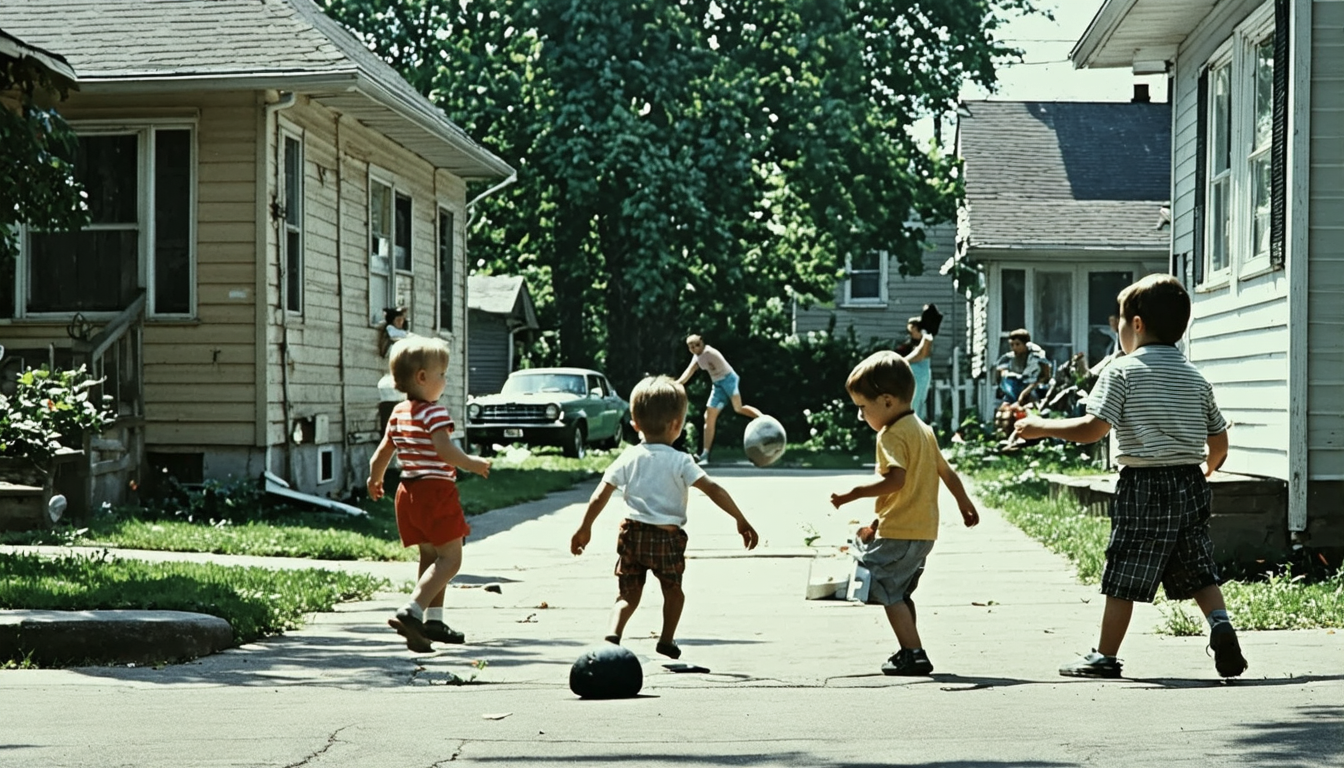
Combined with this, the absence of material abundance encouraged turning boredom into creativity. With few toys, children invented their own games, using everyday objects to create unique play universes. This dynamic led to the development of valuable practical thinking and functional creativity, which still find professional applications such as innovation or solving complex problems.
| Developed skill | Concrete manifestation in the 60-70s |
|---|---|
| Active information seeking | Library consultations, requests to local experts |
| Practical problem solving | Manual DIY, object repair |
| Perseverance | Successive experiments without quick abandonment |
This context also allowed cultivating a form of critical thinking, necessary to evaluate the validity of found information, which is a key skill more relevant than ever in 2026 in the digitally overloaded information sphere.
Practical case:
Jeanine, born in 1965, recalls how to help her family repair the old radio set, she had to learn to dismantle parts, observe their function, and sometimes improvise solutions. This experience created trust in her ability to face unknown problems from a very young age.
Adaptability: a cognitive intelligence forged by a changing world of the 60-70s
The 60s and 70s were the scene of profound socio-cultural upheavals: civil rights struggles, sexual revolutions, evolving roles of women, and challenges to traditional rules. Growing up observing and participating in these changes gave these generations an uncommon capacity for adaptability.
This ability to navigate between antagonistic paradigms — ancestral traditions on one side, emerging counter-culture on the other — taught them to integrate and respect different perspectives within the same mental horizon. Psychologically, this cognitive flexibility is a form of emotional and social intelligence that fosters better intergenerational understanding and conflict resolution skills.
Such a context also early encouraged critical thinking, prompting questioning of authority and established norms. The youth of that time, confronted with varying family and social models, learned to develop autonomous judgment, an indispensable foundation for adult life. Their ability to anticipate and adapt to continual changes is now a rare asset given the rapidity of current technological and societal evolutions.
- Rapid evolution of clothing and cultural styles
- Questioning of traditional gender roles
- Emergence of new family and professional models
- Reconciling tradition and modernity
This mental flexibility also expresses itself in these individuals’ ability to easily understand different generations, each with its own societal benchmarks, a precious gift at a time when intergenerational communication is often complex.
A contemporary perspective:
Claire, born in 1970, remembers a childhood where her parents, attached to classical values, nevertheless encouraged her to defend her personal ideas—especially during the May 68 student protests—which taught her to combine respect with critical thinking.

Independence and autonomous decision-making: a freedom envied by today’s children
Compared to today’s protective standards, childhood for generations born in the 60s-70s was characterized by a high degree of autonomy. Children roamed their neighborhoods alone, went to school alone, and spent time freely without constant parental supervision. This spatial autonomy was a crucible for building a strong capacity to manage risks and make decisions in real situations.
This freedom was often accompanied by early responsibility, with daily life tasks entrusted early on—housework to cooking—contributing to forging a deep sense of responsibility and developing effective self-discipline. Learning also took place through direct experience: mistakes were natural and useful, teaching caution and wisdom.
| Autonomous activity | Developed psychological skills |
|---|---|
| Independent school journeys | Spatial orientation, time management, anticipation |
| Outdoor play without supervision | Hazard assessment, social relations, negotiation |
| Early domestic responsibilities | Sense of responsibility, practical management |
Contemporary psychologists and educators emphasize that this model promotes the development of a robust self-confidence as well as an ability to overcome difficulties without excessive dependence on adult supervision. In a time when children are sometimes overprotected, this approach invites reconsideration of the balance between safety and autonomy.
Creativity and problem-solving in a context of limited resources
Fewer toys, fewer electronic distractions: this observation might seem like a handicap, but it was mainly the breeding ground for intense creative development. Children of the 60s-70s learned to invent their games and leisure activities from everyday objects, mobilizing their imagination to transform a simple cardboard box into a castle or a stick into a sword.
This stimulation of practical creativity was closely linked to responsible resource management, valuing repair over replacement, and ingenuity over material possession. Such an approach builds adaptability and out-of-the-box thinking, which remain major assets in 2026 both in personal and professional life.
Moreover, instruction often oriented towards manual skills – sewing, mechanics, or gardening – consolidated this skill in solving concrete problems, combining practical intelligence and logic.
- Creating toys and games with recycled materials
- Prioritizing repair and reuse
- Learning practical manual skills
- Valuing creative ingenuity over mere possession
This practical expertise illustrates a mental strength that promotes a more grounded and serene management of everyday challenges, notably in an economic and ecological context where frugality and sustainability are crucial issues.