
Faced with the explosion in volumes of information, the question of the optimal use of artificial intelligence technologies arises acutely. In particular, the choice between predictive AI and generative AI has become one of the major dilemmas for companies wishing to leverage Big Data to improve their performance and innovate. These two branches of artificial intelligence certainly rely on machine learning and algorithmic models, but they pursue very different objectives, while offering complementary usage opportunities within data processing, decision-making, and value creation.
In an economic context marked by unprecedented speed of evolution, the use of predictive AI makes it possible to optimize the management of historical data, anticipate trends, and significantly reduce uncertainty in operational processes. Predictive algorithms analyze massive data sets by applying advanced statistics to provide reliable projections, essential in sectors such as logistics, finance, or industrial maintenance. At the same time, generative AI disrupts paradigms by producing original content, adapting to varied scenarios through user interactions. Whether to generate text, code, images, or even complex simulations, this approach emphasizes technological innovation and applied creativity.
Through a detailed exploration of these two forms of artificial intelligence, their functioning, advantages, but also their limitations, this article guides you through the strategic choices faced today by decision-makers and CIOs. The analysis of use cases, the insight on security challenges, and the perspective of future hybridization help to better understand how companies can build high-performance and responsive Big Data infrastructures at the dawn of 2026.
- 1 The fundamental differences between predictive AI and generative AI in data analysis
- 2 How generative AI transforms the user experience in the video game sector
- 3 Predictive AI: an essential lever for online gambling platforms
- 4 Technical distinction and uses of predictive versus generative models in Big Data
- 5 Why collaboration between predictive and generative AI is becoming essential today
- 6 Security, reliability, and governance challenges in the use of predictive and generative AI
- 7 2026 outlook: towards a unified Big Data architecture integrating predictive and generative AI
- 7.1 What is the main difference between predictive AI and generative AI?
- 7.2 In which fields is predictive AI particularly effective?
- 7.3 What are the risks associated with the use of generative AI?
- 7.4 How to ensure the reliability of predictive algorithms?
- 7.5 Why combine predictive AI and generative AI in the same infrastructure?
The fundamental differences between predictive AI and generative AI in data analysis
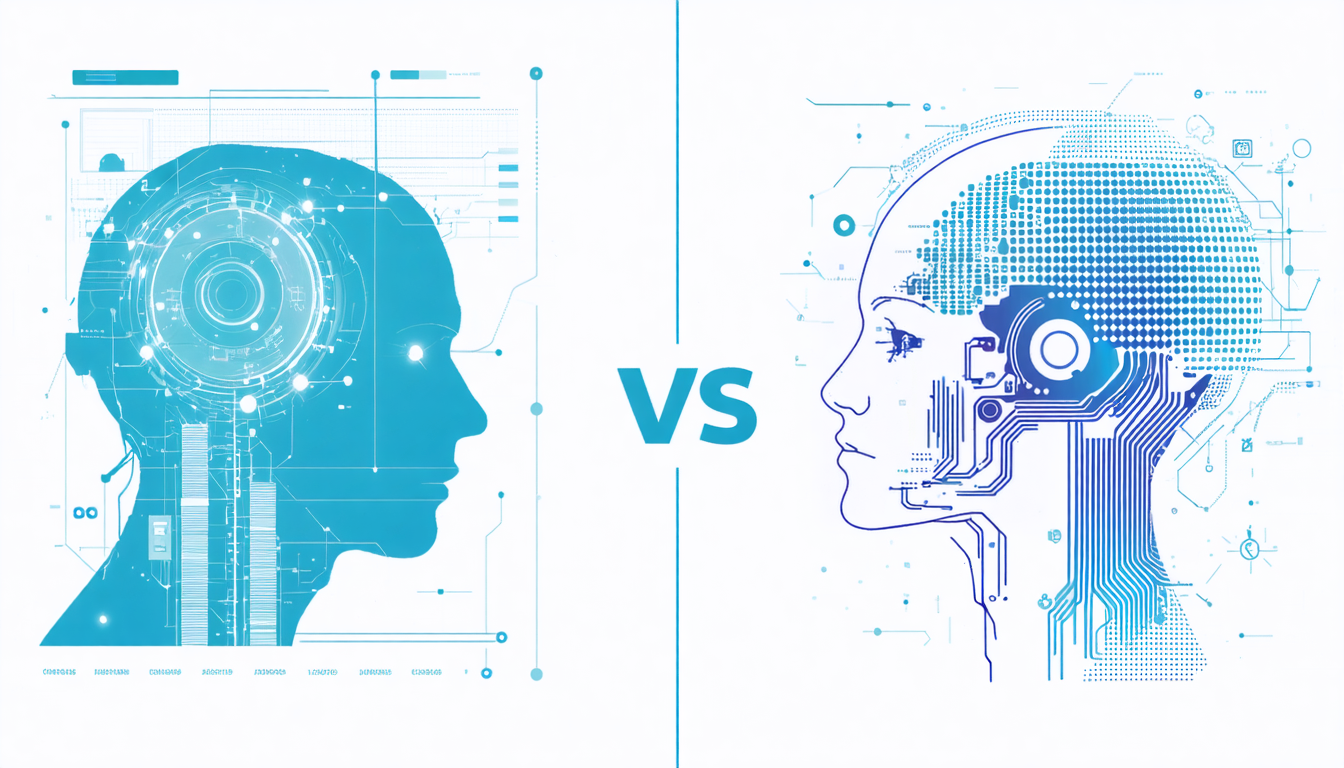
To understand the nature of predictive AI and generative AI, it is essential to analyze their underlying mechanisms as well as their purposes. Predictive AI, which mainly relies on statistical models and machine learning, focuses on exploiting “clean” and structured historical data. Its ambition is to identify recurring patterns in order to forecast future results with a controlled margin of error. For example, in the industrial field, this technology can determine the probability of equipment failure, which allows for the implementation of effective predictive maintenance.
Conversely, generative AI is based on probabilistic models capable of exploring a multitude of unprecedented combinations from often unstructured data, such as text, images, or audio recordings. Unlike the rigorous determination of the most probable answer, it aims to create original content, whether dialogues, scenarios, computer code, or images. Its goal is therefore less precision than creativity and the richness of the possibilities offered.
To illustrate this difference by a metaphor, predictive AI can be seen as a flashlight illuminating a known path and helping avoid traps, while generative AI would be a magic lantern projecting unexpected images, opening new perspectives. This distinction is crucial, as a poorly adapted choice can generate high costs and delays in data processing within Big Data architectures.
The concrete applications of these technologies clearly show this opposition: predictive AI focuses on stability and optimization of routine operations, while generative AI enriches innovation and personalization through creative exploration. We will see later how they can nevertheless collaborate harmoniously to multiply added value.
How generative AI transforms the user experience in the video game sector
Video games constitute a prime example of the creative power of generative artificial intelligence. Rather than predicting a concrete future event or behavior, generative AI in this field acts as a constant innovation engine to enrich the immersive experience of players.
In modern games, generative algorithms create dynamic dialogues that evolve according to the player’s actions and choices, thus generating a personalized narrative without a fixed scenario limiting the development. In addition, these models produce procedural environments where maps, quests, and characters adapt spontaneously and dynamically. For example, a player exploring a forest in an adventure game may discover a different landscape each time, with new missions adapted to their play style.
This ability to produce “new” content continuously renewed is at the heart of player retention. The added value lies in the creation of an evolving narrative and a user experience always unique and surprising, thus fostering long-term engagement. Moreover, some companies integrate generative AI to adjust level difficulty in real time, promoting an intelligent balance between challenge and enjoyment, which helps optimize user retention.
From this perspective, generative artificial intelligence goes far beyond a simple technological tool: it literally shapes the virtual universe and redefines interactions between man and machine. This technological innovation also leads to new forms of scripting where the player becomes a co-creator of the story, thus energizing the overall video game ecosystem.
The economic impact of generative AI on the video game industry
Economically, the integration of generative AI in development processes reduces costs associated with the manual design of repetitive or voluminous elements, such as creating environments, secondary characters, or dialogues. This allows studios to invest more in narrative quality and innovation.
Furthermore, the extreme personalization enabled by generative AI fosters the rise of economic models based on subscriptions or personalized additional content. Players are willing to pay more for rich, unique, and evolving experiences, which boosts platform revenues.
This trend, confirmed in 2026, also transforms the value chain of the sector, pushing stakeholders to adopt ever more advanced technologies and rethink their marketing and product strategies to fully benefit from the adaptability and creative capabilities of generative AI.
Predictive AI: an essential lever for online gambling platforms
In stark contrast, the online gambling sector illustrates the power and relevance of predictive AI in personalizing offers and managing risks. Unlike generative AI that seeks to create, here, the action is entirely focused on anticipating and systematically modeling player behavior.
A tangible example lies in the personalization of the home screens of online casinos. Thanks to predictive models, each user sees an interface adapted to their preferences, gaming habits, and statistical profiles. If a player particularly likes blackjack, algorithms will recommend similar alternatives, such as video poker, a game combining a high return-to-player rate (almost 99%) and a need for strategy.
These recommendations are based on concrete variables such as game pace, volatility, and offered bonuses, ensuring a smooth user experience while maximizing chances of satisfaction and loyalty. Moreover, these predictive systems help limit risky behaviors by detecting early signs of addiction or abuse, contributing to the social responsibility of platforms.
Beyond personalization, predictive AI also plays a crucial role in securing transactions, detecting fraud, and continuously improving offers by adapting the commercial strategy to the evolution of player profiles and the market.
Transparency and ethical challenges in predictive algorithms
Like any mathematical system, predictive models are sensitive to the quality and representativeness of the data used. A biased or corrupted database can cause interpretation errors, penalizing users and weakening trust in platforms. Companies must therefore ensure the robustness of their ETL processes, maintain constant updates of models, and act on possible deviations.
Moreover, transparency of systems is essential to comply with legal and ethical standards, especially regarding personal data protection. Algorithms must be regularly audited and integrated into a responsible governance framework, where humans maintain effective control over decision-making.

Technical distinction and uses of predictive versus generative models in Big Data
The fundamental distinction between predictive AI and generative AI also materializes in their mode of integration and exploitation of Big Data works. Predictive models mainly operate with clean, structured, and labeled data. This rigor is essential to produce reliable forecasts, thus guiding strategic and operational decision-making in critical environments.
For example, real-time stock optimization relies on precise time series and fine statistical analysis to anticipate demand. Similarly, predictive maintenance of machines uses sensors and failure histories to avoid unexpected production stoppages.
On the other hand, generative AI excels in processing so-called “dormant” or unstructured data, such as PDF documents, email communications, or technical knowledge bases. It allows querying these masses of information in natural language, offering considerable accessibility gains and energizing the valorization of capitalized data without direct exploitation.
Through the creation of synthetic data sets, generative AI also provides a response to the crucial issue of confidentiality, allowing other models to be trained while preserving anonymity of real personal data.
| Aspect | Predictive AI | Generative AI |
|---|---|---|
| Main objective | Anticipate and forecast future events | Create new and original content |
| Type of data | Structured and historical data | Unstructured and varied data |
| Technical approach | Statistical models and supervised learning | Probabilistic models and unsupervised learning |
| Usage examples | Predictive maintenance, stock optimization, risk management | Text generation, report synthesis, multimedia creation |
| Limitations | Sensitive to data biases, requires clean data | Risk of hallucinations, data confidentiality |
This clear distinction guides Big Data architecture decisions, avoiding confusion and inefficiencies in deployment.
Why collaboration between predictive and generative AI is becoming essential today
Several case studies demonstrate that the real value of data analysis lies in the intelligent association of the two types of artificial intelligence. The Norauto brand, for example, combined predictive analysis to anticipate its sales with generative AI to develop adapted advertising campaigns. This hybridization allowed the company to increase its omnichannel turnover by 20% while improving the advertising return on investment by 18% in barely ten weeks.
This success is based on the ability of predictive AI to provide precise insights on demand and customer behavior, allowing generative AI to adapt advertising content in real time to better capture attention and optimize conversion.
In another register, data management in natural language illustrates how generative AI facilitates access to predictive analysis results by producing clear summaries and actionable recommendations, even for teams not specialized in data science.
This complementarity opens up unprecedented perspectives in technological innovation, fostering decision-making that is both proactive and creative, key to facing the complex challenges of the contemporary market.

The concrete strengths of predictive and generative AI hybridization
- Increased accuracy: Predictive AI provides solid foundations on which generative AI can rely to generate relevant content or recommendations.
- Enhanced accessibility: Generative AI facilitates data interpretation, making predictive results understandable to all.
- Continuous innovation: Together, they enable adaptive scenarios and renewed creativity.
- Risk reduction: The accuracy of predictive models tempers the uncertainty of generative ones.
- Resource optimization: A unified infrastructure minimizes costs and improves responsiveness.
Security, reliability, and governance challenges in the use of predictive and generative AI
The growing integration of these technologies raises new major challenges for IT and Data managers. In terms of security, predictive AI requires impeccable data quality. Any biased or erroneous data compromises the validity of forecasts, known as “Garbage In, Garbage Out.”
It is therefore essential to deploy rigorous ETL processes as well as continuous monitoring of models to detect any drift phenomena (model drift). These mechanisms ensure that algorithms remain adapted to evolving markets and behaviors.
For generative AI, the issue is different and sometimes more thorny. Generative models can produce “hallucinations,” i.e., incorrect information presented as credible. This can generate significant legal, commercial, and operational risks. Moreover, the confidentiality of data entered into prompts must be ensured, especially if using cloud-based solutions or public models.
Secure architectures, such as RAG (Retrieval-Augmented Generation) systems, appear as a response to limit these risks by anchoring generative responses in a verified and controlled database, thus ensuring reinforced reliability.
That is why human supervision remains essential in decision-making processes involving these technologies, ensuring enlightened final validation and permanent compliance and security monitoring.
2026 outlook: towards a unified Big Data architecture integrating predictive and generative AI
As 2026 progresses, the technological ecosystem shows a clear trend towards convergence of predictive and generative AI solutions. Companies no longer seek to choose between these two approaches but to build adaptive infrastructures that simultaneously exploit their respective strengths.
This technological hybridization offers an intelligent system where prediction feeds content and decision generation, thus creating virtuous cycles of innovation and efficiency. The French market, in particular, benefits from notable growth with more than 1,000 AI startups recorded in 2025, illustrating the vitality and maturity of this ecosystem.
These developments also encourage the emergence of sovereign tools, limiting dependency on extra-European actors while providing customized solutions adapted to the specific challenges of large companies. In this context, the roadmap for IT managers consists of investing in platforms capable of intelligently managing the predictive-generative duality, thus enabling decision-making that is both agile and creative, serving a data strategy resolutely oriented towards the future.
What is the main difference between predictive AI and generative AI?
Predictive AI aims to anticipate future outcomes based on structured historical data, while generative AI creates new and original content from unstructured data.
In which fields is predictive AI particularly effective?
Predictive AI excels in sectors requiring rigorous planning, such as logistics, industrial maintenance, finance, and risk management.
What are the risks associated with the use of generative AI?
The main risks include hallucinations where AI produces incorrect information, as well as issues related to the confidentiality of data used in the models.
How to ensure the reliability of predictive algorithms?
This requires rigorous data quality management, solid ETL processes, and continuous monitoring of models to avoid any drift from reality.
Why combine predictive AI and generative AI in the same infrastructure?
The combination allows benefiting from both the accuracy of predictions and the creative richness, facilitating more agile and innovative decision-making.