In our contemporary society, the colors we choose to wear tell much more than just our simple aesthetic taste. They become a true emotional and psychological language, a mirror of our moods and our level of self-confidence. Indeed, color psychology shows that certain chromatic choices, often unconscious, reveal our inner vulnerabilities and how we assert ourselves to the world. In 2026, understanding this subtle link between hues and personal confidence has become a key issue for those who wish to better control their image and strengthen their self-esteem. This article proposes to explore the shades that betray the search for confidence, while offering a new perspective on how to transform these colored allegiances into true weapons of personal expression and lasting charisma.
Colors strongly influence not only our mood but also how others perceive us. Clothing thus becomes an extension of our personality, playing a key role in self-assertion. Through this analysis, you will discover which tones are often chosen by individuals seeking reassuring visibility and what hidden signals may lie behind these wardrobe preferences. We will also examine how to go beyond these emotional plateaus, to infuse your wardrobe with positive energy in harmony with an affirmed and secure identity.
- 1 The foundations of color psychology and their impact on self-confidence
- 2 Blue: a soothing refuge but revealing a need for validation
- 3 Neutral colors: strategies of fading away and fear of judgment
- 4 Black: between assumed elegance and masked self-defense
- 5 Possible transformations: using color to strengthen charisma and self-esteem
The foundations of color psychology and their impact on self-confidence
Color psychology is based on multidisciplinary research, combining neuroscience, sociology, and cognitive sciences. These studies demonstrate that each shade carries a symbolic charge capable of changing the way we perceive ourselves and how we are perceived by others. For example, studies have shown that about 35% of personal esteem can be influenced by the colors we wear, while the first visual impression is based 62% on non-verbal language, among which color plays a central role.
Eva Heller, a pioneer in this field, identified that our collective unconscious assigns deeply rooted emotions to certain hues. These emotions shape our relationship with our own image and influence our self-assertion. Wearing a soothing color or an energy booster can thus act as a powerful lever to enhance our charisma and boost our esteem. Conversely, repetitive choices within a limited and dull palette may reflect an inner struggle with a feeling of insecurity.
This psychological understanding finds an enlightening application in what is called “enclothed cognition,” theorized by researchers Adam and Galinsky. This concept states that clothing, through its tactile and symbolic characteristics, modifies not only our outward image but also our cognitive functions. Thus, unconsciously choosing certain colors reflects our psychological state at the moment, a powerful tool for individuals seeking self-confidence who use their wardrobe as an invisible armor against social scrutiny.
Impact of colors on perception and personal esteem
| Psychological aspect | Measured effect |
|---|---|
| Changes in personal esteem | +/- 35% |
| Influence on the first impression | 62% |
| Confidence projected by non-verbal language | +/- 40% |
This numerical illustration highlights how our chromatic choices are never trivial, especially when it comes to affirming a personality or expressing a posture of self-confidence. With this in mind, let us move forward to discover the colors most frequently associated with an unconscious search for inner security.
Blue: a soothing refuge but revealing a need for validation
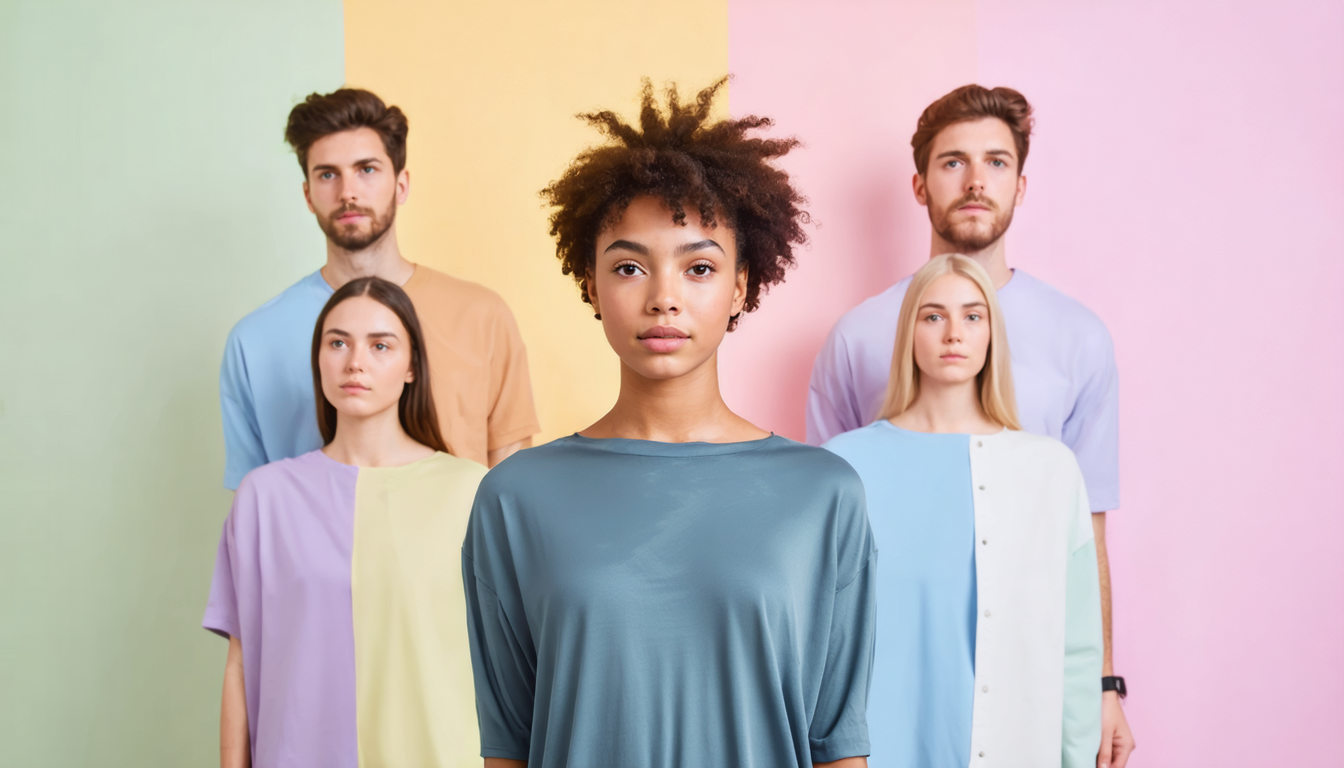
Among the so-called “revealing” colors, blue holds a special place. A traditional symbol of calm and serenity, this tone is often adopted by those seeking emotional anchoring and a feeling of security. Yet, when it settles permanently in the wardrobe, it often signals a desire to please and be accepted, reflecting a deep lack of confidence.
The spectrum of blue is broad, ranging from pastel blue to navy blue, including more faded shades like washed-out blue. Each has a specific psychological meaning illustrating various manifestations of a personality seeking balance.
- Pastel blue: reveals a rather withdrawn personality, preferring to avoid conflict at all costs.
- Navy blue: reveals a need for rigid structure, a desire to control one’s environment.
- Washed-out blue: expresses an underlying fear of social confrontations.
- Sky blue: expresses an assumed vulnerability, a form of fragile confidence.
In a professional context, it is not uncommon for individuals to consistently opt for blue, often perceived as reassuring and consensual. However, this repetition can betray a lack of daring and an unconscious refusal to assert a more dynamic and assertive colorful identity. By favoring a reassuring shade, they prefer to fade away rather than risk negative judgment.
Blue, despite its popularity, can in 2026 be seen as an invitation to rethink our mode of personal expression, to dare to assert oneself more through bolder touches, to strengthen a true and lasting self-confidence.
Neutral colors: strategies of fading away and fear of judgment
Besides blue, certain neutral colors dominate the wardrobes of people who unconsciously seek to protect themselves. Gray, beige, and taupe then appear as shades testifying to a deep desire to go unnoticed in a world often seen as hostile to vulnerability.
Particularly, gray is called the “color of fading away” because it allows minimizing social visibility and sheltering behind a voluntary neutrality. It is often chosen by individuals whose self-esteem is fragile and who wish to avoid any criticism or intrusive questioning.
Beige and its earthly variants, such as taupe or sand, follow the same protective logic but often indicate a stronger need for emotional security. These shades facilitate social camouflage, representing a subtle compromise between presence and fading away.
| Neutral color | Underlying psychological message |
|---|---|
| Light gray | Desire for social transparency and not to disturb |
| Beige | Search for anchoring and emotional security |
| Taupe | Compromise between conscious presence and voluntary fading |
Through these preferences, a clear message emerges: avoiding confrontation and the weight of others’ gaze to preserve a certain serenity despite roots of insecurity. These clothing strategies, although unconscious, act as real non-verbal codes modulating relational dynamics.
Brown: an underestimated shade for camouflaging vulnerability
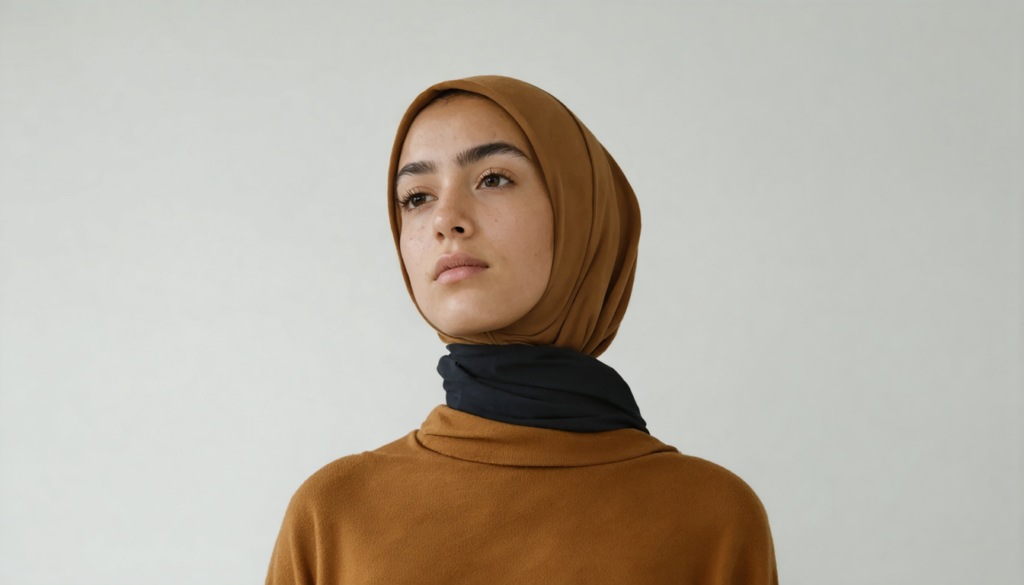
Brown fits into this continuity with a charged but often unknown symbolism. Often neglected in contemporary fashion, this earthy color conveys an attachment to stability at the expense of an expression vibrant with energy and new ideas.
Regularly choosing brown reflects a need for strong anchoring, but also a will to try to disappear without attracting attention. This shade acts as a shield, allowing those who wear it to avoid social spectacle while maintaining a discreet but socially acceptable presence.
- Dark brown: suggests a defensive retreat into oneself, a refusal of outside scrutiny.
- Camel: reveals shyness masked by elegant sobriety.
- Chocolate: expresses a need for material comfort and tangible well-being.
- Military khaki: camouflages fragility behind a functional appearance.
These variations reinforce the idea that color here becomes a vector of personal expression, often tacit, which informs us about intimate dynamics linked to our self-esteem in construction or deficit. Brown thus reveals a facet of identity that many prefer to conceal, yet essential to understand in order to progress in confidence.
Black: between assumed elegance and masked self-defense
Black holds an ambivalent place in the palette of colors revealing self-confidence. Often associated with elegance and sophistication, it can serve, in some cases, as a true psychological armor. Wearing exclusively black reflects a protection mechanism aimed at creating an invisible distance between oneself and others, to hide areas of strong vulnerability.
Contrary to popular belief, all-black is not necessarily a choice of assurance. It can sometimes reflect a fear of judgment and a reluctance to step out of one’s comfort zone. By adopting a strict monochrome, people avoid the risk of a wrong choice perceived as a social mistake. This chromatic “uniformity” acts as a barrier with its own symbolic nuances.
| Shade of black | Behavioral meaning |
|---|---|
| Everyday solid black | Excessive protection mechanism, social avoidance |
| Washed-out black | Emotional fatigue, inner tiredness |
| Shiny black | Attempt to compensate for underlying insecurity |
This all-black look can also distance others, reinforcing the feeling of isolation in the person wearing it. Clothing then ceases to be a means of self-expression to become a barrier in building social relationships. Understanding this dynamic invites thinking of color as a potential therapeutic tool to gradually rebuild a more confident and brighter identity.
Possible transformations: using color to strengthen charisma and self-esteem
Recognizing the signals emitted by our clothing choices opens the way to an inner revolution accessible to all. Gradually replacing protective and dull shades with more assertive colors allows introducing a new dynamic in our relationship with ourselves and our environment. This approach fits within a logic of self-assertion and the blossoming of a natural charisma.
It is not necessary to radically change one’s style. Sometimes, a simple touch of vibrant color is enough to trigger an avalanche of positive energy and alter external reactions. These small colorful steps become signals of a personality that embraces itself, expresses itself, and gains esteem. The phenomenon of “Dopamine dressing” that became popular in contemporary fashion from 2020 to 2025 attests to this: the choice of dynamic shades like red, purple, or electric blue acts as a true psychological stimulant.
- Use red to express boldness and dynamism
- Introduce purple to reveal creativity and originality
- Adopt touches of electric blue to boost confidence
- Prefer yellow tones to reinforce joy and inner light
This positive palette is not limited to improving external image. It profoundly modifies the internal perception that nourishes any dynamic of self-assertion. Gradually, the chromatic transformation accompanies a global process of strengthening self-esteem, which sustainably fuels charisma.
Understanding the mechanisms concerning revealing colors is therefore arming oneself with a powerful tool to become an actor of one’s own identity. Clothing ceases to be mere coverings to become interfaces of expression and communication, revealing a personality that dares to shine.