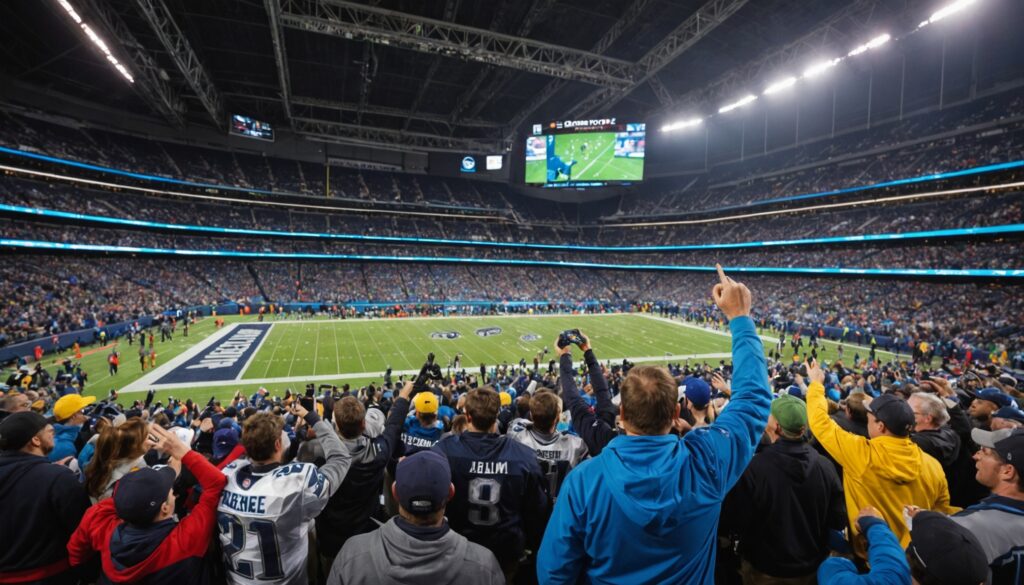
On February 4th, during the Super Bowl, the most watched televised event in the United States, the duel between giants of artificial intelligence took an unexpected turn. Anthropic, an innovative start-up in the field of AI, seized this colossal stage to broadcast a series of advertisements indirectly targeting OpenAI, sparking a wave of reactions, notably the sharp and disappointed response of Sam Altman, CEO of OpenAI. Beyond a mere commercial dispute, this confrontation highlights deep issues related to the economic models underpinning the evolution of conversational assistants, whose societal reach continues to grow with the increasing importance of AI in 2026.
Through a campaign as bold as it is controversial, Anthropic did not only aim to entertain or provoke. The underlying message questions the transformation of chatbots into platforms flooded with advertising, a hot topic as OpenAI begins to introduce ads on ChatGPT to finance its free usage. Sam Altman’s response, marked by a tone harsher than usual, reveals how strongly the battle for legitimacy and control among AI giants is driven by powerful strategic, economic, and ethical interests.
- 1 Anthropic’s Super Bowl ads, a strategic masterstroke against OpenAI
- 2 The massive Super Bowl audience, an ideal ground for taking a “jab” at OpenAI
- 3 Sam Altman’s sharp and offended response to Anthropic’s provocation
- 4 The profound implications of advertising in AI assistants: a crucial ethical and economic debate
- 5 The intensification of competition in the artificial intelligence sector through an image and legitimacy war
- 6 Public reactions and stakes for the reputation of AI players in 2026
- 7 A decisive turning point for the legitimacy and future of intelligent assistants
- 8 FAQ on the controversy between Anthropic and OpenAI at the Super Bowl
Anthropic’s Super Bowl ads, a strategic masterstroke against OpenAI
Seizing the Super Bowl opportunity to launch an advertising campaign is never trivial. In 2026, this event attracts over 130 million viewers, offering an exceptional platform for any brand or company wishing to maximize its visibility. In this context, Anthropic made a bold choice by investing several million dollars in offbeat spots implicitly targeting OpenAI’s flagship tool.
The ads feature a human chatbot who begins delivering relevant advice, before abruptly interrupting its responses to promote increasingly incongruous products: orthopedic insoles, dating services, fictitious products… This deliberate caricature expresses the fear that the rise of advertising in AI assistants could harm their primary function — to be a help tool and not a disguised billboard.
Anthropic’s major interest lies in its strong promise: unlike OpenAI, their chatbot “Claude” will never broadcast intrusive ads. This differentiation aligns perfectly with a more stable economic model centered on paid subscriptions targeting businesses, thus avoiding the need for massive free adoption reliant on advertising.
At the heart of this strategy is also a clear desire to position Anthropic as an ethical and responsible alternative in the fierce competition of AI technologies. Offering an ad-free experience, especially in this context where OpenAI is beginning to change direction, amplifies the impact of the message by demonstrating a different vision of the balance between accessibility and respect for the user.
The massive Super Bowl audience, an ideal ground for taking a “jab” at OpenAI
Advertising during the Super Bowl remains a colossal and highly selective investment. Each 30-second spot can cost between 8 and 10 million dollars, making it a luxury reserved for the most ambitious advertisers willing to pay the price to reach a diverse and gigantic audience.
Anthropic therefore took on this cost to deliver its message that is both promotional and critical, betting on the fact that these millions of American and international viewers would be attentive to this jab directed at the OpenAI giant. This choice reveals the strategic maturity of the start-up, which no longer confines itself to technological development but enters the war of communication and image.
This campaign perfectly overlaps with the context of the evolution of OpenAI’s economic model. Indeed, the company is now testing integrated advertising on ChatGPT in certain versions, a move explained by the need to fund the free access and explosive growth of its user base. Anthropic sees this as a betrayal of previously stated principles and chooses to publicly denounce this pivot during the highlight moment of American television.
The highlight of a human chatbot that “sells” vaguely anything after a promising start immediately raises questions about the user’s perception of the aggressive commercialization of AI assistants. This directly plays on doubts related to the pollution of the service by sponsored content and on the very integrity of the technology.
Comparative table of the economic models of Anthropic and OpenAI in 2026
| Criterion | Anthropic | OpenAI |
|---|---|---|
| Main economic model | Paid subscriptions, B2B | Freemium + Advertising |
| Target audience | Businesses and paying users | General public with free access funded by ads |
| Advertising in AI responses | No | Testing on ChatGPT |
| Adoption strategy | Targeted market, controlled growth | Mass adoption, industrialization |
| Ethical positioning | Focus on transparency, user experience | Commitments, but possible exceptions |
Sam Altman’s sharp and offended response to Anthropic’s provocation
Sam Altman’s response on the X network (formerly Twitter) did not take long. The CEO of OpenAI called Anthropic’s ads “manifestly dishonest.” While acknowledging pleasant humor, the tone later hardened with insistence on the falsity of accusations regarding advertising intrusion in ChatGPT conversations.
Sam Altman wants to reassure and states that OpenAI is committed not to insert intrusive ads in the answers provided by its AI models. He also specifies that conversations will never be shared with advertisers, thus guaranteeing confidentiality and the integrity of the user experience.
Furthermore, Altman accuses Anthropic of adopting an elitist vision by targeting a restricted and wealthy audience, while seeking to control the AI ecosystem through selective barriers. This criticism highlights the heart of the dispute: the divergent conception of democratization and accessibility to AI.
It is noticeable that the tone of this response contrasts with the usually measured stance of the OpenAI president, revealing a genuine discomfort. This tension also reflects the growing pressure linked to the need to preserve the reputation and trust surrounding ChatGPT, now the nerve center of AI innovations and subject to sensitive public scrutiny.
The profound implications of advertising in AI assistants: a crucial ethical and economic debate
Beyond the media confrontation, Anthropic’s ads raise a central issue in the development of artificial intelligence tools: the risk that advertising modifies the user experience, or even biases the responses provided by conversational assistants.
The fear expressed in these caricatural ads is not unfounded. As advertising has permeated digital platforms, whether social networks or search engines, it has often altered priorities and behaviors, sometimes to the detriment of users. This mutation is feared in the AI world where neutrality and relevance of responses are essential.
The BBC highlights that Sam Altman has promised “strict safeguards” to ensure that advertising is clearly identified, that responses remain uninfluenced by commercial considerations, and that the confidentiality of conversations is protected. However, the specter of past abuses casts a legitimate doubt in the minds of users and experts.
The essential question, raised by Anthropic, is that of the intrinsic conflict of interest when funding depends on advertisers. Can a paid and independent assistant truly offer objective advice without compromise? This question goes beyond OpenAI and stands as one of the major challenges for the entire AI industry, which seeks to establish legitimacy in an ultra-competitive market.
List of risks associated with invasive advertising in AI assistants
- Loss of user trust due to commercial intrusion
- Bias in responses favoring advertisers
- Deterioration of the quality and usefulness of advice
- Invasion of privacy through conversation data analysis
- Standardization of usage driven by commercial interests rather than real needs
The intensification of competition in the artificial intelligence sector through an image and legitimacy war
For several years, competition among AI leaders has no longer been limited to the raw performance of models. The strategic battle now extends to building a brand image around ethics, a sustainable economic model, and a trust relationship with users.
In this context, Anthropic’s “jab” during the Super Bowl is more than a simple marketing operation: it is a strong signal sent to the entire industry about the need to maintain high standards and offer products aligned with responsible values.
Sam Altman’s strong reaction shows that managing public image has become a central issue. The balance between massive accessibility and technical integrity becomes a complex challenge, with risks of quality dilution or loss of trust posing direct threats to the sustainability of OpenAI and its competitors.
This dynamic highlights fundamental differences in the vision of the players. Anthropic seems to prioritize controlled growth and enhanced ethical commitment, while OpenAI chooses a massive industrialization strategy, supported by diversified revenues including advertising. This conflict is symptomatic of a pivotal moment in the sector’s evolution.
Public reactions and stakes for the reputation of AI players in 2026
Advertising campaigns as bold and unexpected as Anthropic’s, and strong reactions like Sam Altman’s, strongly influence public opinion. In 2026, users are increasingly attentive to the ethics of tech companies and how AI impacts their daily lives.
A study conducted with several thousand AI assistant users early in the year reveals that more than 64% of respondents worry about potential advertising intrusion in their interactions with chatbots. This feeling reinforces the need for companies to carefully manage their image, particularly by guaranteeing transparency and respect for privacy.
Brands that embody these values naturally gain public trust, as shown by the growing preference for solutions like Anthropic’s Claude, which relies on a paid, ad-free model. This trend marks an evolution in the relationship between innovation and social responsibility, with the rise of a deep and informed consumer.
Key points to remember about the impact of this confrontation in the media
- Amplification of the international debate on AI ethics
- Valorization of sober economic models focused on the user
- Potential market rebalancing with the emergence of paid alternatives
- Increased awareness of the risks related to invasive advertising
- Strengthening of public scrutiny on the practices of AI giants
A decisive turning point for the legitimacy and future of intelligent assistants
The confrontation between Anthropic and OpenAI at the 2026 Super Bowl illustrates a major shift in how artificial intelligence is perceived and regulated. It is no longer only technological prowess that counts but also how players incorporate ethics, economic models, and user expectations into their strategy.
Through this public duel filled with humor and aggression, a future emerges where trust must be the cornerstone of AI assistant success. Users in 2026 demand not only performance from their tools but also respect, transparency, and protection of their data.
Intrusive advertising in chatbots, denounced by Anthropic, represents a crucial test for the industry. It raises questions that will far exceed the industry alone and will condition how artificial intelligence will be sustainably integrated into society.
FAQ on the controversy between Anthropic and OpenAI at the Super Bowl
Why did Anthropic choose the Super Bowl for its campaign?
The Super Bowl is the most watched televised event in the United States, with over 130 million viewers in 2026. This exceptional audience allows Anthropic to maximize the visibility of its critical message towards OpenAI.
What is Anthropic’s main criticism of OpenAI?
Anthropic denounces the introduction of advertising in OpenAI’s AI assistants, fearing that it transforms chatbots into platforms flooded with promotions, harming their usefulness and user trust.
How did Sam Altman react to Anthropic’s ads?
Sam Altman called Anthropic’s criticisms dishonest, while defending OpenAI’s commitment not to broadcast intrusive ads in responses and to protect user data.
What are the risks of advertising in AI assistants?
The risks include loss of user trust, biased responses favoring certain advertisers, degradation of advice quality, and data privacy issues.
What is the main difference between the economic models of Anthropic and OpenAI?
Anthropic favors a model based on paid subscriptions without advertising, mainly aimed at businesses, whereas OpenAI relies on a freemium model partially funded by advertising targeting a much wider audience.