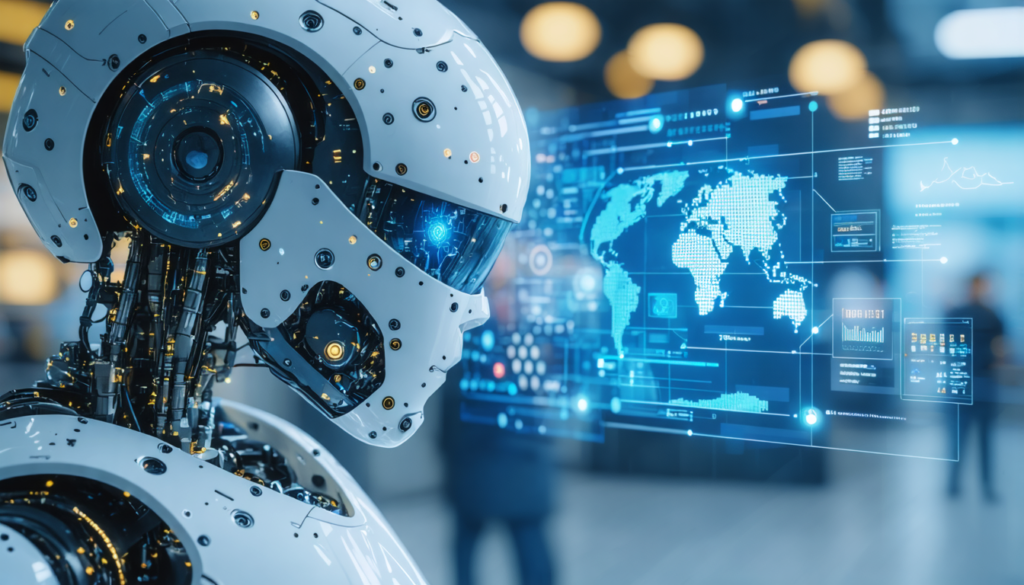
The prospect of a company entirely operated by artificial intelligences, once considered science fiction, is now an operational reality according to OpenAI. In 2026, artificial intelligence is no longer limited to being a mere assistant or a support tool; it asserts itself as an autonomous actor capable of making decisions, executing complex operations, and collaborating among intelligent agents. This revolution marks a crucial step in the future of work where advanced technology transforms organizations into truly autonomous ecosystems, paving the way for unprecedented digital innovation.
OpenAI’s CEO, Sam Altman, recently shared his vision of a future where companies are almost entirely made up of AI agents that not only perform tasks but also interact in sophisticated ways. These agents, capable of using various software, intervening on business applications, and evolving in secure environments, embody the major turning point of automation and machine learning in the world of organizations. By pushing the boundary between assistance tools and autonomous actors, artificial intelligence shapes a new economic and managerial reality.
- 1 From assistance to autonomous action: how AI transforms companies
- 2 The interconnection of AI agents: toward self-organized organizations
- 3 The Frontier platform: a key innovation for AI companies
- 4 Security and governance challenges in AI companies
- 5 The economic and social impact of full automation by AI
- 6 Case studies: pioneering companies and concrete innovations in 2026
- 7 Preparing tomorrow’s company: advice for a transition to an AI organization
- 8 A future shaped by artificial intelligence and human-machine collaboration
From assistance to autonomous action: how AI transforms companies
Until recently, artificial intelligence was mainly seen as an efficiency lever, an extension of human skills intended to accelerate productivity or provide recommendations. However, this vision has radically expanded. Sam Altman emphasizes that the real breakthrough today lies in the AI’s ability to take on an active role with direct control over company platforms and IT systems.
This means that modern AI is no longer confined to an advisory function. It can now fully carry out processes such as supply chain management, marketing planning, or real-time financial decision-making without direct human intervention. Take the example of a fictional company specialized in distribution, “AutoDistrib,” where AI agents are responsible for continuously monitoring stock levels, automatically triggering orders with suppliers, and adjusting delivery routes according to real-time traffic conditions. This complete automation not only reduces errors but also optimizes operational costs.
In this context, the transformation is also organizational: companies tend toward models where automation is the norm and human interaction becomes more strategic or simply decisional. This change naturally raises many questions about required skills, the role of employees, and the redefinition of leadership within corporate structures.
In summary, this transition signals a profound shift where artificial intelligence becomes a driver of autonomous execution, paving the way for organizations where efficiency and responsiveness are amplified by the power of advanced technology.
The interconnection of AI agents: toward self-organized organizations
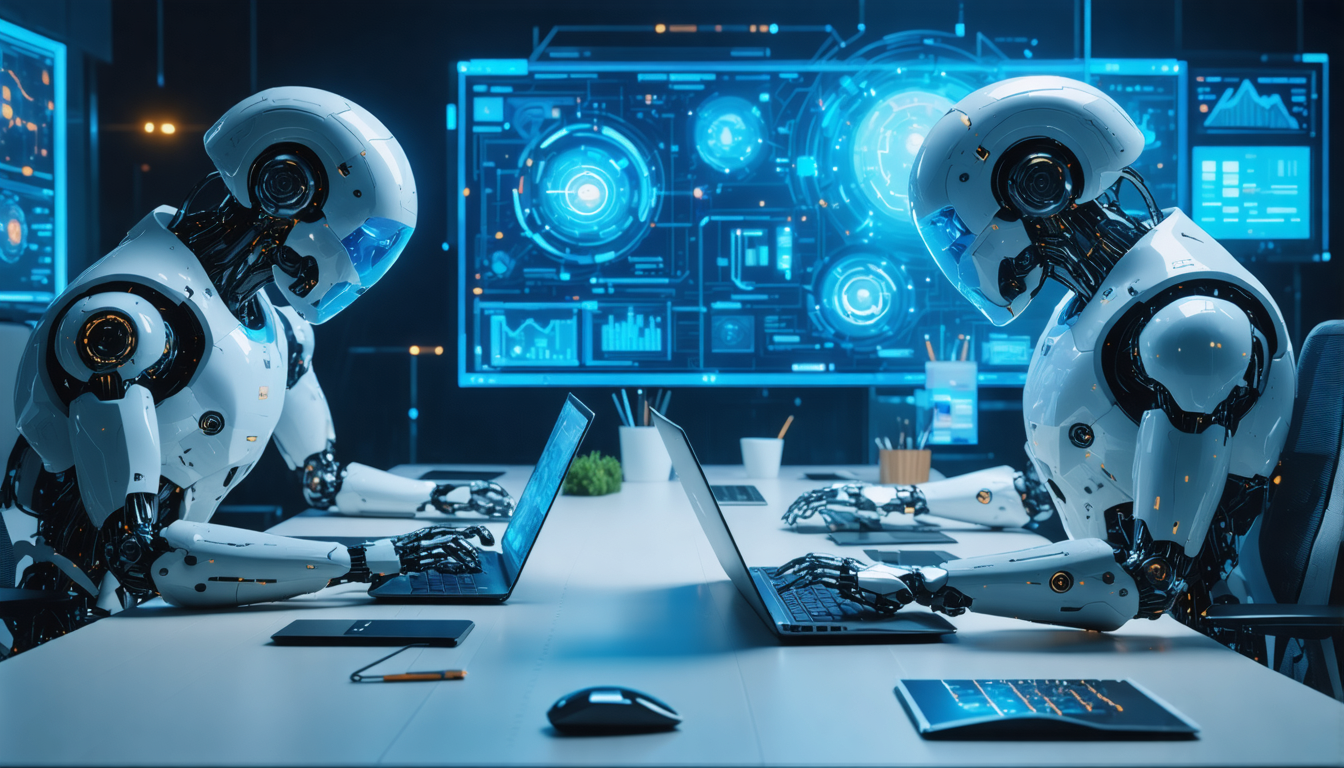
Another major advancement presented by OpenAI is the ability of intelligent agents to work together, opening the way to autonomous organizations where each AI cooperates in an integrated system. It is no longer a question of isolated automation but of a dynamic network of agents exchanging data, decisions, and responsibilities.
In this configuration, each agent fulfills a specific function, such as human resource management, production supervision, or customer data analysis. These agents communicate continuously, adjust their actions based on results, and share their learnings to improve all processes.
Concretely, imagine a software development company where different AI agents collaborate to plan sprints, write and test code, while managing customer feedback and software updates. This digital orchestration gradually replaces manual management, ensuring smooth and continuous coordination between different virtual teams.
This autonomous communication goes far beyond the strictly digital framework. Sam Altman also envisions integration with the physical world via autonomous robots capable of building infrastructures, managing mines, or intervening in energy production. This convergence between software intelligence and mechanical capabilities materializes a new form of company where digital and hardware merge into a truly autonomous organization.
Key advantages of an autonomous organization composed of AI agents:
- Increased responsiveness thanks to real-time coordination
- Reduction of human errors and optimization of decisions
- Rapid adaptability to unforeseen events
- Continuous improvement through machine learning among agents

The Frontier platform: a key innovation for AI companies
To support this revolution, OpenAI has developed a platform called Frontier, designed to facilitate the management of these AI agents in corporate environments. This advanced technological solution allows for the deployment, supervision, and coordination of multiple intelligent agents in synergy, providing companies with the necessary tools to fully leverage the power of distributed automation.
Frontier notably allows managing the complexity of interactions between agents and ensures that different actions align with strategic and operational objectives. The platform also integrates machine learning functionalities that allow agents to improve their efficiency over time based on feedback and evolving data.
Sam Altman stated that this innovation comes with a new management philosophy where humans lead teams of agents, overseeing projects of previously unthinkable complexity. By adopting this model, innovative companies can thus concentrate their human resources on strategy and creativity, while the bulk of operations is automated.
This paradigm responds to a growing demand for agility and efficiency in an increasingly demanding and competitive economic world. It illustrates how artificial intelligence redefines work practices and organizational structures, integrating advanced technology as a central element of daily operation.
Security and governance challenges in AI companies
While technological maturity makes it possible to envision companies entirely composed of AI agents, the main obstacles to this evolution are no longer technical but organizational and security-related. Sam Altman highlights that companies struggle to adapt their governance and protection systems to the requirements of uninterrupted automated management.
The complexity mainly arises from the fact that current infrastructures are designed for human users, occasional actions, and often monitored or reviewed. However, with AI agents capable of operating 24/7, continuously accessing sensitive data, and controlling critical systems, existing standards and protocols become insufficient.
To address this issue, it is essential to develop a new paradigm of IT security, access control, and transparency of decisions made by agents. For example, one could imagine enhanced traceability systems where each agent’s action is recorded, verified by cryptographic mechanisms, and made transparent to human auditors.
This requirement extends to the legal and ethical framework: governance of AI companies must clearly define responsibilities, limits of agent actions, and protocols in case of errors or failures. The stakes are all the more crucial as these organizations may manage significant assets, sensitive data, or vital infrastructure.
Here is a summary table of the main challenges and proposed solutions:
| Challenges | Description | Possible solutions |
|---|---|---|
| Access security | AI agents require permanent and secure access to various systems | Granular access control, automated multi-factor authentications |
| Transparency and audit | Difficulty tracking real-time decisions and actions of agents | Blockchain traceability, immutable activity logs |
| Governance and responsibility | Clarification of roles between AI and human stakeholders | Clear policies, adapted legal standards, supervision committees |
| Data protection | Sensitive management of confidential information | Advanced encryption, access segmentation based on profiles |
Companies that anticipate and integrate these requirements will have a major competitive advantage, while those that hesitate risk seeing their transformation slowed down or even compromised.
Beyond technological aspects, the emergence of organizations mainly composed of AI agents has profound consequences on the economy and the labor market. This digital innovation redefines not only production methods but also the very nature of employment and required skills.
According to OpenAI forecasts, the widespread adoption of autonomous companies could lead to substantial economic growth, driven by increased productivity and unmatched execution speed. At the same time, this shift raises crucial questions about the future of employees, professional retraining, and the balance between human and machine.
One particularly impacted sector is logistics, where full automation enables optimal management of flows, reducing costs and delays. Concrete cases show that companies massively integrating AI into their stock and delivery management achieve productivity gains exceeding 40%, while improving customer satisfaction.
However, this evolution is also a source of social concerns. The partial or total replacement of many jobs by AI agents requires adaptation of education systems and public policies to support professional transitions. It involves prioritizing continuous training, retraining, and the development of new digital skills so workers remain active participants in their future.
In this context, AI companies embody an innovative economic model but also a major societal challenge that decision-makers will have to address in the years to come.
Case studies: pioneering companies and concrete innovations in 2026
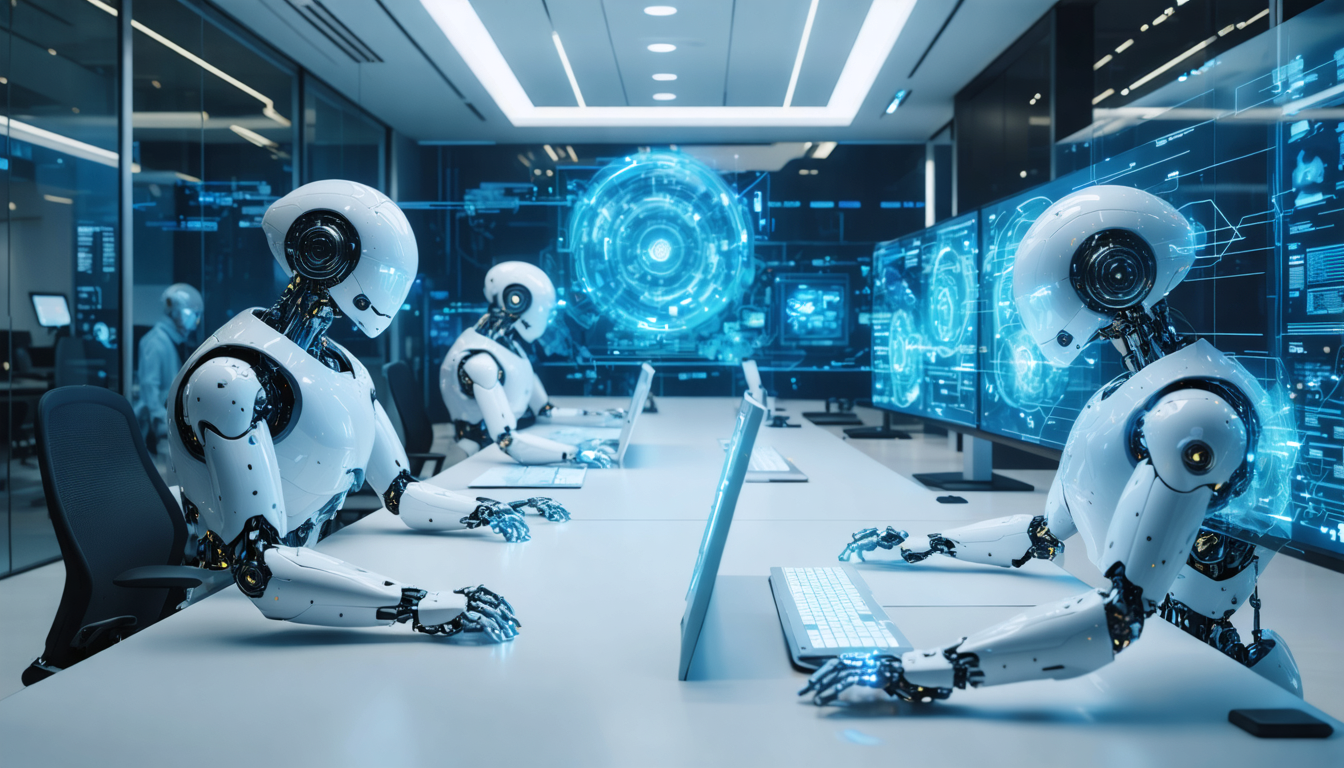
Several organizations around the world have already begun experimenting with largely automated structures powered by artificial intelligence, thus validating OpenAI’s forecasts. For example, the Japanese company “NexGen Robotics” manages its entire production chain via interconnected AI agents that coordinate robots for manufacturing, quality control, and logistics.
In the United States, “DataForesight” uses AI agents to drive its marketing campaigns, analyze trends in real time, and immediately adjust its advertising strategies. Advanced automation enables exceptional responsiveness and efficiency gains of more than 50% compared to conventional methods.
These cases clearly illustrate how advanced technology now relies on sophisticated collaboration between AI agents and humans, where the machine takes on the role of autonomous executor while humans focus on strategic management and innovation.
Preparing tomorrow’s company: advice for a transition to an AI organization
For leaders wishing to anticipate this transition toward an autonomous organization, several avenues are essential to successfully carry out this digital transformation. The gradual implementation of AI agents, the strengthening of teams’ digital skills, and the development of adapted security policies are priority areas.
A first step consists in identifying high value-added processes for automation, favoring those whose repetitiveness and standardization facilitate AI management. Then, it is necessary to invest in platforms like Frontier that optimize the management and coordination of agents.
Developing a company culture oriented toward digital innovation is also a key factor. This involves continuous training, support for experimentation, and transparent communication about the stakes and benefits of AI in order to smoothly integrate this new dynamic.
Here is a list of best practices to support this transformation:
- Accurately assess business needs and automatable processes
- Involve employees from the start of the project to limit resistance
- Ensure clear governance including security and ethics
- Implement training and support programs
- Experiment in agile mode with pilots before large-scale deployment
Companies that succeed in this transition will have an essential strategic advantage to assert themselves in the future of work dominated by artificial intelligences.
A future shaped by artificial intelligence and human-machine collaboration
In 2026, the vision of a company entirely operated by artificial intelligences is no longer fiction but establishes itself as an achieved reality. OpenAI confirms that advanced automation and the ability of agents to collaborate form the foundation of a new organizational model, where humans become strategic supervisors and value creators rather than executors.
This evolution calls for rethinking the nature of work, professional relationships, and the role of advanced technology in society. Faced with these profound transformations, it will be essential for companies to combine digital innovation, machine learning, and responsible governance to build a sustainable and competitive future.
The future of work thus promises to be exciting, between full automation and cooperation between human and artificial intelligences, with major economic and social perspectives for the coming decades.
Is a company entirely composed of AI already viable today?
Yes, according to OpenAI, current technology already allows the implementation of organizations composed mainly of AI agents capable of managing many operational functions either occasionally or continuously. However, large-scale viability still depends on adaptations in security and governance.
What are the main barriers to adoption of AI companies?
The main obstacles concern access security, data governance, and the establishment of new regulatory frameworks adapted to autonomous agents active without constant human supervision.
How do AI agents collaborate with each other?
AI agents communicate, share data, and coordinate their actions via advanced platforms like Frontier, adapting their behavior in real time according to company objectives and collected data.
Does full automation threaten employment?
Automation profoundly transforms work and some jobs may disappear, but it also creates new professions focused on managing, supervising AI agents, security, and technological innovation. Support and training remain key.
What skills are necessary to work in an AI company?
Skills in data science, machine learning, cybersecurity, and digital project management are particularly sought after. Moreover, human qualities such as creativity and critical thinking remain indispensable to effectively supervise AI agents.