

As the artificial intelligence sector continues to gain importance, a new major milestone seems to be emerging. According to various sources close to the discussions, Nvidia, Amazon, and Microsoft are in talks to jointly invest a colossal sum that could reach 60 billion dollars in OpenAI, the groundbreaking startup behind ChatGPT. This massive financial package symbolizes the strong enthusiasm of the tech giants to secure a dominant position in a field considered strategic for the decades to come.
Each of the companies has its own reasons for entering into this large-scale partnership. Nvidia, recognized for its innovations in manufacturing graphics chips essential for artificial intelligence models, appears ready to strengthen its key role by injecting a very significant portion of these funds. Microsoft, for its part, pursues a historic collaboration with OpenAI, while Amazon aims to establish itself as a major investor and strategic partner, notably in cloud computing and the distribution of AI technologies.
- 1 The strategic stakes of a massive investment in OpenAI for Nvidia
- 2 Microsoft: a strategic investment to reinforce its dominance in the artificial intelligence ecosystem
- 3 Amazon: the rise of a new key partner in the AI race
- 4 The economic and technical impact of an investment of this magnitude in OpenAI
- 5 SoftBank: a key Japanese player supporting OpenAI’s global ambitions
- 6 How OpenAI diversifies its revenues amid the financial challenges of artificial intelligence
- 7 OpenAI’s growth prospects and valuation in a highly competitive market
The strategic stakes of a massive investment in OpenAI for Nvidia
Nvidia has been a key player for several years in the field of technologies related to artificial intelligence. Its graphics processors provide the computing power necessary to train and operate models like those developed by OpenAI. The announcement of an investment potentially reaching 30 billion dollars confirms its intention to consolidate this position.
This titanic financial commitment fits within a broader trend where demand for ultra-high-performance hardware solutions continues to grow. In 2026, the optimization of AI infrastructures heavily relies on Nvidia’s ability to innovate and propose architectures increasingly better suited. Nvidia also bets on a close partnership with OpenAI to accelerate the deployment of its latest technologies, notably within specialized data centers.
Another essential aspect lies in the competitive dimension. Faced with rivals such as AMD or Intel, Nvidia seeks to secure its role by becoming not only a hardware supplier but also an active investor who directly influences the technological roadmap of AI. This could give it a significant advantage to steer model development, tailor needs precisely, and establish a solid ecosystem around its technology.
Concrete example: the collaboration around highly specialized GPUs for the massive training of openAI GPT-5, expected to be released in 2027, illustrates Nvidia’s indispensable role. The partnership continuously improves performance while reducing energy and maintenance costs, a crucial challenge as models become more complex.
Finally, this financial choice is not just an economic operation. It fits within a long-term vision where Nvidia wishes to be at the heart of a technological revolution that will disrupt many industries. This ranges from healthcare to transportation, including finance, where AI will find multiple applications.

Microsoft: a strategic investment to reinforce its dominance in the artificial intelligence ecosystem
Microsoft is not a newcomer to the OpenAI universe. The American giant is indeed a historic partner and longtime ally, providing important technical and financial resources. The expected investment, amounting to less than 10 billion dollars, aims to maintain and amplify this ambitious collaboration.
The core of this alliance is based on the integration of OpenAI technology into Azure cloud solutions, which have become a pillar of Microsoft’s commercial strategy. Thanks to this synergy, the Redmond firm has been able to enrich its flagship products, now offering its clients advanced artificial intelligence capabilities integrated into their office tools, cloud services, and even automated conversational interfaces.
In 2026, Microsoft intends to capitalize on this trend by developing exclusive offerings such as ChatGPT Enterprise, where text generation services assist decision-making in various fields. The investment not only accelerates research and deployment but also ensures competitiveness against other digital giants, notably Google and Meta.
For Microsoft, partnering with OpenAI also means retaining control of disruptive technology while making it accessible to businesses through its cloud infrastructure. At this stage, the battle is no longer only technological but also commercial and strategic, with major economic repercussions at stake.
Moreover, Microsoft leverages this partnership to extend its influence in the AI market by integrating advanced deep learning features and collaborating on innovative projects, such as personalized intelligent assistants or enhanced human-machine interfaces.
Amazon: the rise of a new key partner in the AI race
Among the trio, Amazon represents the most notable surprise. Although its involvement in OpenAI has so far been more discreet, current discussions suggest that the e-commerce giant is ready to commit considerable funds, which could reach 50 billion dollars according to some media. This amount would position it at the top of the funding round.
The stake for Amazon thus goes beyond simple financial investment. This rapprochement comes with negotiations on the use of AWS cloud infrastructures, which OpenAI would rent to host its very high-performance AI services. This collaboration would allow Amazon to expand its market share in the cloud while securing a steady revenue stream linked to OpenAI’s operations.
A commercial agreement is also envisaged to distribute certain OpenAI products, notably ChatGPT Enterprise subscriptions, directly via Amazon’s platforms, fostering synergy on solid grounds between content and infrastructures.
Amazon, led by Andy Jassy, is thus heading towards an integrated model where artificial intelligence technology becomes a catalyst for its multiple activities, from logistics to data management, through customer service optimization. This strategy places Amazon at the heart of the AI ecosystem, with growing influence on how innovations will be made available to businesses and consumers.
This partnership risks reshuffling the cards in the sector, with a tech conglomerate ready to play a dual role as investor and provider of essential infrastructures, fully leveraging its cloud computing capabilities to serve OpenAI’s ambitions.

The economic and technical impact of an investment of this magnitude in OpenAI
The declared goal of this monumental fundraising is clear: to meet the growing needs for material and human resources to train increasingly complex artificial intelligence models. OpenAI must face an explosion in costs linked both to the required computing power and the management of very high-performance data centers.
In 2026, training a single large model can consume hundreds of megawatt-hours of electricity, representing considerable operational costs. This economic reality largely explains the startup’s desire to gather a fund that could reach 100 billion dollars in the long run, valuing OpenAI at around 830 billion dollars.
Beyond technical expenses, the challenge also lies in OpenAI’s ability to diversify its revenue sources. Until now largely dependent on paid subscriptions, the company seeks to strengthen its financial flows by introducing advertising devices on certain free uses of ChatGPT. This advertising shift, currently being tested, could generate new commercial momentum while ensuring wider access to AI technologies.
However, this approach raises debates and concerns, notably regarding personal data protection and user trust. Thus, although Google and Meta have already explored this path, OpenAI will have to reconcile monetization and ethics so as not to weaken its reputation.
Ultimately, this massive announced investment represents a powerful driver for innovation, allowing OpenAI to remain at the forefront amid fierce competition, while preparing the company for a potential IPO that could value it up to the symbolic trillion-dollar mark.
Summary table of potential contributions from tech giants in OpenAI
| Company | Estimated investment amount (in billion USD) | Strategic role | Key points of the partnership |
|---|---|---|---|
| Nvidia | ~30 | Key hardware supplier, direct technological influence | Development of specialized GPUs, AI infrastructures, energy optimization |
| Microsoft | <10 | Historic partner, integration into Azure | AI cloud offerings, ChatGPT Enterprise, software synergies |
| Amazon | 20 to 50 (according to sources) | Major investor, AWS host, distributor | Cloud server rental, commercial distribution, product integration |
| SoftBank | Up to 30 | Strategic long-term investment | Significant participation, massive financial support |
SoftBank: a key Japanese player supporting OpenAI’s global ambitions
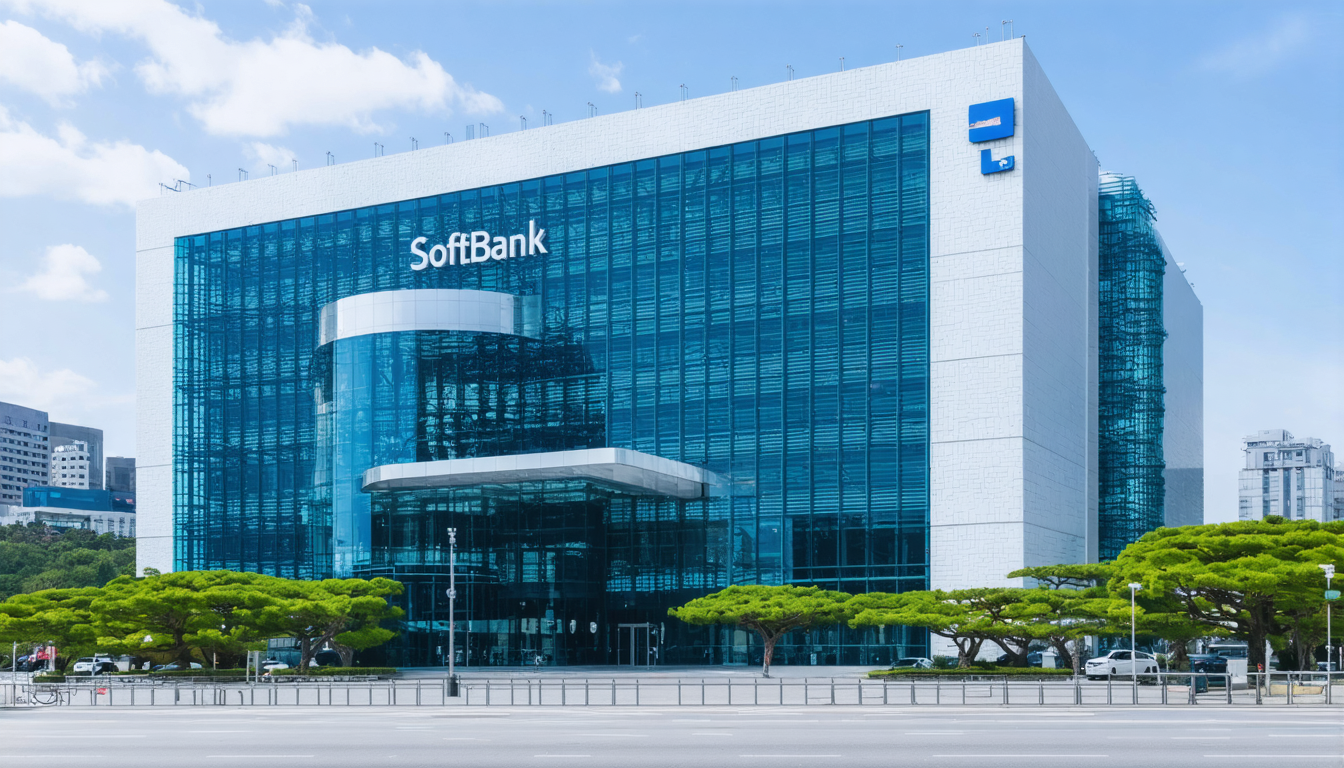
Among the new actors mentioned in the context of this operation, SoftBank, the Japanese conglomerate, reaffirms its confidence in OpenAI by considering an additional investment of up to 30 billion dollars. This move fits within the strategy of Masayoshi Son, its visionary CEO, who considers artificial intelligence as the major economic driver of the coming decades.
SoftBank had already announced a substantial initial investment of 41 billion dollars at the end of 2025, securing about 11% of the startup’s capital. Its increased involvement demonstrates the importance it attaches to AI not only as a high-potential technology but also as a central economic lever for its Vision Fund.
SoftBank’s choice illustrates the global trend to concentrate heavy investments in the most innovative AI companies, aware that the race for technological supremacy will permanently influence geopolitical and international commercial balances.
This new financial injection should notably allow OpenAI to better compete with giants like Google by increasing its R&D capacities and the infrastructures necessary to deploy its models to a wider audience.
How OpenAI diversifies its revenues amid the financial challenges of artificial intelligence
Despite an estimated valuation around 500 billion dollars, OpenAI remains in a deficit situation. Revenues generated by paid subscriptions no longer cover the colossal expenses, which now exceed a trillion dollars in infrastructure and operating costs.
Faced with this, the company has chosen to explore new revenue models to ensure its sustainability. One of the most visible initiatives is the gradual introduction of targeted advertising aimed at free ChatGPT users. This advertising does not interrupt responses but appears at the end, directly related to the theme discussed in the conversation.
OpenAI places great importance on ensuring these ads are clearly differentiated from generated content and guarantees they will not influence the AI’s responses. Fidji Simo, head of applications, emphasizes that this approach seeks to balance accessibility to a high-performance service while generating additional revenue.
However, this strategy raises ethical questions: personal data protection, user trust, and how these ads may impact the relationship between chatbot and user. Other major companies, such as Google and Meta, have already crossed this threshold, which places OpenAI in a process fairly aligned with sector trends.
Alongside this commercial orientation, OpenAI continues to invest in various strategic and technological partnerships, such as the recent agreement with Cerebras, a direct competitor of Nvidia, for a computing deal valued at 10 billion dollars. This diversification demonstrates OpenAI’s willingness to remain agile in a highly competitive market.
OpenAI’s growth prospects and valuation in a highly competitive market
With this impressive fundraising and multiple partnerships, OpenAI positions itself as an undisputed leader in the artificial intelligence sector. Its valuation could reach the unprecedented threshold of 830 billion dollars, or even a trillion, if the anticipated IPO materializes.
The AI market is experiencing rapid growth, driven by increasing demand for powerful and adaptive tools. But this growth comes with major challenges, notably in terms of regulation, ethics, and technological control—parameters that OpenAI will have to skillfully navigate to sustain its business model and maintain user trust.
Competition remains fierce: Google invests massively in its own solutions, Meta develops conversational artificial intelligences integrated into its social platforms, and other emerging players appear every month. OpenAI stands out not only by its technical innovations but also by its open business model and strategic alliances.
Over the next decade, OpenAI’s ability to capitalize on its financial and human resources, to maintain solid partnerships with companies like Nvidia, Amazon, and Microsoft, will be decisive for its lasting success. The artificial intelligence sector, more than any other, indeed demands a subtle balance between constant innovation, cost management, and a coherent economic ecosystem.




