The artificial intelligence sector continues to fascinate and attract colossal investments, and the recent fundraising by xAI is a perfect example of this trend. Indeed, Elon Musk’s startup managed to raise 3.4 billion dollars from Apollo Global Management, an operation that could reshape the contours of the AI-related technology market. This massive capital injection comes in a context where computing power has become a strategic issue, often more critical than the algorithms themselves. The way xAI sources technological resources, notably through the purchase and leasing of Nvidia chips, raises major questions about dependence on certain key players and the evolution of the global technology ecosystem.
This operation, although complex, demonstrates a strong desire to significantly accelerate computing capabilities to support the massive deployment of advanced artificial intelligence systems. The acquisition of xAI by SpaceX, valued at several hundred billion dollars, adds a spatial dimension to this strategy, with the future development of orbital data centers. This original financial arrangement, combining private investments and space technologies, perfectly illustrates the synergy sought by Elon Musk between different high-tech sectors.
- 1 The funding of xAI by Apollo: an innovative investment model
- 2 The strategic impact of the SpaceX-xAI merger on the AI market
- 3 Computing power and market dominance: Nvidia’s central role
- 4 The economic stakes behind the concentration of AI infrastructure
- 5 Systemic risks induced by market concentration
- 6 Alternatives and competing strategies facing Nvidia’s dominance
- 7 Market evolution and prospects for the coming years
The funding of xAI by Apollo: an innovative investment model
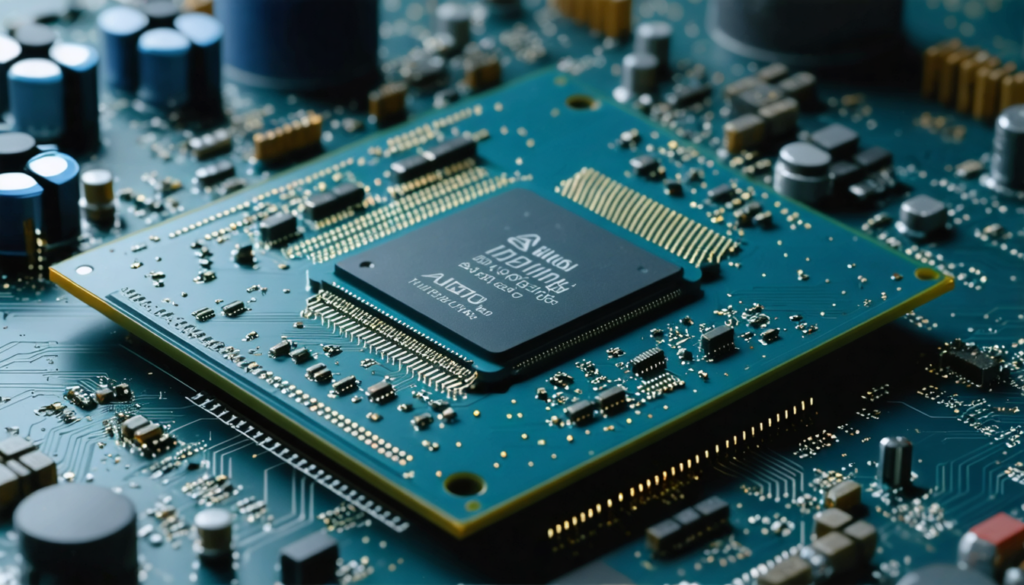
At first glance, the agreement between Apollo Global Management and xAI represents one of the largest investments in the AI field in 2026. However, the nature of this transaction is far from conventional. Rather than a simple capital contribution, it is a loan of approximately 3.4 billion dollars granted to an investment vehicle dedicated to the acquisition of Nvidia chips. These chips, essential for the intensive computations required for AI, are not purchased directly by xAI but leased via this vehicle. This financial arrangement allows Musk’s company to quickly benefit from the required computing power without burdening its balance sheet.
This strategy of leasing hardware infrastructure illustrates an emerging trend in the financing of advanced technologies. It offers xAI high operational flexibility, allowing it to maintain liquidity and quickly adapt to the rapid changes in the market. Apollo, by providing this financing, diversifies its investments in a promising sector, in a context where returns on traditional investments are becoming more limited.
This arrangement is not unprecedented since, as early as the previous November, Apollo had already granted a similar loan of 3.5 billion dollars for a comparable device. These successive operations demonstrate the confidence placed in the ecosystem around xAI and its partners like Nvidia. Valor Equity Partners, a key player for investments related to Elon Musk, supervises this approach, thus consolidating the economic landscape of innovative tech.

The strategic impact of the SpaceX-xAI merger on the AI market
The week prior to the conclusion of this financing, Elon Musk announced the merger between SpaceX and xAI. This operation values SpaceX at 1,000 billion dollars against 250 billion for the artificial intelligence company. It is not just a financial alliance but an ambitious technological development project. The goal is to create orbital data centers capable of running cutting-edge artificial intelligence applications, leveraging unique space infrastructures.
This initiative represents a revolution in how computing resources can be deployed. Rather than relying solely on terrestrial installations, orbital data centers could offer continuous computing power and direct access to data collected in space. This model could accelerate the development of AI technologies capable of solving complex problems related to space exploration or global system management.
The SpaceX-xAI merger symbolizes a convergence of the aerospace and artificial intelligence worlds, illustrating how previously distinct industries can generate unprecedented synergies. These efforts also confirm the crucial importance of computing power as a lever for any major advancement in AI, far ahead of the exclusive importance of algorithms or human capital.
Computing power and market dominance: Nvidia’s central role
The keystone of this expansion lies in hardware computing power, for which Nvidia largely dominates the market. Indeed, the majority of chips leased to xAI come from this player, which holds between 80 and 92% of the market for specialized artificial intelligence chips. In the dedicated GPU segment, Nvidia’s market share even exceeds 92%, a near-monopoly confirmed by projections through 2030.
This hardware supremacy is both an asset and a source of concern. While Nvidia’s technology guarantees cutting-edge performance, it also concentrates power and dependence at the level of very few economic players. The leasing of Nvidia chips by xAI illustrates this dynamic, where innovative startups do not have viable alternatives to equip themselves with adequate computing power.
This concentration raises several questions regarding market resilience. In case of supply chain disruptions, significant price increases, or commercial preference given to certain clients, the development of the entire AI field could be hindered. Moreover, it reduces leeway for major competing players like AMD or Intel, whose market share remains marginal, especially in the high-performance GPU sector.
The economic stakes behind the concentration of AI infrastructure
Beyond the technological aspect, this operation highlighted a fundamental economic issue: the concentration of hardware infrastructure within a very limited number of players. Apollo, as an investment fund, seeks reliable growth drivers and sees exceptional potential in this field. The investment in leasing chips for xAI fits within this framework, offering a new source of return amid a more complex overall financial context.
This investment approach must however be analyzed considering its systemic consequences. Too strong a dependence on a few suppliers can lead to market imbalances, weakening the diversity of solutions and competition. Yet, this diversity is often a key driver of technological innovation. Nvidia’s almost hegemonic position and financing coordinated by investors like Apollo reinforce these concentrated dynamics.
The following diagram illustrates this configuration:
| Player | Role | Estimated market share | Strategic position |
|---|---|---|---|
| Nvidia | Main supplier of AI GPUs | 80-92% of AI chips | Dominant near-monopoly |
| Apollo Global Management | Investor and lender in chip purchase vehicles | Not applicable | Facilitator of AI financing |
| xAI (Elon Musk) | End user of computing power | New player valued at 250 billion dollars | Key beneficiary of financing |
| AMD and Intel | Peripheral competitors in the AI GPU market | 6% (AMD), nearly 0% (Intel) | Limited access to the AI market |
Systemic risks induced by market concentration
Through these operations, a major systemic risk is arising: that of a quasi-exclusive dependence on a player like Nvidia for computing power. This situation presents several potential dangers for the entire AI ecosystem. For example, an interruption in the supply chain or a technical problem affecting GPUs could significantly slow technological progress.
Beyond the technical aspects, even minor price increases or restrictive commercial policies could bias access conditions to intensive computing. Less funded startups and companies could be excluded from the most innovative projects, thereby increasing inequalities and hampering competition. This scenario could prevent the emergence of disruptive innovations and consolidate a closed market for certain players.
This concentration is a source of concern not only for fast-growing startups but also for traditional investors betting on alternatives or less dominant players. Indeed, if Nvidia’s near-monopoly strengthens, these investments could see their profitability decline because market leaders capture most opportunities.
Alternatives and competing strategies facing Nvidia’s dominance
Although Nvidia remains in the lead, some competitors like AMD or Intel are trying to develop their presence in this high-performance AI market. However, their market shares remain marginal, with AMD capturing about 6% of discrete graphics card sales in the second quarter of 2025 and Intel nearly absent from this segment.
Faced with this situation, these companies innovate on several fronts: alternative architectures, development of specialized chips, strategic partnerships, or targeted offers in niche segments. Intel, for example, bets on deeper integration of its solutions into specific cloud infrastructures, without fearing for its long-term sustainability according to its CEO.
The path to greater technological diversity involves several levers:
- Focus on research and development to technically compete with Nvidia.
- Establishment of open ecosystems promoting solution interoperability.
- Niche strategies to conquer segments less dominated by Nvidia.
- Strengthening alliances with cloud players and investment funds.
If these strategies offer prospects, the 2026 market dynamics remain largely favorable to the historic leader. The development and standardization of Nvidia platforms continue to structure the entire global AI ecosystem.

Market evolution and prospects for the coming years
In a context marked by massive investments, all projections agree that the artificial intelligence market will see its spending on technological infrastructure cross several hundred billion dollars in the coming years. Industry giants such as Alphabet, Microsoft, Amazon, and Meta are already investing more than 600 billion USD in 2026 according to Reuters, illustrating the scale of the power race.
This surge in spending also reveals an intensification of issues related to the management of hardware resources. Dependence on Nvidia chips and the financings orchestrated by funds like Apollo are symptomatic of this trend where GPU availability and performance become key success factors for large-scale projects.
The market will also have to deal with multiple challenges:
- The need to develop effective technological alternatives to avoid concentration on a single player.
- Pressure on costs and tension on global semiconductor supply chains.
- Regulation concerning potential monopolies and security of critical infrastructure.
- The constant need for innovation to keep pace with the rapid research in AI.
Apollo’s and xAI’s role is revealing, as it embodies the shifts in technological financing, where financial engineering accompanies cutting-edge technology to push current limits and achieve new heights with unparalleled space ambitions.