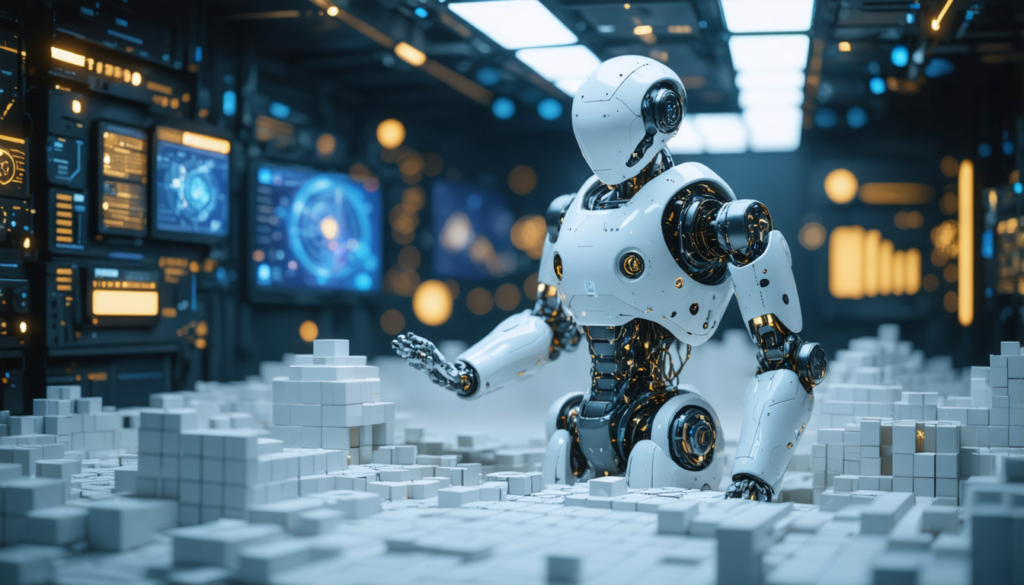
At CES 2026 in Las Vegas, Atlas, the iconic humanoid robot developed by Boston Dynamics, captivated attention with a demonstration combining acrobatic feats and handling of unforeseen events. It had been over ten years since this robot had been in the spotlight, with its astonishing abilities to simulate human movements. Yet, that day, it was a backflip that caught the spectators’ attention, not for its perfection, but for the unexpected bounce that occurred upon landing. This stunt, previously mastered by Atlas, nearly ended in a fall, illustrating both the power of modern robotics and the limitations still present in programming. A sequence rich in lessons about dynamic balance, the simulation of complex gestures, and the real-time responsiveness required.
As the crowd watched with fascination, this spectacular backflip turned into a double demonstration: a high-flying execution followed by immediate error management. Atlas’s mechanical precision, although remarkable, was put to the test when an unexpected event occurred at the moment of landing. This mishap, often dreaded in humanoid robotics, sheds new light on the technical challenges encountered in the creation and programming of such robots.
- 1 Atlas: a humanoid robot at the heart of modern robotics advances
- 2 The backflip: a spectacular and complex stunt for Atlas
- 3 The unforeseen event during the backflip: how Atlas reacts to the fall
- 4 Industrial applications of Atlas and the importance of mastering stunts
- 5 Programming and simulation: the keys behind Atlas’s balance and flexibility
- 6 Atlas’s current limits in facing unforeseen events and upcoming challenges
- 7 Decoding spectators’ reactions: between fascination and questions about Atlas’s real capabilities
Atlas: a humanoid robot at the heart of modern robotics advances
Since its first appearance over a decade ago, Atlas has established itself as a symbol of innovation in robotics. Designed by Boston Dynamics, this humanoid robot is equipped with a sophisticated calculation engine that allows it to integrate not only precise movements but also adapt in real time to its environment. The embedded software functions like a central nervous system, coordinating every joint to provide a smooth and natural gait.
The complexity of this robot also lies in its ability to simulate high-speed human actions such as running, dancing, or acrobatics, while maintaining dynamic balance. Atlas is equipped with sensors and cameras that feed its advanced programming algorithms with essential data to instantly adjust its posture and movements. These simulation techniques rely on advanced physical models to predict interactions with the ground and surrounding objects.
For example, during its movements, Atlas continuously calculates the distribution of forces to avoid falling. This enables it to recover quickly even when disturbed, such as during the backflip attempted at CES 2026. This balance is not merely the result of programmed execution but of artificial intelligence that observes, learns, and corrects its movements in real time. This advance is a true turning point in humanoid robotics, ensuring better autonomy and safety in future applications, whether in industry, rescue, or exploration.
The backflip: a spectacular and complex stunt for Atlas
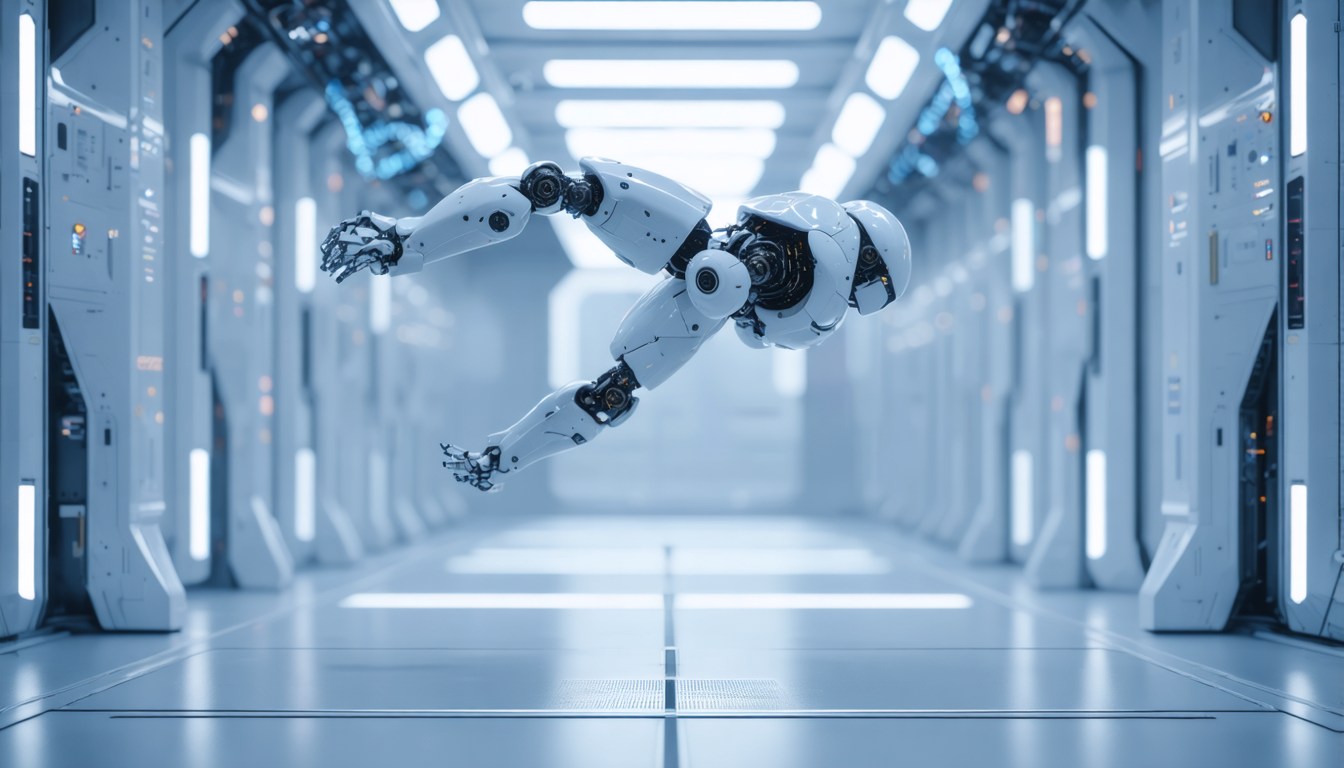
Performing a backflip is a true feat for anyone, human or robot. This acrobatic figure combines precise coordination, significant energetic impulse, and perfect balance control through several phases of the movement. In Atlas’s case, executing this backflip is not just a spectacular show but a major demonstration of its advanced capabilities.
The rotating back, the push on the legs, and the smooth landing on two feet are all elements the robot must manage simultaneously. Its programming includes simulation scenarios that anticipate these phases, but each attempt is unique, dependent on the context, the ground, and environmental conditions. The stunt also requires a significant initial acceleration to generate enough momentum, while being capable of braking its rotation at the right moment to avoid imbalance.
In older models, simple acrobatic figures, like somersaults, were already brilliantly performed, but under strict conditions and controlled environments. Today, Atlas has to deal with more variables, including sometimes technological or mechanical surprises. The backflip is therefore doubly interesting: it serves as a test bench for the robot’s motor skills as well as for its management of hazards during the execution of complex gestures.
Here are the main steps the robot follows to succeed in this kind of stunt:
- Analysis and anticipation: calculation of necessary angles and speeds
- Motor programming: leg impulse and joint coordination
- Axis maintenance during the jump: control of rotation and torso posture
- Landing: adjustment of the feet and shock absorption
- Recovery: activation of the motors to regain balance
Each of these phases is integrated into a simulation model continuously improved through tests and observations in real conditions.
The unforeseen event during the backflip: how Atlas reacts to the fall
During the demonstration at CES 2026, Atlas failed with a somewhat shaky landing following its backflip. This potential fall, although avoided, revealed the robustness of the control system and the robot’s self-correction ability. Indeed, at the moment when the right hand’s gripper lost a cap and a metallic noise was heard, balance was severely tested.
This type of unforeseen event is feared in robotics, as it can cause serious material damage or a complete halt of the machine. Yet, Atlas showed that with advanced programming and sophisticated alert systems, it could almost cancel out the consequence of a landing error. This mechanism relies on:
- Rapid detection of the anomaly via tactile and inertial sensors
- Activation of a balancing algorithm adapted to the new situation
- Instant modification of posture and support points
- Quick transmission of this information to the motors for adjustment
- Final stabilization, avoiding the fall and maintaining the robot’s integrity
This reactivity is crucial for the future of humanoid robots which, if they want to operate in unpredictable environments like factories or public spaces, must be able to correct errors without human intervention. The incident at Las Vegas thus reveals the progress made and the remaining challenges in designing mechanical intelligence close to human spontaneity.
Industrial applications of Atlas and the importance of mastering stunts
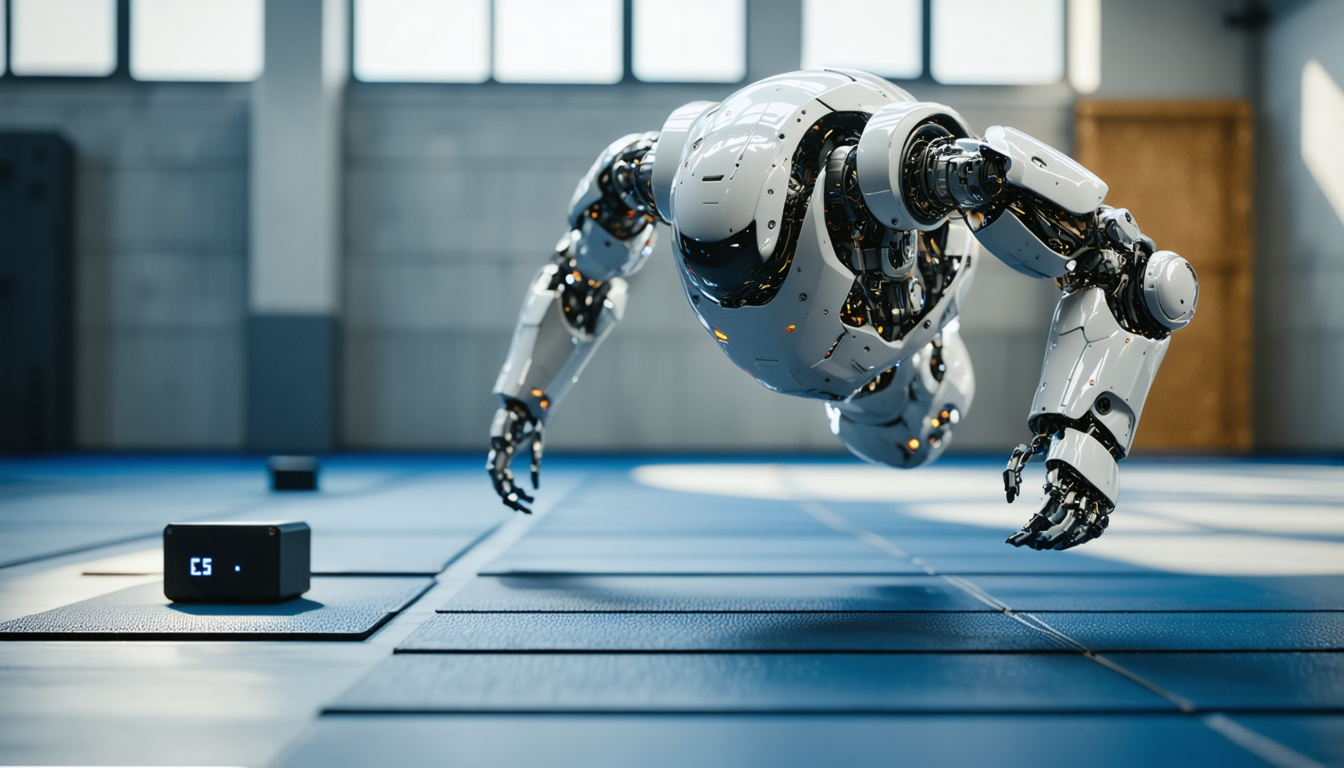
While demonstrations at CES often focus on the spectacular, Atlas’s industrial reality is much more pragmatic. This robot, intended to be deployed in factory and production environments, must be able to perform multiple varied tasks, often under time pressure and in crowded spaces.
Mastering complex gestures like the backflip is not just a stylistic exercise but a metaphor for the high demands the robot must face daily. For example, in a factory where the floor may be slippery or obstacles numerous, the ability to instantly adjust its balance can prevent costly accidents or interruptions on the assembly line.
Here are some industrial fields where Atlas’s coordination and agility prove decisive:
- Handling heavy and fragile objects with precision
- Rapid movement in unstable or narrow environments
- Variable adaptation according to the nature of the floor or unforeseen obstacles
- Safe collaboration with humans on production lines
- Quick reactions to incidents or mechanical failures
Boston Dynamics engineers are nevertheless working to fine-tune Atlas’s programming to optimize these abilities. Once again, numerical simulation plays a major role, allowing anticipation of many scenarios and refining the robot’s reactions in the lab before real-world application.
Programming and simulation: the keys behind Atlas’s balance and flexibility
One of the pillars of Atlas’s success lies in its extremely advanced programming designed to simulate the complexity of human movements. Each movement is based on dynamic models where the physics of balance and forces is finely calculated. This numerical simulation offers several advantages:
- Prediction of impacts and adjustment of trajectories
- Anticipated error management to avoid falls
- Energy optimization of movements
- Continuous improvement through machine learning
- Ability to integrate unknown scenarios thanks to adaptive intelligence
Engineers use highly advanced virtual environments to simulate various critical situations before moving to the real world. This limits the risk of damage and allows faster progress by adjusting the robot’s parameters each time. The alliance of precise programming, high-precision sensors, and artificial intelligence makes Atlas a pioneer in modern humanoid robotics.
| Technical Aspect | Description | Impact on the backflip |
|---|---|---|
| Inertial sensors | Measure angular velocity and acceleration during rotations | Allow real-time adjustment of position |
| Control algorithms | Continuously coordinate movement and posture | Ensure stability during the acrobatic figure |
| Joint motors | Provide the necessary force for impulse and landing | Ensure power and reactivity of movements |
| Numerical simulation | Anticipates physical constraints and terrain | Minimizes risk of falling and improves recovery |
| Machine learning | Analyzes errors to optimize future attempts | Strengthens adaptability after an unforeseen event |
Atlas’s current limits in facing unforeseen events and upcoming challenges
Despite observed feats, Atlas is not yet a perfect candidate to evolve completely autonomously in real environments. The unforeseen event at CES 2026 revealed some residual challenges. For example, landing on a slippery floor complicated the full return to balance, showing that humanoid robotics still requires improvements to manage perfectly unstable or uneven surfaces.
Another limiting factor is remote or semi-autonomous control. While Atlas can quickly correct some minor imbalances, it still depends on human supervision or at least programmed intervention to correct more significant errors. In the coming years, research laboratories’ goals include notably:
- Strengthening the ability to anticipate random terrains
- Improving management of sudden external forces
- Developing more predictive artificial intelligence capable of evaluating multiple options
- Integrating new materials to make joints more flexible and resistant
- Reducing mechanical failures related to the true trade-off between flexibility and power
These efforts will enable Atlas to reach a new level, replicating with increased efficiency the most complex human gestures but also surpassing current limits of programmed mechanical movements. The future thus unfolds with robots capable not only of spectacular performances but also unprecedented robustness in their missions.
Decoding spectators’ reactions: between fascination and questions about Atlas’s real capabilities
Atlas’s performance at CES 2026 did not leave spectators present on site or the millions of internet users watching online indifferent. The exceptional execution of the backflip aroused a feeling of fascination mixed with slight concern at the moment of the unforeseen event. For many, this episode realistically illustrated the breaking point not to be surpassed in current humanoid robotics.
The debates that followed focused notably on the viability of this type of robot in industrial or domestic contexts, where every mistake can have serious consequences. Atlas’s performances were applauded, but the demand for flawless reliability remains a goal to aspire to.
Some specialists thus took this stunt as an example to stress that the real challenge is less the execution of the spectacular gesture than adaptability to the unforeseen, and the ability to limit the risk of falling. In this sense, the possible fall of Atlas resembles a mirror of the current state of research, where the boundary between feat and risk remains thin.
In summary, the show offered by the humanoid robot has amply demonstrated the progress made in programming, artificial intelligence, and simulation. However, it also put the spotlight on remaining challenges, especially related to dynamic balance and managing unforeseen events, challenges Boston Dynamics and the robotics community strive to overcome every day.