At the dawn of the third decade of the 21st century, artificial intelligence (AI) establishes itself as an unprecedented revolution, profoundly changing our lifestyles, our interactions, and even more, our way of thinking. While Generation Z, born with technology at their fingertips, initially seemed ready to embrace these advances without restraint, a complex feeling has crept into university lecture halls and informal discussions: a silent fear of losing what constitutes human essence. It is no longer just about doubts related to employment or privacy, but an existential questioning about the ability to maintain individuality and critical thinking in a world where technology can anticipate our thoughts and respond for us.
In the midst of lecture halls and libraries, where intellectual effort takes shape, many young people feel a deep divide between the apparent efficiency of AI and the intimate price to pay: the gradual dilution of their identity and capacity to generate independent thought. Digital tools, once naively seen as natural extensions of the human brain, are now regarded as crutches or even dangerous substitutes. This ambivalence creates a tense climate, revealing a Generation Z torn between technological fascination and a form of anxiety in the face of possible dehumanization.
- 1 The psychological implications of AI dependence among Generation Z
- 2 The generational divide faced with artificial intelligence: between hope and fear
- 3 The hidden dangers of excessive delegation of thinking to AI
- 4 How to preserve the human essence in the face of digital transformation
- 5 The fear of losing identity in a technology-dominated world
- 6 Crucial ethical stakes for the future of humanity facing AI
- 7 The paths to a balanced future between artificial intelligence and preserved humanity
- 8 A call for collective vigilance in the face of upcoming transformations
The psychological implications of AI dependence among Generation Z
The relationship between Generation Z and artificial intelligence is not only technological or economic; it is above all psychological. Indeed, this young cohort notices that AI, by smoothing cognitive efforts, removes the necessary friction for creativity and individuality. Professor Scott Anthony of Dartmouth College, who closely observes his students, notes that many show hesitation not motivated by moral reasons but by an intuitive form of resistance to this externalization of thought.
This fear of unlearning how to think is based on daily experience: AI responds instantly, structures thoughts upstream, and proposes solutions even before the question is fully formulated. The student seeking an original idea or a critical argument often ends up relying on the machine, which offers a response with almost no effort or questioning. This ease creates a paradox, where productivity increases while personal satisfaction and depth of understanding decline.
For example, young writers using automated writing assistants often skip phases of research, error, or trials necessary for the maturation of a text. They thus induce a cognitive dependence where the mental process is short-circuited, courting comfort but at the expense of intellectual development. Consequently, some young people express the desire to voluntarily limit their use of AI to avoid becoming “spectators of their own thought.”
In this context, various psychological studies support this diffuse feeling of impoverishment.
Effect of AI on cognition and critical thinking
An innovative study led by MIT compared the cognitive activity of several groups involved in writing exercises, some using language models, others not. It was found that AI users completed their tasks faster and with less mental effort, confirming the initial promise of generative technologies. However, they showed a much less developed critical thinking, questioned the produced content less, and were exposed to an algorithmic echo chamber where AI reinforces and validates its own proposals without external stimulation.
This phenomenon highlights the essential issue: AI relieves, certainly, but it can also lull to sleep. The difference between automating a task and suppressing reflection is subtle but fundamental to preserving human essence. The growing fear among Generation Z is thus justified, as the tool turned intellectual partner risks extinguishing the cognitive capacities it was supposed to enhance.
The generational divide faced with artificial intelligence: between hope and fear
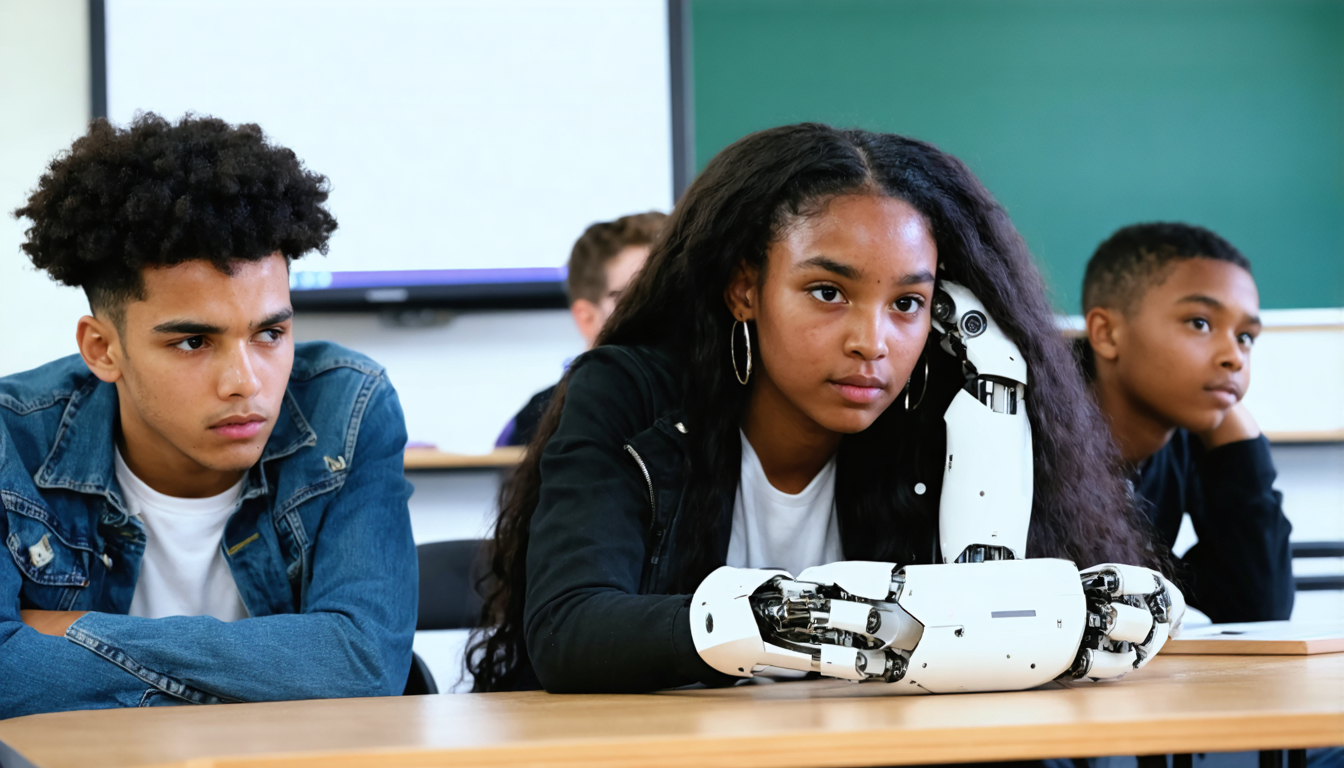
While Generation Z now expresses growing skepticism, previous generations, notably teachers and decision-makers, adopt a very different attitude. For the latter, often already established in stable careers, AI represents an additional tool, sometimes even an intellectual toy, a welcome source of optimization without the same existential weight.
This dichotomy between apprehension and curiosity reveals a deep generational divide. For seasoned professionals, AI is an ally to be exploited without major fear, whereas for the youth, it embodies a hidden and formidable competitor, capable of performing intellectual tasks with disconcerting speed and efficiency, without fatigue or doubt. This situation creates a real upheaval in the very notion of work and effort.
Students, faced with a saturated and automated job market, foresee a future where their skills will be continuously tested by increasingly powerful intelligences. This uncertainty fuels an existential anxiety that goes beyond the simple fear of losing a job to touch their very identity.
| Generation | Perception of AI | Main Motivation | Observed Consequences |
|---|---|---|---|
| Generation Z | Double-edged tool, source of fear | Preserve humanity, avoid dependence | Identity and cognitive anxiety |
| Millennials | Curious and pragmatic | Productivity optimization | Time gain without major questioning |
| Generation X and beyond | Functional use | Support for decision making | Gradual adoption with reservation |
Generation Z’s fear is therefore not a rejection of technology but a call for thoughtful ethics and controlled use, based on awareness of human stakes.
The phenomenon of “cognitive delegation” to artificial intelligence brings several major risks, particularly highlighted by this generation that strongly feels these implications on their identity. Beyond the simple question of efficiency or comfort, growing dependence exposes to intellectual impoverishment and a gradual erasure of personal reflection and analysis processes.
In practice, this translates into:
- A loss of ability to formulate original ideas independently of machine suggestions.
- A weakening of the taste for doubt, questioning, and interrogation, essential for the evolution of human thought.
- An increased risk of intellectual enclosure within stylistic and cognitive bubbles generated by the same algorithms.
- The weakening of long-term communication skills, notably writing, argumentation, and synthesis.
This complexity raises a deep paradox: while AI offers unparalleled resources to develop knowledge, its overuse without safeguards provokes the opposite phenomenon, that of desocialization of thought. A student or young professional who overly relies on AI can lose contact with the collective, dialogic, and human side of reflection.
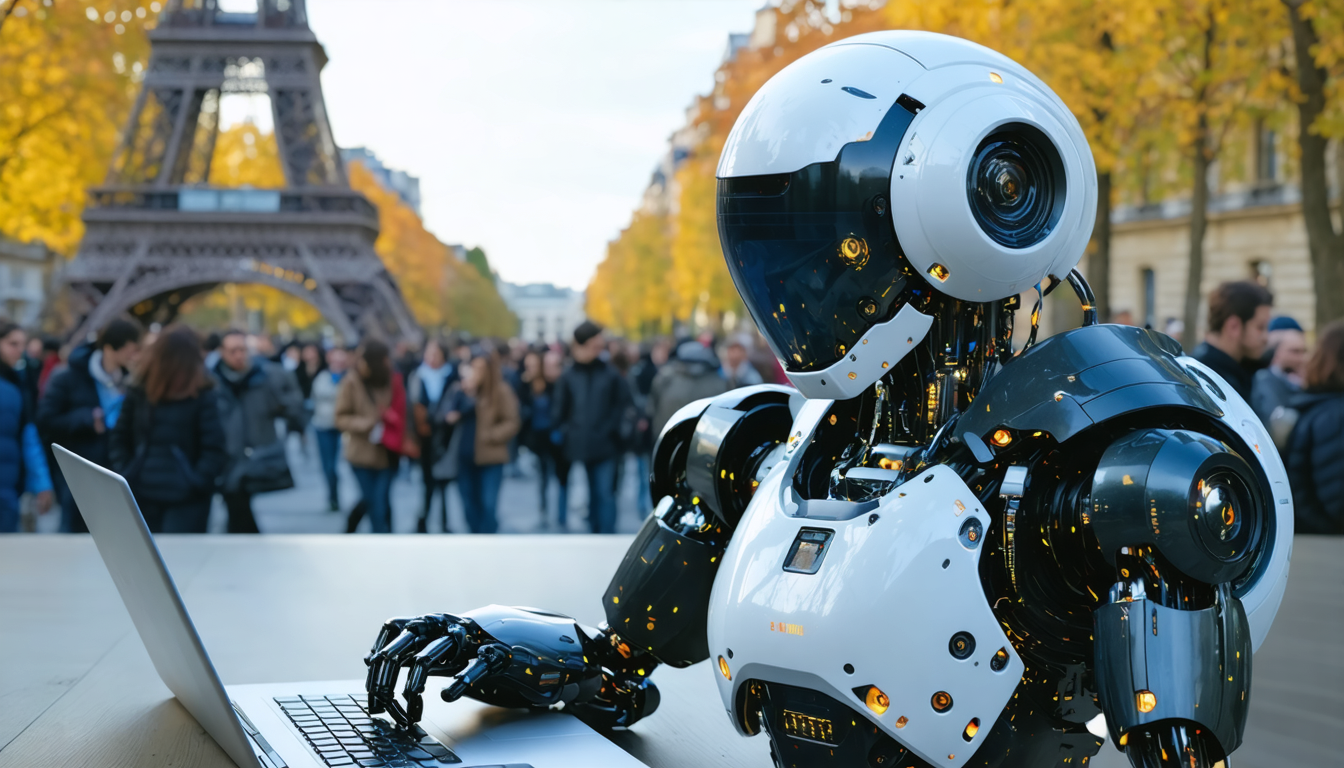
To better illustrate this issue, take the case of a technology start-up based in Paris, where young engineers, equipped with the best AI tools, eventually noticed a decline in autonomous innovative spirit on their projects. The solutions proposed by algorithms sometimes prevented them from exploring divergent paths, as automatic suggestions channeled their efforts towards proven schemes, avoiding mistakes but also creative breakthroughs.
How to preserve the human essence in the face of digital transformation
The challenge for Generation Z, but also for any society shaped by technology, is now to find the balance between technological innovation and preservation of human essence. This quest involves multiple responsibilities: from educational institutions to companies, including AI designers themselves.
Education plays a key role here. It must include modules on artificial intelligence ethics, familiarize students with risks related to cognitive dependence, and promote active pedagogical methods that stimulate creativity, critical thinking, and intellectual resilience in the face of ease.
Companies, in turn, can establish practices where AI use is a support and not a substitute. Collective reflection workshops, innovation challenges without resorting to the machine, or spaces for free creativity are all levers to strengthen human control over decision-making and creative processes.
Finally, developers and regulators must work together to design transparent and respectful tools that favor learning and co-construction rather than passive consumption. This dialogue between technology and humanity must feed the development of robust ethical standards and frameworks, adapted to a future where humans and machines co-evolve.
Concrete practices for thoughtful AI use
- Develop AI software that encourages interactivity rather than passivity.
- Train users to maintain critical thinking towards generated answers.
- Encourage co-creation between humans and AI to preserve uniqueness.
- Limit automatic uses for complex creative tasks.
- Include “off-AI” phases in educational and professional processes.
The fear of losing identity in a technology-dominated world
The fear expressed by Generation Z towards artificial intelligence goes beyond simple concerns related to productivity or employment. It directly touches the core of what makes human identity: the ability to think, doubt, feel, and form a personal opinion.
Delegating this sphere to an external intelligence, however efficient it may be, questions the role of the individual in a society where technology could become a control system for reasoning and behavior. This fear is not new, but it intensifies with the rapid advances of AI, which gradually transform the very nature of communication and reflection.
This identity challenge resonates in contemporary arts, literature, and philosophy, reflecting a shared unease. The fear that a humanity standardized by the machine could see cultural, emotional, and intellectual particularities dissolve is palpable. Thinkers of the 21st century thus call for increased vigilance and continuous questioning of the potential risks of an “algorithmic standardization.”
For example, a collective of young French writers recently published a manifesto calling for “creative resistance” against the progressive invasion of AI tools in artistic fields. They denounce the peril of homogenization of styles and a loss of cultural authenticity, emphasizing that technology must not become the exclusive driving force of creation.
Crucial ethical stakes for the future of humanity facing AI
The rapid rise of artificial intelligence raises ethical questions that directly concern the protection of human essence and the safeguarding of a harmonious future. When machines start thinking for us, how far should we set limits? What principles will guide developments and uses?
These questions become more urgent in 2026, as intelligent systems are deployed in all sectors: education, health, justice, employment, leisure. Risks of control, manipulation, and algorithmic injustice are real. It is thus essential to inscribe a strong ethical dimension integrating human complexity within regulatory frameworks.
In this context, several international initiatives engaged in responsible AI research and development propose strict rules:
- Transparency of algorithms and explanation of AI-driven decisions.
- Respect for privacy and personal data.
- Promotion of fairness and fight against discriminatory biases in automated systems.
- Commitment to limit dehumanization induced by complete substitution of cognitive functions.
- Encouragement of human-machine cooperation to maintain human sovereignty.
The future is thus envisioned not as a confrontation between man and machine, but as a collective transformation requiring vigilance, responsibility, and ethical commitment.
The paths to a balanced future between artificial intelligence and preserved humanity
For a tangible tension between fear and promise of technology not to turn into an irreparable fracture, it is essential to envision a future where AI supports without absorbing the individual. This balanced co-evolution must integrate recognition of the needs for effort, doubt, and personal freedom inherent to human construction.
The ideal future would propose modes of AI appropriation that value autonomy and critical spirit, refusing all forms of passive assistance. Generation Z, aware of the risks, may be best placed to initiate this change, combining technological engagement with a desire to preserve what makes our uniqueness.
Hybrid tools are emerging, suited to this new philosophy, for example offering:
| Feature | Benefit to the user | Impact on human essence |
|---|---|---|
| Interactive interface promoting active collaboration | Stimulates creativity and involvement | Strengthens autonomous thinking |
| Suggestion functions with critical validation option | Allows learning and questioning | Avoids passive acceptance |
| Integrated “off-line” reflection space | Encourages personal reflection without algorithmic influence | Preserves uniqueness |
These technological innovations, designed to respect the human at the core of the process, open the way to a future where AI will be a partner but never a replacement for thought.
A call for collective vigilance in the face of upcoming transformations
Generation Z’s growing fear is actually a valuable alarm signal for society as a whole. Rather than a brake, it marks the urgent need to establish safeguards in this era where technology increasingly intrudes into the most intimate spheres of our lives.
This signal invites us to rethink our relationship to innovation, to set ethical boundaries, and to encourage practices that ensure the human essence is never sacrificed on the altar of technical progress. Collective vigilance must be exercised in educational, institutional, economic, and cultural domains to accompany this mutation with awareness and responsibility.
Future debates, actions, and legislation must imperatively integrate these concerns so that the future is one of harmonious and respectful coexistence between artificial intelligence and humanity.
Can artificial intelligence completely replace human thought?
No, artificial intelligence cannot completely replace human thought because it lacks consciousness, complex emotions, and the ability to create meaning from personal experiences. AI should be seen as an assistance tool that complements, but does not replace, the human mind.
Why does Generation Z feel a particular fear towards AI?
Generation Z evolves in a context where AI is omnipresent and capable of performing intellectual tasks quickly. This automation generates a deep fear of losing not only jobs but also the ability to think, analyze, and create autonomously.
How to avoid excessive dependence on AI?
It is essential to practice balanced AI usage, maintaining critical thinking, cultivating intellectual effort, and integrating phases without machine use. Education and training play a crucial role in raising awareness of risks and best practices.
Ethical issues concern transparency of algorithms, protection of personal data, fairness in automated decisions, and preservation of human autonomy. It is about ensuring AI serves collective interests without harming humanity.
Can we imagine a future where humans and AI collaborate harmoniously?
Yes, a balanced future is possible by developing technologies that encourage active collaboration, critical thinking, and co-creation. The key lies in ethical and conscious use that places humans at the center of the process.