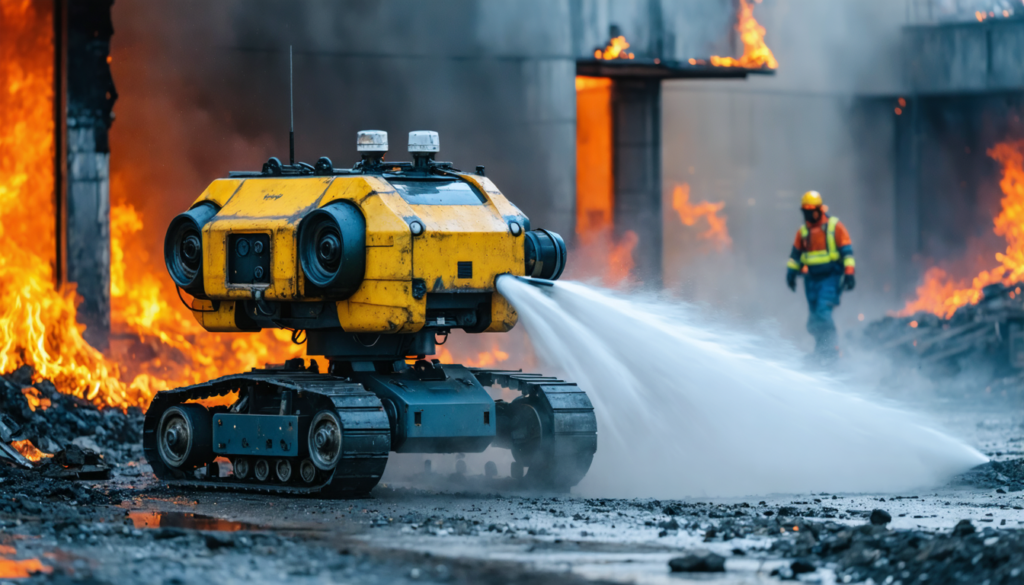
The deployment of advanced technologies in the field of rescue represents a major revolution for civil security and emergency interventions. Hyundai, a key player in industrial innovation, has taken a new step by unveiling an autonomous firefighting robot capable of withstanding extreme temperatures up to 800 degrees Celsius. This mechanical device, designed to enhance firefighter safety, perfectly illustrates the convergence of robotics, artificial intelligence, and thermal resistance in intervention conditions often inaccessible to humans.
Faced with the increase in fires and the challenges posed by hazardous environments, this technological innovation meets an urgent need: to protect firefighters’ lives while optimizing rescue operations. Moving autonomously and analyzing the intervention scene in real time, the robot developed by Hyundai profoundly transforms the approach to thermal crises, offering more reliable assurance in terms of safety and efficiency.
This is evidenced by the presentation on February 24, when the South Korean firm highlighted a robust prototype capable of acting immediately against deadly risks, while collecting and digitizing essential data to anticipate and improve future missions. This system represents a symbiosis between automation and immediate responsiveness, combining exceptional thermal resistance and embedded intelligence.
- 1 Hyundai firefighting robot: a technological breakthrough for safety and autonomy in intervention
- 2 Advanced technology integrated to guarantee the safety of firefighters and the public
- 3 Embedded artificial intelligence for intelligent disaster management
- 4 Thermal resistance at the heart of design: a mastered industrial challenge
- 5 Automation and transformation of emergency interventions: a visible future
- 6 Technical and human challenges related to the implementation of the firefighting robot
- 7 A concrete example of intervention: real situation demonstration
Hyundai firefighting robot: a technological breakthrough for safety and autonomy in intervention
The firefighting robot designed by Hyundai perfectly illustrates the evolution of technologies serving civil security. By adopting a robust architecture capable of withstanding extreme temperatures up to 800 degrees, it positions itself as a real asset for modern rescue operations. This development responds to the clear observation that human exposure to cities in flames or areas affected by explosions or toxic gases represents a hardly surmountable obstacle.
Equipped with a platform initially designed for military operations, the robot named HR-SHERPA has been redeployed in a civilian firefighting mission. This conversion highlights technological versatility and the transition of innovations towards applications with high human value. Hyundai partnered with several entities, including Kia, Hyundai Rotem, and the National Firefighters Agency, to design a machine capable of operating in the most demanding conditions.
This robot combines autonomous electrification and advanced vision through a unique thermal management system. It integrates highly technological insulation as well as a water spray cooling system that protects the battery and sensitive components, thus ensuring prolonged activity in hostile environments. This thermal resistance gives the robot a field durability that human firefighters cannot match, with an operational potential of up to 12 hours under these extreme conditions.
Analysis capabilities and decision-making autonomy for rapid intervention
Unlike simple remote-controlled devices, the robot, equipped with embedded artificial intelligence, offers a precise self-assessment capacity of its environment. Before any intervention, it identifies the fire source remotely, then analyzes the scene in real time thanks to a range of sensors, including short and long-wave thermal cameras capable of piercing smoke and dust.
The robot does not merely reflect a mechanical presence but acts with a certain form of physical intelligence. It reacts without waiting for orders, quickly evaluating the best strategy to extinguish the flames, thus significantly reducing the precious time losses during disasters. This operational autonomy transforms the way rescue operations are organized by strengthening coordination between humans and machines.
Intervention speed is also a major asset: with a capacity to reach 50 km/h, the robot easily overcomes obstacles up to 300 mm, adapting to many rough or cluttered terrains in disaster zones. Each wheel is independently motorized, ensuring optimal maneuverability to slip through narrow spaces, thus enhancing operational efficiency even in complex urban environments.
Advanced technology integrated to guarantee the safety of firefighters and the public
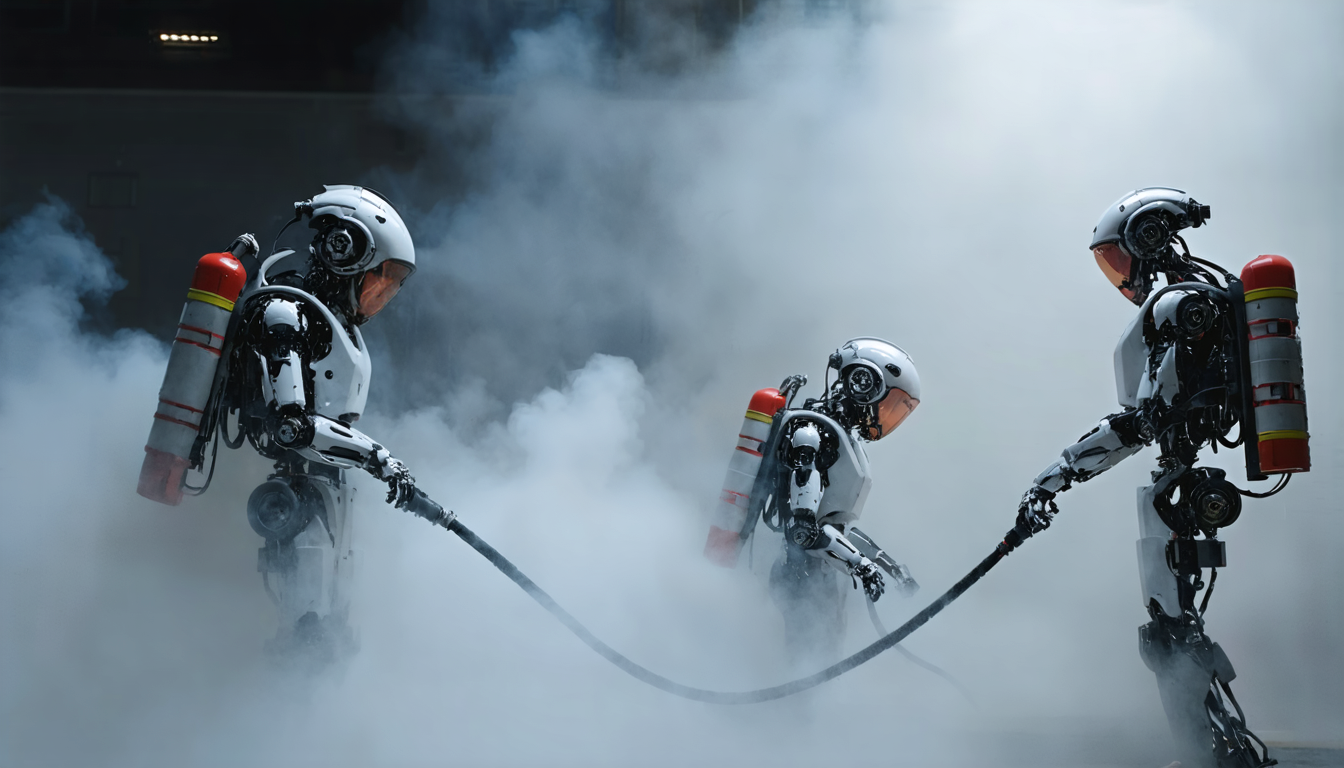
The contribution of this robot to the safety of human teams is essential. By entering zones inaccessible due to extreme heat conditions, dense smoke, or explosion risks, it limits the risks of fatal accidents or serious injuries among firefighters. This innovation echoes a well-documented issue: notably in France, where a civil security study over several years reported an accident rate of 7% among 70,000 firefighters, with an increased mortal risk.
Beyond the simple physical risk, the automation associated with this technology has a systemic scope. It allows humans to be freed from repetitive, arduous, or high-risk tasks, focusing their skills on strategic missions. The robot therefore acts as a multiplier of safety effectiveness, capable of operating 12 consecutive hours without fatigue, where a human firefighter would reach their limits in less than 20 minutes of exposure under these conditions.
Innovation in vision and interaction systems
To face degraded environments, the robot is equipped with a photoluminescent camera that improves visibility in low light or nighttime conditions, making its high-pressure hoses themselves visible. This innovative feature enables teams to better locate exits and access areas, even in complete darkness or dense smoke.
This advanced vision system also includes dual thermal sensors, offering real-time readings of temperatures around the robot, as well as the ability to anticipate fire evolution. Combined with artificial intelligence, this fosters better risk management and more targeted intervention, thus limiting collateral damage and maximizing efficiency in quickly extinguishing fires.
Embedded artificial intelligence for intelligent disaster management
At the heart of Hyundai’s strategy are physical AI algorithms capable of analyzing the situation on the ground and making decisions in real time. This autonomy is essential: it is not merely a remote control tool but a cognitive extension of rescue, capable of collecting, interpreting, and acting without immediate human intervention.
According to Seung-ryong Kim, senior official of the National Firefighters Agency, the main added value of the robot lies in its ability to function as a true physical intelligence, accumulating crucial field data. This information feeds both ongoing operations and databases to optimize future interventions, thus laying the foundation of a comprehensive disaster management platform.
In the long term, Hyundai aims to develop a fully autonomous system, managing priorities and planning extinction strategies, capable of coordinating multiple devices independently. This integrated vision of technology would revolutionize the way rescue operations are deployed, with increased efficiency and drastically reduced human risk.
An overview of AI capabilities to date
- Rapid identification of hazard sources
- Real-time thermographic and smoke density analysis
- Dynamic mapping of the disaster area
- Autonomous decision-making to trigger the most appropriate actions
- Data collection and centralization for future learning and mission optimization
This list illustrates the sophistication of technological integration approaching principles known in other sectors, such as autonomous mobility, but applied here to extreme safety conditions and challenges.
Thermal resistance at the heart of design: a mastered industrial challenge
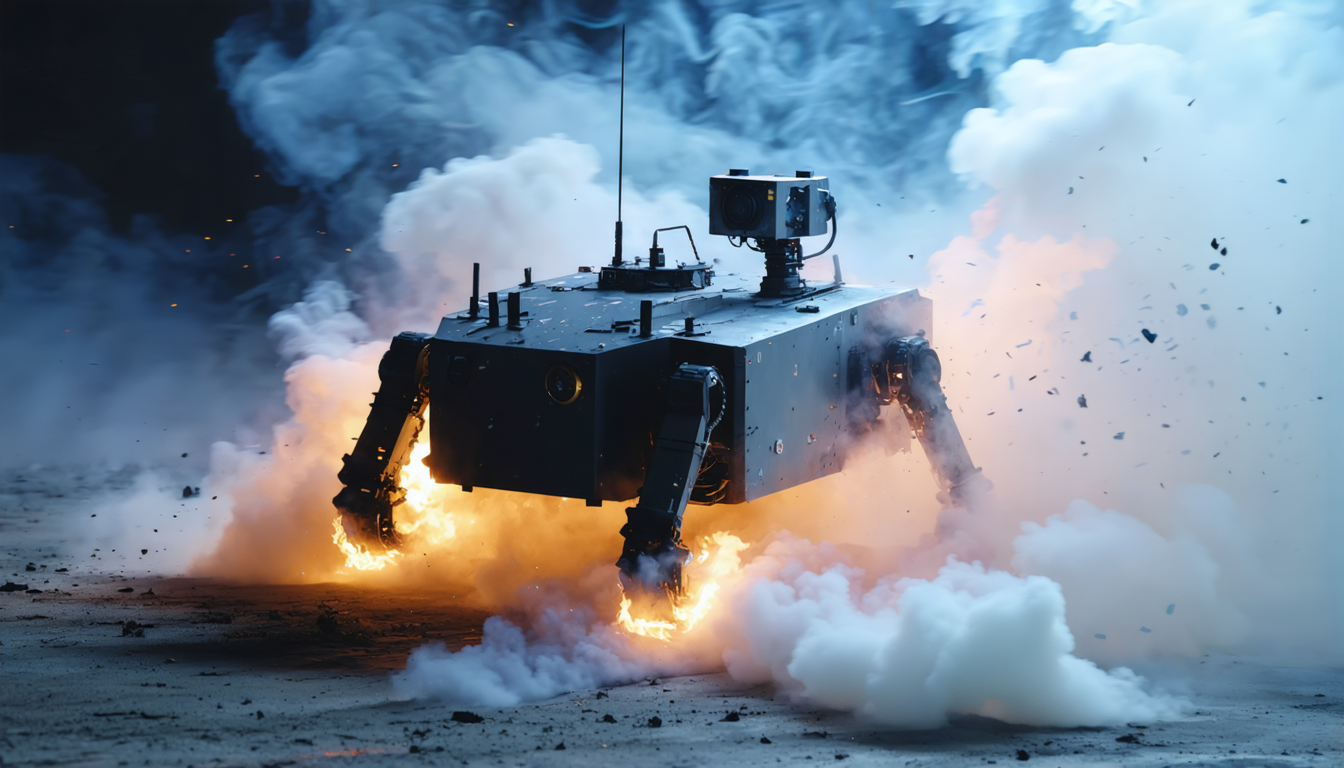
One of the main innovations lies in the robot’s ability to maintain its performance despite prolonged exposure to temperatures nearing 800 degrees Celsius. Hyundai has therefore developed a water spray cooling system for its electronic core, high-tech thermal shielding, and a specific insulating structure. These elements guarantee the robot’s survival and ensure its operational functionality even in the most violent fires.
This endurance far exceeds what is common in other industrial robots or even in some military equipment, placing this system at the pinnacle of thermal resistance technologies. The machine’s design had to incorporate advanced composite materials as well as innovations in heat management to preserve essential electronic and mechanical components.
Comparative table of the main characteristics of the Hyundai firefighting robot
| Characteristic | Description | Main advantage |
|---|---|---|
| Maximum supported temperature | Up to 800 °C (1,472 °F) | Operation in extreme environments |
| Maximum speed | 50 km/h | Fast movement on disaster terrain |
| Cooling system | Water spray to protect the battery | Performance retention in hostile environments |
| Vision system | Short and long-wave infrared thermal cameras | Clear vision even in smoke presence |
| Operational autonomy | Up to 12 hours | Extended intervention capability without fatigue |
Automation and transformation of emergency interventions: a visible future
The integration of this firefighting robot into daily rescue work marks a major paradigm shift. Whereas man was inevitably confronted with high physical risks in the past, collaboration with machines that are both autonomous and resistant to extreme conditions opens the way to a new form of secure action.
This automation translates into better responsiveness on the ground, as well as optimization of human and material resources. As the number of interventions increases due to worsening climate phenomena, this type of robotization enables the deployment of innovative solutions that favor the preservation of human lives and improve overall operational efficiency.
It is interesting to note that Hyundai’s strategy fits within a sustainable development model, combining advanced technology and reduction of environmental risks linked to fires. Continuous data collection serves not only to manage the immediate response but also to better understand fire dynamics and anticipate future crises.
Although the technology is promising, its implementation involves complex challenges, both technical and societal. The first challenge is to ensure smooth integration between human teams and these robotic agents, guaranteeing that operational procedures incorporate this new factor without disruption.
Furthermore, maintenance, operator training, and regular updates of artificial intelligence algorithms are fundamental aspects to ensure system reliability and sustainability. Trust in machines in life-or-death situations remains a major challenge to overcome.
Key points to consider for successful adoption
- Comprehensive training of teams in new technologies
- Development of mixed human-robot protocols
- Regular maintenance and updating of AI software
- Continuous evaluation of performance in real environments
- Engagement of local communities and transparency in use
These elements reflect Hyundai’s commitment to accompany humanity through a technological transition that places safety and collaboration at the heart of progress. Dialogue between engineering and operational practices is essential to maximize the positive impact of this innovation.
A concrete example of intervention: real situation demonstration
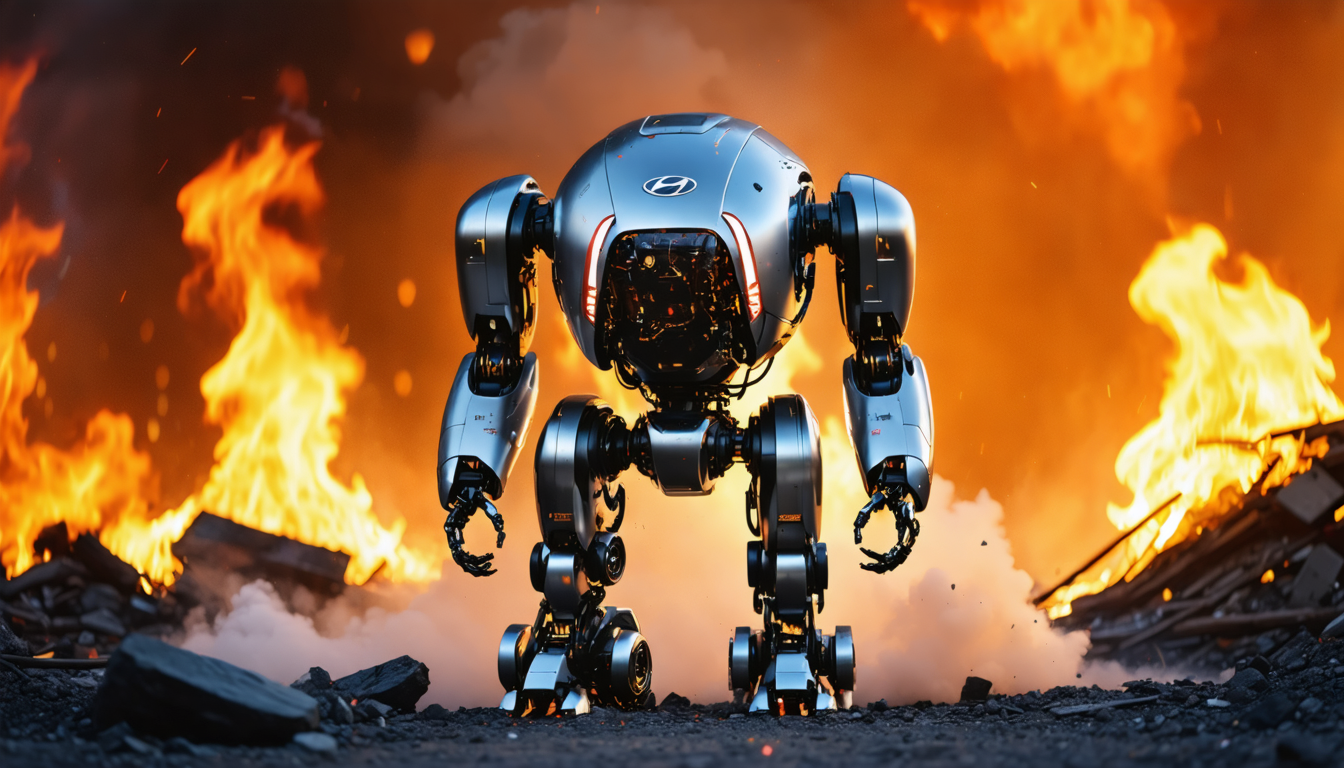
The video presented by Hyundai, titled “A Safer Return Home,” offers a clear preview of the robot’s operational capabilities in emergency situations. During a demonstration session in Namyangju, northeast of Seoul, in February, the robot displayed exemplary maneuverability in front of an intense urban fire simulator.
The robot was able to identify the fire source remotely, move through terrain cluttered with debris and various obstacles, and apply a high-pressure water jet while maneuvering precisely. This public demonstration showed that the machine fits perfectly into current intervention strategies, without sacrificing either speed or rigor.
This type of operation highlights the fundamental interest of the robot in situations where speed and safety are paramount. It allows not only rapid assessment of the situation but also laying down a first attack layer on the fire before the arrival of human teams, thus reducing damage and increasing success chances.