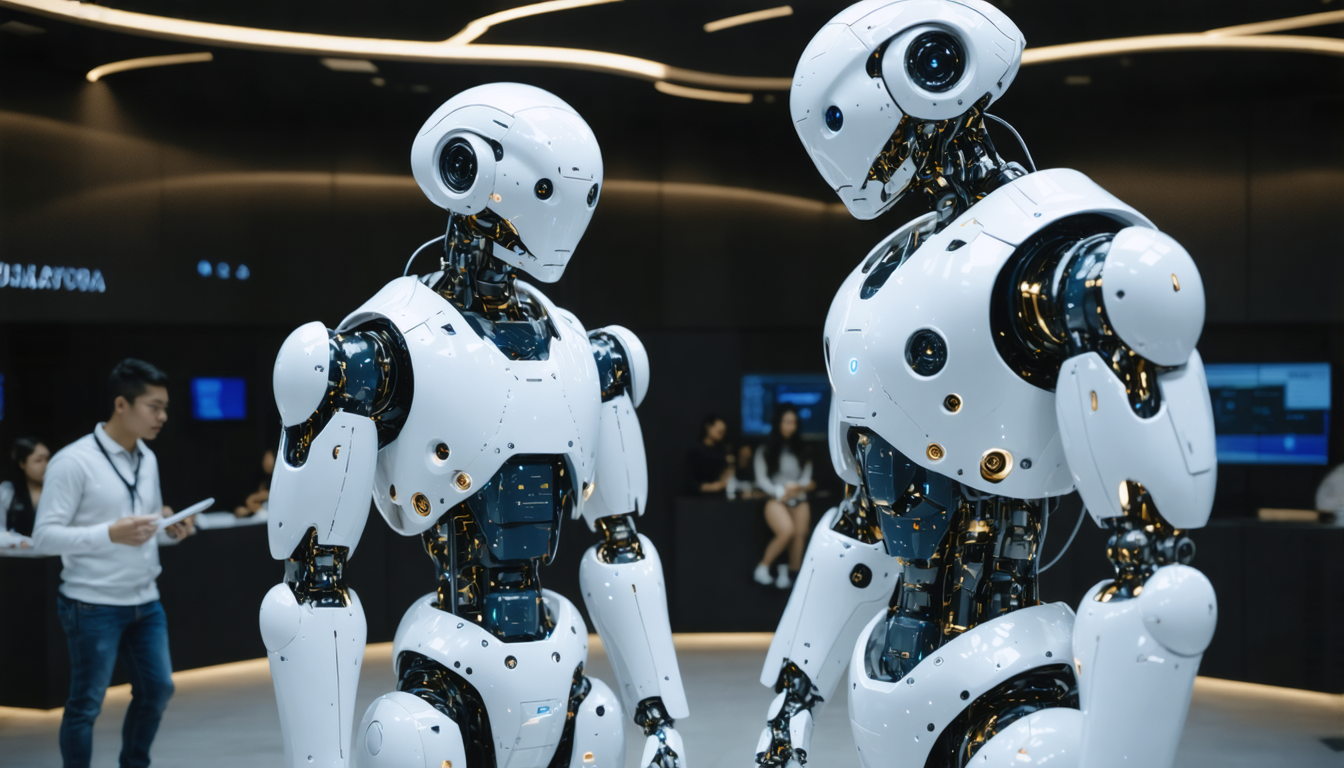
At the heart of advanced robotics, a major innovation is shaking up the landscape: the COSA operating system developed by LimX Dynamics, a company based in Shenzhen. In this era where technology evolves at high speed, the combination of artificial intelligence and automation opens up unforeseen horizons. COSA is not just a simple program, but an integrated cognitive architecture that allows humanoid robots to interact autonomously in complex environments, previously considered inaccessible to machines. The visionary system acts like a true digital brain orchestrating every movement, decision, and perception, making robotic intelligence smoother and closer to human functioning.
Through the demonstration video featuring Oli, a robot measuring 1.65 meters and equipped with 31 joints, we discover a humanoid capable of performing tasks given by voice commands, without any human supervision in real time. This technological leap symbolizes a fundamental advancement for the future of robotics, with profound implications on how robots will be integrated into our societies, workplaces, and daily interactions.
LimX Dynamics’ ambition with COSA goes beyond simple automation. The system is designed to adapt, learn, and anticipate, establishing a new era where humanoid robots become reliable partners capable of evolving in varied contexts, whether industrial, public, or domestic. Behind this technological revolution lie principles derived from a deep understanding of human cognition, fusing perception, reasoning, and action into a single powerful software.
- 1 An unprecedented operating system at the core of humanoid robots: COSA and its cognitive architecture
- 2 The technological innovation behind COSA: a robotic brain inspired by human cognition
- 3 The practical integration of COSA via the robot Oli: demonstrations and impressive capabilities
- 4 The major advantages of the COSA system in the design and use of humanoid robots
- 5 Impact on human-robot interaction: towards simplified and natural communication
- 6 The potential opened by COSA for industrial and public applications
- 7 Ethical issues and prospects for the future of humanoid artificial intelligence
An unprecedented operating system at the core of humanoid robots: COSA and its cognitive architecture
LimX Dynamics has developed a unique operating system named COSA, standing for Cognitive OS of Agents, specifically designed for humanoid robots. This software platform aims to reconcile several essential domains: physical movement control, intelligent environment perception, and cognitive decision-making in real time. Unlike traditional robotics systems, often compartmentalized and complex, COSA offers a seamless integration between these functions, enabling the robot to act with impressive autonomy.
The architecture of COSA is based on a multi-level structure. The lower layer is dedicated to motor control: it manages balance, allows the humanoid to walk fluidly, and ensures the ability to overcome obstacles such as stairs or rough terrain. This mechanical foundation guarantees permanent stability even in dynamic environments.
The intermediate layer focuses on perception. Thanks to sophisticated sensors and advanced algorithms, the robot recognizes objects around it, interprets space in real time, and adjusts its navigation as well as its handling of movable elements. This active perception is crucial to ensure relevant interaction with the physical world, making every gesture meaningful and appropriate.
Finally, the upper layer, the true brain of the system, handles cognition. It transforms natural language instructions into concrete action plans, organizes task planning, takes autonomous decisions, and continually adapts the robot’s behavior according to the new data it receives. This unification of perception, movement, and reasoning places COSA at the center of a genuine revolution in the future of robotics.
The technological innovation behind COSA: a robotic brain inspired by human cognition
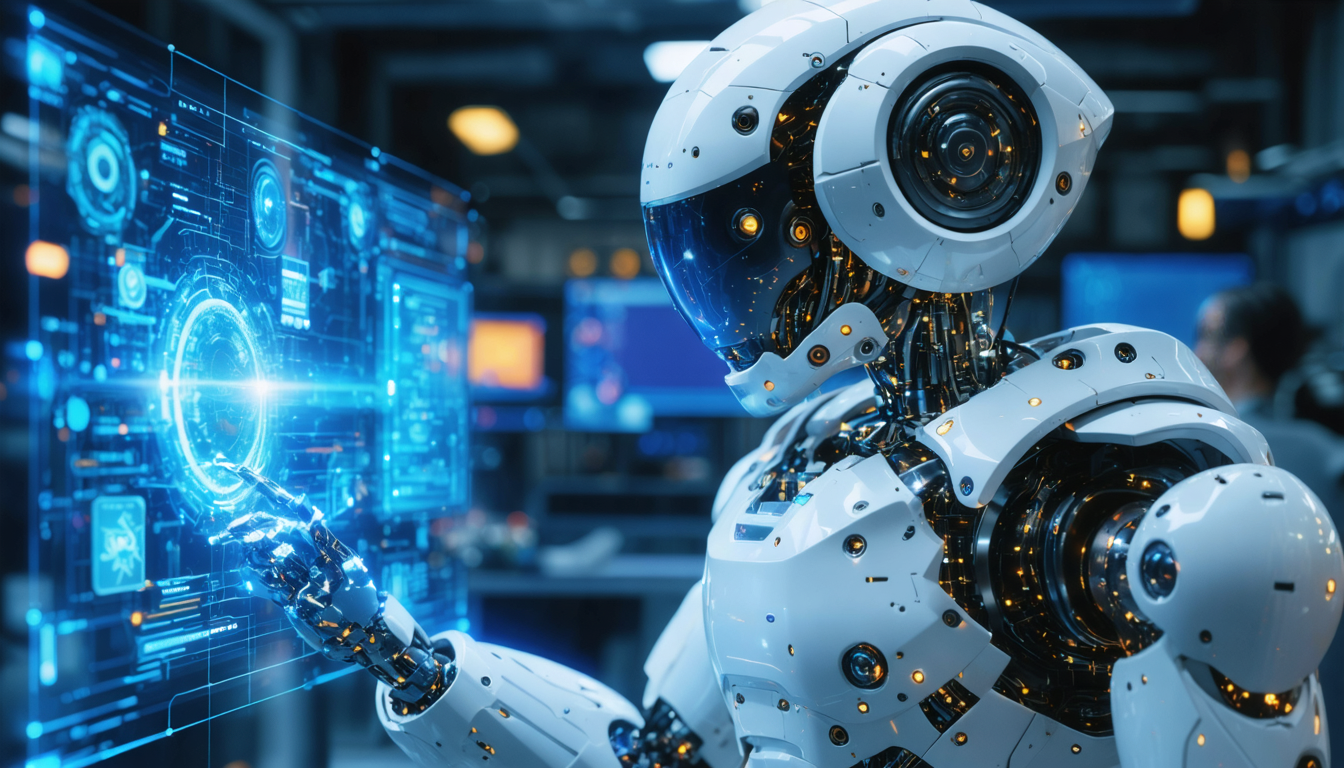
What truly distinguishes COSA from other operating systems for robots is its direct inspiration derived from the functioning of the human brain. LimX Dynamics designed this platform to integrate cognition and physical action inseparably, an approach that results in simultaneous planning and near-instant execution, making robots much more reactive and adaptive.
Internal memory plays a fundamental role. Unlike traditional robots that often operate in a reactive and fragmented manner, COSA enables the robot to retain a semantic memory of its environment. Thus, it remembers places already visited, objects observed, giving it the ability to anticipate its future actions. This evolving memory supports continuous learning, where every interaction with the world helps enrich and refine the overall system behavior.
The use of this cognitive model gives COSA a decisive advantage: it avoids frequent confusions and errors that occur when robots face unforeseen or fluctuating situations. On an industrial site, for example, or a public building in constant change, this ability to adjust trajectory and decisions in real time ensures unprecedented robustness and reliability.
This advance in advanced robotics demonstrates how the convergence between artificial intelligence and neuroscience can lead to operational systems of remarkable complexity and efficiency, opening the way to new perspectives in intelligent automation.
The practical integration of COSA via the robot Oli: demonstrations and impressive capabilities
To illustrate the power of its operating system, LimX Dynamics unveiled Oli, a synthetic human robot whose capabilities speak for themselves. Measuring approximately 1.65 meters, Oli is equipped with 31 joints, allowing natural and coordinated movements. In the filmed scenarios, he responds to complex voice commands and performs tasks completely autonomously.
For example, in a welcoming simulation, he receives the order to bring two bottles of water to a reception desk. Rather than following a pre-programmed path, Oli analyzes the request, identifies objects in his environment, plans an optimal route, and moves fluidly to accomplish the mission. This adaptive behavior is the direct result of robotic intelligence orchestrated by COSA.
During the entire task, no human intervention is necessary. The robot continuously adjusts to any obstacles and possible disruptions, whether a sudden change in an object or a modification of the space. This ability to generate behaviors in real time is a major innovation illustrating the technological revolution represented by COSA.
The major advantages of the COSA system in the design and use of humanoid robots
The development of COSA imposes a new vision in the design of humanoid robots. By breaking with fragmented architectures where each feature is developed and adjusted separately, this system offers a global coherence that simplifies the creation and adaptation process.
This consolidation brings several benefits:
- Development simplicity: Engineers have a unified platform, which reduces the need for complex interconnections between specialized modules.
- Operational robustness: Robots can face environmental changes without malfunctioning, thanks to real-time coordination of cognitive and physical functions.
- Cost and time reduction: Centralization allows better maintenance and smoother updates, accelerating deployment in the field.
- Adaptability: Robots can operate in different environments without requiring exhaustive reprogramming.
- Enhanced user experience: A natural and intuitive voice interface makes interactions more direct, lowering the adoption barrier.
These advantages represent a turning point in humanoid robot automation, making them more accessible and efficient in sectors as varied as logistics, healthcare, and public services.

Impact on human-robot interaction: towards simplified and natural communication
One of the most promising aspects of the COSA operating system is the radical improvement of interactions between humans and robots. Thanks to the recognition and understanding of natural language, the robot becomes capable of receiving oral instructions without requiring users to have particular technical knowledge.
Adopting this type of intuitive communication facilitates the integration of humanoids into daily and professional life. Whether in a hospital, a shopping center, or an industrial site, operators can converse with machines as with a colleague, without a complex interface or moving to specific terminals.
Moreover, this technology helps humanize advanced robotics. The user experience gains in naturalness, creating a relationship of trust and increased cooperation, which encourages the widespread adoption of innovations in the near future.
This evolution marks a decisive step towards automation fully integrated with human activities, where artificial intelligence no longer limits itself to repetitive tasks but accompanies and enriches social and professional interactions.
The potential opened by COSA for industrial and public applications
The versatility of COSA allows envisioning numerous applications in various sectors, where robotics is advancing by leaps and bounds. Here is an overview of the fields that could benefit from this revolutionary technology:
| Sector | Potential Applications | Key Benefits |
|---|---|---|
| Industry | Warehouse management, equipment maintenance, inspection of sensitive sites | Autonomy in complex environments, risk reduction for humans |
| Public Services | Reception and guidance, surveillance, assistance to people | Improved accessibility, natural interaction with the public |
| Health | Care assistance, transport of medical equipment, patient aid | Reliability and adaptability in a demanding environment |
| Logistics | Order preparation, internal delivery, automated sorting | Maximum efficiency and operational flexibility |
| Research and Education | Collaborative projects, teaching, robotic exploration | Intuitive interaction and continuous learning capability |
In all these fields, the combination of robotic intelligence, advanced robotics, and automation offered by COSA renews uses and optimizes the performance of humanoids in real contexts.
Ethical issues and prospects for the future of humanoid artificial intelligence
The development of systems like COSA is not exempt from questions about ethical implications. As humanoid robots gain autonomy and intelligence, it becomes essential to reflect on their regulation, responsibility, and place in society.
For example, the fact that a robot can make decisions alone raises the need to define clear limits to avoid uncontrolled or inappropriate behavior. The protection of personal data used for the robot’s memory and learning is also a sensitive subject, requiring suitable regulation.
From a broader perspective, the question of the impact on employment and the role that humanoids could take relative to humans must be approached with caution, promoting a balance between human-machine collaboration and respect for social rights.
However, thanks to transparent and ethical advances, the future of robotics could fit into a new symbiotic relationship, where artificial intelligence improves quality of life while respecting fundamental human values. This vision engages researchers, industry players, and policymakers in a collective dynamic serving a responsible technological revolution.