In the complex and constantly evolving world of computing, certain innovations have marked a decisive turning point. Unix, an operating system born in the Bell Labs laboratories in the 1970s, stands out as one of these cornerstones. Its originality notably lies in its coding in the C language, a major innovation at the time that propelled it far beyond its origins. This symbiosis between Unix and the C language not only transformed operating system programming but also laid the foundations for a computing revolution that continues today. In 2025, despite the multiplication of modern alternatives, the imprint of Unix is omnipresent in the technological landscape, from Linux to macOS, including mobile devices and cloud infrastructures.
The success of Unix also lies in its pioneering philosophy, built around multitasking, multisession, and remarkable portability. These qualities have sparked lasting enthusiasm in academic and professional circles, making Unix much more than a simple operating system: a reference, a model, a source of inspiration. However, faced with contemporary challenges, notably in memory security, Unix’s legacy is evolving, integrating new technologies and languages to remain relevant in an increasingly complex digital world.
- 1 Unix and the C language: an alliance that transformed operating system programming
- 2 The fundamental components of Unix: kernel, shell, and file system explained
- 3 Unix’s legacy: major influences on modern operating systems
- 4 The rise of Linux, Unix’s open source heir
- 5 Security challenges related to Unix and the integration of the Rust language into Linux kernels
- 6 The diversity of Unix variants: proprietary vs open source and industry standards
- 7 Unix-like systems: understanding the different families of operating systems in 2025
Unix and the C language: an alliance that transformed operating system programming
When Ken Thompson and Dennis Ritchie began developing Unix at Bell Labs, they chose a radical approach: instead of writing the system in assembly, as was the norm at the time, they rewrote it in the C language. This choice was both bold and visionary. The C language, designed by Dennis Ritchie, is at a higher level than assembly while offering fine control of system resources, allowing for unprecedented portability.
This decision revolutionized operating system programming because it detached the operating system from the specific hardware on which it runs. Unix can thus be ported to different types of computers with reduced effort. This portability, combined with the power of a multitasking system capable of managing multiple users simultaneously, places Unix at the heart of computing innovation.
Unix quickly became a reference in academic environments, notably thanks to the University of Berkeley which developed the BSD variant (Berkeley Software Distribution), enriching the system with a set of additional tools and features. BSD, in turn, inspired the creation of many variants such as FreeBSD, OpenBSD, and NetBSD, widely used in contexts as varied as servers, workstations, and embedded devices.
- The C language brings unprecedented portability: Unix ceases to be tied to a specific architecture.
- The modular architecture of Unix: ease of modification and system improvement.
- A multitasking and multisession philosophy: efficient management of concurrent processes.
- Rapid adoption in universities: creation of a pool of skilled developers.
- BSD and its heirs: foundations for multiple modern systems.
Thanks to the C language, Unix programming gains in readability, modularity, and efficiency. This alliance remains a major computing revolution because it paves the way for current open source systems and the explosion of projects based on Unix heritage. The close collaboration between Unix and C is, moreover, a model still studied today in university computer science courses.
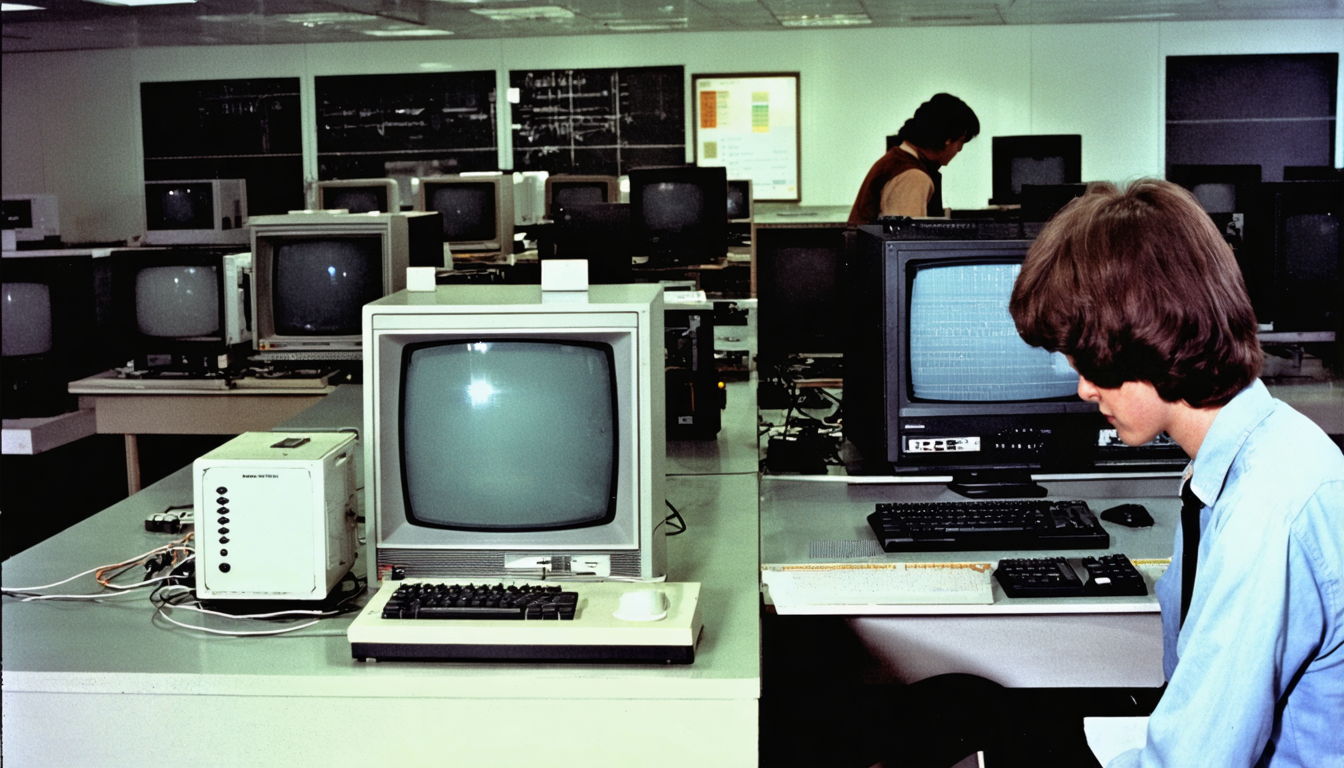
The fundamental components of Unix: kernel, shell, and file system explained
The Unix system relies on three essential components that interact to ensure its robustness and flexibility: the kernel, the shell, and the file system. Each of them plays a key role in the management and operation of the system.
The kernel: the vital core of Unix
The kernel is responsible for managing hardware and software resources. It coordinates access to memory, task scheduling, input/output management, and enforces security and access rules. By passing commands from the shell to hardware resources, it acts as an indispensable mediator between the user, applications, and the hardware.
The versatility of the Unix kernel allows it to operate on different hardware, again highlighting the portability inherited from the C language. It also enables fine multitasking management, capable of running several programs simultaneously without conflict, as well as multisession management that permits multiple users to work simultaneously on the same system.
The shell: a user-friendly and powerful interface
The Unix shell is a command-line interface that serves as a direct bridge between the user and the kernel. It receives entered instructions, interprets them, and transmits them to the kernel for execution. The shell also facilitates automation through scripts, allowing complex tasks to be executed from simple commands.
There are several types of shells under Unix, among which the Bourne Shell (sh) and the C Shell (csh) are the most emblematic. Other variants such as the Bourne Again Shell (bash) and the Korn Shell (ksh) add advanced features. The power of these shells lies in their ability to manage autocomplete, command history, and input/output redirection, making Unix very flexible for experienced users.
The file system: an innovative hierarchical organization
Unix organizes its files in a tree-shaped hierarchy, a structure that facilitates the management, storage, and retrieval of data. Unlike flat systems, this architecture allows multiple levels of directories and subdirectories suited to the diversity of modern needs.
Different types of files are distinguished: ordinary files containing text or data, symbolic links that refer to other files, and special directories located notably in the /dev directory, used to represent hardware devices.
| Component | Description | Main Function |
|---|---|---|
| Kernel | Center of the operating system | Manages memory, processes, input/output |
| Shell | User command line interface | Interprets commands, executes scripts |
| File system | Hierarchical organization of files | Stores and classifies data and devices |
This clear and powerful system organization is another reason why Unix was a forerunner and why its concepts are still present in most modern operating systems.
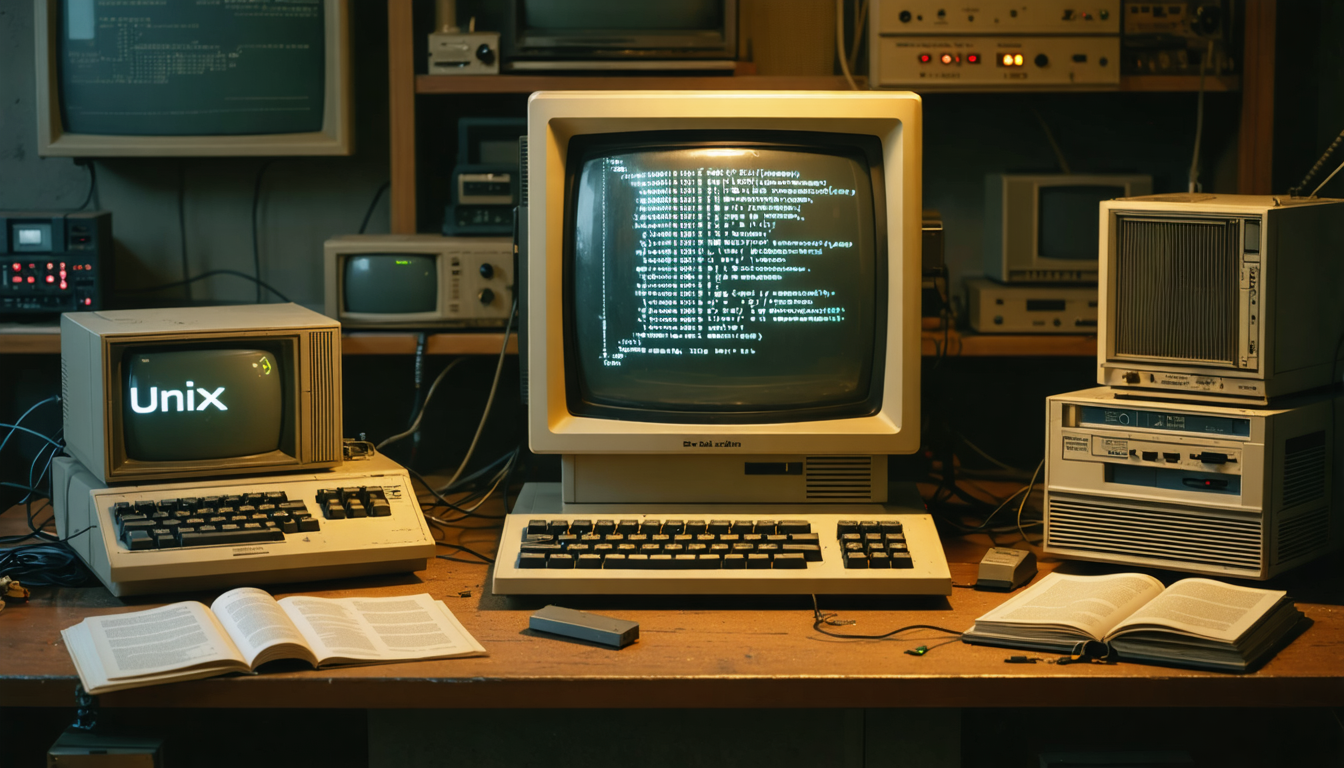
Unix’s legacy: major influences on modern operating systems
The impact of Unix goes far beyond its era. Its design has influenced a multitude of contemporary systems, particularly Linux, which today lies at the heart of many servers, mobile devices, and cloud infrastructures.
Linux, created in the 1990s by Linus Torvalds, is a Unix-type system, although entirely rewritten. By retaining Unix’s founding principles — portability, multitasking, multisession, “everything is a file” philosophy — Linux has thrived thanks to its open source model, attracting a large community of developers and massive adoption in enterprises in 2025.
Besides Linux, variants like FreeBSD, OpenBSD, and NetBSD continue to be used for their robustness and security. Apple’s macOS, used on Macs, iPhones, and iPads, is also a direct descendant of Unix. Even Android, the dominant operating system in the mobile world, draws a significant part of its conceptual heritage from this ecosystem.
- Unix laid the foundations for multitasking and multisession.
- The “everything is a file” model facilitates system interactions.
- The modular approach inspires modern architectures.
- Open source variants encourage collaborative innovation.
- Unix’s legacy is visible in the majority of current OSes.
This influence is such that it is almost impossible today to speak of operating systems without mentioning, one way or another, the trace of Unix. Even cloud environments heavily rely on its principles, making Unix a central building block of the modern digital era.
The rise of Linux, Unix’s open source heir
While Unix reigned supreme for a long time, it is its open source descendant, Linux, that now dominates the computing scene. Thanks to its free and customizable nature, Linux has established itself as a credible and performant alternative in many sectors.
In 2025, Linux adoption in enterprises continues to grow, with more than 78% of global companies using Linux-based systems in their infrastructures. This notable increase is due to several key reasons:
- Robustness and reliability: Linux offers remarkable stability suited for critical environments.
- Enhanced security: effective permission management and an active community for vulnerability detection.
- Reduced costs: absence of proprietary licenses facilitates large-scale adoption.
- Flexibility and adaptability: capability to customize the system according to specific needs.
- Large ecosystem: solid base for cloud platforms, web hosting, and embedded devices.
This evolution reflects a paradigm shift in the field of operating systems, where open source has become a key driver of innovation and collaboration. Linux today embodies the living legacy of Unix, adapting to contemporary demands.

Despite its success, Unix carries the weight of its past, notably through the C language which constitutes a source of vulnerabilities, mainly in memory management. The “Memory Safety crisis” refers to difficulties in protecting systems against memory management errors, which can lead to critical flaws.
The C language, due to its manual memory management, is often blamed as the origin of the most feared attacks such as buffer overflows. This structural vulnerability requires an essential adaptation to guarantee the security of modern infrastructures relying on these legacy systems.
To address this challenge, the emergence of the Rust language in Unix/Linux architectures is an important milestone. Rust combines performance comparable to C with increased memory safety thanks to automated memory management checks at compile time. In 2025, Rust has become an official component of the Linux kernel, beyond mere experimentation.
This integration was approved at a summit in Tokyo where project maintainers validated the permanent inclusion of Rust, with more than 65,000 secure Rust lines already deployed in production. This evolution is also driven by CISA requirements that push vendors to clarify their roadmaps for memory security.
- Memory Safety: enhanced protection against memory errors.
- Gradual transition from C to Rust: for better security guarantees.
- Strengthening of the Linux kernel: for increased resistance to cyber threats.
- Preservation of the Unix legacy: by adapting it to current requirements.
- Innovative hardware solutions: such as CHERI for memory security.
This modernization perfectly illustrates how Unix’s legacy is not limited to a fixed past but evolves to meet today’s challenges, ensuring the sustainability and resilience of critical systems in the era of cloud computing and the Internet of Things.
The diversity of Unix variants: proprietary vs open source and industry standards
Since its creation, Unix has spawned a multitude of variants with various statuses, between proprietary paid systems and free open source solutions. This diversity reflects both the richness of its heritage and the interoperability issues that arise from it.
Among proprietary solutions, Oracle Solaris and IBM AIX are notable examples. These systems have commercial licenses and are frequently used in large enterprises requiring certified environments and dedicated support. In contrast, open source variants such as FreeBSD, OpenBSD, NetBSD, and Linux are favored for their free availability, flexibility, and the dynamic community that constantly develops them.
Faced with this diversity, organizations like The Open Group have worked to standardize the Unix ecosystem through the SUS (Single Unix Specification) specification and POSIX standard, aiming to ensure a certain homogeneity and compatibility among different systems. These standards facilitate application portability and allow developers to reduce maintenance efforts.
| Variant Type | Examples | Main Characteristics | Target Audience |
|---|---|---|---|
| Proprietary | Oracle Solaris, IBM AIX | Paid license, professional support, certification | Large companies, critical environments |
| Open Source | FreeBSD, OpenBSD, NetBSD, Linux | Free, modifiable, active community, flexible | Developers, startups, academia, web hosting |
This range of choices attests to the lasting influence of Unix and highlights how this system has adapted to varied contexts, from industrial data centers to educational projects, while maintaining a solid and recognized technical foundation.
Unix-like systems: understanding the different families of operating systems in 2025
The term “Unix-like” is used to describe operating systems that share similar behavior to Unix, rather than being directly derived from its source code. This broad term can sometimes be confusing, as it gathers very diverse systems.
Generally, three main categories are distinguished:
- Systems directly derived from Bell Labs code: these are the original Unix versions and their maintained evolutions.
- Certified Unix systems: these systems comply with SUS and POSIX standards and are authorized to use the Unix name (examples: IBM AIX, HP-UX).
- Unix-like systems: they follow Unix’s functional specifications without using its code (example: Linux, Minix).
This classification is useful to understand the variety of systems used today, where compatibility needs and technological innovation coexist. Linux, for example, although not an official Unix, is widely accepted as a Unix-like system due to its compliance with industry standards and its wide adoption.
A look toward 2025 shows that this diversity will be preserved, each family serving different needs and contributing to a rich and dynamic ecosystem. Understanding this plurality is essential for professionals and computing enthusiasts who navigate a universe where Unix remains a historic and technical reference that is essential.