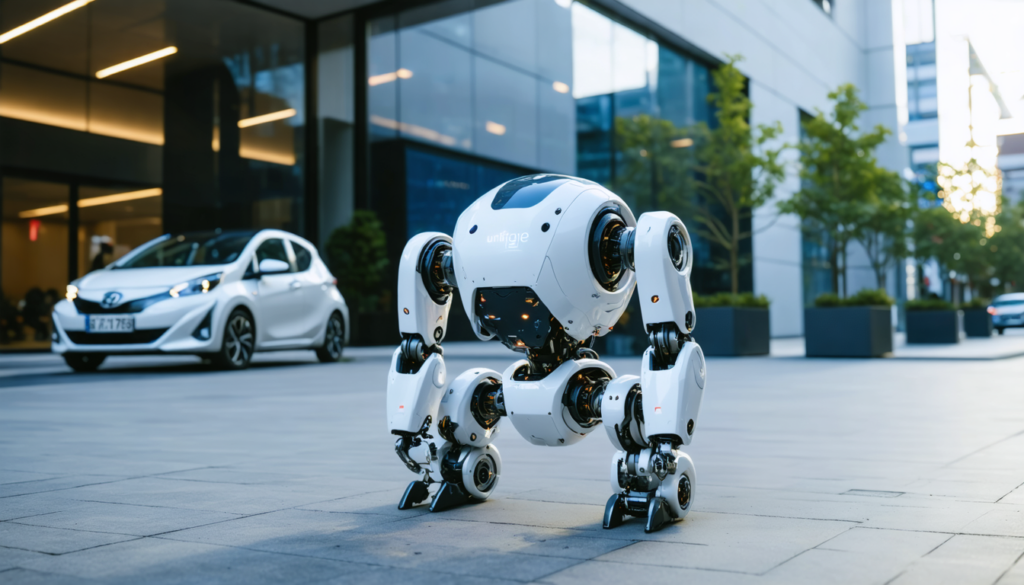
Unitree Robotics is revolutionizing the world of humanoid robotics by introducing its brand new model, the R1, an acrobatic robot with a compact stature and remarkable performance. Launched at an unbeatable price, comparable to that of a small used city car, this economical robot marks a major turning point in technological accessibility. With impressive prowess in terms of mobility, agility, and interactions, the Unitree R1 is not just a mechanical feat: it also embodies a vision of a future where robotic technology integrates harmoniously both in domestic and professional environments. This innovative robot stands out not only for its low cost but also for its ability to perform acrobatic maneuvers, a feat rarely achieved at this price level.
Against the giants of the sector, this agile robot destabilizes the competition and paves the way for a new generation of leisure and service robots, adapted for a broad audience. What are the technical specificities that make the R1 unique? How can this domestic and professional robot fit into a rapidly expanding market? Explore with us the multiple facets of this industrial phenomenon.
- 1 Unitree R1: a revolution in humanoid robotics at a reduced price
- 2 Impressive physical performance for a compact acrobatic robot
- 3 Human-machine interaction redesigned to foster collaboration
- 4 Practical applications of the Unitree R1: between domestic and professional robot
- 5 An educational tool and an open platform for developers
- 6 Technical limits and security challenges surrounding the Unitree R1
- 7 Comparison between the Unitree R1 and its rivals on the global market
- 8 A promising future for the Unitree R1 Robot on the global market
Unitree R1: a revolution in humanoid robotics at a reduced price
The launch of the Unitree R1 caused a shockwave in the robotics industry. Thanks to a starting price around 5,900 dollars (approximately 5,060 euros), this acrobatic robot establishes itself as a genuine asset in the democratization of robotic technology. To understand this advancement, one must first grasp the positioning of Unitree Robotics, a Chinese company that plays a key role in the accessibility of humanoid robotics.
Before the arrival of the R1, humanoid robots were often sold at prohibitive prices exceeding 20,000 dollars, accessible only to large companies or research laboratories. The previous model from Unitree, the G1, was itself priced at over 16,000 dollars. With the R1, the company changes the paradigm by targeting a mass market composed not only of professionals but also enthusiasts and independent developers. The shift from a 16,000-dollar robot to a 5,900-dollar model represents a major industrial upheaval.
This innovation responds to several essential challenges:
- Financial accessibility: a price comparable to that of a small used city car enables reaching a much wider audience.
- Technological standardization: democratizing a stable hardware platform to accelerate software and application development.
- Industrialization: targeting volume and no longer exceptions, to optimize costs and ensure production reliability.
This approach marks a clear break in the field: offering an agile and high-performing humanoid robot at a price that makes it accessible to everyone. This strategy reflects Unitree Robotics’ desire to create an open ecosystem. Thus, developers benefit from a tangible tool to push research and innovation further in robotics, while progressively installing the acrobatic robot into users’ daily lives.
| Characteristics | Unitree G1 (2024) | Unitree R1 (2025) |
|---|---|---|
| Launch price | $16,000 | $5,900 |
| Weight | 30 kg | 25-29 kg |
| Height | 167 cm | 123 cm |
| Degrees of freedom | Variable | 26 DOF |
Thanks to this approach, Unitree manages to combine remarkable performance, quality manufacturing, and attractive price, making the acrobatic robot accessible to new horizons. The R1 asserts itself as a catalyst for innovation destined to shake up established codes.

Impressive physical performance for a compact acrobatic robot
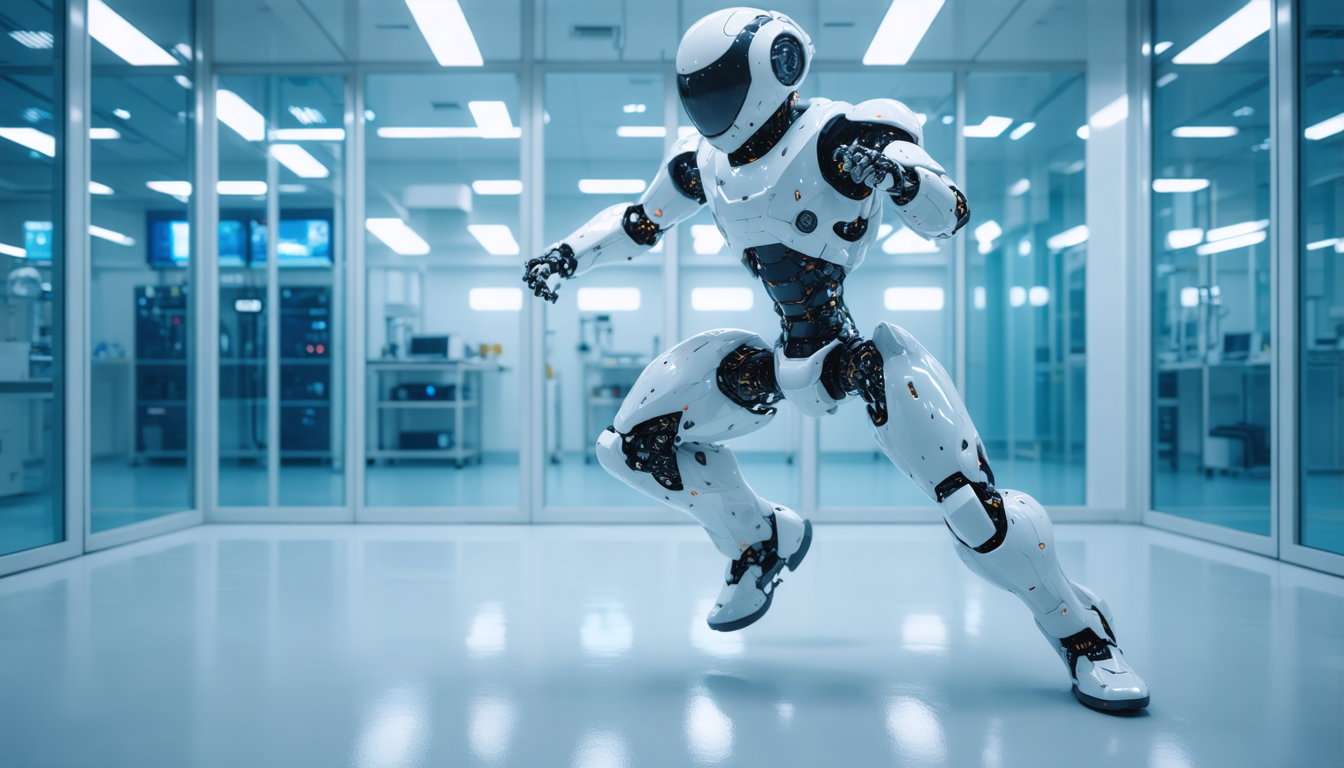
In the sometimes rigid world of robotics, where humanoids are often considered too heavy or limited in their movements, the Unitree R1 makes a remarkable entry displaying surprising agility. Its compact design optimized for mobility constitutes a real technical tour de force, allowing it to execute maneuvers previously reserved for much more expensive robots.
With a height of only 123 cm and a weight ranging between 25 and 29 kg, the R1 is particularly maneuverable. This lightness promotes not only its agility but also the quick response of actuators, optimized with permanent magnet synchronous motors (PMSM) with low inertia. The robot carries 26 degrees of freedom, including 6 per leg, offering a certain flexibility to adapt to complex environments.
Among its acrobatic feats are:
- Back and front flips executed with mastery.
- Kickboxing movements, unexpected for a humanoid robot.
- Rolls and runs on rough terrains, demonstrating great stability.
- The ability to quickly stand back up after a fall.
These performances are not simply demonstrative but reflect an advance in agile robotics, essential for tasks requiring fluid and efficient movement.
| Attribute | Description |
|---|---|
| Degrees of freedom | 26, including 6 for each leg |
| Height | 123 cm |
| Weight | 25-29 kg |
| Motors | Permanent magnet synchronous motors, low inertia |
| Energy autonomy | About 1 hour of continuous use |
The mechanics incorporated in the R1 thus illustrate a subtle balance between lightness, power, and energy efficiency. This innovative robot is therefore capable of achieving physical performance comparable to models ten times more expensive, positioning it advantageously in the contemporary robotics landscape.
Human-machine interaction redesigned to foster collaboration
The Unitree R1 also innovates in user interaction. The goal is to make the experience smooth, intuitive, and collaborative, by integrating advanced perception and communication systems. The robot is strongly oriented toward embedded intelligence capable of understanding and interacting with its environment.
Here are the devices enabling natural interaction for the R1:
- Binocular camera: ensuring stereoscopic vision to analyze depth and better perceive surrounding objects.
- Microphones and speakers: arranged in a network of four elements to precisely capture sounds and allow two-way voice communication.
- Large Multimodal Model (LMM): integrated for voice and visual recognition, facilitating understanding of commands and human expressions.
- Head mobility: equipped with 2 degrees of freedom, helping the robot to direct its perception and adjust its behavior according to the environment.
The R1 robot can thus behave like a real mobile computing server, equipped with WiFi 6 and Bluetooth 5.2 to ensure smooth connectivity. It also benefits from remote software updates (OTA), which allows continuously enriching its functionalities without manual intervention. The open platform provided by Unitree gives developers full access to joint and sensor controls, opening the way to advanced customization.
| Technology | Functionality |
|---|---|
| Binocular Camera | Stereoscopic vision for depth evaluation |
| Microphone network (4) | Precise sound detection and recognition |
| Multimodal LMM systems | Intelligent voice and visual recognition |
| WiFi 6 / BT 5.2 connectivity | Reliable and fast communication with the environment |
| OTA updates | Continuous maintenance and improvement without physical intervention |
This interaction-oriented architecture emphasizes the collaborative dimension of the robot, essential for its integration in domestic and professional scenarios. It also fosters advanced software developments by the community.
Practical applications of the Unitree R1: between domestic and professional robot
The R1 demonstrates rare versatility for an economical humanoid robot. It fits into several fields, emphasizing simple yet effective functions, both in the professional and domestic sectors. Thanks to its locomotion, perception, and voice interaction capabilities, it easily performs light assistance roles.
Among possible applications:
- Reception and customer service assistants: the R1 can serve as an interactive receptionist, answering questions and guiding visitors.
- Supervision and data collection: in commercial environments, the robot produces analyses on traffic and customer interactions.
- Support for the service industry: it facilitates logistical management by ensuring a mobile and efficient presence.
- Educational leisure robot: used as a pedagogical tool or in interactive entertainment environments.
These functions meet nearly 90% of the automation needs identified in service companies. The ease of integration, thanks to the development kit (SDK), allows adapting the R1 to the specificities of existing systems, notably the Internet of Things (IoT) and analytical platforms.
| Use | Main advantage | Sector impact |
|---|---|---|
| Reception and assistance | Natural voice interaction, smooth mobility | Improvement of customer experience and cost reduction |
| Data analysis and collection | Real-time monitoring, organizational improvement | Support for strategic decision-making |
| Logistic services | Automation of repetitive tasks | Increased operational efficiency |
| Leisure and education | Interactive and programmable support | Energizing pedagogical activities |
Unitree thus positions itself as a major player in the democratization of humanoid robots, offering accessible, efficient, and immediately applicable technology, which could change the game across several sectors.
An educational tool and an open platform for developers
Beyond its practical functions, the Unitree R1 particularly stands out in the educational and research field. The model specially designed for education, R1 EDU, supports a software ecosystem dedicated to laboratories and developers worldwide.
The R1 EDU can optionally be equipped with a NVIDIA Jetson Orin computing module, capable of executing up to 100 TOPS (Tera Operations Per Second). This computing power enables the execution of complex tasks, such as advanced image analysis, real-time simulation using engines like Unreal Engine, or the development of sophisticated control algorithms.
Among the benefits for educational users and hobbyists:
- Compatibility with common simulation platforms: extended support for ROS (Robot Operating System) and Moveit, facilitating integration and prototyping.
- Access to low-level controls: allowing individual modulation of joints, sensors, and behaviors.
- Hardware modularity: easy addition of components, sensors, or computing modules.
- Active community: encouraged by Unitree to share and develop innovative solutions.
This configuration opens unprecedented prospects for robotics training, experimentation, but also the creation of customized professional solutions, contributing to extending robotic technology to a more diverse and creative audience.
| Characteristic | Description | Educational advantage |
|---|---|---|
| NVIDIA Jetson Orin module | Up to 100 TOPS of computing power | Execution of complex software and simulations |
| ROS/Moveit compatibility | Standard platforms in robotics | Facilitates prototyping and research |
| Complete and open SDK | Precise control of actuators and sensors | Advanced customization for specific projects |
| Modularity | Easy extension via modules and sensors | Adaptability to evolving needs |
Technical limits and security challenges surrounding the Unitree R1
Despite its many qualities, the Unitree R1 presents significant constraints that must be taken into account, especially for professional and knowledgeable educational users. These limits underline the compromises made to keep its cost low.
Energy autonomy ranks as the top challenge. The R1’s lithium battery only allows about one hour of continuous use, necessitating frequent recharge cycles, which can be a barrier to extended operation. Furthermore, the absence of dextrous hands, with fixed hands and a torque limited to about 2 kg at the arms level, restricts the execution of complex tasks requiring fine manipulation.
Data security is another concern. Some analyses on previous Unitree models have revealed potential cybersecurity vulnerabilities, such as unwanted telemetry transmission. These points highlight the importance of strict management and compliance with regulations, notably concerning personal data protection (GDPR).
- Autonomy limited to about one hour.
- Absence of articulated hands, reducing manipulation capacity.
- Risk of cybersecurity vulnerabilities.
- Need for particular attention to the handling of sensitive data.
| Limit | Description | Consequence |
|---|---|---|
| Energy autonomy | About 1 hour of use per charge | Limited usage time, frequent recharging needed |
| Hand maneuverability | Fixed hands, torque limited to 2 kg | Fine manipulation impossible, limited tasks |
| Cybersecurity | Possible unsolicited telemetry transmission | Potential compliance and confidentiality risks |
These constraints make the R1 an ideal product for specific applications, mainly in leisure, education, or certain light domestic and business tasks, but not for heavy industrial automation or the execution of very complex functions.
Comparison between the Unitree R1 and its rivals on the global market
Against global leaders, the Unitree R1 clearly stands out by its price positioning and limited capabilities, inventing a new segment on the international humanoid robotics stage.
Competitors like Tesla with their Optimus target full autonomy for heavy industrial tasks. The Optimus is aimed to be a factory robot, much more expensive (between 20,000 and 30,000 dollars) and equipped with dextrous hands and all-day autonomy. However, the R1 demonstrates that for more modest needs, it is possible to dispense with these options while retaining great mobility and reduced cost.
Similarly, projects like BMW’s Figure 02 offer extremely sophisticated humanoids, with prices estimated at over 250,000 dollars for certain prototype versions, far from the economic reality of many companies and users.
The following table summarizes the major differences:
| Robot | Approximate price | Autonomy | Dexterity | Target use |
|---|---|---|---|---|
| Unitree R1 | ~$6,000 | ~1 hour | Limited (fixed hands) | Light service, leisure, education |
| Tesla Optimus | $20,000 – $30,000 | Full day | High (dextrous hands) | Industrial automation |
| BMW Figure 02 | ~$250,000 | Variable | High | Research and demonstrations |
This comparison highlights how Unitree chose a different strategy, valuing light automation, adapted to immediate use, and betting on volume to lower costs and accelerate adoption.
A promising future for the Unitree R1 Robot on the global market
Beyond its characteristics and uses, the deployment of the Unitree R1 robot signals a profound transformation of the robotics sector. By making the acrobatic robot accessible at the price of a small city car, Unitree Robotics disrupts balances and forces a rethink of industrial strategies.
The company also plans an IPO in Hong Kong in the last quarter of the year to finance the intensification of production. The transition from tech startup to industrial manufacturer allows it to better meet emerging demand.
Global competitors are forced to accelerate their optimization efforts, under risk of losing the industrial standard battle. This dynamic encourages a possible general price drop and an acceleration of the innovation pace.
Here are the key challenges for the near future:
- Large-scale industrialization: to reduce costs and ensure reliability.
- Diversification of applications: service, education, leisure, light logistics.
- Strengthening of the software ecosystem: vital to stimulate innovation and customization.
- Security and compliance: an ongoing challenge as the robot becomes widespread.
The Unitree R1 symbolizes a turning point where advanced engineering finally rhymes with economic accessibility, preparing a new era in robotic technology.