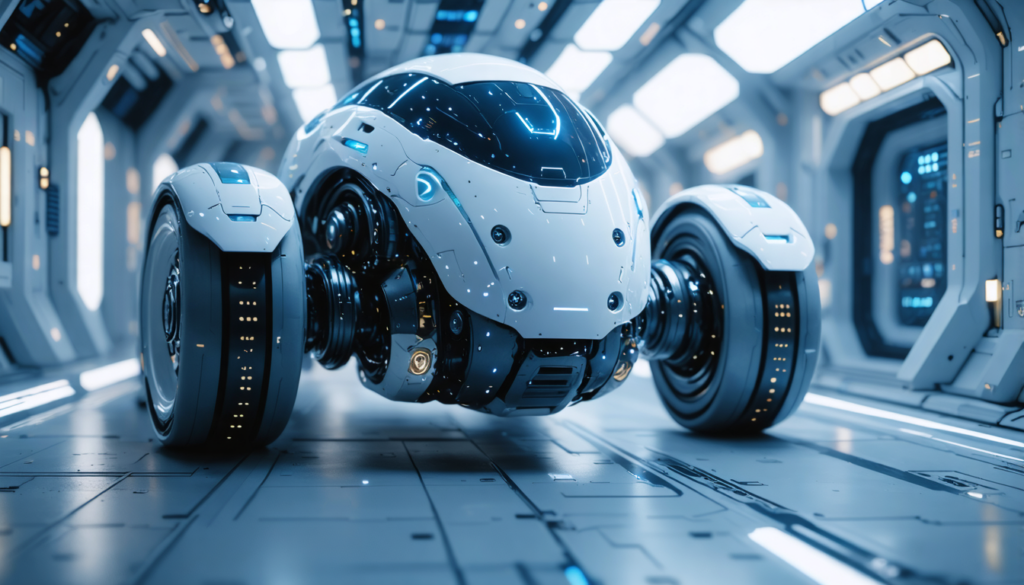
Robotics takes a new step forward with the presentation of the G1-D by Unitree, a hybrid humanoid robot combining biped agility and ultra-fast wheeled speed. This innovation marks a major milestone in autonomous mobility and the interactivity of intelligent machines. Mainly known for its quadruped robots, the Chinese company redefines the humanoid concept by integrating a unique innovative technology: motorized wheels hidden under its feet. This bold choice not only increases the robot’s speed but also improves its stability and energy efficiency, thus opening new perspectives for robotics applied to logistics, education, and assistance.
While most traditional humanoid robots try to imitate human walking with varying degrees of success, the G1-D positions itself as an agile robot capable of instantly switching from bipedal locomotion to fast wheeled propulsion. This versatility is made possible thanks to flexible joints and an advanced artificial intelligence system, trained to navigate different types of terrain and react in real time to obstacles. In 2026, this robot perfectly illustrates the convergence between robotic mobility and cognitive abilities, a real step towards the harmonious coexistence of robots in our daily environment.
- 1 A hybrid technology revolutionizing humanoid robotics in 2026
- 2 Speed performance: the G1-D leads the mobile robot race
- 3 Artificial intelligence at the heart of the Unitree G1-D humanoid robot
- 4 Energy challenges and sustainability of the G1-D robot
- 5 Unitree’s strategic positioning against the global robotics giants
- 6 Evolution prospects for autonomous mobility of humanoid robots
A hybrid technology revolutionizing humanoid robotics in 2026
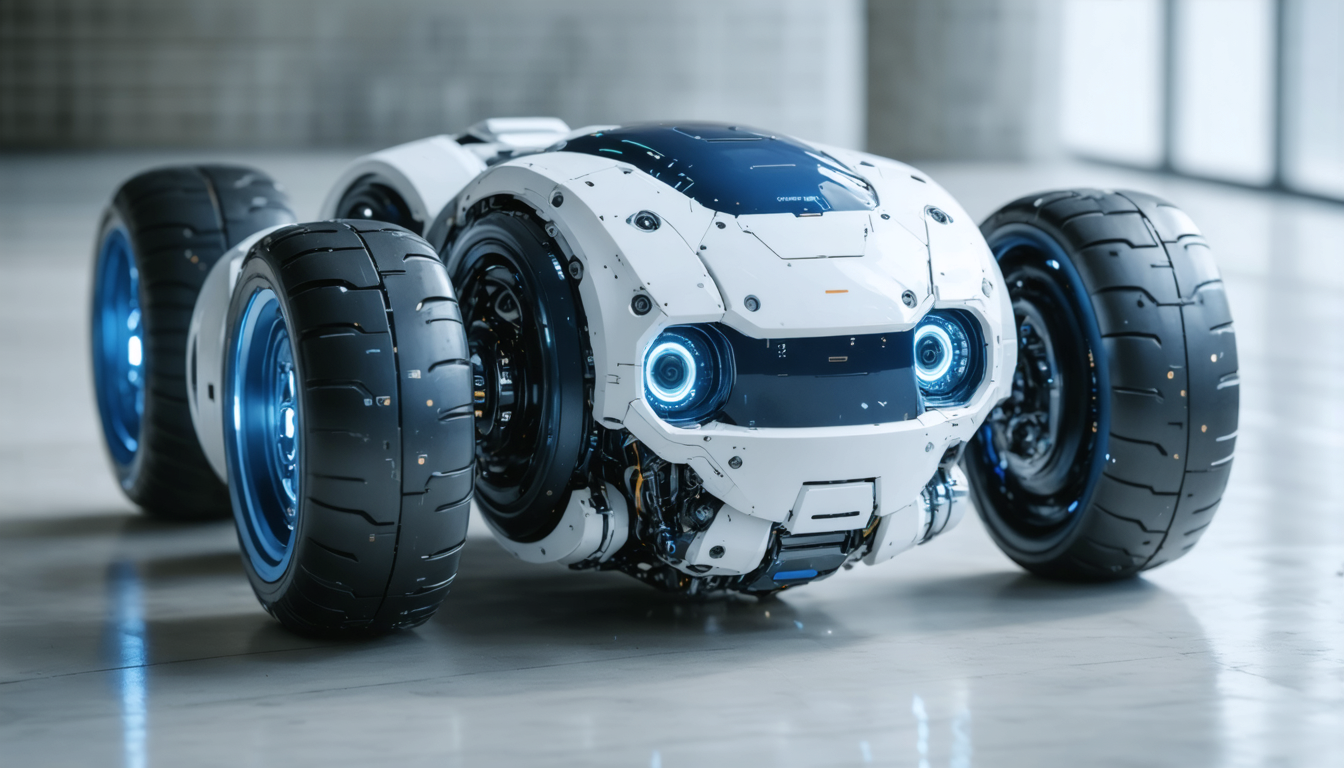
The G1-D represents a significant technological breakthrough in the field of humanoid robots. Until now, the industry had to choose between legged robots, offering excellent obstacle-crossing capabilities, and wheeled robots, known for their energy efficiency and speed on flat surfaces. Unitree breaks this compromise by proposing a hybrid system integrating the best of both worlds in a single robot.
Specifically, the G1-D maintains a traditional humanoid silhouette, which facilitates its social and functional integration in many environments. But its feet are equipped with small motorized wheels, capable of propelling the robot at speeds up to 2 meters per second. This dual locomotion functionality allows the robot to walk when navigating complex or uneven spaces, then instantly switch to a fast run when the terrain permits. It’s an innovation that optimizes both mobility and energy consumption, a major factor for autonomous robots.
With this approach, Unitree introduces fluid and adaptable mobility almost unprecedented in the world of humanoid robots. This dynamic transformation capability is a key argument for the deployment of the G1-D in diverse environments, ranging from logistics warehouses to domestic or educational settings, where speed and flexibility are not antagonistic but complementary.
The technical challenges of an intelligent hybrid configuration
Designing a robot combining bipedalism and wheels poses many engineering challenges. Weight distribution, stability management during transitions, and movement coordination require fine mastery of mechanics and embedded software. Unitree has successfully met these challenges by combining a lightweight architecture with sophisticated sensors and ultra-high-performance artificial intelligence.
The robot is equipped with 23 joints, each optimized to offer a wide range of movements, including bending, squatting, and smooth rotation. This allows it not only to adopt postures suited to the environment but also to efficiently absorb shocks during high-speed wheeled propulsion. The integration of 3D LiDAR sensors and depth cameras completes this system by providing a comprehensive overview of the environment, essential for safe and precise autonomous operation.
Speed performance: the G1-D leads the mobile robot race
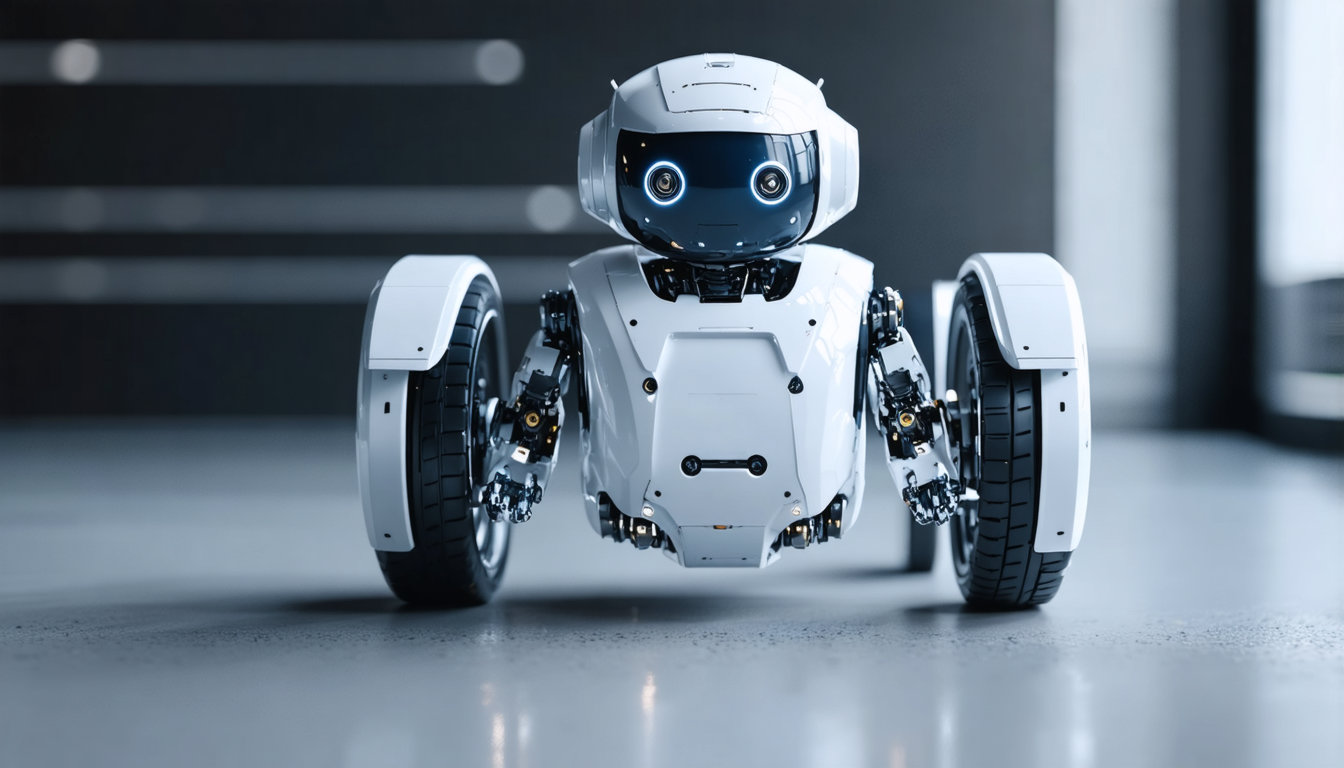
The speed of the G1-D is certainly its most impressive asset. Capable of reaching 2 meters per second, it surpasses most current humanoid robots and competes with certain robotic vehicles used in logistics. Although this figure may seem modest compared to the speed of motorized vehicles, it represents an exceptional performance for a robot of its size designed to operate in demanding indoor environments.
This performance goes beyond simple speed measurements. It directly impacts the operational efficiency of the robot in its applications, particularly in distribution, object transport, or industrial maintenance sectors. The G1-D can thus significantly reduce travel times while maintaining agility and precision in its movements, essential for navigating cluttered spaces.
One of the key factors enabling this agility is undoubtedly the robot’s adaptive speed thanks to its scalable software platform, based on Reinforcement Learning. This form of artificial intelligence allows the G1-D to adjust its trajectories in real time, avoid collisions, and even anticipate the movements of people or other moving objects in its environment.
The balance between speed and safety in autonomous robotics
Reaching such speed on wheels does not mean sacrificing stability or safety. This is precisely where the G1-D makes a difference: it integrates advanced balance control algorithms that automatically lower its center of gravity during fast locomotion phases. This innovative mechanism minimizes the risk of falling, a problem often fatal for classic bipedal robots.
Moreover, the ability to bend or pivot quickly gives the G1-D an advantage over rigid robots, which are less flexible. This increased mobility provides a real gain in autonomous navigation, especially during rapid direction changes or in narrow environments.
| Characteristic | G1-D | Classic Humanoid Robots | Classic Wheeled Robots |
|---|---|---|---|
| Maximum Speed | 2 m/s | 1 m/s | 3 m/s |
| Agility in confined spaces | High | Medium | Low |
| Energy Autonomy | Optimized (wheels) | Low (bipedal) | Excellent |
| Terrain Adaptability | Very Good | Very Good | Limited |
Artificial intelligence at the heart of the Unitree G1-D humanoid robot
The G1-D is among the humanoid robots that fully exploit recent advances in artificial intelligence. The machine’s control relies on an embedded system capable of processing a huge amount of data in real time from multiple sensors.
The 3D LiDAR device equips the robot with advanced spatial perception, assessing distances and reliefs around it, while depth cameras complement this vision by providing information on the shape and nature of obstacles. This data is processed by algorithms trained through a simulation training platform, where the robot undergoes thousands of virtual hours before any field deployment.
Thanks to this, the G1-D intelligently adapts to varied environments, whether it is a smooth floor in an office, a thick carpet, or a semi-rough surface in a warehouse. Reinforcement learning also allows proactive risk management: anticipating a sudden obstacle, handling ground deformation, compensating for momentary imbalance… all scenarios the robot integrates to ensure reliable and smooth autonomous movements.
Concrete applications of this embedded AI
This combination of artificial intelligence and hybrid mobility opens unprecedented applications:
- Data collection and analysis: The G1-D can patrol complex environments while collecting information through its sensors, facilitating predictive maintenance.
- Personalized assistance: In domestic or hospital settings, the robot can adapt its movements to accompany people with reduced mobility, with instant responsiveness.
- Counting and logistics: Its speed and maneuverability allow rapid operations in warehouses, reducing the need for human interventions.
- Research and development: Scientists benefit from a versatile robotic platform to experiment with innovative human-machine interactions.
Energy challenges and sustainability of the G1-D robot
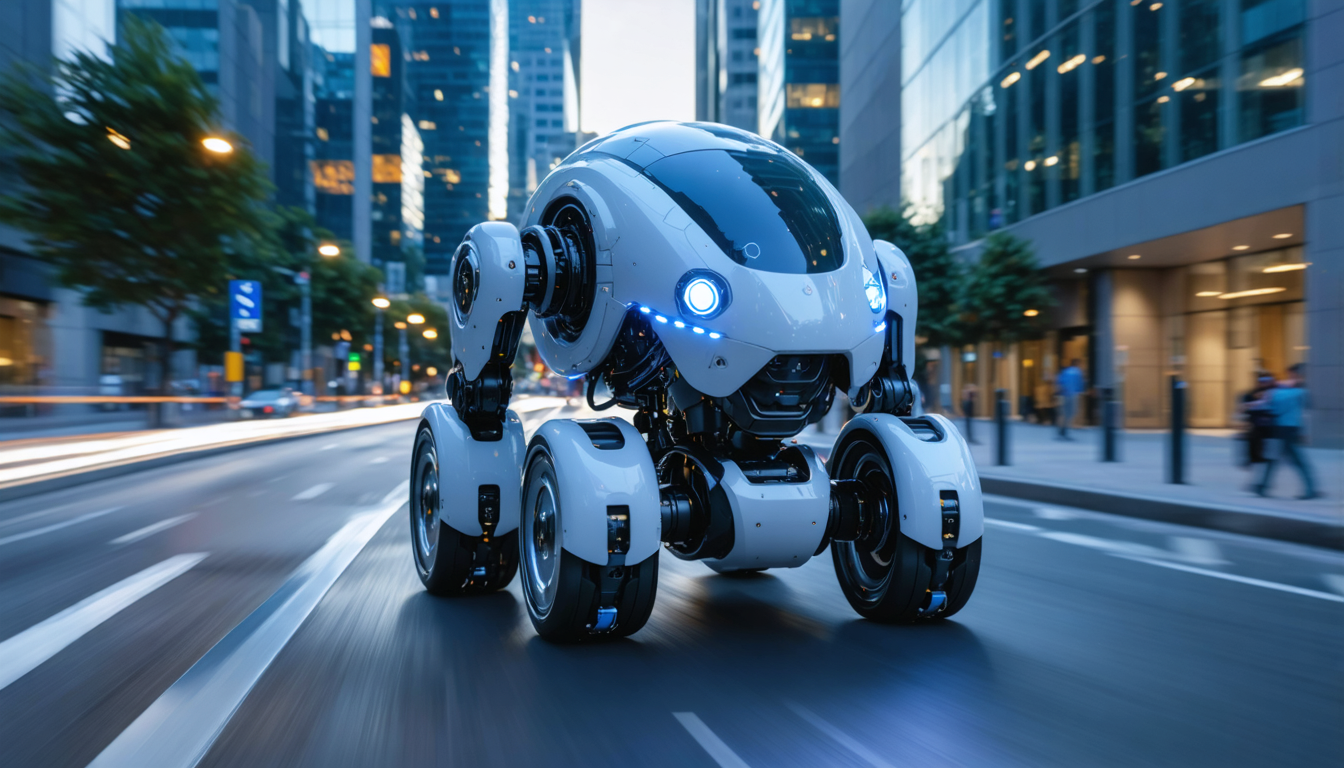
The question of autonomy is crucial in advanced robotics. The G1-D addresses this challenge with a propulsion system that favors rolling for better energy efficiency. When walking, a bipedal robot consumes a significant portion of its energy maintaining balance and managing dynamic impacts on the ground, two constraints mitigated by the use of wheels.
This reduction in consumption allows the robot to extend its activity cycles without recharging, an essential factor for demanding continuous operations in industrial or logistics fields. Moreover, Unitree has equipped its G1-D with a state-of-the-art battery, offering sufficient capacity for several hours of full autonomy, even when combining walking and fast running.
This technological choice can be seen as a strong signal towards more sustainable robotics, where energy management accompanies advances in artificial intelligence and autonomous mobility. This is particularly important at a time when the global demand for high-performance and eco-friendly robotic systems continues to grow.
Strategies to optimize autonomy and maintenance
Unitree relies on several complementary approaches to maximize the G1-D’s durability:
- Intelligent hybrid mode: The robot automatically chooses between walking and rolling depending on terrain and energy constraints.
- Advanced battery management system: Real-time consumption analysis and optimization of charging cycles.
- Predictive maintenance: Continuous data collection on the condition of mechanical components anticipates repair needs and reduces downtime.
- Use of lightweight and recyclable materials: Promotes limited environmental impact from manufacturing.
Unitree’s strategic positioning against the global robotics giants
In an increasingly competitive sector, dominated by players like Boston Dynamics or Honda, Unitree’s strategy relies on a unique combination of innovation, competitive prices, and accessibility. The G1-D perfectly illustrates this ambition: a humanoid robot that is at once high-performing, versatile, and affordable.
Unlike some of its competitors, often out of reach for educational or research markets, Unitree targets a broad audience by offering a modular, scalable robotic platform that is easy to program and adapted to various usage scenarios. This orientation also relies on responsive customer service, advanced software support, and a growing international community of users and developers.
This openness fosters the democratization of intelligent robots, which cease to be mere prototypes or costly prototypes to become concrete tools serving society. The ultra-fast wheeled G1-D robot plays a key role in this technological revolution, redefining standards of autonomous mobility and robotic interaction.
Comparison of Unitree’s offer against the competition
| Criterion | Unitree G1-D | Boston Dynamics Atlas | Honda ASIMO |
|---|---|---|---|
| Estimated Price | €60,000 | €150,000+ | Not commercialized |
| Hybrid Mobility (legs + wheels) | Yes | No | No |
| Maximum Speed | 2 m/s | 1.5 m/s | 1 m/s |
| Main Applications | Logistics, education, assistance | Research and industry | Assistance and demonstrations |
Evolution prospects for autonomous mobility of humanoid robots
Unitree’s G1-D in 2026 illustrates a vision for the future of humanoid robots that goes beyond simple imitation of human capabilities. With its ultra-fast wheeled technology and mechanical flexibility, it marks the beginning of a new era where autonomous mobility becomes more intuitive and efficient, in line with the varied needs of the real world.
The next steps envisaged for this type of robot notably include improving sensory systems for better contextual understanding, developing artificial intelligence algorithms capable of advanced multi-task learning, and further integrating social capabilities to interact naturally with humans.
As these technologies advance, one can imagine hybrid robots like the G1-D deployed on a large scale in smart city management, home assistance, or collaboration in complex professional environments. Artificial intelligence is no longer just an automation tool but a true partner in daily life, redefining robotics not merely as a machine but as a truly integrated actor in our societies.