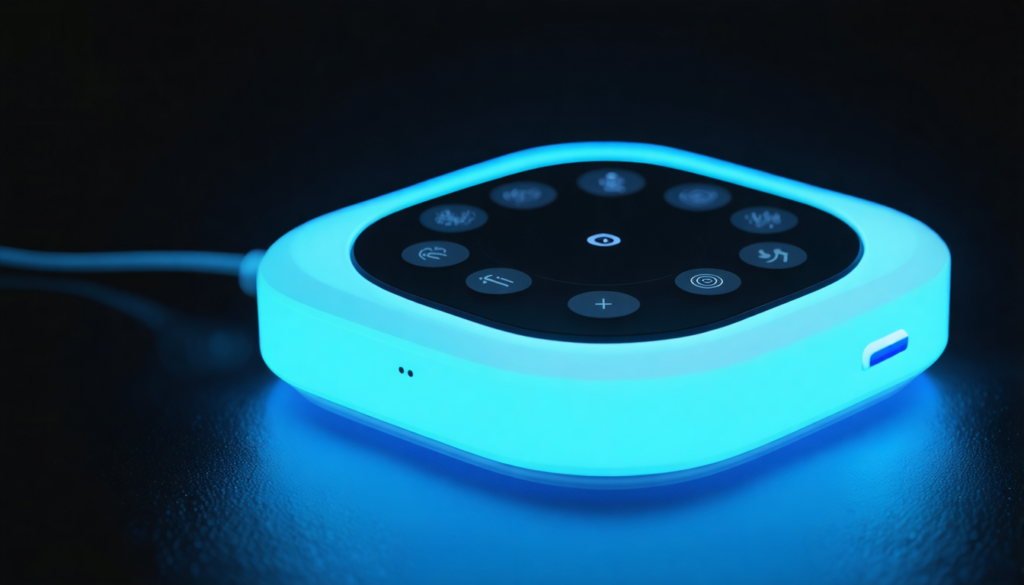
In a context where artificial intelligence (AI) is revolutionizing digital interactions, collaboration between tech giants is becoming strategic. Apple, one of the world’s leading technology companies, recently announced that it would power its voice assistant Siri with Google’s Gemini AI. This announcement was seen as a victory for Google and a blow to OpenAI, the undisputed pioneer of conversational AI with its famous ChatGPT. However, behind this Unexpected Surprise lies a very different reality: OpenAI reportedly chose not to integrate its AI with Siri. This refusal, far from being imposed, reflects a deliberate strategy aimed at preserving OpenAI’s autonomy in the face of integration and technological control challenges imposed by the Apple ecosystem.
Apple is now faced with the imperative to accelerate its AI capabilities to catch up with its competitors while respecting its high standards in terms of privacy and user experience. The choice of Gemini, combined with Google’s cloud infrastructure, fits into a pragmatic and ambitious logic to offer a personalized and ultra-efficient version of Siri this year. Meanwhile, OpenAI, which is now collaborating with Jony Ive, former Apple designer, on an innovative AI-dedicated device, refuses to be reduced to a simple solutions provider within an ecosystem it does not control. This decision, with multiple technological and innovation implications, raises many questions about the future of voice assistants and partnerships in the AI field.
- 1 OpenAI, the major AI player setting its conditions for integration with Siri
- 2 Gemini: the new power behind Apple’s Siri
- 3 Strategic stakes linked to OpenAI’s refusal to integrate into Siri
- 4 Why Apple chose Google after OpenAI’s refusal for Siri
- 5 OpenAI and the ambition of new AI hardware with Jony Ive
- 6 The impact of this decision on the future of voice assistants and mobile technology
- 7 List of key innovations expected in voice assistants post-2026
- 8 Intelligent FAQ on OpenAI’s decision and AI integration in Siri
OpenAI, the major AI player setting its conditions for integration with Siri
For several years, OpenAI has established itself as a key pioneer in artificial intelligence with its major technological advances in natural language processing. The opportunity to integrate ChatGPT into Siri might have seemed like a golden chance, allowing Apple to significantly strengthen its voice assistant. However, OpenAI did not view this agreement as a mere technical partnership. Indeed, several sources reveal that Sam Altman’s company chose to refuse this integration to maintain full autonomy over its model and the user experience it wishes to deliver.
This strategic decision reflects OpenAI’s desire to avoid being confined to the role of an algorithm provider within the iOS ecosystem, which is entirely under Apple’s control. Instead, the company intends to position itself as a comprehensive actor, combining hardware and software, to maximize innovation and the dissemination of its AI technologies. This turnaround highlights the tensions that can arise between an AI provider and a tech giant, especially when it concerns a voice assistant at the heart of mobile usage.
Moreover, this decision was orchestrated to avoid a heavy dependence on Apple, which would have limited OpenAI’s freedom in the design and evolution of its AI. The choice not to integrate with Siri thus illustrates a clearly stated willingness to preserve an autonomous strategic vision while preparing the ground for innovative future hardware. This stance protects OpenAI from regulatory and commercial constraints associated with full integration into a complex system like iOS, while consolidating its reputation as an innovative and independent company in the field of artificial intelligence.

Gemini: the new power behind Apple’s Siri
The partnership between Apple and Google to integrate Gemini AI into Siri marks a decisive turning point in the evolution of Cupertino’s voice assistant. Announced during a revelation by CNBC in January, this agreement is based on a multi-year collaboration combining expertise in language models and Google’s highly efficient cloud infrastructure. Thus, Apple relies on Gemini to offer a more advanced, personalized, and proactive version of Siri, a vital lever to maintain its competitiveness in a booming AI market.
Gemini is not just a simple conversational engine; it is an AI system designed to handle complex contexts, understand multiple intentions, and respond innovatively to user expectations. Apple places particular emphasis on privacy by adapting Google’s models to data processed via its own Private Cloud Compute servers, thus ensuring that user information does not leave the Apple ecosystem.
This partnership is also a pragmatic response to the explosion of AI investments in Silicon Valley. Google spends about 90 billion dollars per year on AI technology research and development. Rather than rebuilding an expensive infrastructure, Apple benefits from this power to accelerate its own developments while retaining control over customization and deployment. This decision deeply illustrates how cooperation between two technological titans can generate beneficial synergy but also the strategic compromises it entails.
Analysts therefore talk about a crucial technological catch-up for Apple, often perceived as lagging behind in the field of artificial intelligence. Gemini could transform Siri from a simple assistant responding to basic commands into an intelligent advisor, capable of contextual recommendations and personalized interactions. This represents a real qualitative leap that is expected, promising a renewal in the use of voice assistants.
Comparative table of AI capabilities for Siri: Gemini vs ChatGPT
| Criterion | Gemini (Google) | ChatGPT (OpenAI) |
|---|---|---|
| Integration approach | Customized models on Apple servers | External software provision without dedicated hardware |
| Privacy | Local processing via Apple’s Private Cloud Compute | Data processed on OpenAI platforms |
| User experience | Advanced contextualization, increased proactivity | Standard conversational interaction |
| Annual technological investment | ~90 billion $ (Google) | Growing investments but lower |
| Planned hardware integration | Yes, with dedicated Apple infrastructure | No, independent hardware project |
These elements confirm why Apple favored Gemini, while underlining that this choice is strategic to ensure Siri’s controlled, innovative, and secure evolution in an increasingly demanding digital universe.
Strategic stakes linked to OpenAI’s refusal to integrate into Siri
OpenAI’s refusal to integrate its AI into Apple’s flagship voice assistant is not trivial. It reflects deep issues related to the very nature of technologies, business models, but also data control and user experience.
Firstly, by refusing to position itself as a simple algorithm provider, OpenAI asserts its ambition to position itself as a global actor, integrating hardware and software. This ambition is materialized through its collaboration with Jony Ive to design a device dedicated to artificial intelligence, an innovation that could disrupt the connected device market. This evolution also means that the company wants to keep tight control over how its AI is deployed, used, and perceived by the public.
Secondly, the decision reflects a different perception of risks related to privacy and data management. With Apple, these two aspects are central, but the environmental constraints imposed by a closed ecosystem can prove restrictive for OpenAI, which wishes to experiment with more open or hybrid models, especially for innovative use cases in business or healthcare.
Finally, OpenAI’s example illustrates the growing complexity of partnerships in the technology sector. In a market dominated by a few large companies, every collaboration is negotiated beyond purely technical aspects to include long-term strategic visions on technological sovereignty and global competition.
List of major implications of OpenAI’s refusal to integrate with Siri
- Strategic positioning: OpenAI aims for complete technological independence.
- Targeted innovation: unprecedented integrated hardware-software development.
- Data control: user information managed under strict supervision.
- Selective partnership: choice of alliances compatible with its ambitions.
- Risks and opportunities: emphasis on a risky but potentially rewarding bet.

Why Apple chose Google after OpenAI’s refusal for Siri
The official announcement of Gemini’s integration into Siri surprised more than one observer but is nevertheless part of a pragmatic logic. With OpenAI’s refusal, Apple had to find a partner capable of meeting its demands in terms of innovation, power, and especially privacy, without delaying its development schedule.
Google stands out with its proven mastery of cloud infrastructures, particularly with its TPU (Tensor Processing Units), which are optimized for large-scale training and deployment of language models. This technical expertise is a major asset for Apple, which wants to customize Gemini models on its own hardware architecture to guarantee security and performance.
Furthermore, Google and Apple have managed to set up a particularly clever arrangement. Google provides the models and the infrastructure during the training phase, then Apple takes control on its Private Cloud Compute platform made up of Mac Studios equipped with M2 Ultra chips. This organization ensures that user data remains under Apple’s control, thus meeting its strong privacy requirements.
Internally, Apple also benefits from Google’s ability to massively deploy its solutions, a crucial point for the success of a voice assistant integrated into hundreds of millions of devices worldwide. This alliance is therefore a powerful technological catch-up, which could well redefine the future of the voice assistant on the iPhone in the coming years.
OpenAI and the ambition of new AI hardware with Jony Ive
Beyond simple software provision, OpenAI opens a new chapter in its history by partnering with designer Jony Ive. This unprecedented partnership aims to design a range of hardware products fully integrating the advanced capabilities of artificial intelligence. Among these projects, a smart pen controlled by AI is already making waves, ready to transform users’ daily lives by automating and enriching their interactions.
This approach reflects a clear desire not to be reduced to a backstage provider but to offer a complete and immersive experience, combining innovative design and advanced technological features. In this context, fully opening integration to a third-party voice assistant like Siri would have represented a dilution of the message and control of the final product.
Moreover, this new AI-assisted hardware development axis fits into a broader movement where AI companies seek to control all aspects of their innovations. This approach optimizes synergy between algorithms, interfaces, and usages, while creating a distinctive offer capable of competing with current giants.
The impact of this decision on the future of voice assistants and mobile technology
The Unexpected Surprise linked to OpenAI’s choice not to integrate its AI with Siri changes the game in the voice assistant sector and beyond. While Apple bets heavily on Gemini to transform Siri into a powerful and intuitive tool, other players like OpenAI turn to independence that could change the very nature of innovation in this field.
This split reveals a growing diversity of technological approaches in managing and developing voice assistants. On one side, giants like Apple rely on centralized and integrated solutions, favoring a unified user experience and privacy. On the other, companies like OpenAI embrace hybrid and independent strategies, focused on product innovation and usage flexibility.
This fragmentation could intensify competition in the assistant market, driving faster and often bolder innovations. Users will thus face several voice assistant models, each adapted to specific uses and different requirements. It is likely that the coexistence of these technologies will promote unprecedented advances in interactivity and personalization.
List of key innovations expected in voice assistants post-2026
- Advanced personalization: adaptive assistants taking into account history and preferences.
- Increased proactivity: intelligent and anticipatory suggestion of needs.
- Multimodality: smooth integration of voice, visual, and textual interactions.
- Enhanced privacy: local data management with maximum security.
- Interoperability: integration with various IoT devices and third-party services.

Intelligent FAQ on OpenAI’s decision and AI integration in Siri
Why did OpenAI refuse to integrate its AI with Siri?
OpenAI chose not to limit itself to a simple role as an algorithm provider in the Apple ecosystem. The company wants to retain full control over its technology and develop its own intelligent hardware. This refusal is a strategic decision aimed at preserving its independence and innovation ambitions.
How does Apple use Google’s Gemini AI in Siri?
Apple relies on Gemini to evolve Siri into a more personalized and proactive voice assistant. Google supplies the models and cloud infrastructure for training, while Apple runs the customized models on its private servers, thus ensuring user privacy.
What are the main advantages of Gemini compared to ChatGPT?
Gemini allows deeper integration with Apple servers, offering better privacy management and a more contextual and proactive user experience. Google invests heavily in AI, enabling it to provide solutions suited for large-scale deployment.
Yes, OpenAI is collaborating with Jony Ive to design a range of smart hardware products that directly integrate AI technologies, marking a shift toward combining software and hardware for greater innovation.
What impact will this decision have on the future of voice assistants?
This decision outlines a new dynamic in the voice assistant sector by encouraging the coexistence of centralized integrated models like Siri/Gemini and more independent ones like OpenAI. This should accelerate innovations and provide users with choices tailored to their needs.