In a world where communication is faster and more complex than ever, understanding the definition and meaning of words has become a fundamental issue. The notions of definition and meaning are often used interchangeably, but they embody distinct concepts that deserve in-depth exploration. This essential guide invites you to dive into a detailed analysis to shed light on these notions, in order to promote a finer understanding and precise use of language. In 2025, with the emergence of artificial intelligences and new digital tools, mastering the definition and the meaning proves more crucial than ever to navigate a world where the sense of words conditions the quality of human and technological interactions.
In this context, we offer you a progressive dive into the key concepts that structure our relationship to language, detailing the cognitive, cultural, and social mechanisms that influence how a word is defined and what it truly means in a given situation. This guide will also be based on the concrete example of prompts in artificial intelligence, perfectly illustrating how definition and meaning are at the heart of the development and interpretation of intelligent commands.
- 1 Clarification of notions: definition vs meaning for in-depth understanding
- 2 The essential role of definitions in the construction of knowledge and understanding
- 3 Understanding the meaning of words in different cultural and professional contexts
- 4 A practical guide to harnessing the power of prompts in artificial intelligence
- 5 Different types of prompts and their specific uses: a complete overview
- 6 Challenges and issues in the development and use of prompts: a detailed analysis
- 7 How to choose keywords to successfully define an effective prompt?
- 8 Thinking of definition and meaning as evolving and dynamic notions
- 9 Practical implications of mastering definitions and meanings for communication in 2025
Clarification of notions: definition vs meaning for in-depth understanding
It is essential to start by clearly distinguishing what the terms definition and meaning cover, two fundamental notions sometimes confused but distinct in their nature and scope.
The definition corresponds to the explicit and concise formulation of a word or idea, often found in dictionaries. It provides a strict framework that delimits what a term represents: a given conceptual label for an object, an action, a state, or an abstract concept. For example, in a dictionary, the definition of the word “prompt” in artificial intelligence is given as a textual command enabling the initiation of an action or a response from a model. This precision is crucial to frame the correct and shared use of the term.
Meaning, on the other hand, is broader and more contextual. It refers to what the word evokes in a given context, including cultural, emotional, or practical connotations associated. It is a dynamic process based on the user’s understanding and interpretation. For example, the word “prompt” may mean to an AI engineer a simple technical request, while a casual user will see it as a tool for interaction with a machine, in other words, a kind of simplified conversation with artificial intelligence.
The distinction between definition and meaning is sometimes schematized as follows:
| Aspect | Definition | Meaning |
|---|---|---|
| Nature | Fixed and textual frame | Contextual interpretation |
| Scope | Limited and formal | Broad and evolving |
| Example | Prompt: AI command | Prompt: user-machine interaction |
| Use | Normative role | Communicational role |
Understanding this difference is an indispensable prerequisite for any in-depth analysis of words and language. In 2025, amid increasing digitalization, the ability to navigate between these two notions makes it possible to better grasp the stakes of interactions with modern technologies.
Concrete examples illustrating the definition/meaning difference
To illustrate this distinction, let’s take the word “prompt,” widely used in artificial intelligence language. Its definition in a technical framework can be: “A short text that serves as a command to an AI model to generate a response.” This is an objective and standardized definition that precisely frames the use of the term within the discipline.
Conversely, its meaning may vary according to people: for a novice user, it may represent any form of written interaction with an AI, while for a specialized developer, it is a precise tool with its own codes and methodologies.
- An AI expert will understand the definition as a technical and formal tool.
- A casual user will associate the meaning with a simple interaction function.
This gap highlights the importance of mastering both rigorous definitions and the various practical meanings to avoid ambiguities and misunderstandings.

The essential role of definitions in the construction of knowledge and understanding
Definitions play a key role in structuring human knowledge. They allow for clear foundations, efficient categorization of knowledge, and facilitate cultural and educational transmission. Without shared definitions, it would be impossible to establish common rules and coherent concepts. They are the cornerstone.
For example, in 2025, in the field of artificial intelligence, the precise definition of terms such as “prompt,” “language model,” or “supervised learning” is indispensable for technology development and specialist training.
Below is a list of the main functions of definitions in building knowledge:
- Clarify concepts to avoid confusion.
- Standardize vocabulary among professionals in a field.
- Facilitate learning by providing precise benchmarks.
- Create a common interdisciplinary language.
- Ensure clear transmission of knowledge.
The quality of a definition directly impacts the ability to communicate effectively. For example, the clear definition of a prompt in the AI field facilitates collaboration among engineers, researchers, and users, thus avoiding misunderstandings often observed in multi-sector projects.
| Function | Description | AI Example |
|---|---|---|
| Clarification | Avoid ambiguities | Precise prompt definition |
| Standardization | Uniform terms | Command standardization |
| Transmission | Facilitate learning | Pedagogical registers for novices |
| Interoperability | Common interdisciplinary language | Communication between researchers and developers |
In summary, definition provides stable foundations so that knowledge does not fragment amid the complexity of discourse and varied uses. It is a fundamental axis in any educational and professional process.
Detailed example: the prompt in AI as an illustration
The word “prompt” has become a keyword for understanding the rapid progress of artificial intelligence in 2025. It precisely designates, in its definition, the textual command sent to a model to obtain a response or content. This technical definition allows building a common framework indispensable to developers.
Specifically, the prompt is a tool that can take different forms:
- A simple question, for example: “What is the capital of France?”
- A complex instruction, such as: “Write a 500-word article about sustainable development.”
- A list of keywords to generate an image or concept.
Thanks to this definition, project teams can work on shared bases, which facilitates the creation, training, and use of artificial intelligences. The framework defined by the definition prevents this term from becoming a “buzzword” devoid of precise meaning.
Understanding the meaning of words in different cultural and professional contexts
The meaning of a word is not limited to its formal definition: it varies according to cultures, professional environments, social usages, and even eras. In 2025, this contextual dimension is particularly visible thanks to digital globalization where words circulate through very diverse frameworks.
For example, the concept of “prompt” will have a different meaning in:
- The technology sector, where it will evoke a technical programming command.
- The education sector, where it will be perceived as a pedagogical trigger or encouragement for reflection.
- The general public, who will often associate it with a simple interaction interface or a prompt.
This gap in meaning can cause misunderstandings and requires increased sensitivity to the cultural and professional environment for effective communication.
| Context | Meaning | Consequence |
|---|---|---|
| Technology | Precise AI command | Rigorous technical use |
| Education | Prompt for reflection | Pedagogical use |
| General public | Simple interaction | User acceptability |
This diversity of meaning highlights that understanding a word requires taking into account its context of use, a key element to integrate into any communication or learning process.
Impact of technology on the variation of meaning
With the exponential rise of AI in 2025, technical words, initially confined to a restricted domain, have penetrated popular culture. This phenomenon creates a wide range of meanings for the same term depending on the audience.
- Developers use prompts to test models, seeking precision and optimization.
- End users, often via voice assistants or chatbots, see the prompt as a simple inscription on a screen.
- Content creators use prompts to generate texts or images, interpreting the notion as a creative lever.
This multiplicity requires knowing how to navigate between the different meanings of the word depending on the context.

A practical guide to harnessing the power of prompts in artificial intelligence
Prompts constitute a fundamental tool for interacting with artificial intelligences. Their mastery proves essential in both professional and personal domains in 2025. This practical guide allows you to discover the keys to effectively formulating your prompts in order to obtain precise and adapted results to your needs.
Here are the essential steps to follow:
- Clearly define the objective of your interaction (writing, translation, image generation, etc.).
- Choose the appropriate type of prompt (descriptive, narrative, informative, persuasive, etc.) according to the expected result.
- Use precise vocabulary with specific keywords and action verbs.
- Give contextual details to properly guide the AI’s response.
- Test and revise your prompts regularly to improve the quality of results.
By carefully crafting the formulation, one obtains a smoother and above all more relevant interaction, essential to make the best use of an AI system.
| Step | Description | Example |
|---|---|---|
| Objective | Clear identification of the task | Generate a market analysis |
| Type of prompt | Choice adapted according to content | Informative for detailed report |
| Vocabulary | Use of precise words | “explain,” “compare,” “summarize” |
| Details | Context and specifics | Limit scope to 2025, tech sector |
| Revision | Continuous refinement | A/B testing to compare results |
Mastering these steps will give you a decisive advantage in your interactions with powerful models, notably language models and image generators.
Different types of prompts and their specific uses: a complete overview
In the artificial intelligence universe, prompts come in several categories intended to meet specific needs. Understanding the types of prompts is essential to adapt one’s approach and obtain relevant and targeted content.
Here is a detailed list of the main types of prompts:
- Descriptive: they provide a precise description of a subject or object. Example: “Describe the operation of an electric motor.”
- Informative: they aim to convey clear information. Example: “What are the effects of climate change?”
- Narrative: intended to generate stories or scenarios. Example: “Tell a futuristic adventure story.”
- Opinion: express a personal point of view or belief. Example: “Why is artificial intelligence beneficial?”
- Persuasive: aim to convince the audience of an idea. Example: “Convince a reader to adopt solar energy.”
- Research: invite in-depth exploration to answer a specific question. Example: “Find recent data on renewable energy.”
Knowing these categories will prevent you from confusing your intention and receiving off-topic or inadequate answers. Each prompt type guides the AI differently.
| Type | Goal | Example |
|---|---|---|
| Descriptive | Detailed description | Describe a technological system |
| Informative | Transmission of information | Explain the steps of a process |
| Narrative | Story creation | Tell a fictional story |
| Opinion | Personal expression | Give a reasoned opinion |
| Persuasive | Convince the audience | Argue for a cause |
| Research | Targeted exploration | Collect updated data |
Mastering these types allows better control of AI-generated results in 2025, for optimal interaction regardless of the purpose.
Example: a descriptive prompt versus a persuasive prompt
Consider the following command:
- Descriptive: “Describe the main characteristics of AI language models” delivers informative, objective content.
- Persuasive: “Explain why AI is positively transforming the world of work” directs the response toward an argument to convince.
This contrast perfectly illustrates how the choice of prompt type influences the tone and meaning of the final text produced.
Challenges and issues in the development and use of prompts: a detailed analysis
While prompts are at the heart of interactions with AI, they are not free from difficulties and issues to consider to ensure effective understanding and relevant results.
Here is a list of main challenges related to prompts:
- Ambiguity: A poorly formulated or vague prompt generates incorrect or off-topic answers.
- Complexity: Creating an effective prompt often requires specific skills that not all users possess.
- Bias: A prompt can induce biases in results if the words used implicitly guide the AI.
- Data quality: The prompt depends on training data, and biased or incomplete data can skew responses.
- Ethical risks: Prompts can produce inappropriate or false content, raising responsibility questions.
Recent developments in 2025 notably concern the industrialization of prompt via PromptOps, aimed at standardizing, testing, and refining prompts to limit these risks.
| Challenge | Description | Impact |
|---|---|---|
| Ambiguity | Imprecise formulation | Incorrect answers |
| Complexity | Difficulty formulating an efficient prompt | Inaccessibility for some users |
| Bias | Unconscious influence of words | Partial results |
| Data | Insufficient quality of databases | Systematic error |
| Ethics | Sensitive or false content | Responsibility issues |
Overcoming these challenges improves the meaning of human-machine exchanges and the effectiveness of AI models.
The PERFECT model: a structured framework for designing successful prompts
To address these issues, frameworks such as the PERFECT model have established themselves in 2025 as standards in prompt engineering. This model rests on the components:
- Position: specify the context, the place of the prompt.
- Action: define the instruction to be executed.
- Result: designate the expected output.
- Format: indicate the form of the result (text, table, image).
- Audience: identify who the content is intended for.
- Intention: express the overall goal.
- Tone: specify the desired tone (formal, humorous, etc.).
The systematic application of this framework considerably improves the quality and relevance of prompts, while reducing errors related to poor understanding.
How to choose keywords to successfully define an effective prompt?
Keyword selection is a strategic component to ensure a clear definition and precise meaning of the prompt. In 2025, mastering this know-how is all the more important with the growing sophistication of AI models.
Tips for choosing keywords:
- Opt for explicit action verbs: “write,” “analyze,” “compare.”
- Include specific nouns related to the subject or context, such as “market report” or “financial data 2025.”
- Avoid vague or ambiguous terms that can cause confusion.
- Ensure consistency with the capabilities of the AI model used.
- Favor precision and concision in formulation.
| Type of keywords | Example | Expected impact |
|---|---|---|
| Action verbs | “write,” “describe,” “explain” | Guides the AI’s task |
| Specific nouns | “report,” “data,” “analysis” | Specifies the subject |
| Terms to avoid | “thing,” “stuff,” “whatchamacallit” | Reduces ambiguity |
| AI-compatible terms | “convert,” “translate,” “summarize” | Optimizes the response |
Choosing keywords is thus a fundamental lever to maximize the performance of a prompt and obtain relevant and coherent results.
Thinking of definition and meaning as evolving and dynamic notions
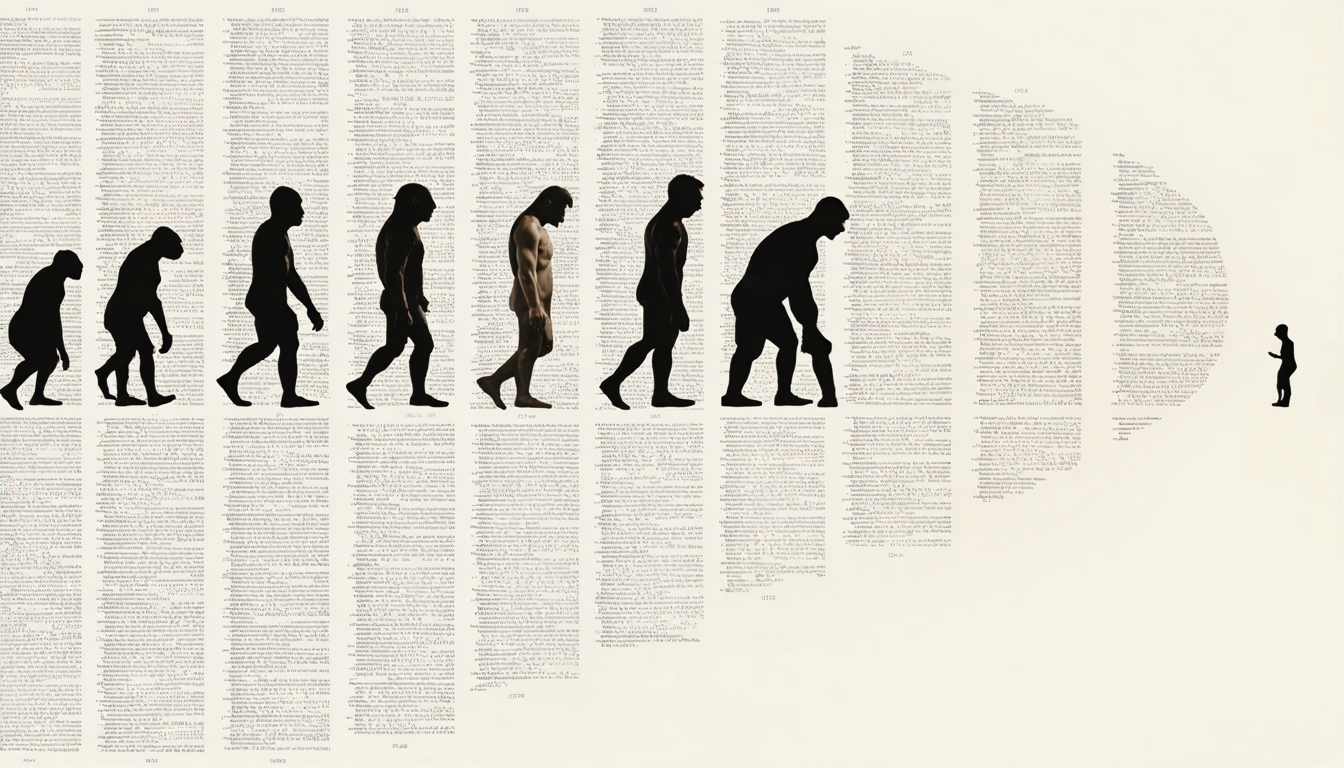
The definition and meaning are not fixed but evolve over time, according to cultural, social, and technological contexts. In 2025, this dynamic is more visible than ever.
New words, alternative usages, borrowings from one language to another testify to a constant fluidity in the sense of terms. For example, the word “prompt,” once a simple English term meaning “quick” or “punctual,” has been enriched with a specific technical meaning thanks to the rise of AI. This transformation perfectly illustrates this evolution.
Here are the factors influencing this evolution:
- Technological innovation: introduction of neologisms and redefinition of existing terms.
- Sociocultural evolution: influence of social movements and value changes.
- Linguistic pressures: globalization and intercultural exchanges.
- Pragmatic adaptation: use and customs in specific groups.
| Factor | Effect on definition and meaning | Example |
|---|---|---|
| Technological innovation | Creation of new meanings | “Prompt” in AI |
| Sociocultural evolution | Modification of associated values | Inclusive language |
| Linguistic pressures | Word borrowings | Frequent anglicisms |
| Pragmatic adaptation | Specific usages | Professional jargon |
This temporality highlights the need to constantly revise and enrich our definitions and understandings of words in order to stay in phase with evolving realities.
Practical implications of mastering definitions and meanings for communication in 2025
In a digital universe where AI is omnipresent, fine understanding of definitions and meanings is a strategic lever for communication, both personal and professional.
Here are the key benefits:
- Clear communication: avoid misunderstandings through lexical precision.
- Optimized interactions with AI systems for relevant answers.
- Better intercultural adaptation thanks to sensitivity to context of meaning.
- Increased efficiency in writing and negotiation.
- Valuing linguistic skills in the competitive professional world.
| Aspect | Advantage | Concrete example |
|---|---|---|
| Lexical precision | Reduction of conflicts | Clear legal contracts |
| AI interaction | Optimal results | Adapted and effective prompts |
| Cultural adaptation | Inclusive dialogue | International communication |
| Efficiency | Time saving | Quick and targeted response |
| Skills | Increased employability | Valued linguistic expertise |
Developing these skills becomes an essential element in continuing education and contemporary career paths, where mastering fundamental language concepts makes the difference.
Practical case: improving the quality of a prompt for a chatbot
A company developing a chatbot decides to improve the quality of customer interactions. By training its teams to refine the words chosen in prompts, it manages to reduce misunderstandings and increase user satisfaction. For example:
- Simple prompt: “Internet problem” → generic and unhelpful answer.
- Improved prompt: “Describe your internet connection problem: slowness or disconnection?” → precise and quick assistance.
This transformation is based on a better definition of the prompt and optimal adequacy with its meaning in the usage context.