
As travel to the USA continues to attract millions of visitors each year, a new measure could radically change the way travelers prepare for the customs check at the United States border. Alongside traditional identity checks, the American administration, driven by the reinforced border policy initiated by Donald Trump, is considering a thorough inspection of social media at the US border. This development raises numerous questions about travel security, digital surveillance, and the privacy rights of foreign tourists.
The ongoing project, recently unveiled in the Federal Register, the official American journal, plans to require nationals from the 42 countries previously benefiting from visa-free stays to submit their social media identifiers and a detailed history of their social accounts covering the past five years. This social media verification is part of an increased desire for a deeper analysis of the profiles of travelers exempt from ESTA.
Beyond a simple form, this measure could include the submission of email addresses used over a ten-year period or phone numbers associated with profiles. Such an inspection creates a precedent in customs control, combining US immigration and digital surveillance, with significant implications for future visitors.
While American authorities claim that these new rules will strengthen travel security and facilitate the management of migratory flows, many voices are raised against these intrusive practices, questioning the right balance between national protection and respect for individual freedoms at the border.
- 1 Social media inspection at the European border: a new step in identity control for entry to the USA
- 2 Immigration policies and digital surveillance: how recent history has shaped the American border
- 3 Practical consequences for France-USA travelers: how to prepare for crossing the American border in 2025?
- 4 Ethical and social issues of enhanced digital control at American borders
- 5 Perspectives and public debate around the proposal for enhanced inspection of social media in the USA
- 6 Growing importance of transparency and digital preparation before a trip to the United States
Social media inspection at the European border: a new step in identity control for entry to the USA
For several years, the American border has been experiencing a considerable strengthening of identity control measures. This trend has intensified with the rise of digital technology and social media in daily life. American authorities now plan, in 2025, to generalize to all visa-exempt travelers a thorough inspection of their online profiles, more precisely their social accounts.
The traditional customs check, based on passport, visa, or ESTA authorization verification, is now giving way to a more intrusive process. US customs officers could request, in some cases, full access to the history of publications, comments, interactions, and social profiles, thus tracing the traveler’s last five years of digital activities. This would add to the information already routinely collected, such as email address, phone number, or emergency contacts.
For French travelers and other nationals from visa-exempt countries, this measure would represent a real turning point in American border policy. The stated objective, at the heart of the discussion, is to reinforce travel security by detecting beforehand suspicious behaviors, affiliations with sensitive groups, or intentions contrary to national rules. However, several experts highlight the risk of stigmatization or discrimination linked to a misinterpretation of digital content.
This digital inspection also represents a technical and legal challenge. The question arises of preserving personal data, protecting it against potential abuses, and the rights of travelers when subjected to this type of surveillance. The legal complexity is heightened by the fact that social networks involve foreign platforms and encryption systems often impenetrable to American authorities.
Finally, this enhanced examination of social accounts is part of a broader strategy for ambitious and differentiated US immigration. For several years, the rules for obtaining visas, green cards, or citizenship have seen this verification progressively increase. An extension to all visa-exempt visitors demonstrates this desire for systematic digital control at the border.
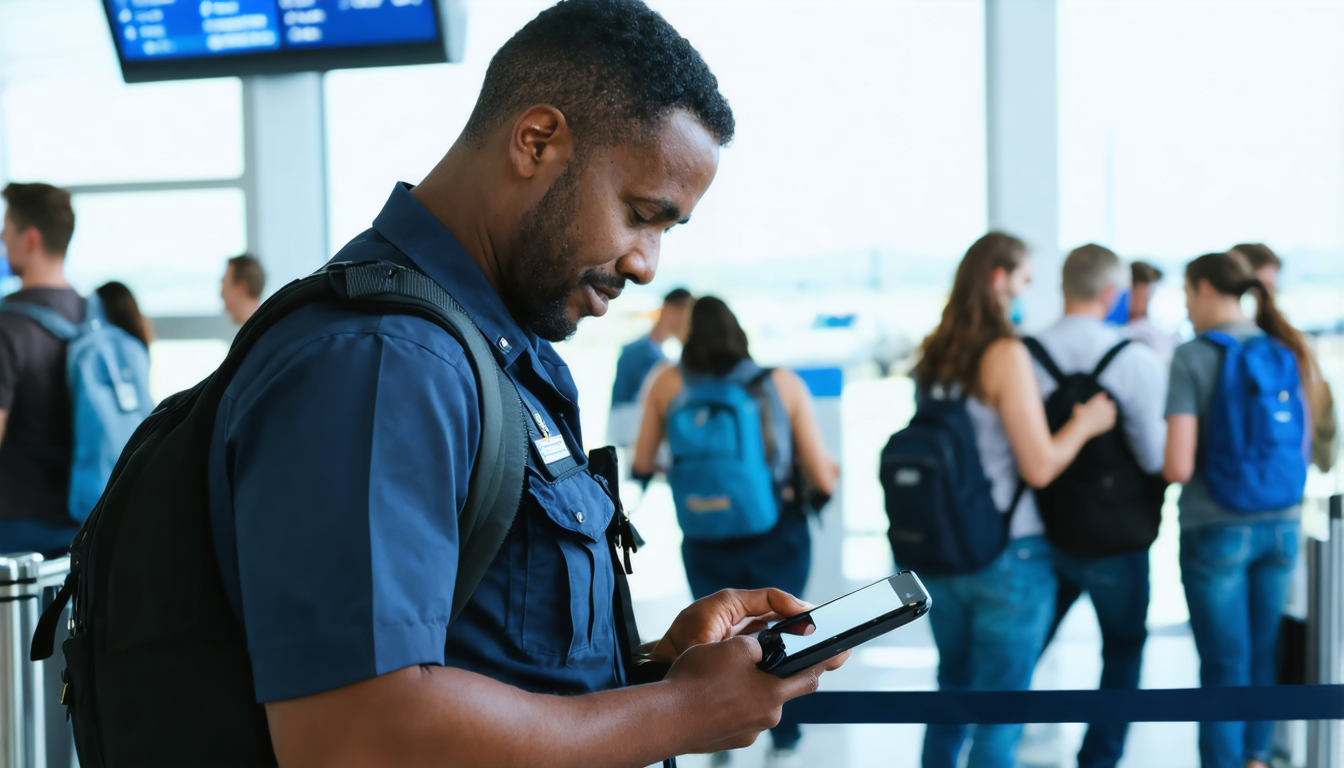
Issues of travel security and enhanced identity control
This new social media inspection responds to a major travel security concern set by the American administration. Since the September 11, 2001 attacks, border control has been a constant priority for various American governments. This measure would enable the identification of risky profiles undetectable via traditional documents.
For instance, a traveler without a criminal record or ban could reveal connections or content related to extremist movements, calls for violence, or membership of dangerous groups. Digital exploration ahead of time would offer border agents a new window into an individual’s intentions, beyond formal declarations. This type of inspection thus strengthens the capacity to prevent illegal immigration or any potential threat.
For the United States, this process also raises questions of efficiency and review timing. Processing several million annual ESTA requests while meticulously analyzing social content requires advanced technological resources. It will likely rely on artificial intelligence and detection algorithms to filter risky profiles. These tools must be calibrated to avoid false positives and discriminatory biases.
However, identity control should not be limited to only “visible” profiles. Authorities also plan to collect email addresses used over ten years and phone numbers over five years, thus digging into visitors’ private worlds. This shift towards ever-broader control questions the purpose and proportionality of the means implemented in light of individual freedoms.
- Reinforcement of national security through better knowledge of travelers
- Early detection of risks linked to extremist or illegal online activities
- Extension of control to personal digital elements for complete transparency
- Potential impact on confidentiality and visitors’ privacy
- Technical difficulties in analyzing massive data volumes within a reasonable timeframe
Immigration policies and digital surveillance: how recent history has shaped the American border
The tightening of measures at the American border is part of a historical context marked by several key episodes since the early 21st century. After the September 11, 2001 terrorist attacks, the United States deeply reformed its border policy, notably through the creation of the Department of Homeland Security (DHS) and increased document checks.
However, the arrival of social media and the expansion of the digital world introduced new dimensions into these policies. Originally focused on the control of physical papers, the systems progressively turned towards digital surveillance. From the 2010s, transparency requirements regarding online activities were introduced for certain types of visas and green card applications.
In 2023, a major milestone was reached when applicants for citizenship, refugee status, or asylum began providing their social media accounts for in-depth analysis. This was an important turning point towards US immigration increasingly governed by digital data and massive digital surveillance.
This trend accelerated further under the Trump presidency, which strongly emphasized control of migratory flows and interior security protection. The current proposal to extend this control to visa-exempt tourists is a natural extension of this policy. It reflects the will to leave nothing to chance in identity verification.
However, the stakes go beyond security aspects alone. There is also growing debate around border policy and respect for fundamental rights. Human rights organizations warn of risks to privacy. The American border therefore appears both as a place of increased surveillance and a field of democratic contestation.
This historical evolution offers a clear perspective on the reasons now leading to enhanced inspection of social networks and digital data at the American border, blending security concerns and ethical challenges.
The technical and legislative evolution of digital surveillance at borders
The use of digital tools for US immigration continues to increase. Alongside manual document control is now an algorithmic approach, with the implementation of facial recognition systems, data mining, and intensive cross-checking of personal information.
These technological innovations facilitate rapid analysis of millions of profiles and enable partial automation of identity checks at the US border. However, the legal framework slowly adapts to these practices, often lagging behind the speed of technological deployment.
The American Congress regularly debates new laws to legitimize these new forms of digital surveillance while attempting to maintain a balance with individual freedoms. In parallel, US courts receive appeals concerning the legality of personal data collection at the border. These legal battles will likely continue shaping border policy in the years to come.
Practical consequences for France-USA travelers: how to prepare for crossing the American border in 2025?
For French tourists and other European visitors, this new policy demands a much more meticulous preparation before considering a trip to the USA. Already, travelers must be aware that their social media may be subjected to detailed, even thorough inspection.
The ESTA, until now mainly an administrative document, will become a comprehensive questionnaire including questions about social media account identifiers as well as the history of digital interactions. Travelers will have to report various active accounts over a five-year period, their email addresses from the last ten years, and phone numbers used over the last five years.
Preparation for this inspection requires verifying one’s social profiles beforehand, deleting sensitive or problematic content, and consolidating one’s digital presence to avoid any unfavorable interpretation. This is an additional step in travel security that demands increased mastery of one’s digital identity.
Concretely, here is a list of recommended steps for travelers:
- Make a complete inventory of active social accounts over the last five years
- Clean old posts, comments, or controversial content
- Update personal information and check privacy settings
- Prepare a clear and honest explanation in case of questions about certain content
- Compile a file with recent email addresses and phone numbers for the ESTA declaration
On the ground, at the American border, it is possible that some agents will require direct access to phones or personal accounts. Refusal of this access may lead to denial of entry, or even additional control operations. Knowing these requirements is thus essential to avoid unpleasant surprises.
| Requested element | Relevant period | Impact on traveler |
|---|---|---|
| Social media identifiers | 5 years | Must provide all active accounts; risk of exclusion if omitted |
| Associated email addresses | 10 years | Obligation for full disclosure, impact on privacy |
| Used phone numbers | 5 years | Increased control, including personal and professional numbers |
| Publication history | 5 years | In-depth analysis of shared content |
| Family details | Not specified | Additional information on relationships and contacts |
The establishment of such a broad digital inspection as envisaged for visa-free travelers opens a vast ethical debate. Control of social media directly interferes with privacy, often perceived as a fundamental right, protected by numerous international conventions.
Digital surveillance at the American border raises several questions, notably about the proportionality of the measures. Should personal confidentiality be sacrificed in the name of travel security? Are the control mechanisms transparent and framed enough to avoid abuses?
Some critics also point out the weakness of criteria for evaluating social content. A poorly interpreted humorous post, a vague mention of a sensitive topic, or even a simple affiliation to a group unrelated to any threat could lead to an unjustified denial of entry for visitors.
Moreover, this policy risks creating inequalities in travelers’ treatment based on origins, beliefs, or digitally expressed opinions. The American border thus becomes a field where a fragile balance is played between national protection, freedom of expression, and social justice.
Finally, extending surveillance to ten years for certain personal data raises questions about the reasonable duration of information retention and their future use. The fear of permanent surveillance weighs on trust in authorities and could permanently alter the online behaviors of international travelers.
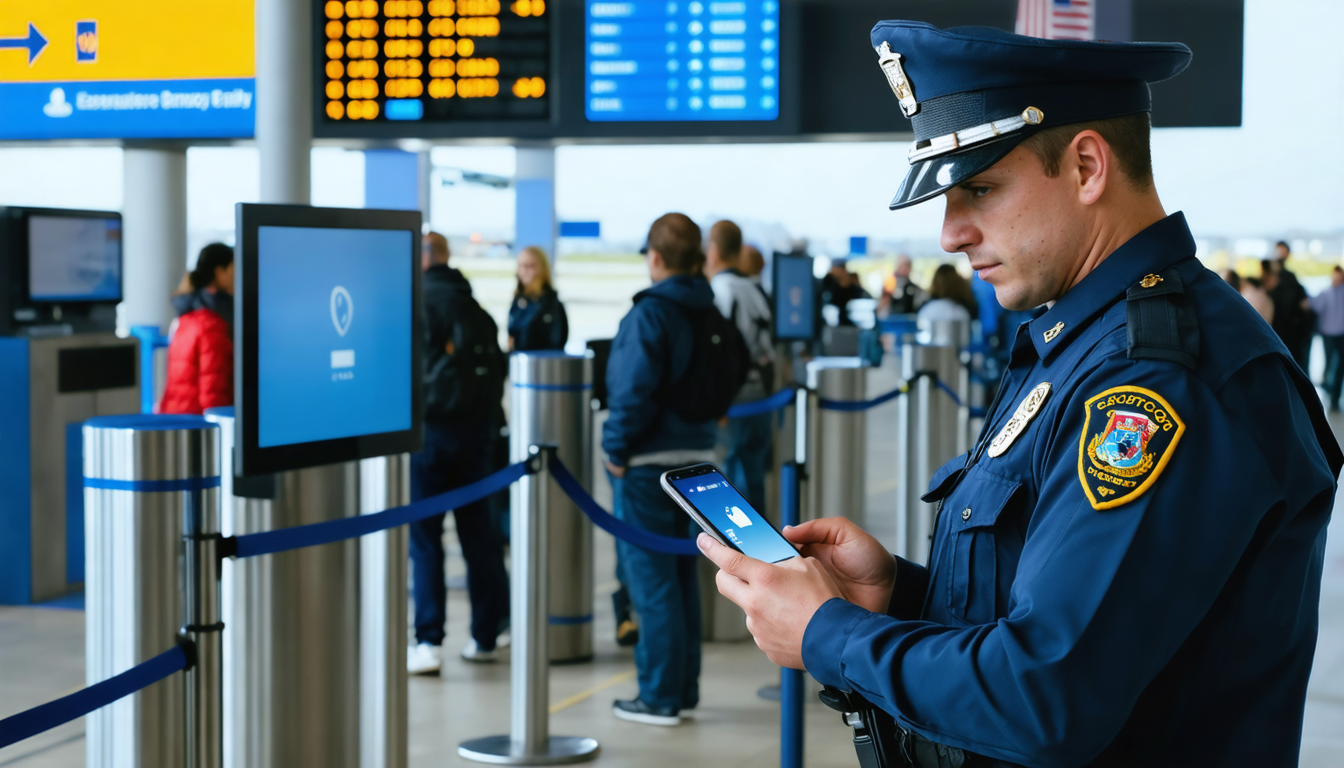
Social and psychological impact on travelers
The transparency requirements imposed by this policy can generate significant stress among tourists. The fear of being refused entry because of private content or a misunderstood online history now influences how individuals manage their digital identity.
This phenomenon can lead to self-censorship, with a noticeable change in social media behaviors. Travelers might feel compelled to limit exchanges or modify their public image to avoid any issues at the border.
Socially, this extended surveillance can also create a divide between those who master digital tools and know how to prepare their files, and novices or more vulnerable people who risk being penalized more heavily. This reinforces inequalities in access to travel.
Faced with this unprecedented customs control project, the American government has opened a public consultation allowing everyone to comment on the proposal for 60 days. This participatory approach shows an apparent will for transparency and listening, but also raises concerns.
The questions raised during this consultation focus notably on practical implementation methods, protection of collected data, as well as possible appeals in case of disagreement or refusal of entry. Many demand strict legal frameworks and guarantees on respect for human rights.
On the security defenders’ side, this review of online activities represents an essential tool to effectively fight transnational crime and terrorism. For them, border policy must adapt to new technologies, and social media inspection is a necessary step towards a safer border.
If this measure is adopted, it would force travelers to completely rethink their practices before a USA trip and suggest an increase in digital surveillance in managing international flows.
- Public consultation open for 60 days to gather opinions and suggestions
- Requests for guarantees on personal data protection and its use
- Intense debates between security advocates and defenders of liberties
- Direct impacts on practices for preparing for international travel
- Possible legal appeals in case of entry refusal based on social media analysis
Growing importance of transparency and digital preparation before a trip to the United States
As the American border becomes a space of intensified digital control, traveler transparency becomes essential to facilitate entrance onto American soil. Perfect mastery of one’s online identity is now a crucial prerequisite for any USA travel procedure.
Many security and immigration experts now recommend regularly monitoring one’s digital footprint. This includes periodic cleaning of posts, rigorous management of privacy settings, and removal of contacts or dubious content that could cause issues during an inspection.
Digital preparation does not only concern experienced travelers but now affects everyone, including occasional tourists or business professionals. This effort is a direct response to the growing power of customs control via digital surveillance.
Here are some practical tips to anticipate well:
- Review privacy settings on all social platforms used
- Remove ambiguous, controversial, or old content that could be misinterpreted
- Document contacts, email addresses, and phone numbers for a clear declaration
- Be honest when declaring social account identifiers in the ESTA
- Have copies of supporting documents or written explanations ready for sensitive content
Adopting this transparency strategy helps avoid potential difficulties and reduces the risk of refusal at the American border. It fits into a travel security logic where vigilance and digital professionalism become indispensable qualities.