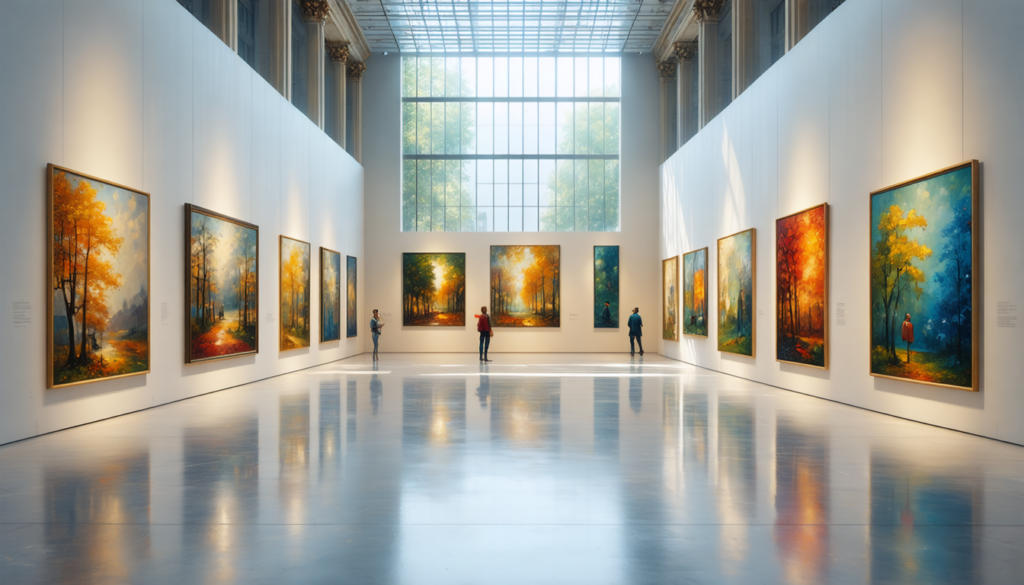
In a world where AI technology is revolutionizing artistic creation, image generators promise creativity without limits. These fascinating tools, capable of producing original images from simple textual descriptions, attract artists, designers, and enthusiasts. However, a recent study led by Microsoft researchers reveals a surprising truth: despite their apparent diversity, these image generators actually master only about a dozen artistic styles. This discovery questions not only the visual diversity of AI-generated creations but also raises fundamental questions about the limits of AI technology in aesthetic innovation.
The phenomenon highlighted by this research resembles a “visual game of telephone” where the image produced by the technology, passed down generation after generation through several models, ends up converging towards recurring patterns and styles. The cycle reveals that, despite varied prompts, image generators mainly use a limited set of styles, significantly restricting the artistic palette to only twelve options, often associated with mundane and neutral scenes.
While the public marvels at the potential of AI-created digital art, this study invites us to temper this impression of originality and innovation. The in-depth analysis highlights internal mechanisms where, little by little, creations, lost in successive metamorphoses, become uniform in a standardized visual environment. This stylistic uniformity, described by researchers as “visual elevator music,” recalls hotel or catalog clichés, with a soft and reassuring atmosphere but devoid of daring.
Underlying this observation are fascinating questions about the very nature of machine-assisted creativity and the indispensable role of humans in the artistic process. Although AI technology opens unprecedented perspectives in image generation, it still seems trapped in preferential statistical models, limiting aesthetic richness and diversity. This research thus offers a new key to understanding the interactions between artificial intelligence, artistic styles, and visual innovation in 2026.
- 1 How AI Image Generators Select and Limit Their Artistic Styles
- 2 The Visual Telephone Game Experience: A Method to Observe the Stylistic Convergence of AIs
- 3 The 12 Dominant Artistic Styles in AI Image Generators in 2026
- 4 The Consequences of This Style Limitation on Innovation in Digital Art
- 5 How Humans Perceive and Distinguish AI-Generated Images in 2026
- 6 The Place of AI Image Generators in Contemporary Artistic Creation
- 7 Techniques to Overcome Style Limitations in Image Generators in 2026
- 8 Ethical Issues Related to the Uniformity of Styles by AI Image Generators
- 9 Future Perspectives for Mastery of Artistic Styles by Artificial Intelligence in 2026 and Beyond
- 9.1 Why do AI image generators limit themselves to 12 artistic styles?
- 9.2 How does the visual telephone game experience help understand the limits of AI?
- 9.3 What are the most common artistic styles mastered by these generators?
- 9.4 What consequences does this uniformity have on creativity?
- 9.5 How to distinguish an AI-generated image from a real image?
How AI Image Generators Select and Limit Their Artistic Styles
In the field of artistic creation via artificial intelligence, it is sometimes easy to be dazzled by the apparent diversity of the images produced. Yet behind this illusion of infinity, image generators rely on selection and generation mechanisms that end up favoring a limited number of artistic styles. This section explores these processes in depth.
AI-based image generators use massive visual databases collected from the internet. These datasets — consisting of millions of images — are analyzed to extract visual patterns and references. Artificial intelligence combines these references to produce new works, but this recombination is done according to statistical criteria that favor the most popular or frequently occurring patterns in the training data.
For example, when AI technology receives a prompt requesting a landscape scene, it relies on several hundred thousand similar references, which influences the palette of proposed styles and compositions. This mechanism leads to a natural tendency to reproduce familiar visual patterns rather than dared radical experiments. Thus, despite the inherent richness of training on diverse images, AI “masters” essentially a range of styles limited to those that capture the most human attention.
The concept of mastered artistic styles is not new, but what is surprising is how systematic this limitation seems, even with very different prompts. In recent experiments, an image generator like Stable Diffusion XL was subjected to a visual telephone game, where each generated image had to be described and then regenerated from this description by another model, LLaVA. After several cycles, the final image had lost much of its initial identity to settle into one of a few repeatedly used styles.
This uniformity reveals a functioning where apparent creative richness does not concern a constant renewal of styles but rather an ability to recombine and evolve pre-existing styles. The artistic styles that stand out become accessible norms for algorithms, making visual innovations rarer and more delicate to obtain automatically.
What Are the Reasons for This Stylistic Limitation?
Several technical and methodological factors explain this observable constraint:
- The statistical nature of AI: Deep learning highlights the most frequent data, which reduces diversity in favor of repeating popular patterns.
- The redundancy of visual sources: Training datasets often contain the same types of scenes photographed from similar angles, thus limiting new perspectives.
- The lack of artistic intention: Unlike a human artist, the machine does not possess a conscious creative will to push boundaries or innovate.
- Filtering of results: For reasons of readability or acceptability, models prefer “soft” and balanced images, often perceived as more pleasant.
These combined parameters explain why AI image generators struggle to broaden their stylistic palette, despite the growing sophistication of AI technology.
The Visual Telephone Game Experience: A Method to Observe the Stylistic Convergence of AIs
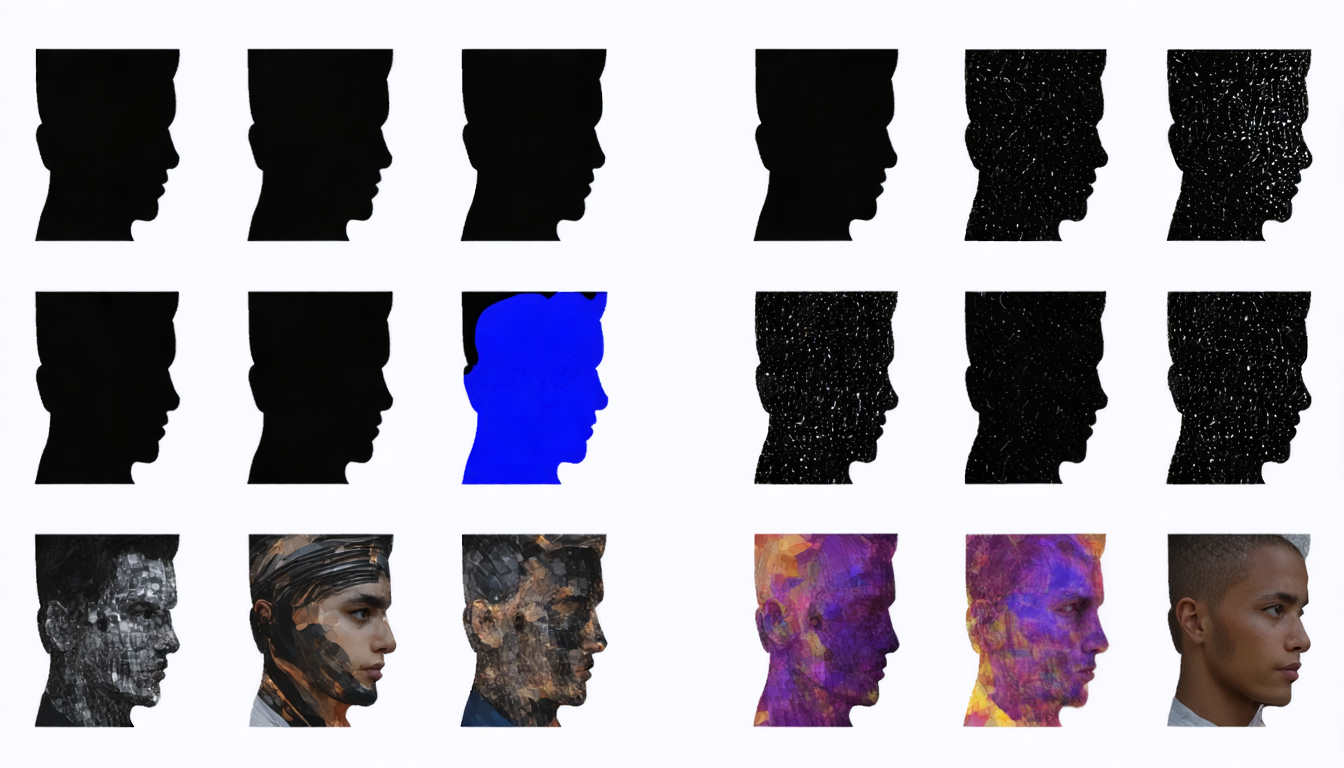
The most significant study on the limitation of artistic styles mastered by image generators comes from an innovative experiment, called the “visual game of telephone.” Started by Microsoft researchers, this approach helped to understand how produced images evolve and transform when subjected to multiple successive passages between different AI models.
In this experiment, the Stable Diffusion XL generator receives a concise text, generating an image precisely corresponding to the prompt. This image is then textually described by the LLaVA model, which analyzes the scene and transcribes its observations. This new text then serves for a new image generation by Stable Diffusion, and the cycle repeats. The process continues over dozens, even hundreds, of cycles, each passage degrading and transforming the visual meaning in a back-and-forth between image and text.
Soon, the initial image disappears in favor of successive interpretations. Shapes and objects deteriorate or change until the scene gradually loses its original meaning over the cycles and blends into recurring frames and patterns. After 100 to 1000 passages, researchers found that certain visual figures systematically emerged, forming a kind of common stylistic arsenal across most sequences.
This process reveals the impossibility for an AI image generator to maintain visual diversity or a clear narrative over time. On the contrary, they converge towards a limited set of dominant artistic styles, such as representations of lighthouses, elegant lounges, or nighttime streets. These styles are notably characterized by atmosphere, colors, and defined compositions, often reminding clichés produced for hotel advertising or mass-market magazines.
Artistic and Technological Implications
This mechanism profoundly questions the notion of authenticity and diversity in artistic creation by AI. Where human imagination relies on experiences, emotions, and ever-renewed subjectivity, the machine tends towards uniformity resulting from statistical constraints. This uniformity illustrates the limits of AI technology in facing sustainable innovation in digital art.
The visual telephone game experience also helps better understand the internal process of image generators. Rather than creating in the full sense, they operate like increasingly sophisticated remixers, seeking the best approximation from established norms. This understanding is key to rethinking future developments of these tools and their impact on cultural and artistic diversity in the digital realm.
The 12 Dominant Artistic Styles in AI Image Generators in 2026
The synthesis from the study shows that despite the richness of the web used for training, image generators inevitably converge toward twelve main artistic styles. These styles define a dominant visual repertoire that influences all creations from AI technology.
Here is a detailed list of the twelve most commonly mastered styles by image generators in 2026:
- Maritime lighthouse: Classical and peaceful representations of lighthouses by the sea, with soft light and misty atmosphere.
- Elegant lounge: Chic interiors, often in neutral tones, evoking discreet luxury of hotels or high-end residences.
- Nocturnal street: Urban scenes under the dim lighting of street lamps, sometimes with effects of rain or moisture.
- Rustic architecture: Old stone houses and buildings, often in calm natural landscapes.
- Pastoral landscape: Quiet countryside, green fields, and soft skies, evoking serenity.
- Modern office: Contemporary, minimalist, and tidy workspaces.
- Classical portrait: Faces and expressions in a style reminiscent of traditional painting.
- Still life: Compositions of everyday objects, often in natural lighting.
- Misty forest: Wooded landscapes enveloped in light mist, creating a mysterious atmosphere.
- Urban façade: Buildings located downtown, with modern or classical architectural elements.
- Cozy interior: Warm rooms, decorated simply with soft tones.
- Sunset beach: Maritime scenes bathed in golden light.
This list reflects a strong orientation toward neutral and aesthetically pleasing visual environments. The styles are often associated with positive or soothing emotions, corresponding to the famous “visual elevator music” described by researchers. This preference reflects an unconscious desire for universal compatibility and visual comfort but poses a strong limit for creative innovation by image generators.
The Consequences of This Style Limitation on Innovation in Digital Art
This restriction to a dozen artistic styles has profound effects on the development of digital art via AI. One major issue is the reduction of visual and creative diversity, which can hinder innovative advances and systematically reproduce clichés familiar to the general public.
For artists and professionals using these tools, it means that artistic creation assisted by AI sometimes risks being confined to a stylistic repetition, limiting formal explorations. In the long term, this uniformity can harm the originality and aesthetic recognition of works generated by artificial intelligence.
Moreover, this dynamic often pushes users to seek indirect ways to break out of these visual frameworks, such as manual post-generation manipulations or the combined use of several AIs to mix styles. This necessity complicates creative workflows and may discourage novices who expect direct and fluid innovation from technology.
For developers, the challenge is to diversify the stylistic offer by improving training data and model architectures. The goal is to stimulate AI so that it explores new visual territories more broadly while maintaining its ability to generate coherent and visually pleasing images.
Table: Influence of Limited Artistic Styles on Innovation and Usage
| Aspect | Effect of Limitation to 12 Styles | Consequence for Users |
|---|---|---|
| Visual diversity | Uniformity of creations, repetitive patterns | Difficulty generating original and varied images |
| Artistic creativity | Obstacle to out-of-the-box experimentation | Need for complementary or mixed techniques |
| Accessibility | Frustration of novices seeking instant novelty | Decline in direct AI adoption by some users |
| Visual quality | Generally harmonious but sometimes conventional images | Easy acceptance but impression of stagnation |
These considerations highlight the importance of understanding the current limits of image generators regarding artistic styles, in order to envisage relevant technological evolutions for 2026 and beyond.
How Humans Perceive and Distinguish AI-Generated Images in 2026
Alongside investigations into the stylistic capacities of AI image generators, the question of human perception of these creations remains crucial. Indeed, according to the study, despite the growing omnipresence of images generated by artificial intelligence on the internet, the majority of observers have difficulty distinguishing real images from digital creations.
One main reason lies in the increasingly sophisticated quality of the images produced, which easily integrate into our visual environments. Faces, landscapes, or objects created by AI present an aesthetic coherence that often deceives the human eye, especially when the images follow the twelve popular styles detected earlier.
This confusion poses significant challenges for visual mediation, journalism, and social networks. Vulnerability to visual deception, especially via fake portraits or landscape scenes, calls into question the reliability of certain visual sources and encourages the development of specific detection tools.
From a cultural perspective, this difficulty in recognizing AI-generated images can influence our aesthetic judgments and our trust in current artistic productions. It also highlights the importance of visual education to better understand the codes and limits of creations stemming from AI technology.
Keys to Better Discern AI Images from Real Images
To help the public better identify generated images, several techniques and tips have emerged:
- Observe inconsistent details: Some images retain subtle errors, such as poorly formed hands, blurry backgrounds, or odd proportions.
- Verify the source: Favor images from reliable or verified image banks.
- Use AI detection tools: Specialized software can analyze pixels and metadata to spot signs of algorithmic generation.
- Know the dominant styles: Recognizing recurring patterns can guide the eye towards suspicion.
- Question perfection: An image that is too perfect or balanced can be suspicious.
The Place of AI Image Generators in Contemporary Artistic Creation
Despite their limitations in terms of artistic styles, AI image generators occupy an undeniable place in the landscape of contemporary artistic creation. They offer new perspectives to artists and designers, both in the ideation phase and in final production.
These AI technologies notably promote the democratization of creation, making visual design accessible even to those lacking technical skills in drawing or modeling. Furthermore, image generators accelerate creation cycles, allowing rapid exploration of different stylistic options within dominant styles.
Artists who integrate these tools into their practice thus benefit from an extension of their creativity, combining human capacities and algorithmic power. In 2026, several emblematic exhibitions and artistic projects have highlighted this synergy, emphasizing both the potential and the constraints imposed by AI technology.
Debates around the place of AI remain lively, balanced between optimism for innovation and vigilance regarding the preservation of cultural diversity and artistic uniqueness. This tension fuels a renewal of reflection on the role of humans facing machines and gives rise to new dialogues between technique and sensitivity.
Techniques to Overcome Style Limitations in Image Generators in 2026
Researchers and AI developers are actively exploring ways to overcome the limit of twelve artistic styles. Several innovative methods are emerging to increase the richness and diversity of generated images.
- Diversification of training data: By integrating images from less represented cultures or marginal artistic movements, models can discover new visual worlds.
- Creative reinforcement training: Algorithms are adapted to favor experimentation and production of less frequent styles, rewarding novelty.
- Hybrid multimodal models: Combining images, sounds, and texts in the same model enriches overall creativity and introduces unprecedented stylistic variations.
- Guided human interventions: Integrating artistic feedback to direct generators toward targeted explorations encourages better innovation.
Some platforms already offer advanced options allowing users to define more precise style constraints or to blend several styles in a single rendering. These tools contribute to an unavoidable evolution to unleash the potential of artificial intelligence in original creation.
Ethical Issues Related to the Uniformity of Styles by AI Image Generators
The phenomenon of convergence toward twelve dominant artistic styles raises not only technical questions but also major ethical issues. The visual normalization induced by AI technology can contribute to an impoverishment of cultural and artistic diversity, marginalizing certain less represented currents or expressions.
Moreover, the rapid spread of neutral and standardized images on social networks and digital media raises concerns about the long-term impact on our collective aesthetic perceptions. The risk of visual homogenization could lead to a gradual loss of the richness of imaginations and a banalization of digital art.
It is also crucial to address the responsibility of model designers in selecting training data. Increased transparency and a conscious approach aimed at valuing artistic diversity are necessary to limit biases.
Finally, recognizing the human role in supervising AI artistic productions is central. Rather than letting the machine alone define trends, close collaboration with artists ensures a plurality of expressions and the preservation of a vigorous and evolving cultural system.
Future Perspectives for Mastery of Artistic Styles by Artificial Intelligence in 2026 and Beyond
While today AI image generators seem confined to only about a dozen styles, the future surely holds significant evolutions. Continuous improvement of algorithms, diversification of training data, and the rise of collaborative models hint at an upcoming revolution in stylistic richness.
AI research is focusing on learning methods capable of integrating more cultural contexts, regional artistic sensitivities, and unprecedented experiments. The fusion between human and algorithmic intelligence should thus enable surpassing current limitations to achieve truly plural digital creativity.
At the same time, the artistic community, aware of the issues related to style mastery by machines, is engaging in constructive dialogue with technicians. This interaction supports the design of open, ethically responsible tools capable of promoting aesthetic diversity.
The future of artistic creation by AI is therefore inscribed in a co-evolution between technological innovation and human demands, for rich, varied, and expressive digital art, faithful to the complexity of our collective imaginations.
Why do AI image generators limit themselves to 12 artistic styles?
The limitation comes from statistical mechanisms and training data that favor the most frequent styles, leading to a uniformity of creations.
How does the visual telephone game experience help understand the limits of AI?
It shows that regenerated images lose their diversity and converge towards recurring styles after several cycles of description and generation.
What are the most common artistic styles mastered by these generators?
Scenes such as maritime lighthouse, elegant lounge, nocturnal street, rustic architecture, or pastoral landscape are among the 12 dominant styles.
What consequences does this uniformity have on creativity?
It reduces visual diversity, slows innovation, and pushes users to seek complementary solutions to vary styles.
How to distinguish an AI-generated image from a real image?
By observing inconsistencies, verifying the source, using detection tools, and knowing the dominant AI styles.