At the dawn of 2025, the race for humanoid robotics takes on a new dimension with technological innovations that captivate as much as they intrigue. A Chinese influencer recently took the plunge, spending the astronomical sum of 1400 dollars to rent the humanoid robot Unitree G1 for a day, a marvel of modern technology. This unique experience sparks a debate on the viability and value for money of humanoid robots in our daily lives. On the agenda: cleaning, cooking, mobility, social interaction, and even an attempt to accompany a romantic date. Astonishing performances in some aspects and glaring awkwardness in others come together to paint a portrait of an assistant still in the learning phase. So, renting a humanoid robot at a premium price, is it a flashy stunt or a relevant investment?
The rapid rise of robotics combined with artificial intelligence heralds revolutions in how we live in our homes and enjoy our free time. But where do the real advances lie? This exclusive report on an influencer’s experience with the Unitree G1 highlights the technical challenges, strengths, but also the current limitations of these machines. From clumsiness during household tasks to surprising successes in social activities, this test opens an exciting debate about the future of these technologies and their potential impacts on our daily lives.
- 1 Unitree G1: a deep dive into the technology of a humanoid robot at 1400 dollars per day
- 2 Field experience: cleaning and cooking with a humanoid robot at $1400 per day
- 3 Mobility and social interaction: when a humanoid robot surprises
- 4 Cost-benefit analysis: are the 1400 dollars per day justified?
- 5 Unitree G1 and Tesla Optimus: the duel of humanoid robots for 2026 in France
- 6 Varied uses: beyond cleaning, towards extended robotization
- 7 Technical and ethical challenges to overcome for mass-market humanoid robotics
- 8 Medium-term perspectives: towards realistic integration of robots in our homes
Unitree G1: a deep dive into the technology of a humanoid robot at 1400 dollars per day
The Unitree G1 is a cutting-edge humanoid robot designed primarily for advanced uses in various fields, ranging from research to industrial assistance. This 1.32-meter, 35-kilogram device stands out for its configuration combining computing power and sophisticated sensors. Equipped with a depth camera, a 3D LiDAR, noise-canceling microphones, and an eight-core processor, the G1 is a concentration of technological innovation. Its battery, designed for a two-hour autonomy, is fortunately replaceable, allowing for prolonged use.
Despite its modest appearance compared to some prototypes, the G1’s hardware and software language gives it remarkable agility. It can reach a speed of 7.2 km/h, smoothly navigate around obstacles, and even run in sync with a user. These characteristics make it one of the reference models in robot mobility for 2025.
The embedded high technology plays a key role in the automatic management of movements and interactions. The robot analyzes its environment in real time thanks to the fusion of data from multiple sensors, optimizing both its navigation and its ability to respond to human commands. This integrated artificial intelligence is considered one of the most advanced on the current humanoid robotics market, combining innovation and responsiveness.
However, this advanced technology comes at a price: renting the Unitree G1 for one day costs 1400 dollars. A substantial sum that raises the question: does this robot justify this expense compared to its actual performance? The experience of the Chinese influencer Zhang Genyuan provides crucial insight into this point by putting in perspective the costs and benefits of this expensive rental.
Field experience: cleaning and cooking with a humanoid robot at $1400 per day
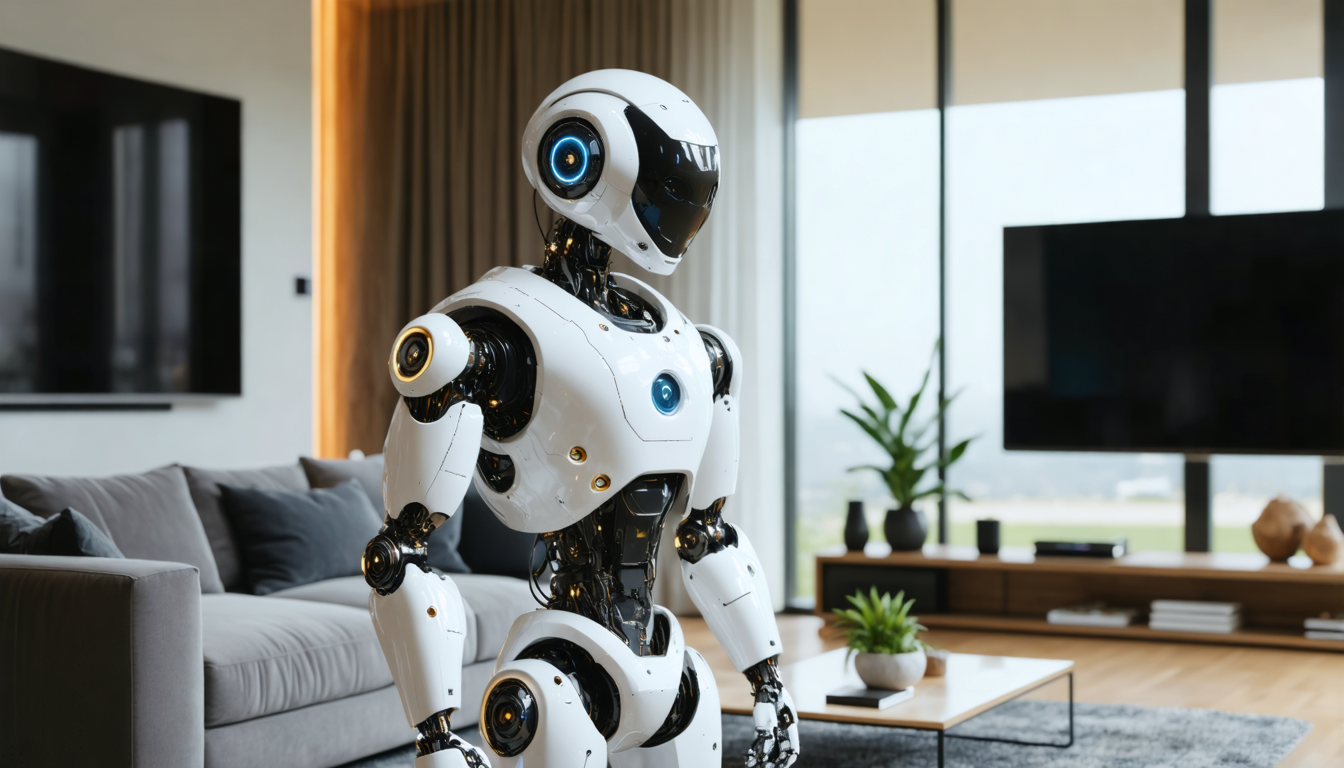
To test the domestic assistant qualities of the Unitree G1, the influencer subjected the machine to two symbolic daily tasks: cleaning and cooking preparation. These tests quickly revealed the current limits of humanoid robotics in these complex areas.
During cleaning, the robot is supposed to handle objects, vacuum, and clean surfaces with precision. Yet, the G1 showed marked clumsiness. It often knocked over furniture and other items without being able to reposition them correctly. This lack of coordination resembled more a tentative learning process than professional execution. Obviously, the algorithm does not yet allow for perfect mastery of the dynamic home environment, where contingencies are numerous and gestures must continuously adapt.
In the kitchen, the complexity increases. The influencer asked the G1 to perform seemingly simple gestures like cracking an egg and pouring milk. The result? The egg often ended up on the floor, and the milk spilled, demonstrating that at this stage the artificial intelligence struggles to manage the multitude of variables involved in such a delicate manipulation. The surgical precision required in cooking remains a colossal challenge despite recent progress.
These scenes are not isolated: they illustrate a fundamental aspect of the domestic robotics challenge, namely adaptation to non-standardized and unpredictable environments. Tactile awareness and hand-eye coordination, still rudimentary in robots, largely determine the effectiveness of their interventions. For now, these functionalities are far from matching human expertise.
Nevertheless, this clumsiness also evokes a form of empathy and humor, humanizing the robot through its flaws. This establishes a new relationship with the technology, where the user becomes aware of the potential and current limits while contributing to the progress of these innovations through such field feedback.
If the Unitree G1’s abilities in cooking or cleaning do not fully convince, this robot excels in mobility and social interaction, two crucial areas for envisioning a smooth coexistence between humans and machines.
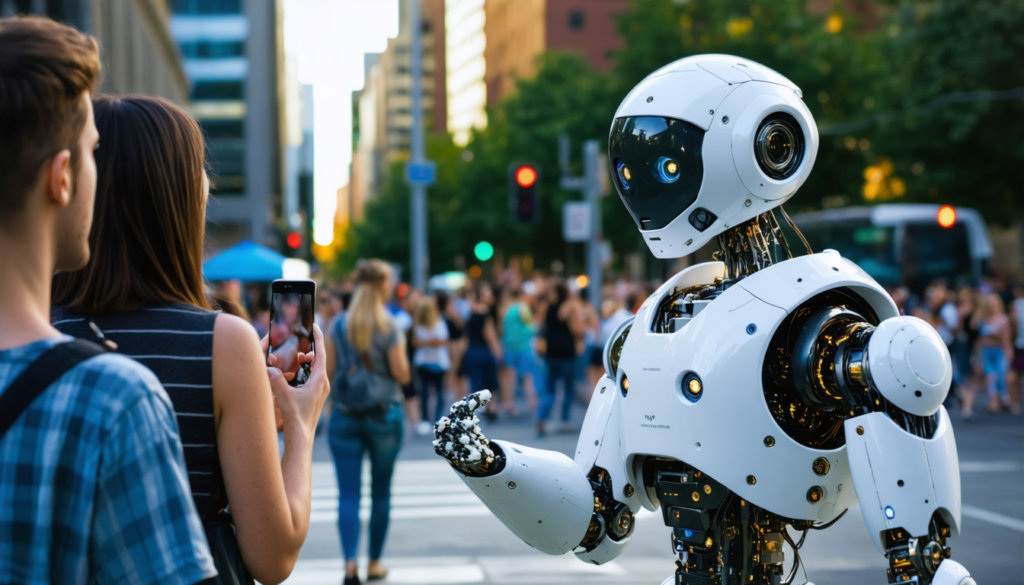
The G1’s mobility is remarkable. Capable of walking at 7.2 km/h, avoiding obstacles, and even running alongside its human companion, its locomotion system is one of the most advanced on the market. This capability opens the door to many applications, especially in providing mobility assistance for elderly people or persons with reduced mobility.
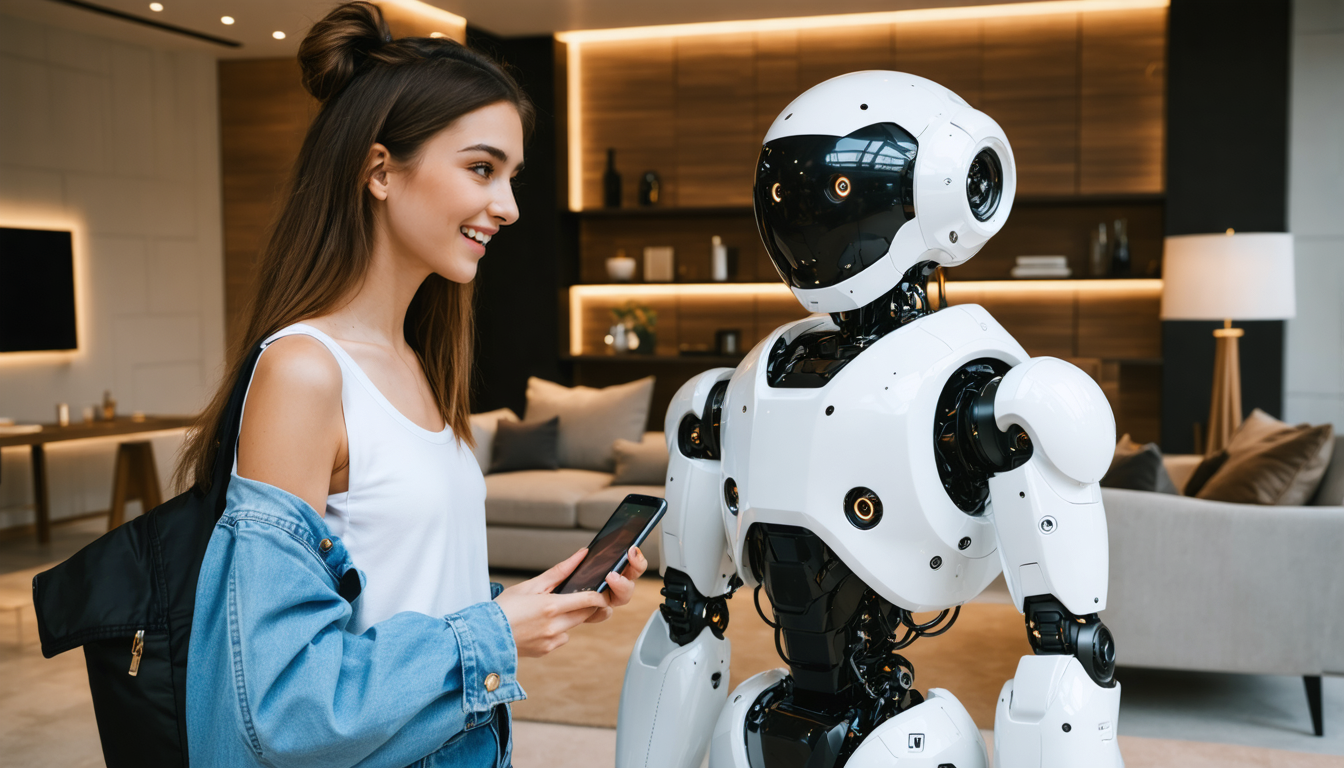
In terms of social interaction, the robot stands out for its recognition and communication abilities. During a romantic date organized by the influencer, the G1 managed to surprise by recognizing its owner’s profession and followers. The machine can engage in a conversation with a minimum of personality, making the experience less impersonal than one might have imagined. This dimension marks a major advance in the integration of robots into human social activities.
However, this enthusiasm must be tempered: a dance trial revealed the robot’s motor weaknesses, as its movements became completely desynchronized. Yet, this clumsiness, far from being a handicap, adds a certain nervousness and authenticity to the machine, making it almost endearing in the eyes of its interlocutors.
These skills promise a gradual transformation of our interactions with technology, where the robot becomes a social partner, a multifunctional companion capable of integrating human dynamics with a minimum of adaptation. The Unitree G1 thus opens a path to future uses of artificial intelligence in the social field, far beyond simple technical functions.
Cost-benefit analysis: are the 1400 dollars per day justified?
Renting a humanoid robot like the Unitree G1 for 1400 dollars a day is a significant expense. To determine if this amount is reasonable, one must evaluate the balance between the benefits derived from the experience and the available alternatives.
On one hand, 1400 dollars can pay for a weekend in a luxury hotel, a gastronomic experience, or the purchase of a high-end computer. These options have the advantage of offering immediate and tangible comfort. On the other hand, renting this robot primarily offers a unique immersive experience. Having such an advanced technological companion by one’s side fascinates, piques curiosity, and confers a status of originality on social media — a valuable asset for an influencer like Zhang Genyuan.
Beyond the symbolism, this expense comes with a return in terms of learning and entertainment. The experience helps to understand the current limits and potentialities of humanoid robotics, while contributing to its future development. For some, this type of investment is a way to contribute to the rise of a promising innovation.
Here is a very instructive comparative table putting the cost of different options and the use of the robot into perspective:
| Option | Average budget | Main utility | Expected return |
|---|---|---|---|
| Unitree G1 rental (1 day) | $1400 | Immersive technological experience | Entertainment, technological learning |
| Luxury hotel weekend | $1200-1500 | Relaxation, comfort | Relaxation, discovery |
| High-performance gaming PC | $1300-1600 | Gaming, productivity | Performance and entertainment |
| Cleaning service (1 day) | $100-200 | Cleaning, maintenance | Time-saving and efficiency |
For an average user, this expense may seem excessive. However, for an influencer or a company seeking innovation and original content, the return in terms of visibility and engagement can justify this investment.
List of strengths and limitations for 1400 dollars per day:
- Strengths: cutting-edge technology, exceptional mobility, advanced social interaction, unique innovative experience.
- Limitations: limited skills in cleaning and cooking, autonomy restricted to 2 hours, very high price, still clumsy handling.
Unitree G1 and Tesla Optimus: the duel of humanoid robots for 2026 in France
The rental of the Unitree G1 at such a high price reveals the challenges of the current humanoid robotics market, still limited to professional niches. However, the future is already looking towards democratization with the imminent arrival of other robots, notably the Tesla Optimus, scheduled for 2026.
While the G1 currently mainly targets a B2B audience due to its price, Tesla, thanks to mass production, aims to offer the Optimus at a much more affordable price. Elon Musk mentioned a range around 25,000 dollars, which is less than half the current rental costs of the G1, making the robot truly feasible for domestic use in France and Europe.
Beyond the price, availability in Europe will depend on CE certifications, a mandatory step to ensure the safety and compliance of humanoid robots for domestic use. This step may slow the arrival of such robots on the consumer market, but intense competition between Chinese and American manufacturers is expected to accelerate the processes.
Here is a comparative table between Unitree G1 and Tesla Optimus:
| Characteristic | Unitree G1 | Tesla Optimus (planned 2026) |
|---|---|---|
| Approximate price | Rental at $1400/day (B2B price) | Commercial launch planned around $25,000 |
| Availability | Limited, mainly companies | Mass market targeted, general public |
| Main use | Mobility and surveillance | Domestic and industrial assistance |
| Key technology | 3D LiDAR, 8-core processor | Advanced Tesla artificial intelligence |
This technological duel illustrates the dynamics of the rapidly expanding humanoid robotics market and the gradual shift from professional niche to the general public. This context marks a major evolution in the sector, with innovations in artificial intelligence and robotics that promise to profoundly impact our daily lives.
Varied uses: beyond cleaning, towards extended robotization
Zhang Genyuan’s experience with the Unitree G1 also serves as an exploration of the new frontiers opened by humanoid robotics. By showcasing its various facets, this experience invites consideration of potential uses far beyond traditional domestic assistance.
In industry, humanoid robots are already changing the game, supporting workers in repetitive or dangerous tasks. Meanwhile, in the medical field, they could assist healthcare personnel, help in rehabilitation, or even keep patients company. Social applications are no longer limited to controlled environments but are tending to take place in our daily lives.
Here is a list of potential uses for humanoid robots in the near future:
- Assistance for elderly and mobility-impaired individuals
- Household tasks: cleaning, cooking, organization
- Social companionship and personalized interaction
- Support in industrial and logistics work environments
- Home surveillance and security
- Education and pedagogical support at home
This plurality reinforces the need for continuous innovation, particularly in artificial intelligence capable of adapting robots to varied and complex contexts. Humanoid robotics thus appears as a true multidimensional revolution with potentials still largely to be seized.
Technical and ethical challenges to overcome for mass-market humanoid robotics
Despite impressive progress, several technical and ethical obstacles remain to be overcome before humanoid robots become full domestic partners.
On the technical side, the major challenge lies in the robustness and reliability of complex physical manipulations. Fine motor coordination, contextual understanding, and the handling of unforeseen events in a domestic environment remain limited. Likewise, energy autonomy and operating duration still need improvement for mass diffusion.
On the ethical side, the presence of a humanoid robot in the private sphere raises questions about privacy and data security. Cameras, microphones, and artificial intelligence software must guarantee perfect protection against intrusion. Moreover, the question of impact on human employment, particularly in assistance and home care sectors, requires in-depth societal debate.
Regulations will have to evolve rapidly to frame the domestic use of humanoid robots, ensuring harmonious and secure coexistence between humans and machines. These challenges are calls for vigilance as innovation accelerates.
Medium-term perspectives: towards realistic integration of robots in our homes
Looking toward the near future, it is reasonable to expect that from 2026, humanoid robots like Tesla Optimus will gradually enter homes, thanks to a more affordable price and improved functionalities. However, this integration must be accompanied by an awareness of the real possibilities and potential limits of these machines.
The continuous improvement of artificial intelligence algorithms and the miniaturization of sensors and processors will promote better adaptability of these robots to individuals’ specific needs. More than a simple gadget, they could become true companions and assistants, changing family and social dynamics.
However, this transition will require ethical and cultural support, as well as a change of mentality to accept close coexistence with these new types of artificial beings. The role of influencers, like the experience tested at 1400 dollars per day, becomes crucial to raise awareness, inform, and demystify these innovations.