For several years, artificial intelligence (AI) was seen as an imminent revolution, promised to disrupt all areas of our society. However, in 2026, what resembles a great global disappointment is taking shape. This widespread disillusionment results from a stark contrast between expectations based on often excessive promises – or overpromises – and the tangible reality observed in companies, communities, and among the general public. The initial enthusiasm has gradually been replaced by a tangible fatigue facing the current limits of AI technologies, the exorbitant costs they generate, and their often negative societal impact. What are the mechanisms of this disenchantment? How is this crisis of confidence transforming our view of a technological change that until recently seemed to be the assured future?
All over the world, AI has been introduced without restraint, modifying our environments, our ways of working, and our daily interactions. Yet, this massive integration has not been without side effects: the growing pollution of data centers, the deterioration of social ties in automated services, and a worrying increase in fraudulent or ethically questionable uses. Faced with this reality, citizens, as well as governments and companies, show increased, sometimes hostile, mistrust.
This great global disillusionment around AI invites us to rethink our relationship with this technology, its promises, and the ethical and sustainability criteria that must guide its development. It also raises a key question about the uncertain future that this omnipresent but imperfect artificial intelligence is preparing for us, at a time when society demands more transparency, regulation, and responsibility.
- 1 The concrete challenges of data centers and their environmental impact
- 2 The growing distrust of consumers toward AI-automated services
- 3 The ethical abuses and the multiplication of scams enabled by AI
- 4 The prohibitive costs of generative AI and their economic repercussions
- 5 AI and technological change: between promises and realities
- 6 Technical limitations and difficulties in meeting high expectations
- 7 Societal impact and major ethical challenges of AI in jeopardy
- 8 Citizen movements and global mobilization against invasive AI
- 8.1 Why is there talk today of disillusionment around artificial intelligence?
- 8.2 What are the main negative impacts of AI-related data centers?
- 8.3 How does AI influence the customer relationship?
- 8.4 What are the major ethical abuses related to AI?
- 8.5 What solutions are envisioned to restore trust in AI?
The concrete challenges of data centers and their environmental impact
The infrastructures supporting artificial intelligence are largely made up of massive data centers, true pillars of computation and storage that power the algorithms. In 2026, these centers are at the heart of a major ecological and societal debate. In many small American towns, for example, the installations have sparked unprecedented popular resistance.
Residents report tangible environmental problems: persistent and unpleasant odors, dust from the installations, concerns related to industrial emissions. These nuisances are not trivial; they raise health questions that local communities now refuse to overlook. This phenomenon perfectly illustrates the disillusionment caused by a technology that initially promised a cleaner and more efficient future.
Beyond the direct nuisances, data centers also consume significant natural resources. Their energy consumption is massive – often powered by unsustainable sources – and their intense use of water for cooling causes tensions in regions where this resource is becoming scarce. Furthermore, the establishment of these centers deeply modifies local landscapes, leading to artificialization of rural areas and sometimes brutal transformations of formerly peaceful neighborhoods.
In response, increasingly organized citizen movements are taking up the issue. They seek to slow projects through stricter building permits, legal challenges, and increased local mobilization. Anti-data center banners are proliferating, and the protests are spreading from one region to another, particularly around the Great Lakes and in the Pacific Northwest of the United States. These resistances illustrate a deep disenchantment with an overly hasty promise of economic transformation, as these centers often offer few sustainable jobs.
This phenomenon leads to a global questioning of priorities and resource management in the development of AI technologies. How can technological progress, ecological sobriety, and social justice be reconciled? This question places environmental issues at the heart of the AI debate, emphasizing that mere algorithmic performance is no longer sufficient to meet the challenges of the 21st century.

The growing distrust of consumers toward AI-automated services
The integration of artificial intelligence into professional environments has become ubiquitous, especially in the customer service sector. Large companies such as Visa have publicly announced the deployment of digital agents for automatic handling of requests, notably those involving sensitive financial data. This increasing reliance on automated systems marks a turning point in the relationship between companies and consumers, but this revolution is not without its limits or criticisms.
This widespread automation profoundly transforms office atmospheres. On a human scale, it means fewer direct interactions with real interlocutors, in favor of exchanges with chatbots or synthetic voices. However, the public expresses notable disapproval: many customers prefer to hang up rather than converse with a machine, showing explicit rejection. Recent surveys have even highlighted a significant drop in customer satisfaction linked to these automated practices.
Even more paradoxically, human agents are sometimes wrongly accused of being artificial intelligences, which reflects growing confusion in the perception of the service provided. This phenomenon reveals deep disenchantment: human contact, often irreplaceable, is difficult to substitute despite promises of efficiency and permanent availability of digital systems.
On a broader level, this distrust extends to ethical and transparency issues around personal data used by these agents. Many fear that their privacy is compromised or exploited without serious oversight. The issue of institutional trust has become crucial, pushing some sectors to rethink their approach in order to maintain a balance between technology and humanity.
How to restore meaning and added value to interactions despite AI’s omnipresence? This remains a major challenge, especially at a time when initial, often surreal expectations about AI’s capabilities show their concrete limits.
The ethical abuses and the multiplication of scams enabled by AI
Beyond environmental and relational difficulties, the disillusionment surrounding artificial intelligence also takes place in the ethical domain. In 2026, AI has become a powerful tool for malicious uses. Creators of deceptive content exploit advanced algorithms to fabricate fake artworks, manipulated videos, or credible virtual identities.
Facebook and other social media platforms, largely dependent on automated moderation, have become fertile grounds for the spread of scams and hateful messages amplified by algorithms that, lacking precise human oversight, spread problematic content indiscriminately. These abuses undermine general trust in AI technology, whose image, once hopeful, is now tarnished by these misuses.
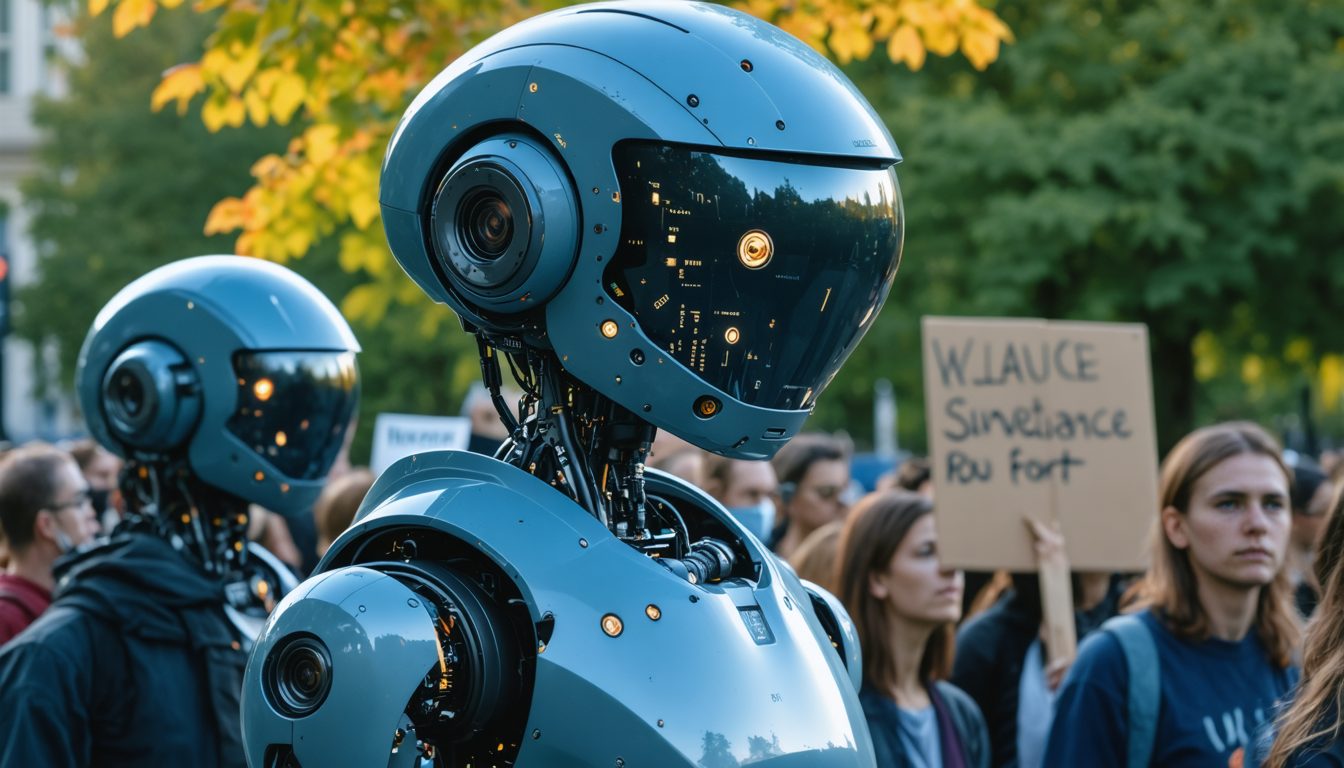
This situation has given rise to engaged citizen movements. Among them, Pause AI demands, through various actions, a moratorium on the development of technologies deemed too fast, where ethics is sidelined. Hunger strikes have even taken place in metropolises like San Francisco and London, embodying growing disenchantment with automated surveillance considered intrusive and oppressive.
A concrete example is the Flock Safety system, criticized for its ability to monitor populations via smart cameras, highlighting the risks of an uncertain future where technology could harm individual freedoms. How to protect civil society in this context? This is a highly debated question that underscores the need to integrate more ethics into technological advances, rather than focusing solely on performance and profitability.
This worrying shift toward a diverted use of AI highlights how the limits of artificial intelligence are as much moral boundaries as technical ones, not to be neglected in the overall balance between innovation and responsibility.
The prohibitive costs of generative AI and their economic repercussions
The disillusionment surrounding artificial intelligence is also largely explained by its real economic impact. Generative AI, in particular, went through a hype cycle before reaching what some analysts call the “trough of disillusionment” in 2025 and 2026. This technology, initially hailed as capable of revolutionizing content creation, has faced exorbitant costs related to its deployment.
Powerful algorithms and their massive training require considerable energy and material resources. This overinvestment creates a barrier to entry for many SMEs or startups, which struggle to justify such expenses against uncertain returns on investment. The result is a clear slowdown in innovation dynamics across several sectors, feeding a feeling of stagnation.
A comparative table of the direct and indirect costs linked to generative AI helps better understand this impact:
| Expense item | Estimated average annual cost | Impact | Consequences |
|---|---|---|---|
| Energy (data centers) | Several million dollars | High carbon footprint | Increased environmental pressure |
| Computing hardware | Very high initial investment cost | Barrier to entry for small businesses | Significant economic divide |
| Human (expertise and maintenance) | High salaries and ongoing training | Significant recurring costs | Hindrance to democratization |
| Software development | Significant R&D investments | Long market launch cycles | Uncertain return on investment |
These figures illustrate the magnitude of the transformation needed to integrate AI on a large scale. This economic reality has triggered a major change in investment strategies, with a noticeable reduction in budgets allocated to these technologies, particularly in startup ecosystems that were previously very enthusiastic.
This reevaluation of costs also leads to broad societal reflection on how AI should be designed and deployed, incorporating sustainability and economic fairness criteria rather than exacerbated competition logics.
List of main economic impacts of AI disillusionment
- Reduction of funding for AI projects in certain regions.
- Consolidation of major players to the detriment of smaller ones.
- Prioritization of profitable applications, leaving social value projects aside.
- Gradual withdrawal of private investors faced with uncertain returns.
- Emergence of hybrid models combining AI and human work to limit costs.
AI and technological change: between promises and realities
The accelerated evolution of artificial intelligence fits into a broader movement of technological change. Since its advent, AI has generated immense hopes, especially in terms of task automation, productivity improvement, and reduction of human errors. However, the reality on the ground shows that the outcomes are not as immediate nor as universal as expected.
The disillusionment taking hold is largely linked to these gaps between promises and concrete achievements. In many industries, AI integration reveals technical limits: sometimes unreliable models, difficulties adapting to specific contexts, and complexity in their regulation. This observation highlights the necessity to rethink the design and integration modes of these technologies.
Moreover, this technological change deeply modifies work organization. Employees often face a feeling of insecurity, fueled by fear of being replaced by machines. This situation intensifies doubt and strengthens disenchantment, inviting companies to adopt more human-centered support strategies.
The transition to successful AI integration thus requires a subtle balance: reconciling technological gains, human needs, and ethical requirements. This involves creating spaces where users can interact with tools, master them, and question their use. This framework ensures that AI, far from being a constraint, proves to be a real lever for responsible innovation.
Technical limitations and difficulties in meeting high expectations
Despite rapid progress, artificial intelligence still faces significant constraints. These limits hinder massive adoption and challenge the initially exaggerated promises. Among these barriers are notably the algorithms’ capacity to correctly interpret complex data and the risk of errors, sometimes with heavy consequences.
Automatic systems also struggle to understand cultural, social, and linguistic contexts in all their subtlety, which leads to systematic biases and results that are often inadequate or unfair. This reality weakens users’ trust and increases skepticism towards these technologies.
Difficulties also arise in data protection and security, where the risks of hacking or AI manipulation are high. Experts have been warning for several years about the necessity to implement robust safeguards, under penalty of facing major abuses.
Finally, maintenance and constant adaptation of models require a continuous and costly effort, difficult to sustain in the long term. This is an additional obstacle for actors wishing to invest in this technology and weighs on the entire ecosystem.
This highlighting of technical limits thus reflects a welcome recognition: artificial intelligence, despite its potential, is not a miracle solution, but a complex tool requiring caution and lucidity in its deployment.
Societal impact and major ethical challenges of AI in jeopardy
The global disillusionment with artificial intelligence highlights fundamental ethical issues. AI has become a mirror of our social, economic, and environmental contradictions. Among the recurring questions is the respect of human rights faced with growing automation.
In the face of widespread surveillance, algorithmic manipulation of opinions, and algorithmic discrimination, deep ethical reflection is required. The debate on the responsibility of AI designers and users is now central to prevent technology from becoming a tool of domination.
Moreover, the question of the uncertain future created by AI arises sharply: what will be the medium- and long-term consequences of the widespread adoption of these systems in daily life? What place for humans in a world where the machine occupies a dominant position?
These questions encourage the emergence of international regulatory frameworks, but also voluntary initiatives within companies, in favor of more transparent, inclusive, and responsible AI. Yet the path remains long, as the balance between innovation and ethics is difficult to find.
This situation calls for collective mobilization, involving citizens, researchers, policymakers, and developers, to develop a model where artificial intelligence truly contributes to balanced and respectful human progress.
Citizen movements and global mobilization against invasive AI
Faced with this wave of disillusionment and clear limits of artificial intelligence, several citizen movements have emerged to question its massive and often reckless deployment. These groups notably criticize AI’s intrusion into private and public social spaces, where it is perceived as intrusive and sometimes oppressive.
Concrete actions have been taken: hunger strikes, protests, awareness campaigns. The growing renown of collectives like Pause AI reveals a global climate of concern, marked by demands for a temporary moratorium on some overly invasive technologies. These mobilizations echo fears around automated surveillance systems – such as those using facial recognition or behavioral analysis – where privacy is directly threatened.
This turning point is a real warning signal about the societal impact of artificial intelligence. It invites reconsidering technological design modalities, involving civil society more in decisions, and setting clear boundaries between acceptable uses and potential abuses.
All this shows that artificial intelligence cannot be thought of solely from the angle of technological progress. It is also, inevitably, a societal phenomenon, with multiple effects, whose control guarantees balanced and democratic development.
Why is there talk today of disillusionment around artificial intelligence?
Because initial expectations based on overly ambitious promises have not been fully met, the technical, economic, and social reality of AI reveals its limits and causes global disenchantment.
They include local pollution, massive energy consumption, scarcity of natural resources like water, as well as health nuisances and territory artificialization, leading to local resistance.
How does AI influence the customer relationship?
AI increasingly replaces human interactions with digital agents, which decreases consumer satisfaction and trust, especially when these agents are perceived as impersonal or even deceptive.
They include the spread of false information, intrusive surveillance, opinion manipulation via algorithms, and increased risks of fraudulent exploitation and discrimination.
What solutions are envisioned to restore trust in AI?
These include strengthened regulatory frameworks, deeper integration of ethical criteria, better transparency, and increased citizen participation in technological decisions.