
Behind the scenes of power, a true bubbling of ideas now animates the Macronist camp, shaken by a growing unease about announcements and speculations on upcoming tax increases. While the government publicly displays its categorical refusal to tighten the tax pressure, economic demands to balance the budget are approaching a worrying threshold, with nearly 40 billion euros to be found for the 2026 fiscal year. This context fuels intense debates, where tax creativity, political concerns, and citizen reactions mingle in a complex and tense dance.
Discussions around tax strategies oscillate between targeted eliminations of tax loopholes, revisions of historic taxes, and innovative proposals such as the establishment of a minimum tax for the highest incomes. But this proliferation of scenarios comes with a palpable malaise within the Macronist ranks themselves. Deputies, advisers, and economic experts question the coherence of the political message and fear a popular disavowal that could weaken the presidential majority. This pivotal moment perfectly illustrates the deep tensions between economic constraints and political imperatives, and highlights the challenge of managing expectations for a government three years away from the next electoral deadlines.
The effervescence of tax proposals and the latent unease among Macronists
For several months, the Macronist political scene has been the stage for a real “fair of ideas” regarding tax policy. This expression reflects the diversity, even confusion, of the avenues proposed to contain the public deficit without excessively weighing on taxpayers. Among the most discussed ideas, the targeted elimination of tax loopholes deemed ineffective often comes first.
These loopholes, which often benefit specific tax categories or certain economic sectors, are examined under a magnifying glass. For example, the thorough review of exemptions on business transfers worries local deputies, such as Élise, an entrepreneur in Lyon, facing growing uncertainty about the fiscal future of her activity. This case illustrates how a seemingly technical measure has concrete repercussions on investment and regional economic dynamics.
At the same time, the partial reintroduction of the housing tax for wealthy households is debated. While it had been largely abolished to improve purchasing power, its targeted return is considered by some Bercy experts and a faction of the center-left, eager to establish a more visible form of tax justice. However, this measure raises moderate concern among the Macronist camp, fearing a potentially hostile image among citizens, weakening the gap between past electoral promises and current budget realities.
One of the most noticed and divisive proposals is the introduction of a minimum tax on the highest incomes. This idea, notably supported by the left and center wings of the majority, seeks to strengthen tax justice and restore coherence in the social contract. Nevertheless, the idea generates a significant degree of internal concern, as it questions gains long considered untouchable by some voters and parliamentarians. It also raises fears of a further fracture in an economic landscape already weakened by the perception of excessive tax pressure.
The table below summarizes the main trends of these proposals and the internal reactions that accompany them:
| Tax proposal | Displayed supporters | Degree of internal concern |
|---|---|---|
| Elimination of tax loopholes | MoDEM, part of Renaissance | High (fear over purchasing power) |
| Revisited housing tax | Center-left, some Bercy experts | Moderate (risk of anti-Macron symbolism) |
| Minimum tax for the wealthiest | Left and center wings of the majority | Important (modification of the social contract) |
This mosaic of proposals reflects an intense intellectual and strategic effervescence but also a latent unease, the result of difficult political trade-offs to make. The Macronists must thus combine the necessity to find resources with the risk of amplified popular rejection fueled by the repeated theme of “tax increases.”
Political unease and increased tensions around tax hikes within the majority
The growing malaise within the Macronist camp largely stems from the apparent contradiction between official promises and economic realities. Despite the declared refusal to raise taxes, the scenarios debated in the corridors of power resurrect the possibility of fiscal tightening. This situation fuels an unprecedented political tension climate.
Some deputies, having already faced social protests in recent years, worry about the traditional electoral base of the president drifting away. Social pressure around the theme of taxes remains strong, recalling historical protest movements that have marked French politics. This distrust towards the government’s discourse creates a hard-to-bridge gap between political communication and real expectations.
The difficulty of the presidential majority to control its communication on these sensitive issues results in increased trust deficit among citizens and even parliamentarians. Sometimes contradictory statements coming from Bercy reinforce this impression of confusion and nurture doubts about the coherence of the chosen course.
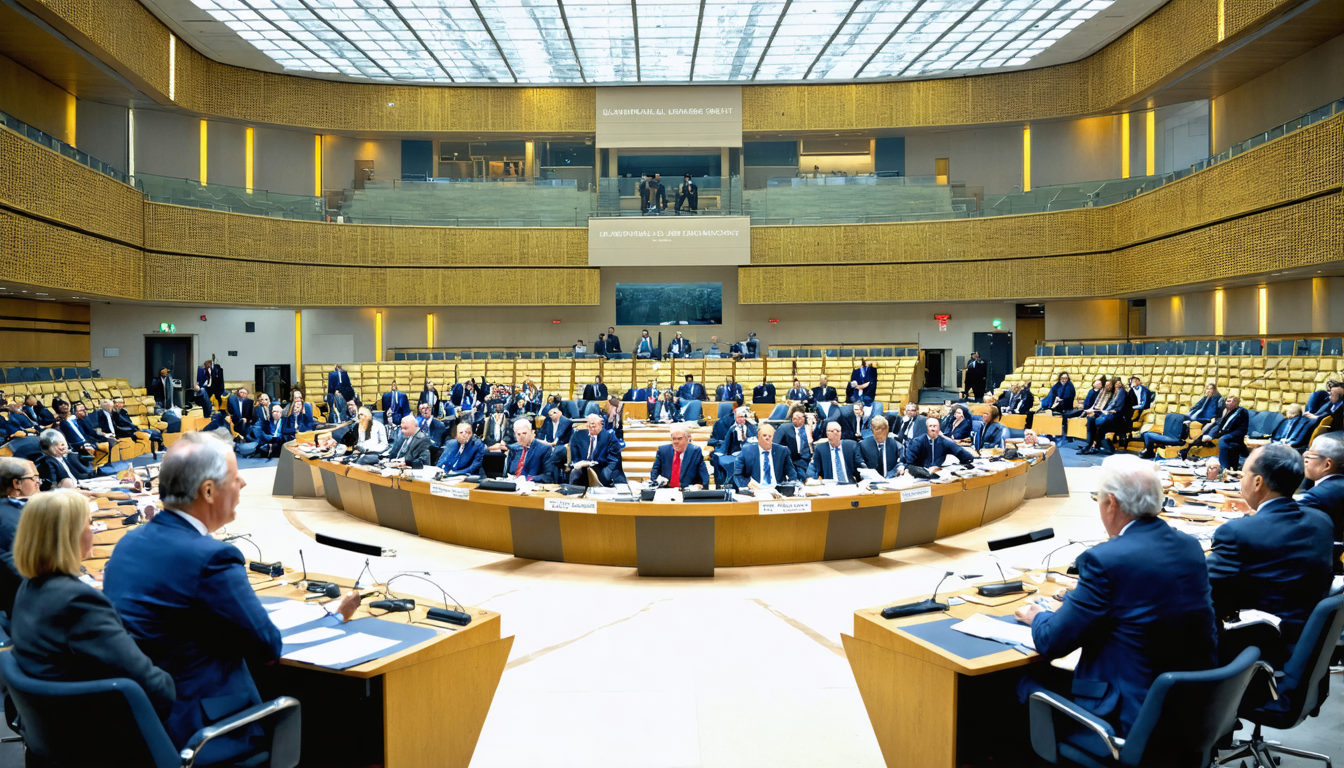
Internal tensions also translate into a multiplication of scenarios and last-minute trade-offs postponed, notably during the public finance conference, where the government hesitates to make clear decisions. This political indecision, far from calming the debate, reinforces the general unease and fuels opposition criticism accusing the presidential camp of embracing a vague and unstable fiscal policy.
Here is a table illustrating the major factors amplifying this political malaise within the majority and their estimated impacts:
| Factor | Estimated political impact | Recent example |
|---|---|---|
| Ambiguous communication | Increased trust deficit | Contradictory statements from Bercy |
| Gap between words and deeds | Doubts about governmental coherence | Housing tax relaunched then modulated |
| Multiplication of scenarios | Budgetary and fiscal uncertainty | Trade-offs postponed to July |
This complex context highlights the crucial challenge for the Macronist camp: how to manage a bubbling of ideas enabling some budgetary creativity while mastering a political unease that could destabilize the government in place?
Strategic challenges of tax policy amidst Macronist tensions
The public finance conference is today one of the major meetings crystallizing strategic imperatives around tax policy. This annual meeting setting broad budgetary orientations reflects the delicate trade-offs necessary to preserve the balance between controlling public expenditure and the need for new revenues.
Among the major avenues considered are active reduction of public spending, thorough examination of the most costly tax loopholes, as well as the possible introduction of new targeted taxes. The stated priority is to maintain a responsible budgetary trajectory while avoiding excessively burdening the tax load on households and businesses.
The political line also aims to maintain economic competitiveness in a tense international context, where many European countries also face the need to adjust their public finances. The government is thus engaged in a conciliation approach, seeking to protect the economic fabric while ensuring the financial credibility of the state.
Within this framework, several threats and opportunities emerge for the presidential majority:
- Opportunity: Tax reforms that could restore a form of social justice, notably via the minimum tax on high incomes.
- Threat: Fiscal tightening potentially triggering renewed social protest, destabilizing the majority.
- Opportunity: Targeted reduction of public spending, allowing budgetary leeway.
- Threat: Negative impact on certain economic sectors, slowing recovery or investment, as illustrated by the case of Élise in Lyon.
Managing these challenges is all the more complex as it takes place in a French political landscape marked by the rise of the opposition, which vigorously criticizes fiscal policy perceived as unfair and poorly designed. Citizen reactions oscillate between skepticism, concerns heightened by the multiplication of calls for vigilance, and expectations for more balanced policy.
Planned tax reforms: a comprehensive inventory amid Macronist tensions
The Macronist camp is currently working on a set of targeted tax reforms that could be implemented in the coming months. These proposals aim to restore the state’s financial credibility and to assert a more socially acceptable direction, in response to the effervescence of ideas and the unease of elected officials about the prospect of tax increases.
Among these measures, the reintroduction of a minimum tax on very high incomes is undoubtedly the most emblematic proposal. This measure aims to strengthen tax justice and respond to criticisms about the progressivity of income tax. In parallel, conditional reliefs on the taxation linked to productive savings are under study, in order to support investments without penalizing middle-class savers.
Another major project concerns the revision of exemptions on business transmissions. This reform aims to simplify the system, reduce abuses, and secure the role of heirs, without discouraging the economic sustainability of family businesses. Finally, a tightening of the ceiling on tax benefits related to donations seeks to strengthen tax equity while maintaining support for associations.
The following table summarizes these proposals according to their objectives and the groups mainly concerned:
| Measure | Objective | Beneficiaries / Penalized |
|---|---|---|
| Minimum tax for high incomes | Strengthen tax justice | Very wealthy households |
| Limitation of loopholes on savings | Optimize tax expenditure | Wealthy savers |
| Revision of donations and transmissions | Simplify system, prevent abuses | Heirs, associations |
Facing the growing attention from public opinion and the media, the Macronists are trying to moderate their discourse to reassure without renouncing reforms considered necessary. Indeed, distrust of tax policy has increased in a context where social tensions are exacerbated by the multiplication of debates and the sensitivity of the French regarding the theme of taxation.