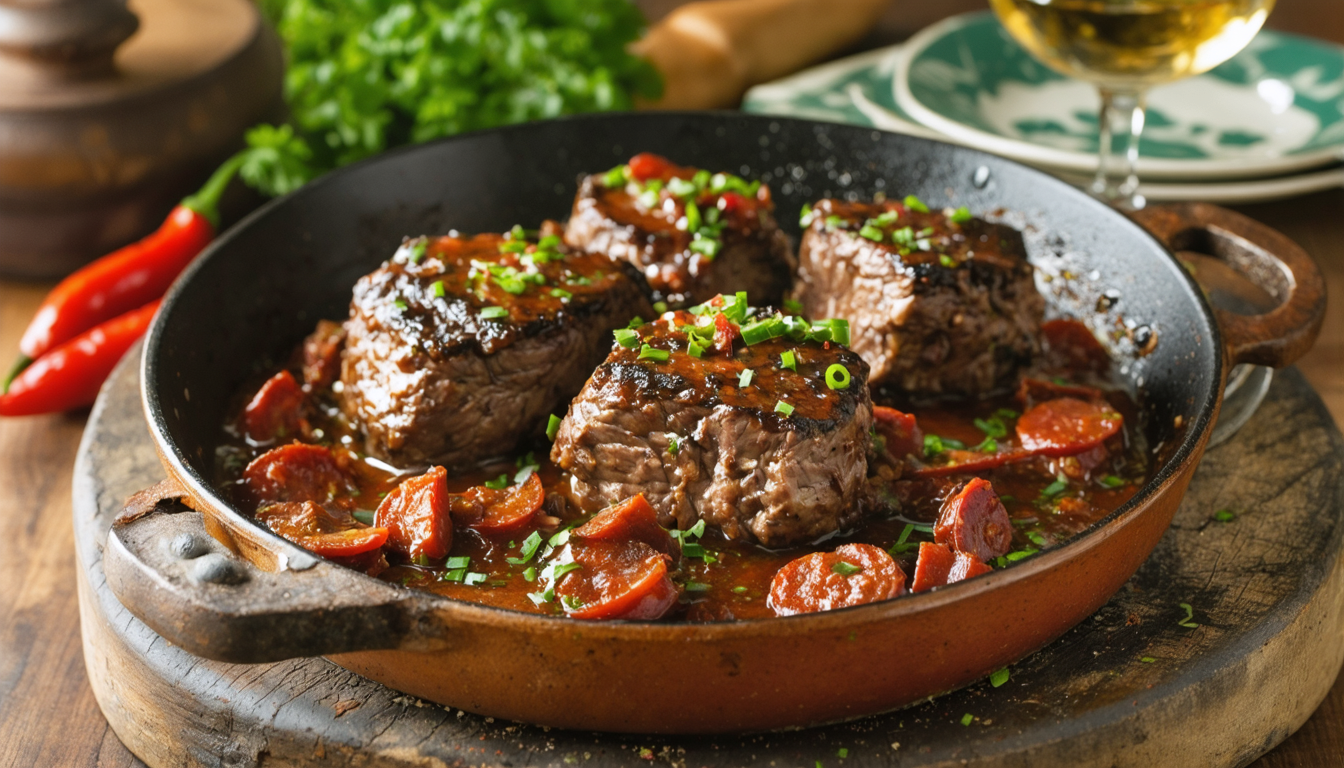
The crisp autumn air gently settles in, transforming landscapes into a palette of warm and golden colors. It is also the time when our culinary cravings shift towards generous, warmly scented dishes, whose slow cooking is a promise of pleasure to be shared. In this world of woody fragrances and sweet spices, braised pork cheeks take a special place. Their unique tenderness, enhanced by spicy chorizo and the warmth of Espelette pepper, elevates this dish to the rank of a true ritual of conviviality. This recipe, rooted in French tradition but with Basque and Spanish accents, perfectly embodies the spirit of a gourmet and comforting autumn.
Between the gentle simmering of the casserole and the powerful aroma of chorizo filling the kitchen, this dish invites slowing down, surrendering to the complex flavors revealed by slow and prolonged cooking. Each bite unveils a wonderful balance between the melting richness of pork cheeks and the spicy liveliness of Espelette pepper, a perfect marriage that warms both body and soul. By following this recipe step by step, you will discover how a simple piece of meat can become the centerpiece of a warm meal, both traditional and bold.
- 1 Pork cheeks: a forgotten treasure of slow-cooked French cuisine
- 2 The unique role of chorizo and Espelette pepper in the harmony of comforting flavors
- 3 Meticulous preparation and braising: the secrets of a traditional fragrant and comforting dish
- 4 Food and wine pairings to enhance this fragrant autumn dish
Pork cheeks: a forgotten treasure of slow-cooked French cuisine
Pork cheeks are one of those cuts from the pig’s lesser-known parts, long neglected in favor of nobler pieces like tenderloin or ribs. Yet, in cooking, this cut deserves all your attention, especially when slowly braised. This phenomenon is mainly explained by its richness in collagen, the protein that transforms into gelatin during long cooking, thus offering an unrivaled melting, almost candied texture.
In 2025, this rediscovery of offal cuts aligns with a broader trend that values sustainable cooking and waste reduction. Fully utilizing different parts of the animal, especially the cheeks, proves not only economical but also very gratifying on a gustatory level. The pork cheek, prepared in a casserole, thus finds its full place in a traditional dish perfectly suited to cool seasons.
To prepare pork cheeks, the first step is to trim the pieces, meaning removing excess fat and unsightly membranes. This operation, performed by your butcher or at home, ensures even cooking and better absorption of flavors. Once trimmed, the cheeks are floured to facilitate crust formation during searing, an essential step that develops aromas thanks to the Maillard reaction. It is also at this stage that the meat better retains the sauce that will accompany it.
Long appreciated in bistros and generous tables of the Southwest, braised pork cheek has become a signature dish for lovers of rustic flavors. Imagine meat so tender that it delicately falls apart with a fork, accompanied by a fragrant and robust sauce. This dish alone gathers everything that slow cooking offers at its best: softness, aromatic intensity, and authentic pleasure.
Beyond the classic, this meat is a playground for all regional variants: from Bordelaise pork cheek to the famous Basque coast stew, each recipe reveals the gustatory richness of the product. For 2025, chefs or enlightened amateurs often highlight combinations with local products and spices, bringing modernity while respecting the French gastronomic heritage.
Some practical tips to successfully braise your pork cheeks
- Patience: slow cooking over low heat is crucial to tenderize the meat and release its juices.
- Controlled browning: a nice coloration in the pan before cooking guarantees a flavorful and robust sauce.
- Appropriate seasoning: salt, pepper, and spices must be carefully dosed not to mask the natural taste.
- Braising covered: retaining moisture preserves tenderness and the richness of the sauce.
- Resting: preparing the dish the day before enhances aromas and improves texture.
These strategies, implemented, give braised pork cheek an almost mythical dimension in the universe of traditional French dishes.
The unique role of chorizo and Espelette pepper in the harmony of comforting flavors
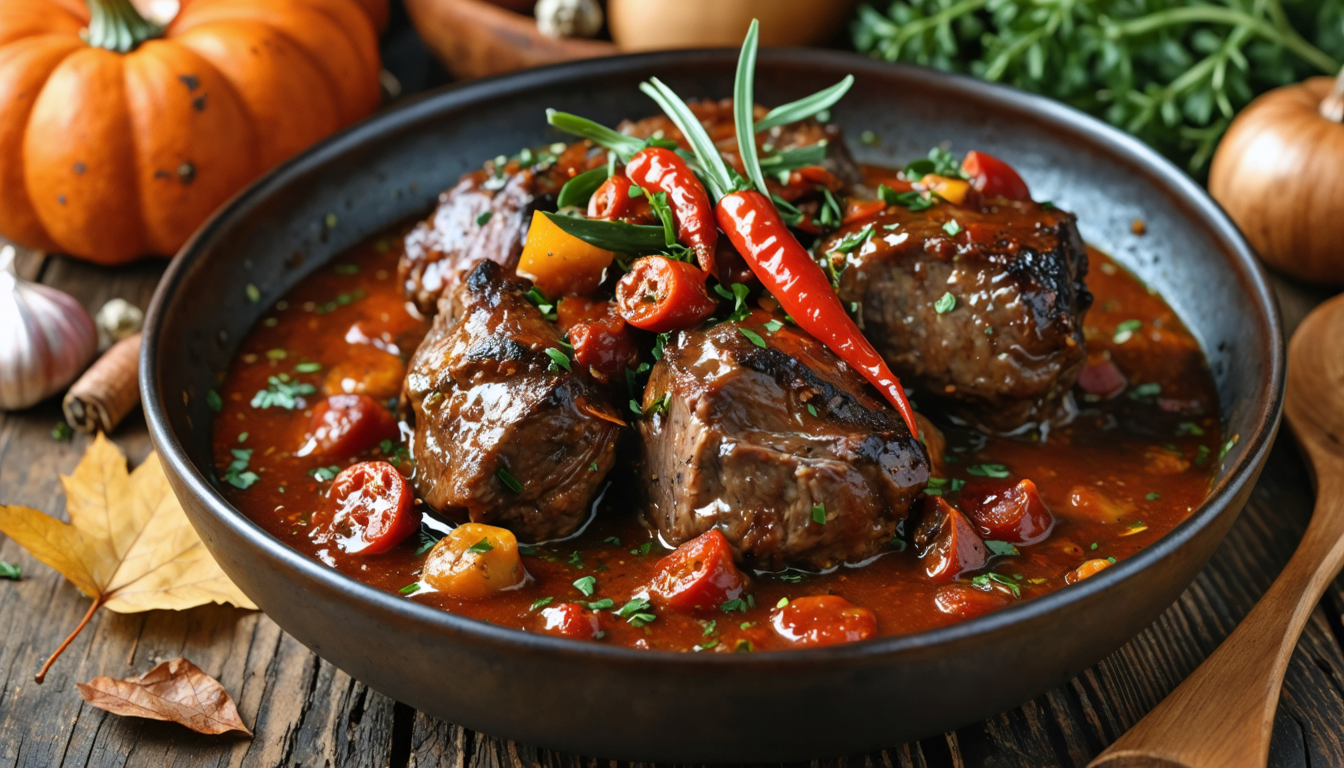
In a braised dish such as pork cheeks, the addition of chorizo brings an incomparable aromatic depth. This Spanish charcuterie product, recognized for its richness in paprika and smoked notes, pairs excellently with the softness and melting texture of the cheek. In 2025, chorizo remains an essential specialty that has crossed borders to happily integrate into French cuisine, especially in regions close to the Iberian Peninsula.
Chorizo, used in slices or small pieces, then diffuses its powerful flavors throughout the dish. The fat it releases during cooking blends with the meat juices, creating a creamy, fragrant, and spicy sauce. The texture of the chorizo melts slightly to maintain a pleasant contrast on the palate, preventing the dish from becoming too uniform.
Espelette pepper plays an essential role in the taste balance. Recognized as a protected designation of origin (PDO), it offers subtle and fruity heat without excessive burning, making it perfect for enhancing braised dishes without masking the complexity of their other ingredients. This iconic pepper of the Basque Country has become a symbol of the excellence of French regional products in 2025, and its presence in a recipe is often a tribute to local gastronomic tradition.
This marriage between the rounded sweetness of pork cheeks, the scented power of chorizo, and the spicy kick of Espelette pepper creates a harmony that delights all palates. It is a fragile balance not to be underestimated: too much pepper could darken the tenderness of the meat, while too little would not awaken the flavors. In this recipe, the right measure lies in the finesse of the seasoning, where each ingredient complements the other.
A culinary inspiration between the Basque Country and Spain
This recipe follows a culinary tradition that unites and transcends French and Spanish cultures. Around the typical spiciness of Espelette pepper, Basque cuisine celebrates the mix of earthy and marine ingredients, while the Spanish influence of chorizo expresses the generosity and boldness of flavors. The result is a dish both humble and sophisticated, rooted in the identity of autumn terroirs.
In 2025, this type of combination is experiencing a revival, driven by an increased search for authenticity and originality in meals. More than just a dish, it is an invitation to a sensory journey awakening memories, emotions, and desires for sharing around a steaming, fragrant table.
Meticulous preparation and braising: the secrets of a traditional fragrant and comforting dish
Making a dish of braised pork cheeks with chorizo cannot be improvised. Every step, from cutting ingredients to slow cooking in a cast iron casserole, demands particular attention to guarantee an optimal result. The recipe begins with the meticulous preparation of vegetables: onions, carrots, garlic. Chopped or sliced, they form the indispensable aromatic base for the richness of the dish.
The choice of utensils also influences the final quality. A cast iron casserole, ideal for distributing heat evenly and preserving aromas, is recommended. The meat is first seared over high heat to reveal all its nuances thanks to the Maillard reaction, ensuring a more intense flavor. Then comes the moment when vegetables and chorizo join the casserole before being deglazed with dry white wine, a key ingredient that brings a lovely acidity and balancing freshness.
Slow cooking over low heat for at least three hours transforms the ingredients. This slow process allows the collagen in the pork cheeks to turn into melting gelatin, giving the meat its emblematic texture. The sauce, enriched by chicken broth, tomato paste, Espelette pepper, thyme, and bay leaf, gains intensity and depth, enveloping each bite in its fragrant generosity.
Once cooking is finished, patience and delicacy are still required. The meat must be able to break apart without resistance, a sign of successful cooking. Sometimes, a reduction of the sauce uncovered is necessary to further concentrate the flavors, giving this dish the appearance of a true gourmet work of art.
Table of key preparation steps
| Step | Description | Chef’s advice |
|---|---|---|
| Ingredient preparation | Slice onions, cut carrots into rounds, mince garlic, cut chorizo into slices | Prepare all ingredients in advance to avoid stress during cooking |
| Prepare the meat | Trim the cheeks, dry them, and flour with salt and pepper | This step is crucial to achieve a nice coloration during searing |
| Sear the meat | Brown the cheeks in hot oil | Do not overload the casserole to properly caramelize the pieces |
| Cook vegetables and chorizo | Sauté onions and chorizo, add carrots and garlic | Let sweat gently to release the fat from the chorizo |
| Deglaze and braise | Pour in white wine, deglaze, add broth, spices, and cook 3h on low heat | Avoid lifting the lid too often |
| Finishing | Adjust seasoning, reduce sauce if needed | Taste regularly and adjust according to preference |
A recipe rich in comforting flavors, ideal for a warm meal with family or friends, celebrating the simplicity of perfectly mastered traditional cooking.
Food and wine pairings to enhance this fragrant autumn dish
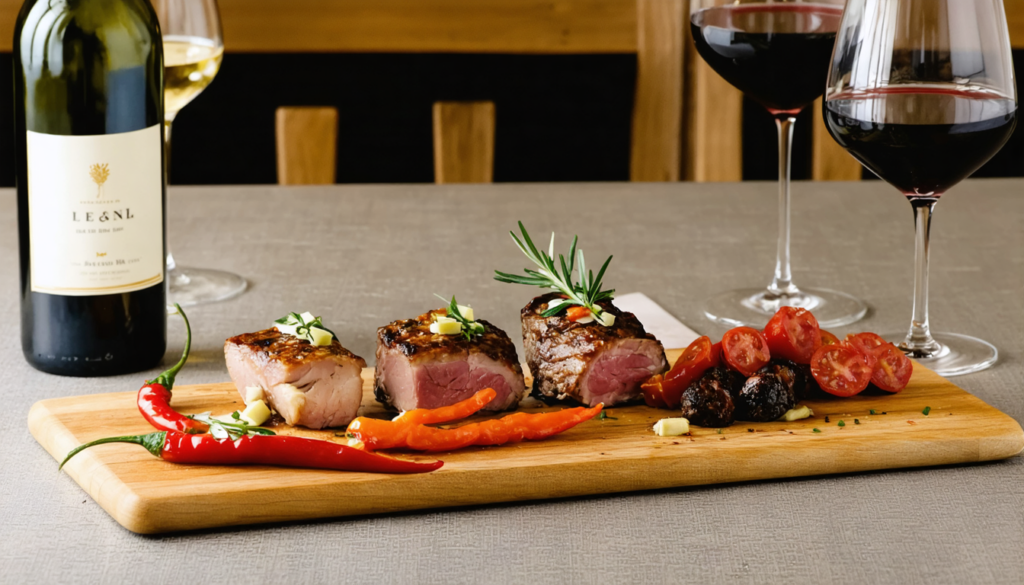
The perfect marriage between pork cheeks, smoked chorizo, and Espelette pepper requires a wine selection capable of responding to this aromatic intensity. To honor the terroirs mentioned, wines from Southwest France prove to be ideal companions in 2025.
Madiran holds the reputation of being a powerful red wine, rich in tannins and aromas of black fruits, spices, and undergrowth, which brings perfect balance to this dish. Irouléguy red, softer yet with beautiful structure and noticeable freshness, magnificently matches the robust flavors and tender texture of pork cheeks.
For those preferring a rounder wine, a Côtes-du-Rhône Villages often expresses notes of garrigue, black cherry, and sweet spices, offering a lovely roundness that wonderfully counters the spiciness of the Espelette pepper. White wine lovers will not be forgotten: a dry Jurançon combines lively freshness and aromatic complexity, an interesting contrast with the richness of the meat and chorizo.
This variety of options allows adapting the wine choice according to personal preferences and the desired level of intensity to bring to the tasting experience. The important thing is to honor the tradition and aromatic signature of the dish by choosing a beverage capable of enhancing each ingredient.
List of best wine pairings for braised pork cheeks with chorizo and Espelette pepper
- Madiran red: tannic, fruity, spicy, ideal for lovers of power.
- Irouléguy red: elegant, fresh, with silky tannins and notes of red fruits.
- Côtes-du-Rhône Villages: versatile, warm with hints of garrigue and spices.
- Dry Jurançon: lively white and aromatic, brings freshness and balance to the richness of the dish.