
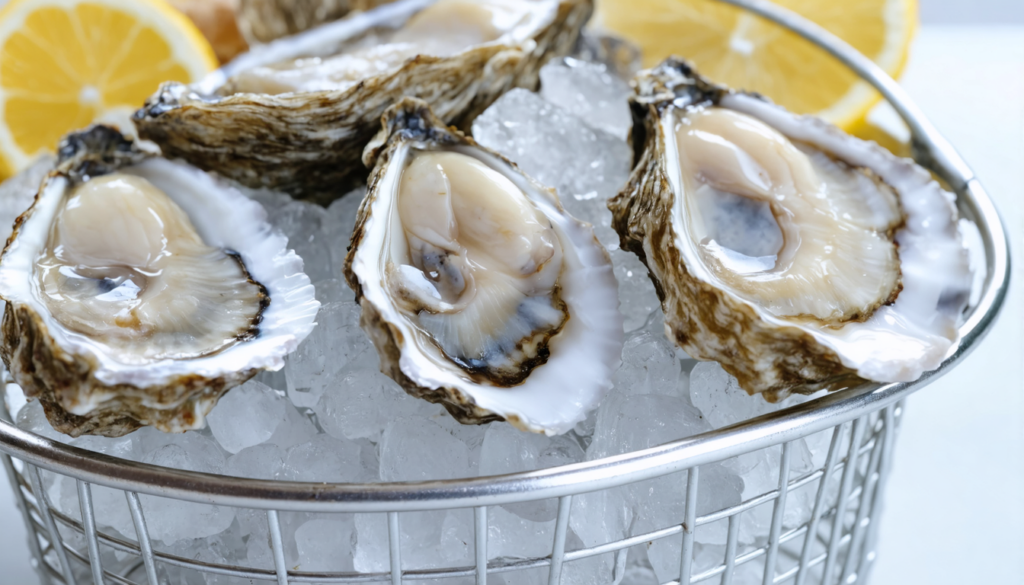
An exceptional product appreciated at festive tables, the oyster embodies both refinement and delicacy in seafood. Its tasting, a privileged moment, essentially relies on one essential condition: preserving its freshness. However, the question of its preservation remains at the heart of many discussions, particularly regarding whether or not it must be kept refrigerated. This recurring question hides major issues related to food safety, product shelf life, and the intrinsic gustatory quality of this living organism. In 2026, with a growing awareness around sustainable and sanitary practices, it becomes essential to clarify the best methods to ensure optimal storage of oysters while maintaining their intact iodized flavor. So, should oysters always be kept in the refrigerator? What are the ideal temperatures and possible alternatives? This article delves into these essential questions to guide enthusiasts towards a tasting full of pleasure and safety.
- 1 Why storing oysters in the refrigerator is crucial for freshness and food safety
- 2 Defining the ideal refrigerator temperature for optimal oyster storage
- 3 How long can oysters be stored in the refrigerator: durations and tips to prolong their freshness
- 4 Mistakes to avoid to not compromise the quality and safety of stored oysters
- 5 Alternatives to the refrigerator for oyster storage: cellars, outdoors, and coolers
Why storing oysters in the refrigerator is crucial for freshness and food safety
The oyster, unlike other meat or marine products, is a living organism once removed from its natural environment. It totally depends on storage conditions to survive and maintain its original qualities. The storage temperature thus plays a fundamental role in maintaining its freshness and preventing health risks.
Keeping oysters cool significantly slows down their metabolism. Indeed, under the effect of cold, these shellfish enter a kind of dormancy that allows them to retain their internal water and prevent the degradation of their flesh. Conversely, a temperature that is too high accelerates this metabolism, which can not only exhaust the animal but also promote harmful bacterial growth. This bacterial proliferation, notably germs of the Vibrio genus, can cause severe food poisoning if the cold chain is not respected.
At room temperature, these intestinal bacteria multiply very rapidly, making consumption dangerous. Strict respect of the cold chain, therefore placing oysters in a refrigerated environment, is essential to avoid these risks. Many cases of poisoning linked to poorly stored oysters have been recorded recently, underscoring the importance of appropriate storage to guarantee optimal food safety.
From a taste perspective, an oyster that has suffered from poor storage loses its subtle aromas and crunchy texture. The water, called the “first juice”, so characteristic, evaporates, making the flesh dry and limp. This decline in taste illustrates how much a controlled temperature is synonymous with quality and rediscovered pleasure at the table. Thus, cold storage, notably in the refrigerator, becomes the guarantee of an experience both healthy and flavorful.
In summary, for a product as sensitive as the oyster, the storage temperature in the refrigerator is a key factor. It reduces bacterial multiplication, preserves the vitality of the shellfish, and keeps its organoleptic qualities intact, finally ensuring a tasting in complete serenity.
Defining the ideal refrigerator temperature for optimal oyster storage
The notion of “cold” must be precisely defined when talking about oyster storage. It is not enough simply to be in the refrigerator; it is crucial to maintain an adequate temperature range so that these shellfish keep their freshness and quality.
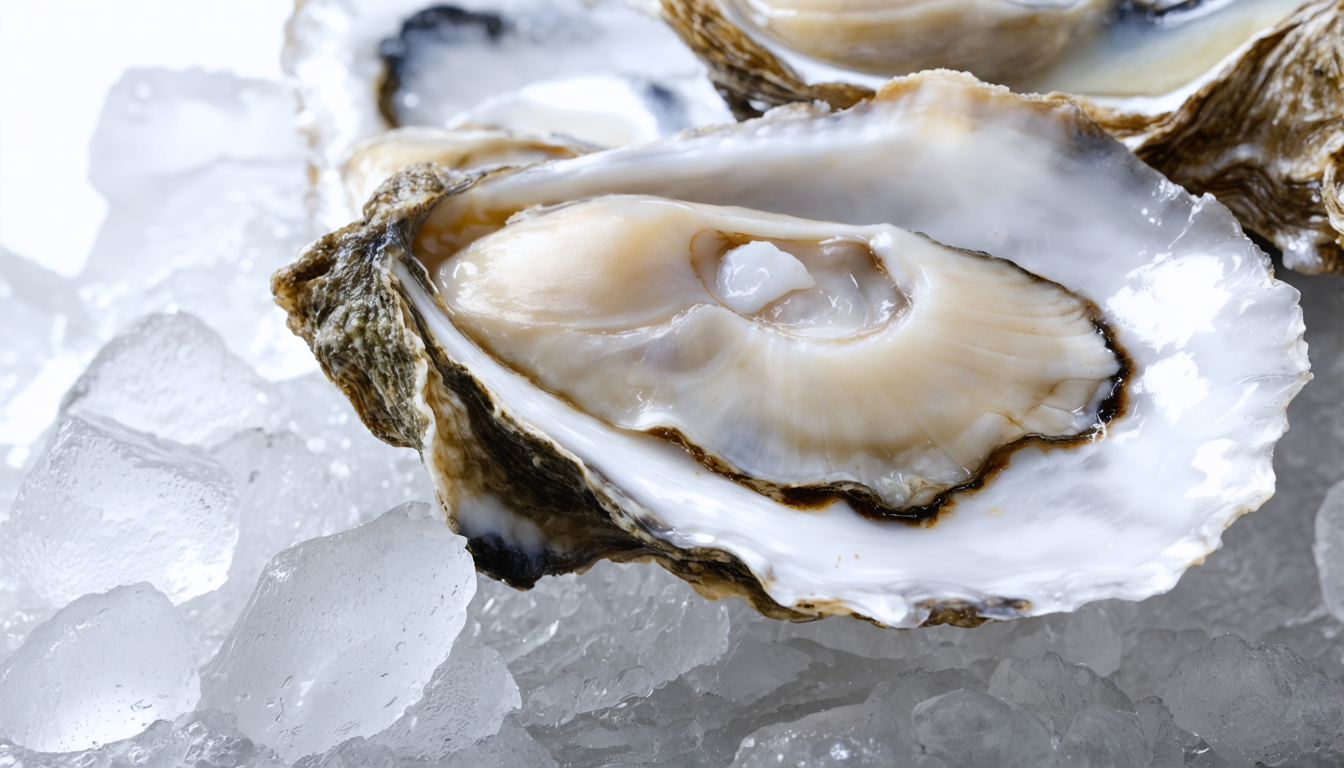
Professionals recommend an optimal range between 4°C and 10°C. Below 4°C, the risk of freezing is real. Freezing would lead to the death of the oyster and alter the texture of its flesh, making it cottony and less pleasant to eat, especially raw. Above 10°C, the organism’s metabolism accelerates, causing rapid energy loss, a decrease in freshness, and rapid bacterial growth.
To ensure this constant temperature, the choice of the refrigerator location is decisive. Indeed, not all compartments have thermal homogeneity.
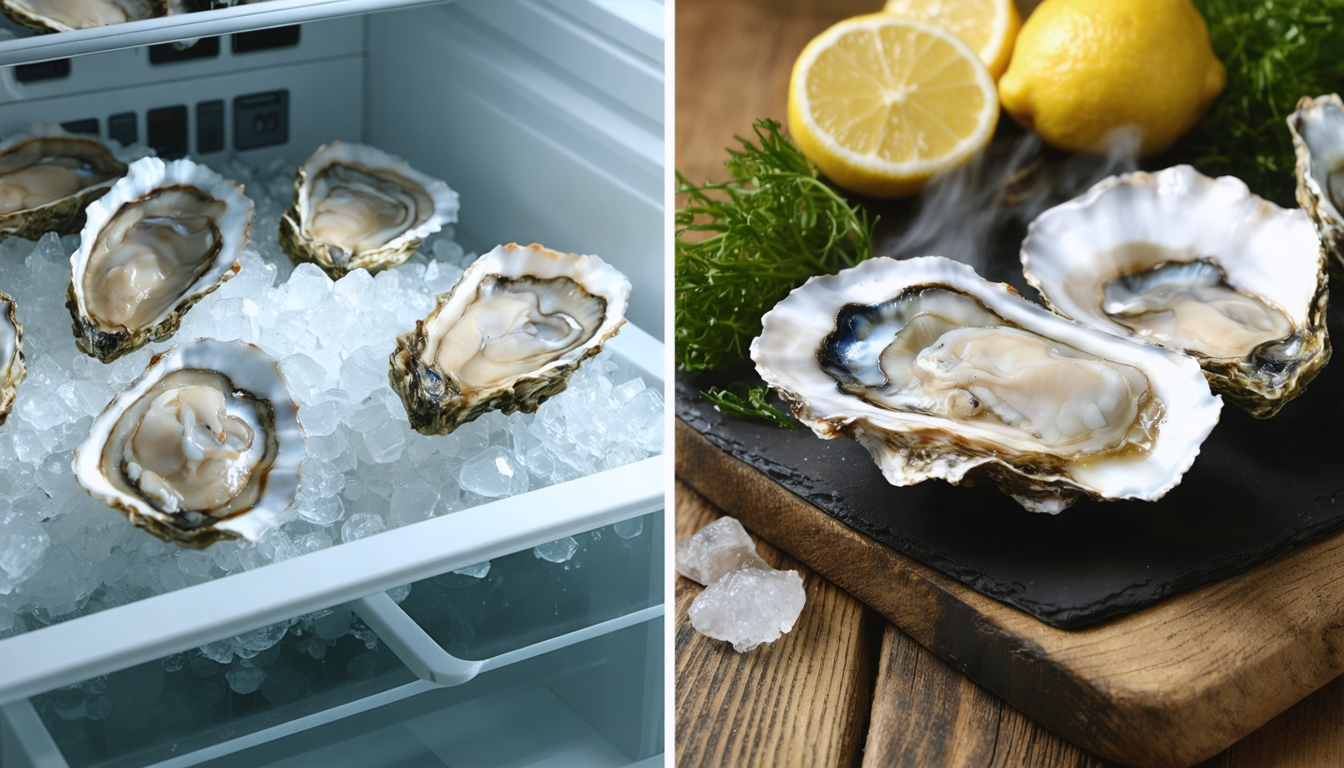
The vegetable drawer is often favored because it maintains a stable temperature around 5 to 10°C, perfect for slowing down oyster metabolism and avoiding too large variations. Conversely, the refrigerator door is discouraged because it undergoes more frequent variations and can reach temperatures above 10°C.
Here is a table summarizing the average temperatures by zone and their suitability for oyster storage:
| Refrigerator zone | Average temperature | Recommendation for oysters |
|---|---|---|
| Door | 8°C – 12°C | To avoid |
| Top shelf | 6°C – 8°C | Acceptable |
| Middle shelf | 4°C – 6°C | Ideal |
| Vegetable drawer (bottom part) | 5°C – 10°C | Recommended |
Another essential recommendation is the position in which oysters should be placed. They must be stored with the hollow side down, so the natural internal water remains in contact with the flesh, thus preventing drying out. The original basket, which allows breathing, is also the best container to ensure good air circulation and extend the oysters’ shelf life.
How long can oysters be stored in the refrigerator: durations and tips to prolong their freshness
Beyond temperature, it is important to understand how long oysters remain edible under good conditions. Generally, the shelf life of unopened and well-stored oysters is about 5 to 7 days after their packaging date. This date, different from the purchase date, corresponds to when oysters were taken out of the water and packed.
Quick consumption guarantees optimal freshness, but it is possible to store oysters up to a maximum of 10 days provided the cold chain is strictly respected. This means that any break, even brief, can immediately reduce this time frame.
Several criteria also help assess if the oyster is still good to eat:
- Weight and sound: A fresh oyster is heavy, a sign that it has retained its water. Tapping its shell should produce a full, dull sound; a hollow sound indicates a defect.
- Shell tightly closed: If an oyster is slightly open before opening, a gentle tap should close it. Otherwise, it must be discarded.
- Smell: When opened, the oyster should smell like the sea, fresh and iodized. Any unpleasant odor is a sign of spoilage.
- Reaction to touch: Gently pricking the edge of the mantle causes a live oyster to retract slightly.
For opened oysters, it is advised to consume them within 24 to 48 hours if they are well stored in the refrigerator, ideally on a bed of crushed ice to prolong their freshness. Freezing is possible, but it alters texture and is not recommended for raw tasting.
Correct and careful storage also ensures that the pleasure offered by tasting remains intact, with tasty and safe oysters to eat.
Mistakes to avoid to not compromise the quality and safety of stored oysters
Despite increased awareness of storage requirements, some classic mistakes persist and can cause rapid freshness loss and increased health risks.
Immersing oysters in water is probably the most common. Many believe they preserve freshness by plunging them into fresh water, but this causes an osmotic shock fatal to the oyster within hours. Even reconstituted seawater is unsuitable since stagnant water quickly pollutes, suffocating the shellfish.
Using an airtight container is also a serious mistake. Since oysters are alive, they need oxygen to survive. Sealing a batch in a plastic box or closed bag suffocates them and accelerates their death.
Taking time to position them well also plays a key role: placing them hollow side down in their original basket preserves the water necessary for hydration.
Finally, a simple tip to prevent premature opening is to press them gently. For example, cover them with a damp cloth then place a light weight (a plate or brick) on top to keep them closed without crushing them, thus limiting the loss of their precious water.
Neglecting these rules causes the oyster to quickly lose all freshness, its texture becomes soft, and the risk of bacterial contamination rises sharply. Respecting these simple principles ensures better preservation while minimizing dangers.
Alternatives to the refrigerator for oyster storage: cellars, outdoors, and coolers
While the refrigerator remains the safest and simplest solution, some alternatives can be considered in particular circumstances, provided that temperature management and appropriate storage are well controlled.
The cellar or pantry traditionally offer a stable and cool temperature, generally between 5 and 15°C. If this temperature remains close to the ideal range (4°C to 10°C), oysters can be stored there for several days without major risk. The place must be ventilated, dark, and free of strong odors. As with the refrigerator, it is important to arrange oysters hollow side down, protected by a damp cloth and weighed down to prevent them from opening.
In winter, outdoor storage on a balcony or in an unheated garage can temporarily replace the fridge if temperatures always stay above zero. This method requires constant vigilance: avoid freezing, protect oysters from rain, direct sun, and predators. In a temperate climate region, it is a viable option during certain times of the year.
For transport or short-term storage (24 to 48 hours), a cooler is also useful. The oyster basket is placed on a bed of ice covered with cardboard or newspaper to avoid direct contact and excessive moisture which would be harmful. This technique ensures sufficient shelf life while traveling home or preparing for the festive occasion.
- Store oysters in a cool, ventilated cellar (4-10°C)
- Use a balcony or unheated garage in winter with caution
- Transport in a cooler with protected ice packs
- Avoid any immersion or unstable temperatures with these alternatives
These less common but entirely valid solutions show that keeping oysters in the refrigerator remains the recommended standard, but other options can be adopted when well mastered.




