In a world saturated by a frenzied production of data, where every second generates petabytes of information, the longevity of their storage becomes a major challenge. Our current devices, whether traditional hard drives or SSDs, have a limited lifespan, often less than a decade, and remain exposed to various risks such as electron loss or physical deterioration. Today, a revolution is underway thanks to a spectacular innovation: the 5D memory crystal. This optical storage technology offers permanent memory, capable of preserving your data not only for several centuries but on time scales ambitiously comparable to that of the universe itself. Enough to envision a radically transformed storage future, where the 5D memory crystal would definitively replace SSDs, combining data durability and phenomenal capacity. After decades of reliance on non-volatile memories equipped with fragile components, this technological innovation overturns the paradigm, opening unprecedented horizons for historical and scientific archiving.
Developed by the start-up SPhotonix after intensive research at the University of Southampton, this technology exploits ultra-fast laser engraving on pure silica glass, creating a polymorphic structure in five dimensions, capable of being read billions of years later. Between astronomical capacity and extreme resistance to environmental aggressions, the 5D memory crystal inaugurates a new era where cold data, those masses of information rarely consulted but essential, can finally be stored without ever degrading. But behind this feat also lie technological and economic constraints that remain to be overcome before wider democratization, notably for the general public or gamers. Here is an in-depth dive into this technology that could well mark the end of the SSD reign.
- 1 The secrets of five-dimensional engraving: how does the 5D memory crystal work?
- 2 Extreme resistance: the exceptional longevity of the 5D memory crystal compared to SSDs
- 3 Current limitations and performance: the 5D memory crystal vs. fast storage expectations
- 4 Practical applications of the 5D memory crystal: cultural, scientific, and historical archiving
- 5 Economic and environmental impact: the 5D memory crystal, a sustainable solution
- 6 Future perspectives and expected innovations in the 5D storage domain
- 7 Ethical and societal issues related to the permanent memory of the 5D crystal
- 8 Towards a storage revolution: the 5D memory crystal, a sustainable and promising future
The secrets of five-dimensional engraving: how does the 5D memory crystal work?
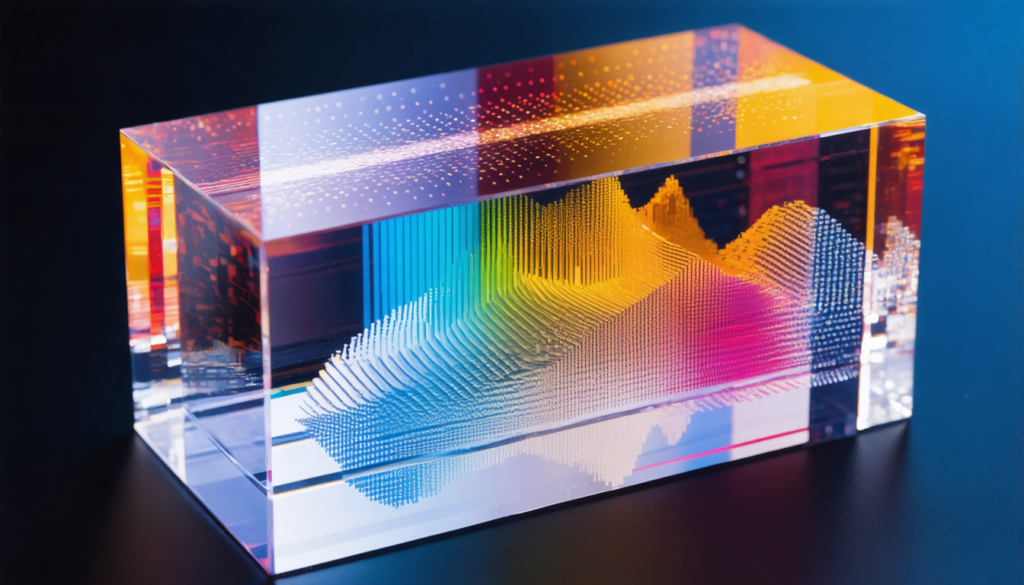
The 5D memory crystal is based on a revolutionary concept of optical storage, exploited for the first time viably in the early 2020s and fully mature by 2025. Unlike classic media such as CDs, DVDs, or even SSDs, where data is written on the surface or via electronic circuits, this crystal uses the manipulation of the internal structure of silica glass thanks to a very precise and ultra-fast laser. This engraving physically modifies the matter in three spatial dimensions, and also plays on two other parameters: the size and orientation of nano-structural micromodifications. Hence the term “5D”.
The first three dimensions naturally correspond to the spatial coordinates within the volume of the crystal. The fourth dimension is the size of the nano-modifications, which acts as an additional encoding to increase the density of information. The fifth dimension, the orientation of the nanostructures, serves to encode variations that allow differentiating data within the same three-dimensional space. Thus, unlike conventional solutions, the entire volume of the crystal is used, multiplying the storage capacity in a disk barely 5 inches across.
This technique allows reaching impressive data volumes, with a capacity that can peak at 360 terabytes on a single disk. This density is unmatched and represents a colossal leap compared to the best SSD technologies currently available, which rarely exceed several terabytes. In practice, this means a single crystal can contain the equivalent of thousands of DVDs or astronomical volumes of precious digital information.
To illustrate, imagine an entire library engraved in 3D inside an object the size of a vinyl record. Each book, page, and sentence would be encoded in the different dimensions, offering incredible precision in navigation and data retrieval. Moreover, the reading and writing system uses ultra-powerful lasers, capable of scanning and interpreting these nanometric microstructures, thus ensuring faithful reading of the information regardless of the distance between lasers and material.
- Three spatial dimensions — physical location of points within the volume of the crystal.
- Fourth dimension — variable size of alterations to encode more information.
- Fifth dimension — nanostructural orientation allowing additional encoding.
This advance is so innovative that it could be called an unprecedented paradigm in data storage technology, breaking completely with the limitations of traditional volatile memories or SSDs. The approach is also very resistant to impurities or micro-tears in the crystal.
Extreme resistance: the exceptional longevity of the 5D memory crystal compared to SSDs
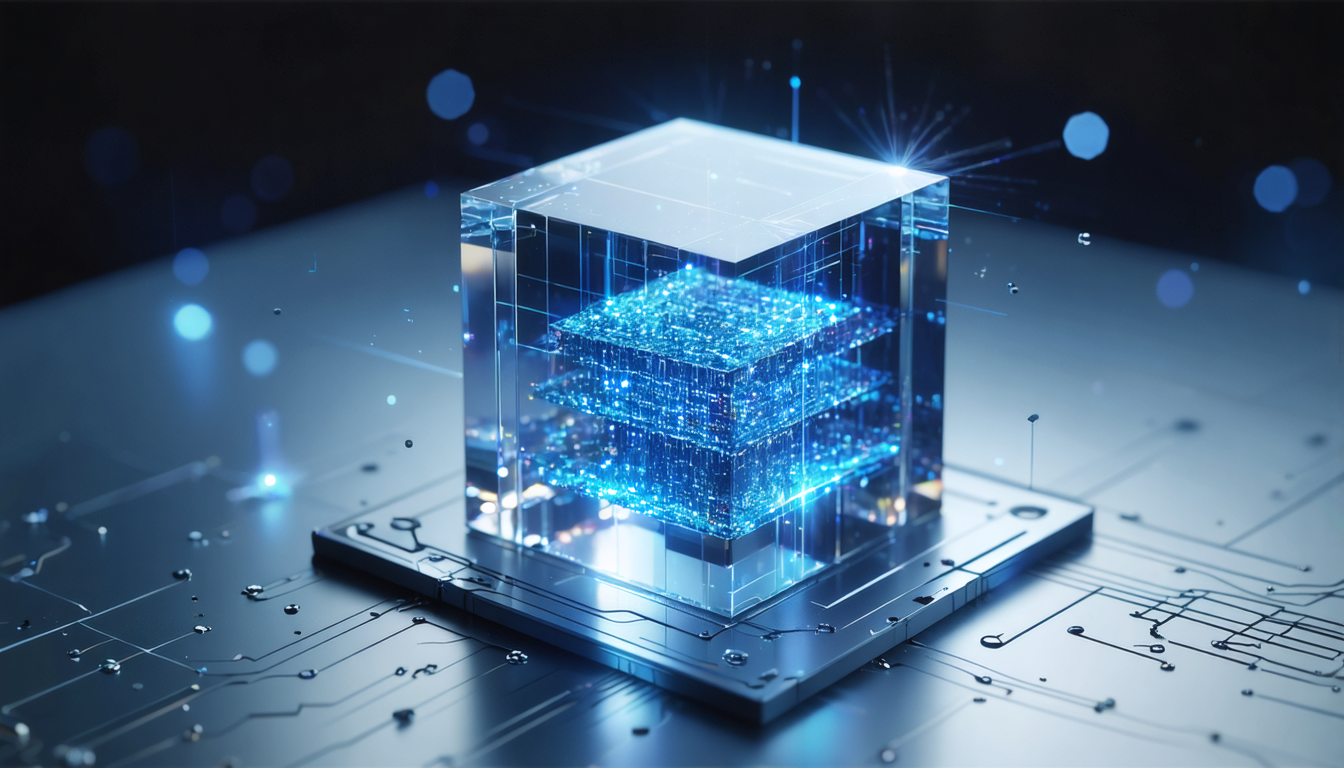
While the lifespan of SSDs is around 10 years under optimal conditions, and traditional hard drives are also vulnerable to various mechanical failures, the 5D memory crystal pushes the limits of data durability. Its composition of pure silica glass confers exceptional chemical and physical robustness, offering optimal protection against factors such as heat, humidity, vibrations, or even magnetic fields.
Tested under extreme conditions, this crystal can withstand continuous temperatures up to 190°C without altering the quality of the engraved information, a performance that far exceeds the resistance of common technologies. But what fascinates most is the theoretical data preservation duration which reaches a cosmic scale: about 13.8 billion years at room temperature. In other words, data engraved today could perfectly remain usable at the time the Sun goes out, an unimaginable horizon with conventional volatile memories.
The consequences for conserving human history, scientific archives, cultural data, and even the human genome are phenomenal. This is a medium that practically eliminates the risk of total loss through obsolescence or physical degradation, particularly sparing data centers from heavy constraints of maintenance and regular replacement of their media.
The table below puts into perspective the longevity and resistance to physical constraints of popular storage technologies compared to the 5D crystal:
| Technology | Average lifespan | Resistance to high temperatures | Vulnerability to humidity/magnetic fields |
|---|---|---|---|
| SSD | 7 to 10 years | Low (max 70°C) | Moderate to high |
| Traditional hard drive | 5 to 8 years | Low (max 60°C) | High, sensitive to magnetic fields |
| Magnetic tape | 10 to 20 years (with maintenance) | Moderate | Moderate |
| 5D memory crystal | ≈ 13.8 billion years | Withstands 190°C indefinitely | Very low, nearly none |
Eliminating the need for regular migrations between media — a major problem with magnetic tapes whose lifespan is limited — is a key advantage, drastically reducing costs and risks related to accidental data loss. This unparalleled durability demonstrates that the 5D crystal could well be the ultimate archival medium, especially for large infrastructures requiring permanent memory resistant to the ravages of time.
Current limitations and performance: the 5D memory crystal vs. fast storage expectations
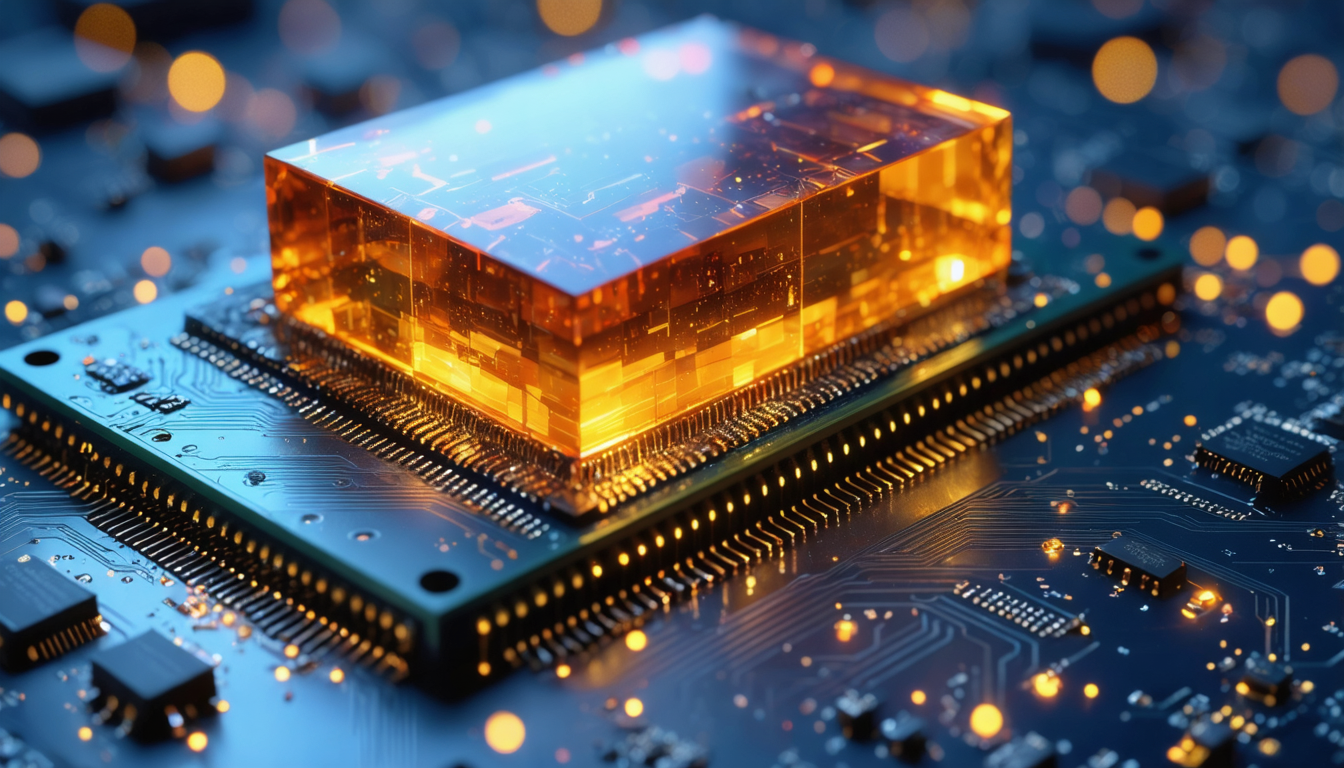
Despite its revolutionary advantages, the 5D memory crystal is not expected to immediately replace SSDs, at least in scenarios where read/write speed is decisive. Indeed, current prototypes record write speeds around 4 MB/s, with read speeds capped at about 30 MB/s. These numbers seem modest compared to modern NVMe drives capable of far exceeding 7,000 MB/s, indispensable for intensive uses such as gaming, video editing, or real-time applications.
This inherent slowness in the technology thus does not yet allow it to impose itself on the general consumer market or in configurations requiring fast data access. However, the 5D memory crystal mainly targets the protection of “cold data” – in other words, archived data that is consulted very occasionally but whose preservation is imperative for legal, historical, or scientific reasons.
For example, companies and public institutions often hold vast volumes of information, ranging from administrative documents to multimedia archives, which must be preserved without degradation but are only read occasionally. Currently, this data is stored on magnetic tapes, pressured by requirements for regular renewal and migration every 10 to 20 years to preserve quality.
The arrival of the 5D memory crystal could disrupt this market by offering a permanent and almost maintenance-free solution, thanks to a “write and forget” technology. The question remains to improve throughput to meet broader demands. The company SPhotonix, which currently distributes this material, plans within 3 to 4 years to increase speeds to nearly 500 MB/s, which would start to make the technology competitive even for intermediate uses and encourage broader adoption.
- Current speeds: 4 MB/s write, 30 MB/s read;
- Medium-term target: acceleration up to 500 MB/s;
- Target market: cold data and historical/scientific archiving;
- Major limitation: inadequate for gaming or demanding multimedia use;
- Advantage: unmatched durability and stability.
Practical applications of the 5D memory crystal: cultural, scientific, and historical archiving
Beyond intrinsic technological innovation, the 5D memory crystal opens concrete prospects in several archiving fields where data longevity is an absolute priority. One pioneering project consists of storing the entire human genome in a single crystal, a feat achieved by researchers at the University of Southampton. This type of archiving could preserve biological information for thousands or even millions of years, notably for future research or potential reconstructions.
In the cultural domain, national archive centers or libraries could rely on this technology to guarantee infinite conservation of essential documents, manuscripts, digital artworks, or historical films, without being subject to the aging of traditional media. The permanent memory ensured by these crystals represents a foundation for transmitting the world’s heritage across generations.
Scientifically, space agencies are particularly interested in the resistance to extreme temperatures and radiation offered by this material. For long-duration space missions, where data must be preserved without loss for decades or even centuries, the 5D crystal could constitute an ideal solution.
Here is a list of sectors where this technology is already envisaged or in use:
- Biology and genomics: conservation of the human genome, DNA banks;
- Libraries and national archives: storage of historical documents;
- Media and film production: backup of old and rare digital content;
- Space agencies: storage of interplanetary mission data;
- Government institutions: long-term legal and administrative archiving.
This diversity of applications shows that the 5D memory crystal stands as a cornerstone of the future of storage, placing the durability of data at the heart of societal concerns.

Economic and environmental impact: the 5D memory crystal, a sustainable solution
Beyond its technical characteristics, the 5D memory crystal arouses growing interest thanks to its economic and ecological potential. Current data centers consume massive amounts of energy, notably for server cooling and archival media maintenance. The need for frequent data migrations to new media also increases costs, both in hardware and labor.
In comparison, a 5D crystal requires no energy once the data is engraved. Its passive conservation eliminates all needs for power supply or corrective maintenance for billions of years. On a global scale, this could represent colossal energy savings and a drastic reduction in the carbon footprint linked to digital storage.
Economically, despite still high initial costs (about $30,000 for a laser engraver and $6,000 for a specialized reader), the return on investment becomes clear for companies managing very large volumes of cold data, where periodic migration costs much more. The absolute longevity offered also reduces the risk of accidental loss or erasure, a considerable added value.
The table below presents a brief comparison in terms of economic impact over 10 years:
| Criterion | Magnetic tape storage | SSD storage | 5D memory crystal |
|---|---|---|---|
| Initial cost | Moderate | High | Very high |
| Maintenance cost over 10 years | High (regular migrations) | Moderate (hardware replacement) | Almost none |
| Energy consumption | Medium | High | None |
| Useful lifespan | 10-20 years | 7-10 years | 13.8 billion years |
As laser technologies and production processes democratize, these costs should decrease, bringing this innovation to a wider range of users. The long-term vision proposed by this crystal also raises the issue of environmental responsibility in data management in the digital age.
Future perspectives and expected innovations in the 5D storage domain
While we are at the dawn of this technology, technical, economic, and operational challenges remain significant. SPhotonix has established itself as a pioneer, with clear ambitions to drastically increase read/write speeds and significantly lower equipment costs. One of their priorities is improving write speed while maintaining the exceptional durability of the medium.
One expected innovation concerns optimizing the software managing engraved data, which will need to fully exploit the richness of five-dimensional coding. Better managing error correction, speeding access to specific crystal areas, and facilitating interoperability with existing infrastructures are avenues under development.
In parallel, different variations of materials and laser processes are being studied to offer more specific characteristics: for example, 5D crystals adapted to extreme environments such as deep space, or capable of storing encrypted data with enhanced security. This technological modularity could accelerate adoption across various industries.
On a broader level, this technology is inspiring numerous international collaborations involving data centers, national archives, and private actors, to develop universal standards and ensure the longevity of tomorrow’s digital data.
- Medium-term speed increase (goal: 500 MB/s);
- Reduction of engraving and reading equipment costs;
- Software optimization for better 5D data management;
- Development of variants for specific applications (space, security);
- Implementation of international standards.
Beyond technical questions, the massive use of 5D memory crystals to store data eternally also raises ethical and societal debates. Notably, the ability to keep personal, cultural, or even genomic data forever poses issues regarding privacy, intellectual property, and collective memory.
Storing the human genome in permanent memory well illustrates this dilemma: who will have access to this data, how will it be protected against abusive uses, and to what extent could its archiving impact future generations? Moreover, the question of long-term management of this quasi-infinite digital memory arises concerning control over what remains and what fades, an unprecedented issue in the history of information.
Furthermore, quasi-eternal longevity could lead to information saturation, where keeping all memories and knowledge without ever erasing anything could generate cognitive or cultural overload. Society will have to think about selective archiving policies, establishing conservation criteria, or even developing sophisticated indexing systems to manage this digital heritage.
Ethical questions thus call for enlightened and transparent governance to fully leverage this innovation without compromising fundamental rights or cultural diversity.
Towards a storage revolution: the 5D memory crystal, a sustainable and promising future
The promise offered by the 5D memory crystal goes far beyond a simple technological improvement. It embodies a profound transformation in the way humanity envisions the preservation of its knowledge, memory, and digital creations. With unprecedented storage capacity and durability defying all competition, this technology establishes itself as an essential pillar to meet the growing challenges of the digital age.
As SSDs reach their intrinsic limits, notably in reliability and lifespan, the 5D crystal proposes a durable, energy-efficient alternative adapted to a planet in search of greener solutions. In a society where data becomes an essential asset, this innovation symbolizes the future of storage, where information, time, and space intertwine to ensure an intact collective memory, accessible to many future generations.