As the mixed reality market opens up to a wider audience with strong ambitions, the launch of the Samsung Galaxy XR in 2025 has generated both hope and some disappointment among technology enthusiasts. Presented as a product capable of combining artificial intelligence, immersion, and productivity, this Samsung XR headset draws attention with its price more accessible than Apple’s Vision Pro, while promising an enhanced Android experience. However, despite the real potential shown by its technical features, the Galaxy XR struggles to convince in practical and experimental use. The absence of a strong identity, limited content, and features very close to what already existed, notably thanks to competition, have left many users wanting more, questioning the value of this investment, especially in the face of a rapidly evolving range of XR headsets.
This new ambitious device relies on spatial computing, a futuristic technology according to Samsung, where multimodal artificial intelligence should bring a fresh breath to the immersive experience. Despite this, the Galaxy XR ultimately appears as a version of Android in a luxurious format, but without real outstanding innovation. Its design borrowed from Apple’s visual codes, its almost identical control interfaces, and above all a very limited application park suggest that Samsung wanted to ride a wave already in motion rather than propose a revolution. This strategy, although attractive for its value for money, raises the question of the relevance of such a headset in the current ecosystem, where real takeoffs depend on a harmonious combination of hardware, content, and a clear usage vision.
- 1 Samsung Galaxy XR: an inspired but too conventional design compared to the competition
- 2 Technical performance of the Samsung Galaxy XR: a power concentrate despite some limits
- 3 Limited application content: a major obstacle to the rise of the Galaxy XR
- 4 Price compared to the XR market: relative accessibility for the general public
- 5 Samsung Galaxy XR and mixed reality: untapped potential between dream and reality
- 6 Ergonomics and user comfort: a sensitive issue for the Samsung Galaxy XR
- 7 Comparison of the Samsung Galaxy XR with other XR headsets on the market
- 8 The future of the Samsung Galaxy XR and mixed reality: what challenges lie ahead?
Samsung Galaxy XR: an inspired but too conventional design compared to the competition
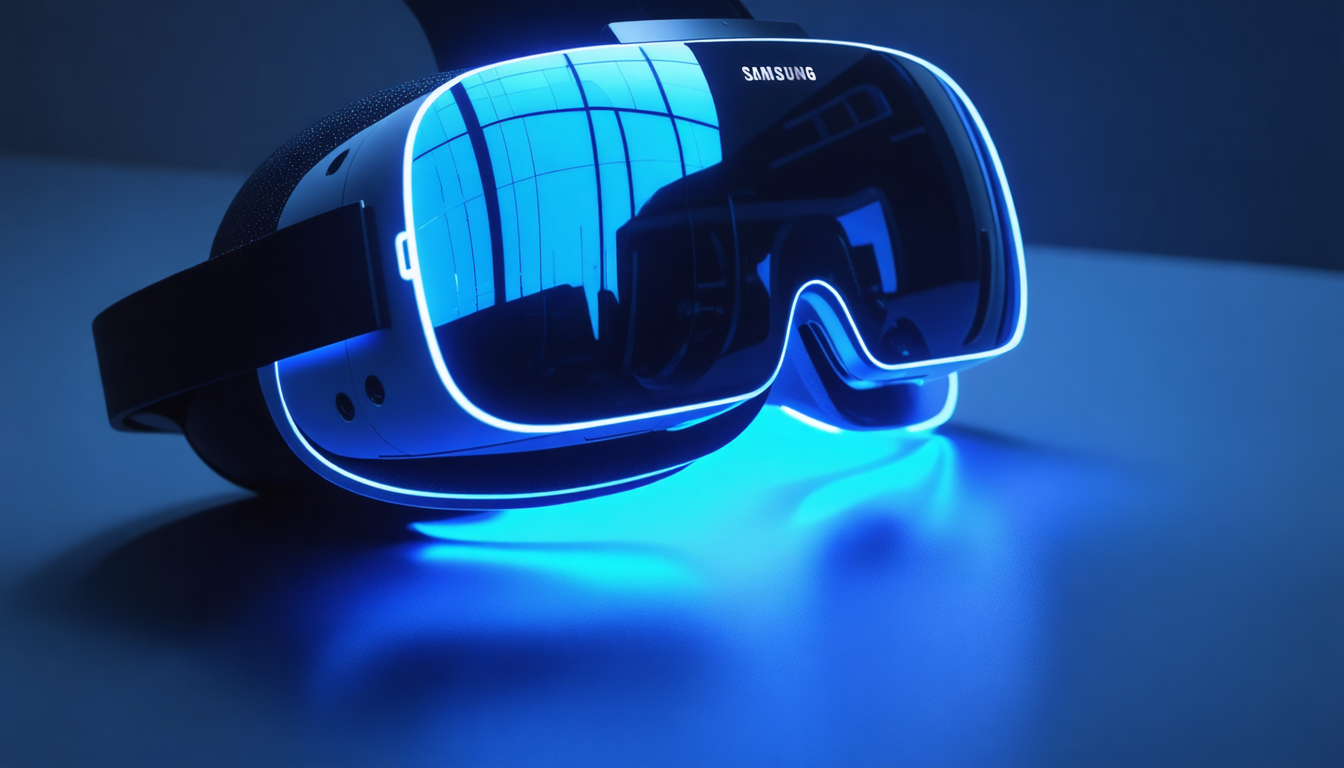
The Galaxy XR was unveiled with a design that balances between modernity and familiarity. At first glance, the headset evokes a mix of high-tech ski goggles and professional equipment, with sleek lines and a robust structure. However, despite this refined aesthetic, the device fails to fully break away from direct comparison with its main competitors, especially the Apple Vision Pro. The choice of micro-OLED screens to ensure good image quality is a strong point, offering sharp and bright visuals, but the bulkiness remains a barrier to mass adoption.
The very design of the Galaxy XR paradoxically seems to constrain the user experience. Unlike other headsets that seek to reduce their mass or incorporate lighter materials to extend sessions, Samsung opted for a configuration ensuring certain comfort but mainly weight. This aspect does not ease ergonomics, especially for a product intended to be worn for several hours a day, whether for work or entertainment.
Compared to the hybrid glasses envisaged for the future of mixed reality, the Galaxy XR’s approach appears dated. Samsung has announced promising collaborations with brands like Warby Parker or Gentle Monster for future more discreet and everyday-suited projects, but these promises remain in a draft state for now. This lack of a tangible transition between the Galaxy XR and these new generation glasses reinforces the feeling that the headset is not yet ready to engage in a broader evolution dynamic.
The pinch-gesture-based touch control system, although functional, offers nothing new compared to what the competition already provides. This similarity in touch interaction feeds the impression that Samsung is betting on a copy of what works elsewhere without daring a clear break. In short, the Galaxy XR offers a refined but conventional design, where innovation is not found in the form but rather in the hope that content and performance will catch up with these limits.
Technical performance of the Samsung Galaxy XR: a power concentrate despite some limits
The Galaxy XR features a hardware configuration designed to meet the high expectations of the XR market in 2025. The device has a high-end processor, optimized to handle heavy calculations in mixed reality, and comfortable RAM that allows simultaneous use of several applications. The micro-OLED screen delivers a high resolution, guaranteeing high-quality visual immersion, with deep blacks and faithful color reproduction, enhancing the realism of virtual environments.
An important point in the Galaxy XR’s technical sheet is its battery. Samsung endeavored to balance autonomy and weight to offer extended experience, but in practice, usage time remains behind some competitors. Extended sessions often require recharging, which limits continuous use without interruption, a factor to consider for professional users or enthusiasts who aspire to sustained use.
The Android XR operating system, central to the device, allows access to a wide application ecosystem, but one that struggles to take off. The raw performance of the device is not questioned; however, application optimization and functional coherence under this platform sometimes leave much to be desired. Latency management, crucial in mixed reality, is adequate without being exceptional, with some occasional slowdowns or hiccups that disturb overall fluidity.
Moreover, connectivity is good with advanced Bluetooth and Wi-Fi options. The integration of artificial intelligence, notably thanks to Google Gemini, promises a more natural interaction with the voice assistant and contextual aid features. While this presence of AI is a major asset in theory, the real experience may still seem slightly artificial, not radically transforming daily use.
In conclusion, the Samsung Galaxy XR presents a good level of technical performance for an XR device of this generation, but this technical power is not enough to mask some flaws, notably related to battery life and optimizations still perfectible, posing a barrier to a fully satisfactory experience to date.

Limited application content: a major obstacle to the rise of the Galaxy XR
The major problem keeping the Samsung Galaxy XR from its full potential lies in the content and available applications. In 2025, an XR headset can no longer just be a simple screen on your nose with a few already-seen smartphone apps. Yet, this is largely what Samsung seems to offer with its application catalog.
For now, the headset mainly offers classic experiences, such as Google Maps or Google Photos, which are very useful tools but already familiar to all Android users. There are also 360-degree videos on YouTube, a classic of the genre, but not an innovation or differentiating content. This very meager offering quickly gives the impression of a return to 2014 VR, a time when the diversity and richness of immersive content were still very limited.
By comparison, Apple invested better in content creation with the Vision Pro, notably offering 8K videos and work focused on image quality and immersive experience. Samsung, for its part, has not announced similar ambitious partnerships or projects for the Galaxy XR, thus significantly reducing its attractiveness for early adopters or enthusiasts.
Developers also appear hesitant to engage in creating applications for Android XR. Google’s past in XR hardly inspires confidence: one recalls the successive abandonments of Cardboard, Daydream, or Stadia. Without a clear and lasting vision, the development of a true ecosystem is compromised. Users thus risk ending up with a thin application catalog, insufficient to justify the Galaxy XR’s high purchase cost and learning complexity.
This content situation directly affects users’ perception of the headset’s value for money. Powerful hardware is undeniably important, but without a suitable, immersive, and feature-rich software offering, the overall experience is not enough to captivate attention over time. As it stands, the Galaxy XR struggles to justify its price of nearly 1,800 dollars against better content-served competition.
Main applications available on Samsung Galaxy XR
- Google Maps: navigation and exploration in augmented reality
- Google Photos: viewing photo galleries in an immersive environment
- YouTube 360 Player: virtual reality videos
- Google Gemini voice assistant: multimodal AI interaction
- Compatible Android applications (Netflix exclusively noted on Android XR compared to Apple visionOS)
Price compared to the XR market: relative accessibility for the general public
Samsung has clearly positioned the Galaxy XR with a price more affordable than Apple’s Vision Pro, announced around 1,800 dollars versus over 3,500 dollars for Apple’s headset. This approach may seem wise to attract curious consumers or professional users seeking more accessible alternatives.
However, even this more “economical” price remains a significant sum for equipment whose real daily usefulness is yet to be proven. The XR headset market, still nascent, sees many potential buyers hesitate to invest without tangible guarantees in terms of content, ergonomics, and prolonged use. Moreover, several consumers wonder if they prefer to wait for the next generation, sometimes announced as more compact and better suited for everyday use.
The Galaxy XR price, although technically lower than its competitors, must therefore be put into perspective. It is mainly targeted at seasoned enthusiasts, developers, and professionals able to make use of advanced features. The general public remains cautious about a headset they still consider too bulky and whose usage promise remains vague and unfinished.
Samsung’s business model also seems to rely on a future scale effect. By accelerating the diffusion of its XR products at an affordable price, the brand could hope to federate a user base and encourage the future development of its ecosystem. But for now, this strategy is hindered by the aforementioned limits on content, experience, and the definition of a real practical role in daily life.
Samsung Galaxy XR and mixed reality: untapped potential between dream and reality
Mixed reality, combining virtual reality and augmented reality, represents one of the most promising technological segments, capable of revolutionizing how we interact with digital content daily. Samsung tried to embody this future with the Galaxy XR, but the balance between ambition and concrete realization still heavily leans towards the former.
Indeed, despite interesting additions like the integrated multimodal AI assistant, which theoretically should humanize use, the headset fails to escape certain limitations. Its limited application content, bulky design, and lack of revolutionary use cases reduce the expected impact. The Galaxy XR appears more as a transitional device than a carrier of a new paradigm, a product that tests the waters rather than creating a real ocean.
Samsung talks about spatial computing, new interactions, and open ecosystems, but in practice, it feels too much like Android packaged in a high-end headset, without major disruption. The absence of a killer app, an essential use, or successful integration into daily life hinders adoption. The headset, promising as it is on paper, suffers from a lack of practical ambition, giving the impression of a product launched too early in an unfinished state.
To illustrate this challenge, consider Apple’s strategy with the Vision Pro, which bets on concrete uses such as spatial extension of Mac screens and collaborative virtual meetings. Samsung, while announcing partnerships with glasses brands, has not yet outlined a clear path for the Galaxy XR to become a professional or friendly everyday tool.
Ergonomics and user comfort: a sensitive issue for the Samsung Galaxy XR
A factor often crucial to the acceptance of an XR headset is comfort. Samsung tried to meet this requirement by offering a robust but adjustable structure. Yet the weight of the device remains a significant obstacle. For many users, wearing the Galaxy XR for more than an hour can cause fatigue and discomfort, thus limiting prolonged and repeated use.
Beyond the notion of mass, weight distribution is not always optimal, which can create uncomfortable pressure on certain areas of the face. The padding, although good quality, does not prevent the feeling of a heavy headset on the head. These ergonomic aspects are decisive because an XR headset must be as natural to wear as a simple smartphone should be to handle.
Samsung integrated a ventilation system and materials designed to limit heat, but in practice, these devices do not fully compensate for the constraints of weight and bulk. The exceptional screen quality is therefore not enough to overlook this difficulty in prolonged use.
It is also important to note that the Galaxy XR does not yet have a satisfactory solution for glasses wearers, although prospects with smart glasses brands are also mentioned for the future. Today, these users remain penalized, complicating further mass adoption.
Comparison of the Samsung Galaxy XR with other XR headsets on the market
| Model | Price | Battery Life | Screen Quality | Weight | Available Content |
|---|---|---|---|---|---|
| Samsung Galaxy XR | ~1,800 $ | 4-5 hours | Micro-OLED, high resolution | Relatively heavy | Basic Android apps, limited content |
| Apple Vision Pro | ~3,500 $ | 6 hours | 8K, very high fidelity | Lighter than Galaxy XR | Rich ecosystem with exclusive content |
| Meta Quest 3 | ~500 $ | 2-3 hours | LCD, good quality | Light | Very large library of VR games and apps |
The future of the Samsung Galaxy XR and mixed reality: what challenges lie ahead?
Samsung is at a turning point with the Galaxy XR. For this product to become a success, the brand must imperatively expand its content, improve ergonomics, and clarify its positioning on the XR market. It is clear that merely reproducing a concept established by the competition is not enough to attract a still wary audience facing this emerging technology.
The potential does exist though: the technical performance is up to par, and the more accessible price compared to the Vision Pro is a definite advantage. But without a coherent strategy between hardware, software, and use cases, the Galaxy XR risks remaining a niche product, disappointing despite its intrinsic qualities.
The sustainable development of an ecosystem of innovative applications, collaboration with fashion specialists to transform the design towards more discreet connected glasses, as well as the promotion of clear and concrete uses will be keys to future success. This path will be arduous, but necessary for Samsung to find its place in the long-term XR revolution.
In conclusion, the Samsung Galaxy XR represents a significant step towards accessible mixed reality, but it still needs to prove itself not to remain a disappointment compared to its promising potential.