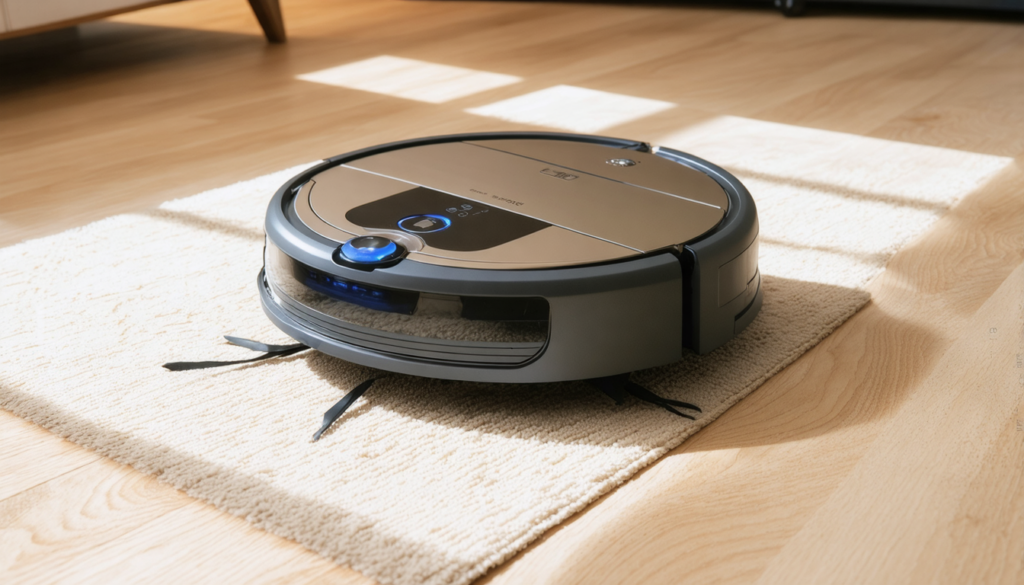
The Roborock Saros Rover, unveiled at CES 2026, revolutionizes the world of robotic vacuum cleaners thanks to an innovative architecture combining wheels and articulated legs. This technological breakthrough not only allows it to roll on all types of floors but also to walk, overcome the most complex obstacles, climb and descend stairs without assistance. This mechanical feat injects a new dynamic into smart cleaning, thus breaking the traditional barriers of domestic robots. Far more than just a vacuum cleaner, the Saros Rover establishes itself as a personal assistant for the complete maintenance of modern homes, integrating cutting-edge technologies such as laser mapping and artificial intelligence for precise and autonomous multi-surface cleaning management. With intuitive automatic programming, optimized battery life, and sophisticated anti-collision sensors, it perfectly adapts to various domestic environments, offering a unique and high-performance user experience.
In a context where connected homes evolve towards spaces with diverse and often complex configurations, the Saros Rover meets a major challenge: ensuring exhaustive cleaning without forbidden zones while avoiding repeated human interventions. This innovation notably comes from the integration of a hybrid mechanism, allowing the robot to step over bulky elements such as door thresholds, thick carpets, or even climb stairs previously inaccessible to traditional vacuum cleaners. This qualitative leap could well redefine the standards of home automation in 2026, notably thanks to its intelligent space management and its ability to perform efficient and smooth multi-surface cleaning. Let’s explore in detail the flagship features and record performances of this exceptional model, marking a true advance for automatic maintenance in connected homes.
- 1 Innovative architecture: the hybrid wheel-leg combination for revolutionary mobility
- 2 Autonomous ability to climb and clean stairs: a unique performance on the market
- 3 Complete cleaning without forbidden zones thanks to unparalleled agility
- 4 Artificial intelligence and 3D perception for perfected navigation
- 5 Obstacle overcoming and record performances for an advanced robotic vacuum
- 6 Complete integration with connected homes and remote control via app
- 7 Battery autonomy and optimized energy management for prolonged performance
- 8 Simplified maintenance and design conceived for durability and ease of use
Innovative architecture: the hybrid wheel-leg combination for revolutionary mobility
The technological core of the Roborock Saros Rover relies on a major mechanical innovation: a hybrid system combining wheels and articulated legs. This unique design allows the robot to benefit from the speed and smoothness of classic rolling while gaining the ability to overcome obstacles by ‘walking’. The chassis equipped with articulated limbs can lift itself to step over complex areas such as thick carpets, high door thresholds, or even low furniture, thus crossing obstacles previously impassable by traditional robotic vacuum cleaners. Each leg contains a high-torque motor providing precise control of position and force, thereby ensuring constant stability even on uneven or sloped surfaces.
The articulated limbs of the Saros Rover operate independently to maintain overall balance during the most complex maneuvers, illustrating a highly advanced mechanical sense. This joint independence is essential to ensure a smooth and rapid transition between walking and rolling, thus optimizing energy consumption and cleaning speed. This architecture also responds to a durability need, as the robot is made of lightweight metal alloys for the legs, which must withstand the physical stresses linked to repetitive movements. The outer shell made of high-resistance polymers and the top surface of anti-reflective tempered glass protect the components while facilitating integration into modern interiors, offering a refined aesthetic and enhanced usability.
Besides robustness, this system increases the vacuum’s flexibility. On a perfectly flat and clear floor, the classic wheel mode ensures optimal speed, while on heterogeneous floors with obstacles, the leg mode takes over to guarantee smooth and uninterrupted progress. This hybrid architecture marks a clear technological break with preexisting models, generally limited to simple rolling capability without physical adaptation to stairs or thresholds.
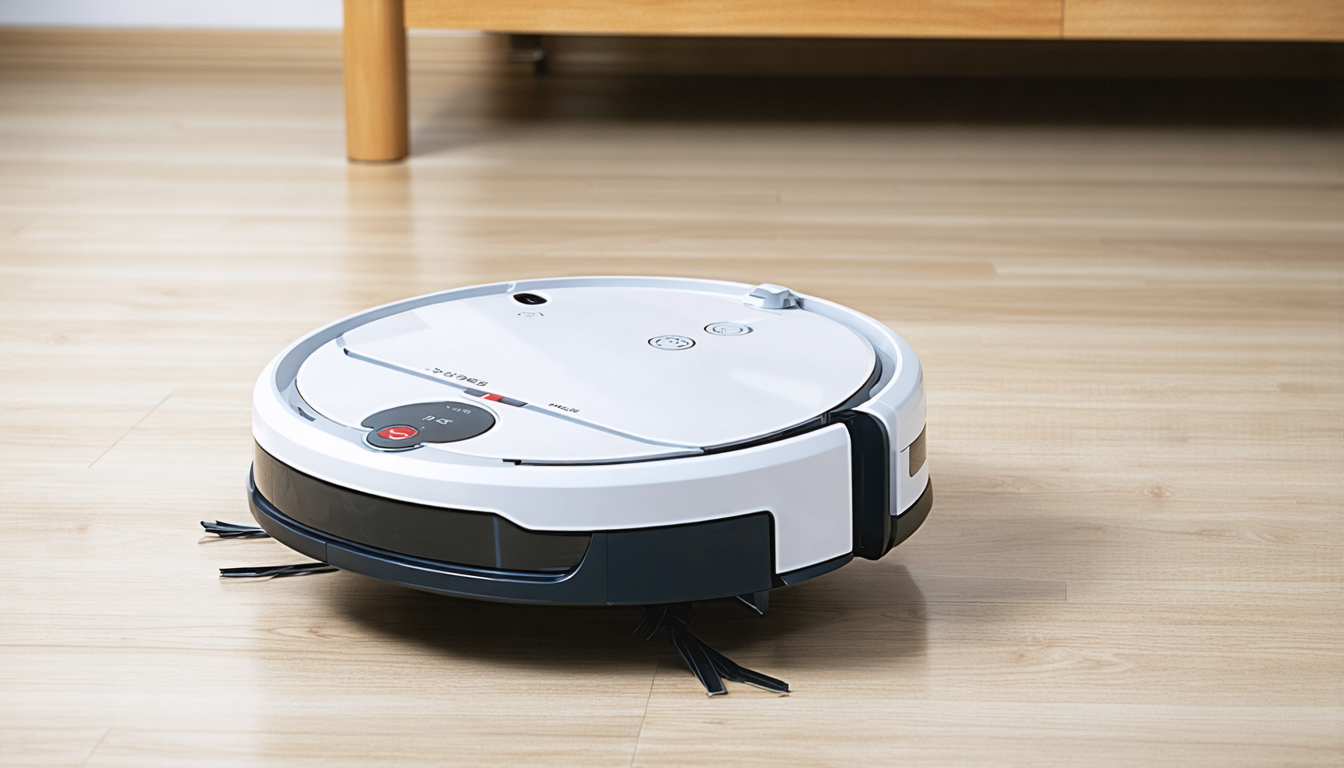
Autonomous ability to climb and clean stairs: a unique performance on the market
The Roborock Saros Rover does not just navigate on a flat surface like the majority of robotic vacuums; it is the first machine in its category capable of ascending and descending stairs completely autonomously. This feat relies on a set of laser sensors and a 3D recognition system that precisely measure the height of each step in order to calculate the optimal positioning of its legs for starting the ascent without risk of falling.
Under each step, the Saros Rover adjusts its side brushes and suction power to ensure effective cleaning of every step, even the narrowest or hardest to reach. This technology eliminates the need to manually move the robot from one floor to another, making multi-level cleaning completely transparent for the user. The coordination between position sensors and dynamic adjustment of the center of gravity also allows the robot to maintain perfect stability, even while climbing or descending. This intelligent control limits the risk of tipping and guarantees the safety of the device in all scenarios.
This system covers all floors of a house integrally without a single corner being neglected. The laser mapping memorizes the staircase structure to optimize subsequent cycles. Roborock thus addresses an important issue for modern households, often composed of several levels, where classic robots remain ineffective on vertical zones.
Complete cleaning without forbidden zones thanks to unparalleled agility
The Saros Rover offers an intelligent cleaning service that exceeds the classic limits of robotic vacuums. It crosses door thresholds effortlessly, long-pile carpets, and precisely avoids cables or small objects on the floor, thus preventing blockages or unexpected stops so frequent with standard models. This agility also results from an adaptive suspension that modulates the robot’s height and posture in real time, optimizing brush contact with various surfaces without damaging fabrics or furniture.
Multi-surface cleaning, an important issue in modern homes often decorated with varied materials, is thus perfectly ensured. It switches from parquet to carpets, from tiles to laminate floors without manual setting changes. This capability is reinforced by the robot’s aptitude to automatically recognize the type of floor and adapt suction power accordingly. The combination of a double brush system and high-performance suction guarantees an optimal yield, effectively evacuating dust, pet hairs, and various debris.
- Crosses obstacles previously impassable, such as high thresholds and thick carpets.
- Automatic adaptation according to floor types for targeted suction.
- Intelligently avoids cables and objects, preventing blockages or stops.
- Adaptive suspension allowing optimal balance and adhesion.
- Precise cleaning of corners and hard-to-reach areas thanks to side brushes.
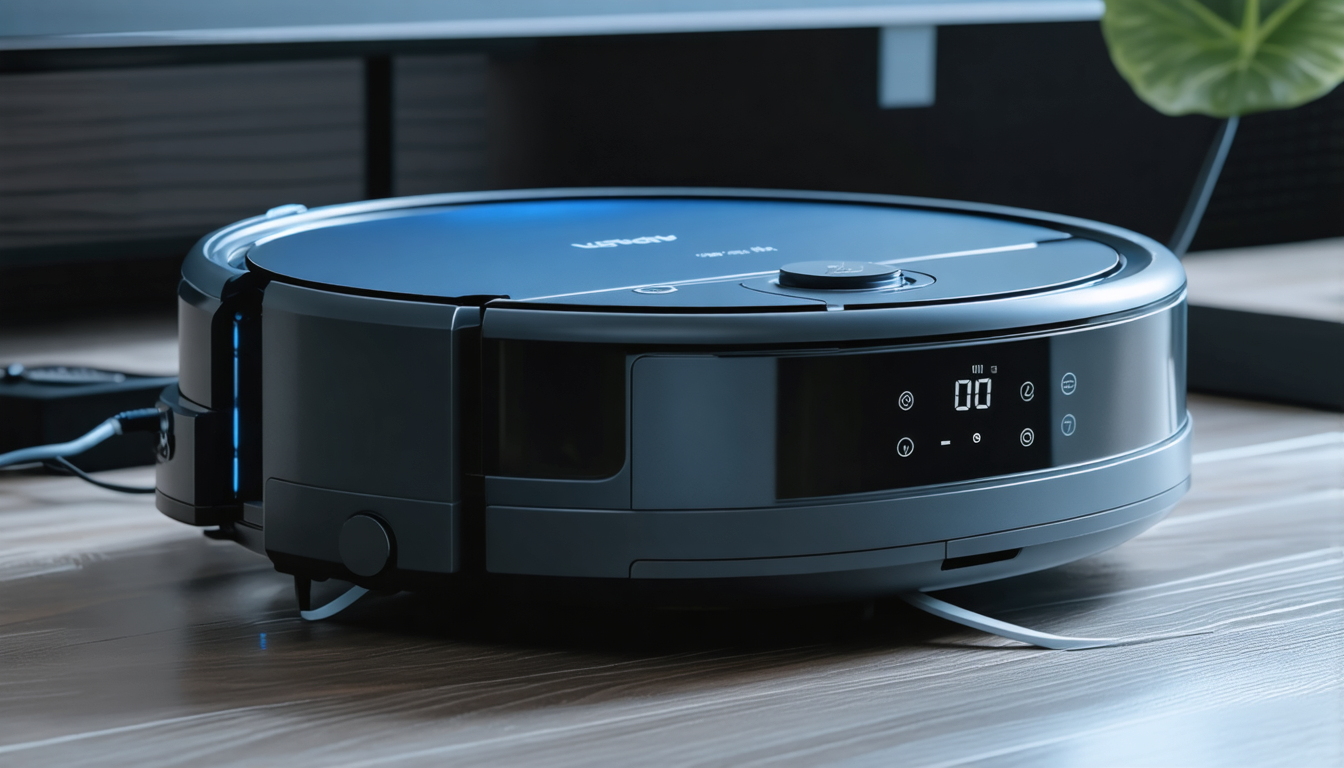
The Roborock Saros Rover harnesses embedded artificial intelligence coupled with three-dimensional spatial perception. This combination allows sophisticated data processing from a multitude of sensors: lidar, proximity sensors, infrared and optical cameras, as well as pressure and orientation detectors. The system creates in real time a dynamic mapping of spaces, precisely identifies obstacles, and adjusts its trajectories for maximum efficiency.
The AI algorithms constantly improve their understanding of the environment through machine learning, allowing rapid and adapted reactions to each situation. Thus, the robot prevents collisions by anticipating object presence, chooses the most optimal paths, and manages crossing complex surfaces with remarkable ease.
This integrated intelligence also optimizes the battery’s energy consumption by adjusting movements and power according to needs. For example, when climbing stairs, the system modulates limb pressure and energy dedicated to lifting, thereby extending overall autonomy.
| Technical element | Description | User impact |
|---|---|---|
| 3D laser mapping | Creation of complete real-time maps | Precise cleaning adapted to each space |
| Intelligent object recognition | Obstacle identification and avoidance | Avoids frequent blockages and interruptions |
| Automatic power adaptation | Modulation according to floor type and heights | Optimizes performance and battery life |
| Automatic programming | Autonomous management of cleaning cycles | Simplifies and saves time for the user |
Obstacle overcoming and record performances for an advanced robotic vacuum
The Saros Rover asserts itself as a reference in its category thanks to its exceptional overcoming capabilities. While other models are limited to obstacles of 4 cm in height, this robot combines fast rolling and articulated walking to step over higher thresholds, transition bars between floor coverings, and other complex household obstacles. This capacity opens the door to total cleaning without prior preparation from users, thereby freeing them from usual constraints.
The robustness of the lightweight alloy chassis and the suspension capable of absorbing vibrations guarantee optimal resistance even during prolonged use cycles. For example, on slippery or inclined surfaces, the robot maintains a constant speed without slipping or losing balance. These performances confirm Roborock’s mechanical and software mastery, which pushes the market limits and redefines the notion of domestic robot.
These technical features were validated during demonstrations at CES, where the Saros Rover stood out through its ability to cross complex zones in dense and typically 2020s-style homes. This mastery of obstacle overcoming inspires a new generation of hybrid and autonomous robotic vacuums.
Complete integration with connected homes and remote control via app
Roborock has equipped the Saros Rover with advanced compatibility with current home automation protocols, notably Matter, allowing seamless integration into the most widely used connected home systems. This interoperability gives users the possibility to control their robotic vacuum from a dedicated application, accessible on smartphones and tablets.
The mobile app offers an intuitive interface to program automatic cleaning cycles, define priority zones, lock certain parts of the house if needed, and track battery status and cleaning progress in real time. The Saros Rover also benefits from a voice control feature via compatible smart speakers, thus facilitating daily use.
This ability to synchronize with other home automation devices offers increased comfort, especially in scenarios where cleaning can be triggered automatically based on residents’ absence, scheduled times, or detected levels of dust and dirt.
- Synchronization with Matter protocols and voice assistants
- Programming via simple and comprehensive mobile interface
- Real-time remote control for greater responsiveness
- Monitoring and alerts on maintenance and charge status
- Possibility of targeted and personalized cleaning sessions
Battery autonomy and optimized energy management for prolonged performance
The energy system of the Roborock Saros Rover was specifically designed to ensure optimal autonomy, even considering the complex movements of its articulated limbs. The high-density battery allows the robot to cover about 300 square meters on a single charge, a particularly impressive figure for such a hybrid and technically advanced device.
In real time, the integrated intelligence adjusts motor effort according to terrain condition: for example, climbing a staircase requires more energy than simply crossing a floor. The robot thus optimizes consumption by modulating speed and suction power, guaranteeing prolonged use without interruption. When the battery approaches a critical threshold, the Saros Rover automatically returns to its charging station and resumes its mission once recharged, ensuring lasting cleanliness over multiple sessions.
This automatic programming and intelligent energy management system is a major asset in the premium robotic vacuum category, meeting growing consumer expectations for reliable, autonomous, and high-performance devices.
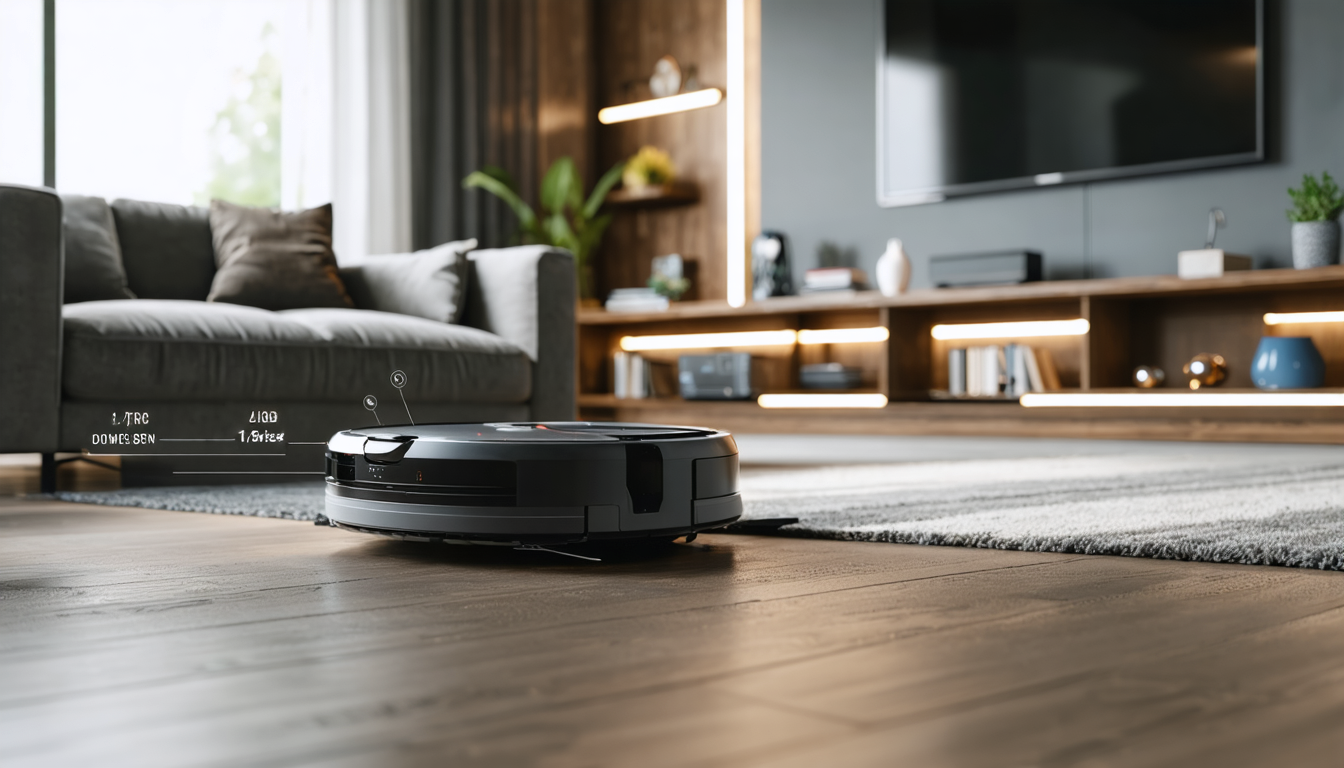
Simplified maintenance and design conceived for durability and ease of use
Maintenance of the Roborock Saros Rover was designed to be accessible, even with its complex design. The rotating brushes are easily removable for quick cleaning, while the motorized leg lifting system requires minimal maintenance. Intelligent sensors monitor the wear status of essential components such as seals and moving parts, alerting the user via the mobile app when intervention is recommended.
The robot also integrates an automatic cleaning system for its own joints and brushes, helping maintain performance without extra effort. The polymer shell and the tempered glass face guarantee optimal protection against shocks and scratches, extending the device’s lifespan even under intensive daily use.
This holistic design greatly facilitates the acceptance of this sophisticated device by a wider audience, who can benefit from technological advances without being overwhelmed by complex maintenance or frequent repairs.