At the dawn of 2026, cybersecurity faces a decisive turning point with the emergence of threats previously thought to be reserved for science fiction. Ransomware no longer settle for being simple static malwares demanding ransoms; they become intelligent, now using artificial intelligence to design, adapt, and execute attacks autonomously. Simultaneously, NFC technology, ubiquitous in our daily exchanges via smartphones and connected devices, becomes a prime target for hackers, with an alarming rise in attacks exploiting this vulnerability. These combined phenomena paint a more uncertain and perilous digital landscape, where data protection and information security require constant vigilance and adaptation. Cybercriminals, thanks to AI advancements, now go beyond simple classic hacking. By generating ransomware like PromptLock, capable of modifying their own code in real-time without human intervention, they obscure traces and significantly complicate detection and neutralization. This evolution profoundly transforms the defense strategies to adopt to protect sensitive infrastructures, whether at the corporate, institutional, or individual level.
At the same time, NFC attacks steal the spotlight with an 87% increase in recorded incidents, reflecting growing exploitation of vulnerabilities in contactless exchanges. Malwares like NGate have expanded their capabilities to stealing personal contacts, attacking the most intimate services and exposing users to an increased risk of phishing and identity theft. The issue now goes beyond purely technical aspects to affect user behaviors and daily digital security management. Faced with these innovative and formidable threats, cybersecurity in 2026 can no longer rely solely on traditional defenses. It must integrate artificial intelligence into its own monitoring and prevention tools while actively raising user awareness of good security practices.
- 1 AI-driven ransomware: a new frontier in hacking
- 2 NFC attacks: a silent threat in full explosion
- 3 The intertwined challenges of cybersecurity in 2026: between offensive AI and adaptive defense
- 4 Cryptojacking and ransomware: a rise of combined dangers in cybersecurity
- 5 Future prospects: anticipating technological cyber threats with AI
AI-driven ransomware: a new frontier in hacking
The ransomware landscape has undergone a major transformation since the progressive integration of artificial intelligence into their design and functioning. While the first generations of ransomware were limited to executing static codes, the latest models now exploit AI to generate and adapt their attacks in real-time, thereby outsmarting classic IT defense systems.
PromptLock: revolution in the ransomware world
The discovery of PromptLock by ESET Research scientists surprised many. Unlike traditional ransomware designed from predefined scripts, PromptLock uses an artificial intelligence engine based on the OpenAI model via the Ollama API to create its own Lua attack scripts on the target machine. This autonomy gives the ransomware the ability to improvise encryption and exfiltration techniques tailored to each environment, making its detection by classic antivirus tools extremely complex.
This approach is divided into two complementary modules. A static module handles communication and monitoring, while a dynamic module, powered by AI, analyzes the targeted system, identifies exploitable vulnerabilities, then writes and executes scripts based on collected data. For example, if sensitive files are detected, PromptLock can prioritize their immediate encryption or, conversely, choose to exfiltrate them before destruction, depending on identified opportunities. This decision-making capability marks a turning point in ransomware sophistication and profoundly redefines the threat they pose.
Impacts on cybersecurity and data protection
Faced with this automated and evolving offensive, IT security in 2026 must imperatively integrate solutions based on artificial intelligence capable of anticipating adaptations and new malicious scripts generated in real-time. Traditional detection models, based on fixed signatures, become obsolete against such a fluid threat. It is now crucial to adopt behavioral detection systems coupled with predictive analysis, capable of continuously learning and adapting their responses to danger.
Moreover, the reduction in technical complexity for cybercriminals changes the game: even hackers without advanced skills can launch sophisticated attacks thanks to configurable AI. This opens the door to a worrying democratization of hacking, requiring heightened vigilance and strengthening data protection strategies at all levels, from IT staff to end users.
NFC attacks: a silent threat in full explosion
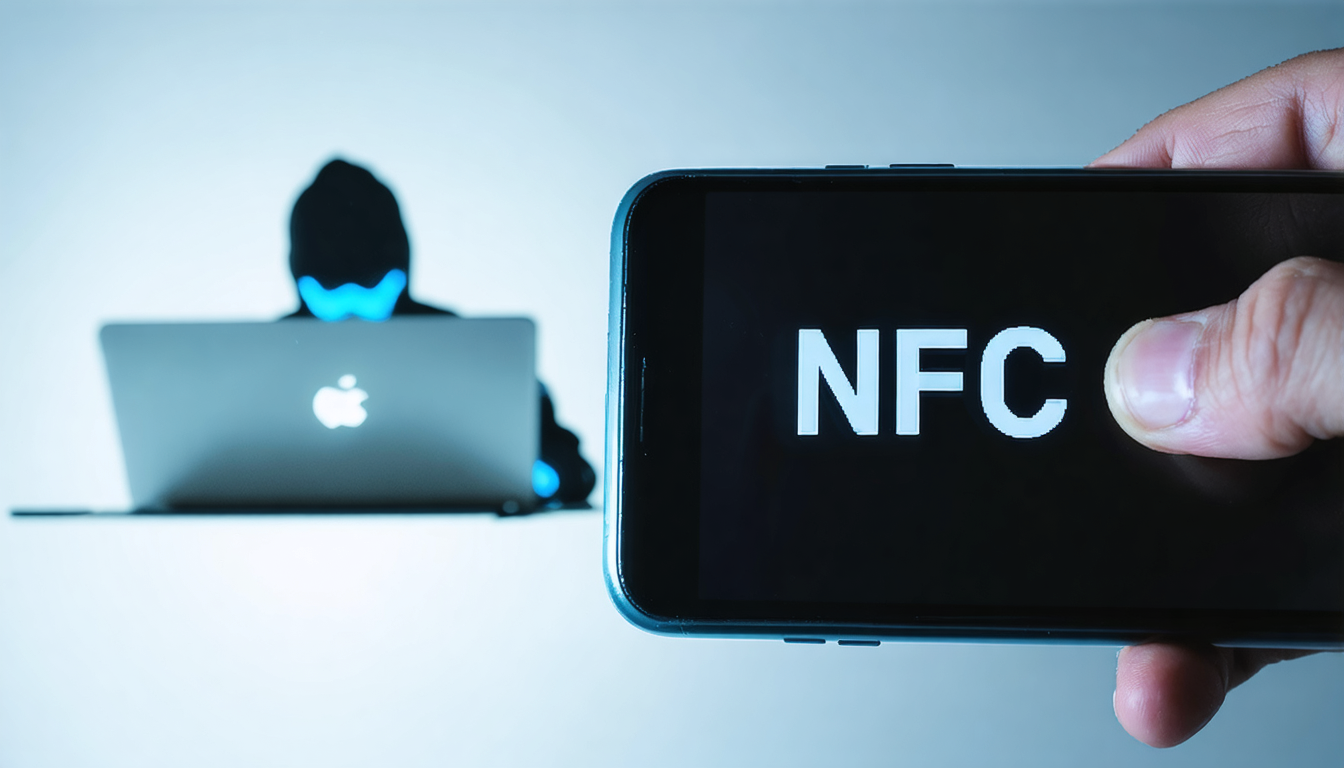
As the world moves towards ever smoother connectivity, NFC technology (Near Field Communication) establishes itself as a favored exchange vector in daily life. Its ease of use and widespread adoption in mobile payments, access management, and data exchanges have unfortunately attracted cybercriminals who have renewed their attack techniques. The sharp 87% increase in telemetry data related to NFC attacks illustrates the seriousness and rapidity of this evolution.
NGate: the example of an NFC malware with unprecedented capabilities
The NGate malware is a clear example of this new generation of threats. Originally designed for simple attacks, NGate now has the ability to steal victims’ contacts, thus facilitating phishing and social engineering campaigns. The exploitation of NFC to inject malware or collect sensitive data often operates in close proximity, making these attacks difficult to detect.
For example, in a professional context, an employee using an NFC badge to access secure areas could be unknowingly infected by NGate during a malicious interaction with a compromised terminal. This discreet attack compromises both physical and digital security, thus multiplying the risks of intrusion and sensitive data leakage.
To counter these cyber threats, several reflexes are indispensable:
- Regularly update operating systems and browsers to reduce exploitable vulnerabilities.
- Enable behavioral detection to better identify anomalies linked to NFC interactions.
- Restrict the use of NFC devices to strictly necessary applications and contexts.
- Avoid relying on so-called “miracle” AI-based tools without serious verification of their reliability, some hiding malicious scripts.
- Maintain offline backups for secure restoration in case of intrusion.
These measures, although essential, also require increased awareness from users and companies about the fragility of contactless technologies, often mistakenly considered perfectly secure.
The intertwined challenges of cybersecurity in 2026: between offensive AI and adaptive defense
The convergence of threats from evolving ransomware and targeted NFC attacks illustrates how cybersecurity in 2026 must evolve towards a more dynamic, proactive, and integrated posture. Artificial intelligence, while powering cyber threats, also represents a vital lever to strengthen defenses and react in real-time to hacking attempts.
Integrating AI into defense systems
Cybersecurity solutions can no longer just react after the fact. They must anticipate the actions of AI self-generated ransomware and detect suspicious behaviors related to NFC exchanges. Machine learning-based monitoring allows identification of complex attack patterns, including those invisible to humans.
A successfully documented adaptive intelligence system, capable of interrupting an evolving ransomware, can thus prevent considerable losses. Large companies now invest in hybrid platforms combining offensive AI to test their own systems and defensive AI to prevent intrusions. This battle of AI against AI becomes a central battleground in the digital war.
Comparative table of key features between classic and AI-generated ransomware
| Features | Classic ransomware | AI-generated ransomware |
|---|---|---|
| Code generation mode | Preprogrammed, static | Self-generated and real-time adaptive |
| System analysis capability | Limited or none | Autonomous and decision-making analysis |
| Antivirus detection | Often identifiable | Increased difficulty, often undetectable |
| Technical complexity required by attacker | High, requires expertise | Low, accessible via AI configuration |
| Adaptation capability | Low, fixed script | High, autonomous evolution |
Cryptojacking and ransomware: a rise of combined dangers in cybersecurity
Beyond ransomware, cryptojacking continues to develop as a complementary cyber threat. This technique consists of hijacking victims’ computer resources, mainly via malware, to mine cryptocurrencies without their knowledge. Artificial intelligence also plays a key role here in optimizing the efficiency and stealth of these attacks, making them harder to detect.
Hackers often combine cryptojacking and ransomware in hybrid campaigns, further complicating data protection. For example, a system may first be infected by cryptojacking malware, slowing performance without raising suspicion, before an AI-driven ransomware takes control and encrypts the data. This strategic approach aims to maximize gains while multiplying attack vectors.
Organizations must therefore strengthen their network monitoring and integrate behavioral analysis tools to quickly identify any abnormal activity. Employee awareness is also crucial, as the human factor often remains the first vulnerability exploited, notably via sophisticated phishing also driven by artificial intelligence.
Future prospects: anticipating technological cyber threats with AI
The rise of artificial intelligence in creating cyber threats, from autonomous ransomware to attacks targeting NFC, invites deep reflection on the evolution of the digital landscape. The multiplication of malicious AI tools hints at a future where cyberattacks will become increasingly precise, rapid, and personalized.
To anticipate these developments, cybersecurity strategies must imperatively rely on continuous monitoring and enhanced international collaboration. Innovation in authentication systems, such as advanced biometrics or distributed trust networks, represents a promising path to counter intrusions via NFC and other contactless technologies.
Another major axis lies in user empowerment. Educating on recognizing potential threats and encouraging daily actions like system updates, caution with dubious AI tools, or vigilance during NFC interactions are essential to limit the impact of cyber threats.
In summary, to face the technological threats of 2026, combining AI-generated ransomware and NFC attacks, it is necessary to develop agile, anticipatory, and collaborative cybersecurity, integrating artificial intelligence as both an ally and an adversary.