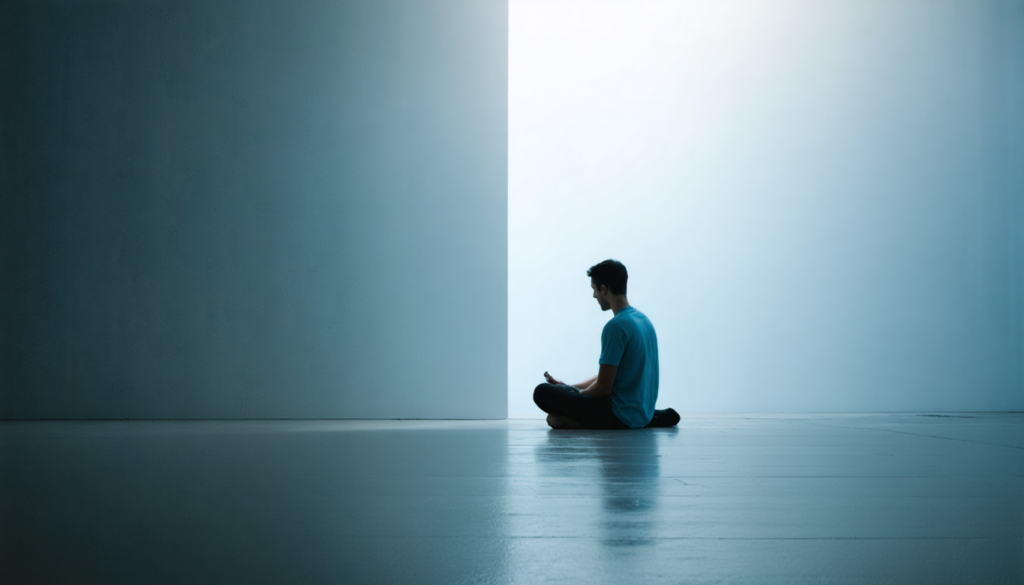
In a world where oral expression and uninterrupted chatter are often valued, those who choose silence arouse curiosity and are sometimes misunderstood. Yet, choosing voluntary muteness is not synonymous with withdrawal or weakness. It is a true psychological stance marked by unique and rich personality traits. These individuals, often the subject of stereotypes, embody a deep inner dimension where reflection, attentive listening, and reserve are the key words. Anchored in a privileged relationship with calm and non-verbal expression, they illustrate modes of functioning little explored in the common understanding of human interactions.
Recent advances in personality psychology emphasize that this preference for silence results from complex and coherent psychological configurations. Far from being a simple refusal of dialogue, this choice reflects a nuanced management of social interactions and internal emotions. Through the study of these behaviors, it is possible to dispel clichés and better discern the cognitive and emotional richness hidden therein. This insight also offers valuable avenues to encourage kindness towards those who dare to abandon speech in favor of other forms of expression and connection.
- 1 Silence as a profound reflection of a unique psychological architecture
- 2 Authentic introversion: the main foundation of silent people
- 3 Hypersensitivity and empathy: emotional keys to chosen silence
- 4 The depth of reflection: a rich and complex inner world
- 5 Authentic relationships favored over superficial exchanges
Silence as a profound reflection of a unique psychological architecture
Chosen silence, unlike imposed muteness, asserts itself as a voluntary space of withdrawal and mental processing. It signifies neither disinterest nor lack of expression, but reveals a unique way of apprehending life, characterized by specific personality traits. In psychology, the distinction is clearly made between imposed silence, often experienced as a source of stress, and sought-after silence as a source of psychological calm.
The most recent studies emphasize that silence is closely linked to a particular management of information and external stimuli. Individuals preferring silence show a marked tendency toward deep reflection, requiring periods of calm where cognitive overload can be avoided. Social stimulation is often experienced as a source of rapid saturation, which accentuates the need for silent breaks to recover their mental energy.
| Field of study | Observed correlation |
|---|---|
| Information processing | Preference for deep reflection |
| Social stimulation | Lower saturation threshold |
| Emotional regulation | Increased need for recovery |
Understanding this dynamic allows going beyond simplistic interpretations and apprehending silence as an adaptive choice and a sophisticated psychological strategy.

Authentic introversion: the main foundation of silent people
One of the major personality traits appearing in the study of silent people is introversion. Often misunderstood, introversion does not necessarily imply a shy or anxious temperament, but rather refers to an energy orientation focused on solitude rather than social interaction. This orientation facilitates emotional and cognitive recharging through silence.
Unlike extroverts, introverts draw their energy through calm moments, far from the tumult of prolonged verbal exchanges. This difference explains why these people often limit their presence in noisy or socially dense contexts. They prefer situations with few chosen interlocutors, where the quality of the relationship takes precedence over quantity.
- Strict management of social energy
- Preference for interactions in small groups
- Active search for alone time to recover
- Careful selection of social engagements
This mode of functioning illustrates a careful selection of interactions to preserve inner balance. This apparent reserve hides a capacity for concentration and often reinforced reflection, enabling a deep understanding of the surrounding world.
Hypersensitivity and empathy: emotional keys to chosen silence
Beyond introversion, research points to an extreme sensitivity to external stimuli as the basis for the inclination towards silence. About 20% of the population would be concerned by this hypersensitivity, studied notably by psychologist Elaine Aron. This amplified sensitivity to noises, movements, or emotions makes the outside world often too intense and tiring for these individuals.
Deep empathy also constitutes an essential component. These people intensely absorb others’ emotions, which can provoke emotional overload. Solitude and silence then become necessary refuges to disconnect and regain inner balance.
These emotional characteristics explain why these individuals prefer a calm environment and avoid superficial interactions that could exhaust them more quickly than they enrich.
- Hypersensitivity to sensory stimulations (light, noise, smells)
- Increased empathy, allowing fine perception of emotions
- Emotional overload requiring regular breaks
- Search for a calm setting for emotional regulation
The depth of reflection: a rich and complex inner world
Psychology reveals that people who favor silence often cultivate intense and prolonged reflection. Their thinking is characterized by detailed analysis and an ability to examine situations from various viewpoints before verbalizing anything. This process requires calm and time, absent in rapid and superficial social exchanges.
This need for deep mental processing is generally accompanied by a passion for contemplation and attentive listening, both towards oneself and towards the world. These moments of solitude are invested in a personal quest for meaning, often thanks to activities like reading, writing, or meditation.
The preference for silence thus gives these people a conducive space for inner exploration, far from social distractions: this stance is not withdrawal but an engagement with their calm and their mental world.
- Thorough analysis of ideas before expression
- Investment in silent and subtle listening
- Search for fine understanding of self and others
- Use of alone time as an enriching space

Authentic relationships favored over superficial exchanges
Those who choose silence do not reject human contact but emphasize quality over quantity. They show little appetite for chatter and conventional exchanges, preferring interactions based on sincerity and depth. This relational selection is a form of protection and authenticity.
Superficial conversations are often perceived as a source of energy loss, even annoyance. Silence then becomes a more comfortable and rejuvenating response than exchanges devoid of substance. Thus, these people build a restricted yet meaningful circle, within which each bond rests on genuine mutual listening and respect for each person’s pace.
| Relational criteria | Description |
|---|---|
| Sincerity | Honest and unmasked exchanges |
| Depth | Discussions on important and personal topics |
| Quality of listening | Attentive and shared attention |
| Respect for silences | Acceptance and valorization of moments without speech |
This relational approach reflects a desire to preserve their psychological balance and energy while nurturing their need for truly rich human exchanges.