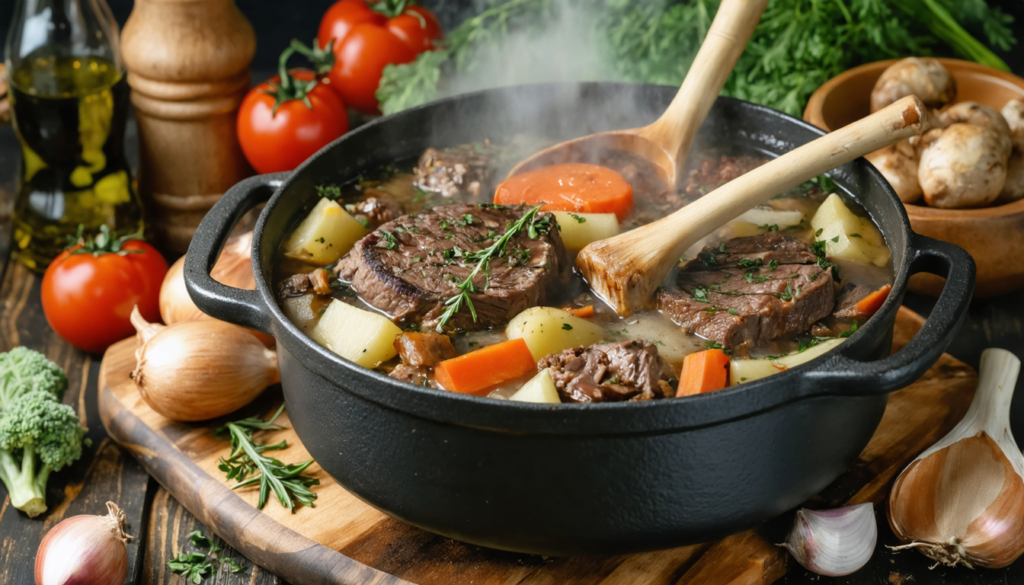
Warming homes from the family table, Pot-au-feu stands out as a true institution of French cuisine. Far from being just a simple boiled meat dish, it is a culinary work where patience and know-how are paramount. This ancestral dish, appreciated since the 17th century, has managed to endure through the ages while preserving its values of authenticity and conviviality. The subtle balance between carefully selected ingredients, slow cooking, and grandmother’s tips offers a fragrant broth, rich in flavors, capable of seducing the most demanding palates. Between perfect cuts of beef and skillfully combined winter vegetables, every detail matters to deliver a traditional dish that warms both body and soul.
As cool evenings settle in, Pot-au-feu asserts itself as the ideal dish to share, both reassuring and generous. Easy recipes abound, but taking into account often overlooked secrets guarantees tender stewed meat and a clear broth with deep aromas. French cuisine finds all its greatness here in the simple fact of patience and respect for ancestral methods, enhanced by some cooking tips that make all the difference. This comprehensive guide provides the essential keys to mastering this traditional dish, thus enhancing the flavors and textures, and ensuring a warm moment around the table. Dive into the world of Pot-au-feu to discover how to transform a classic recipe into an unforgettable gastronomic experience.
- 1 The essential meat cuts for a successful Pot-au-feu: complete guide and tips
- 2 Essential winter vegetables for a Pot-au-feu: tips to preserve their flavors and textures
- 3 Mastering slow cooking for a fragrant broth and tender stewed meat
- 4 How to personalize your Pot-au-feu: regional variations and grandmother’s tips for authentic flavors
The essential meat cuts for a successful Pot-au-feu: complete guide and tips
A perfectly successful Pot-au-feu starts primarily with the choice of meats. More than a simple assembly, success relies on a rigorous selection of cuts suited to slow cooking and prolonged simmering. In 2026, quality takes precedence with a return to local butchers, keen to offer flavorful cuts respectful of the animal.
Beef shin is a noble, marbled, and gelatinous cut, ideal for giving the broth its silky nuances. Its firm but tender texture after cooking promises melt-in-the-mouth softness. The chuck, meanwhile, provides rich, fibrous meat, allowing a perfect balance between tenderness and strong flavor. It is a family meal favorite thanks to its ability to maintain a nice shape even after several hours of cooking.
The rib plate completes the ensemble by delivering a strong taste and enveloping texture. Its collagen content enriches the broth and spreads particularly rounded flavors. Finally, the famous marrow bones should not be overlooked: they make up the soul of the broth, adding richness and creaminess, essential elements for a fragrant broth that awakens the taste buds.
Asking your butcher to tie the cuts allows them to keep their shape during cooking and eases the final presentation. Cooking starts cold, a method traditionally recognized for extracting the maximum flavor gently and preserving tenderness. This approach calms the juices as they slowly diffuse into the liquid, giving the broth clarity and depth.
Here is a table to understand the role of each cut in the composition of Pot-au-feu:
| Meat cut | Main role | Characteristics after cooking |
|---|---|---|
| Beef shin | Gelatinous and melting texture | Tender, rich in collagen, subtle taste |
| Chuck | Firm and tasty meat | Soft, flavorful, ideal for slicing |
| Rib plate | Adds body to the broth | Enveloping texture, pronounced taste |
| Marrow bones | Add richness and creaminess | Melting, intense aroma |
This mastery of ingredients already promises an exceptional traditional dish that will delight all generations. By following this method, you will avoid stringy meat or a bland broth, two pitfalls that weaken the pleasure of Pot-au-feu.
Essential winter vegetables for a Pot-au-feu: tips to preserve their flavors and textures
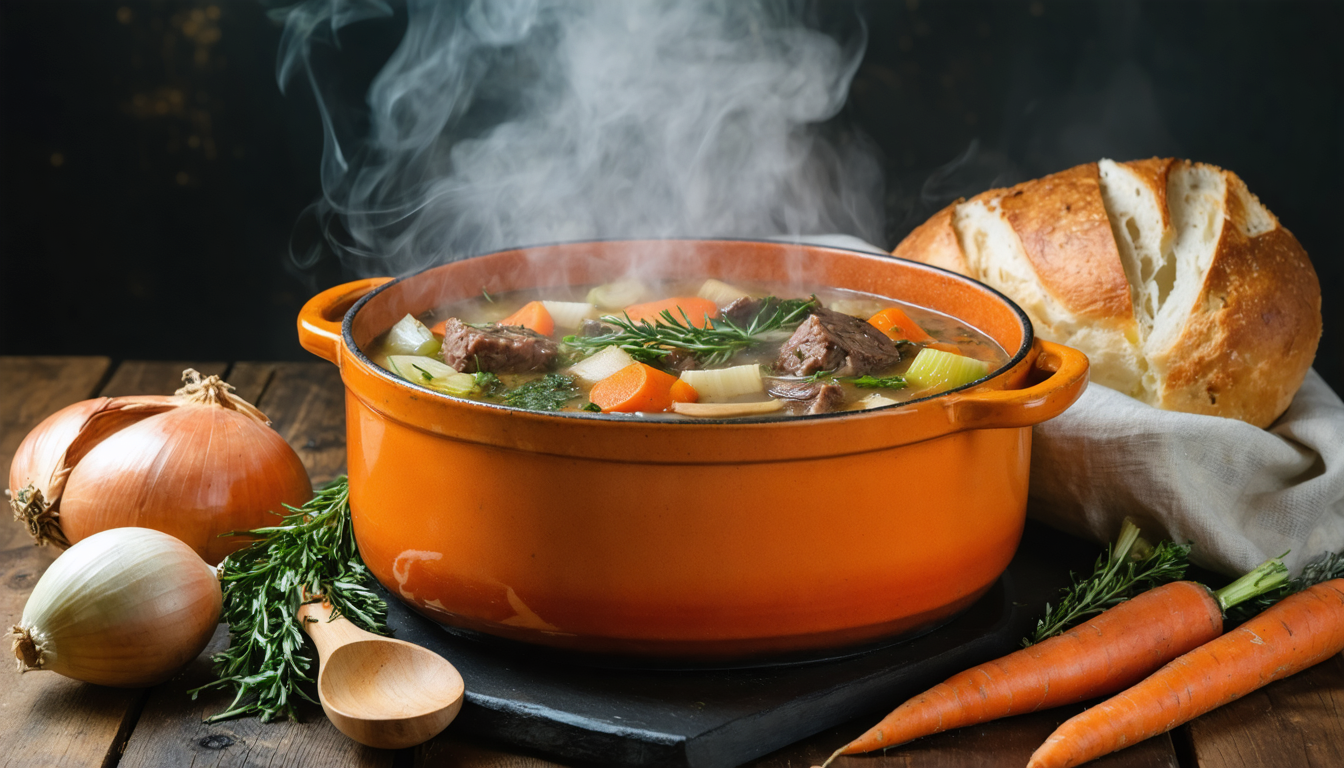
The secret of a Pot-au-feu also lies in the meticulous choice of winter vegetables. They bring freshness and sweetness as an accompaniment to the stewed meat, while enriching the broth with authentic flavors. Their gustative qualities depend as much on their selection as on the moment they are added to cooking.
The classics are well known: carrots, turnips, leeks, celery, and firm-fleshed potatoes. Each vegetable has a precise role to play and their cooking time must be respected to preserve their integrity. For example, potatoes should be added about 30 minutes before the end to prevent them from becoming an unintended puree. This preserves their structure while delicately scenting them with cooking juice.
Leeks, often split lengthwise, require rigorous cleaning to remove all traces of soil, guaranteeing a healthy and tasty dish. The onion, studded with cloves, gently colors the broth and gives it a delicately spiced aroma.
Vegetables also play an aesthetic role at plating. A successful Pot-au-feu presents its vegetables whole or in regular sections, which keep a nice shape and attract the eye as well as the palate. Their gentle color and melting texture are essential to accompany the meat and enhance the simple yet divine richness of the dish.
Winter vegetables also offer a nutritional palette adapted to cold seasons. They provide vitamins, fibers, and minerals necessary for the body while giving a sensation of comfort essential during winter meals. Their thoughtful integration in the broth enhances flavors in a perfect harmony between the robustness of the meat and vegetal sweetness.
List of vegetables and their characteristic contributions in Pot-au-feu:
- Carrots: sweet softness, bright color, texture retention
- Turnips: slight bitterness, subtly flavor the broth
- Leeks: aromatic, add depth to flavors
- Celery: brings freshness and herbal notes
- Firm-fleshed potatoes: firm texture, nourishing base
- Onion studded with cloves: coloration and mild spices
Mastering slow cooking for a fragrant broth and tender stewed meat
Slow cooking, the cornerstone of Pot-au-feu, requires attention and patience. Starting the cooking cold to gradually extract the meat’s juices allows obtaining a clear broth with incomparable aromatic richness. This process, which seems simple, however demands respecting several crucial steps.
When the temperature gradually increases, a foam appears on the surface. This gray scum, coming from impurities and coagulated proteins, must be carefully removed with a skimmer. A clear broth is thus obtained. This often neglected operation is essential to give the liquid visual and gustatory purity.
Then, the heat must be reduced to a minimum so that the broth simmers gently, avoiding a violent boil that would harden the meat and blur the flavors. Cooking, which can last between three and four hours, progressively transforms beef muscles into melting pieces, ready to be enjoyed.
Stewed meat and perfectly cooked vegetables marry in this aromatic bath so that each ingredient releases its flavors without fading. This subtle mechanism distinguishes a successful traditional Pot-au-feu from a simple stew with fast cooking.
A chef’s tip often shared is to cool the broth once cooking is finished. The fat will rise to the surface and harden, making removal easier. This process yields a lighter and even more refined broth.
The following table summarizes the essential steps for slow cooking:
| Step | Description | Objective |
|---|---|---|
| Start cold | Place the meat in cold water before heating | Gradual extraction of juices for a rich broth |
| Skim regularly | Remove foam on the surface as temperature rises | Obtain a clear and pure broth |
| Simmer gently | Reduce heat and let simmer slowly | Enhance meat tenderness and flavor richness |
| Cooling and degreasing | Let cool, then remove the fat layer | Get a light and clear broth |
How to personalize your Pot-au-feu: regional variations and grandmother’s tips for authentic flavors
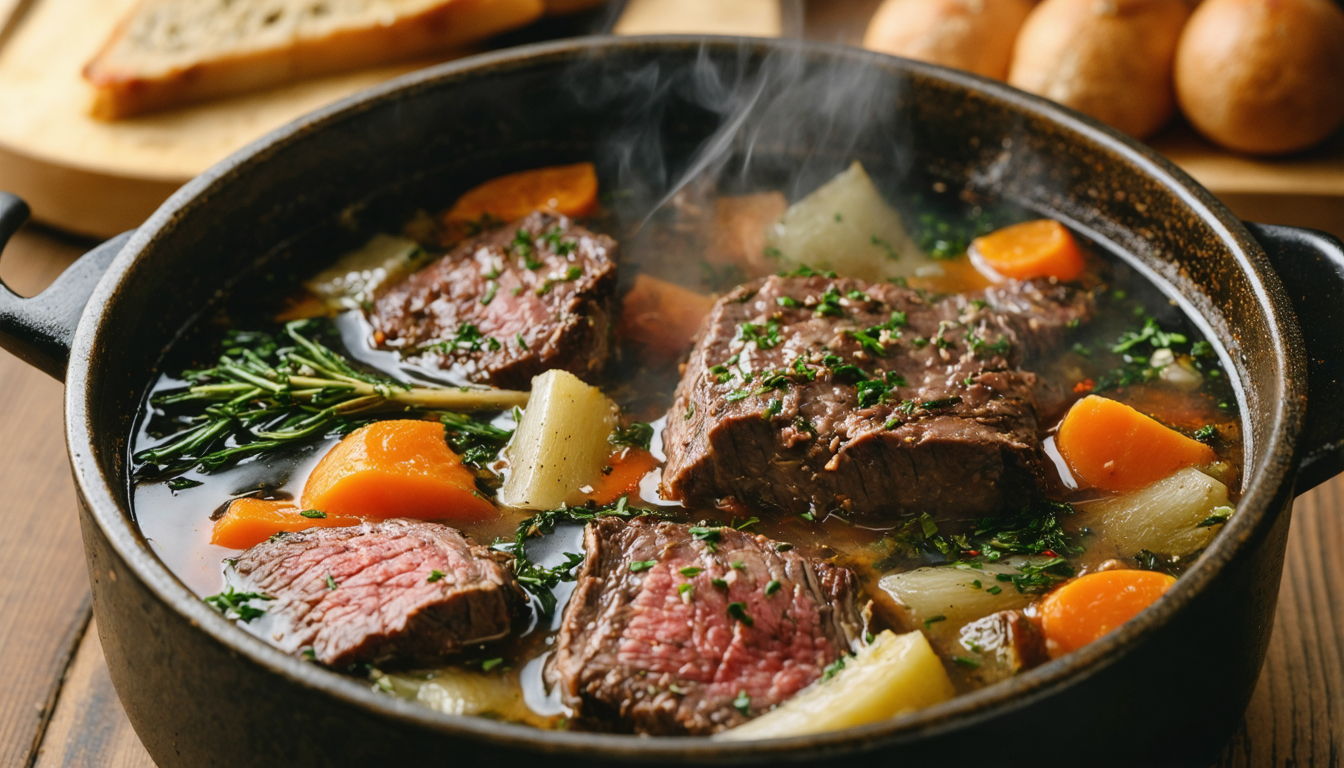
Pot-au-feu, although classified in traditional French cuisine, readily lends itself to regional and family creativity. Each region of France adds its personal touch, enriching this classic dish with delicious adaptations. These variations give another dimension to authentic flavors and allow discovering new nuances.
For example, in Burgundy, it is common to add an aromatic bouquet enhanced with local white wine to boost the broth’s intensity. In Lorraine, cabbage is sometimes added to the vegetables, and in Bourgogne-Franche-Comté, pork shank often complements the beef for more roundness and flavor power.
Grandmother’s tips are also precious: some families add a light drizzle of red wine vinegar at the end of cooking to enhance acidity and balance flavors. Others prefer to accompany pot-au-feu with old-style mustard, essential to bring relief to the dish. These little attentions reveal the convivial and personalized character of this traditional dish.
In 2026, culinary trends also value the use of organic and local ingredients to naturally enhance flavors, thus restoring Pot-au-feu’s role as a generous and healthy dish. A true celebration of the terroir where every element tells a story.
Essential tips to personalize your Pot-au-feu:
- Vary the meats: mix beef with pork shank or sausages according to fancy.
- Adapt the vegetables: include cabbage, celeriac, or even Jerusalem artichoke.
- Flavor the broth with mild spices like nutmeg or an orange zest.
- Play with accompaniments: strong mustard, pickles, or garlic-rubbed toasted bread.
- Use the broth to prepare a soup or a sauce by reusing leftovers.