In our continuous quest for a flat stomach and a harmonious silhouette, Pilates establishes itself in 2026 as an essential method. This discipline, combining precision, control, and breathing, stands out for its ability to target abdominal fat while strengthening the deep trunk muscles. Without requiring sophisticated equipment or going to a gym, it offers a solution accessible to everyone, right at home. By combining specific exercises, improved posture, and lasting muscle activation, Pilates transforms abdominal fitness into a complete and caring experience.
With the new challenges related to metabolic and cardiovascular health, understanding how to effectively burn fat at the abdominal level has become imperative. Pilates offers a perfect balance between muscle strengthening, postural improvement, and stimulation of fat burning. This holistic approach goes beyond mere aesthetics by promoting lasting overall well-being. We will explore in detail these three key exercises that help slim the waist and tone the abdominals, visible in a short time and within everyone’s reach, at home.
- 1 Pilates: fundamental principles to target abdominal fat and slim the waist
- 2 Understanding abdominal fat: types, risks, and health impact
- 3 Pilates Exercise number 1: the “Hundred,” a classic to burn abdominal fat
- 4 Pilates Exercise number 2: the “Roll-up” to tone and lengthen the abdominals
- 5 Pilates Exercise number 3: the “Single Leg Stretch” to slim the obliques and waist
Pilates: fundamental principles to target abdominal fat and slim the waist
Pilates is based on a series of essential principles that amplify the effectiveness of each movement, especially those aimed at the abdominal area. These principles — concentration, control, centering, fluidity, precision, and breathing — are the key to engaging the deep muscles rather than the superficial muscles often worked in classic abdominal exercises.
By practicing at home, you can activate the transverse, this deep muscle that acts like a natural corset around the waist. This strengthening not only helps tone the region but also burns abdominal fat by stimulating the local metabolism. The improvement in posture resulting from this muscle engagement also reduces back tensions, often responsible for poor postures and pains that hinder the motivation to exercise regularly.
The benefits of Pilates go far beyond simple aesthetic gains. Indeed, strengthening the abdominal belt contributes to better body stability, which can prevent many everyday injuries. By emphasizing controlled breathing, Pilates also improves tissue oxygenation, an essential factor for effective fat burning. A concrete example: Emma, 34 years old, a yoga teacher, has significantly reduced her waist circumference in a few months by regularly integrating Pilates at home while improving her flexibility and balance.
Adopting a Pilates routine at home also means immersing yourself in a practice that respects the body’s natural rhythm, with particular attention paid to the precision of movements. This guarantees visible results, especially on waist slimming, without resorting to intensive training that can cause stress or excessive muscle fatigue.
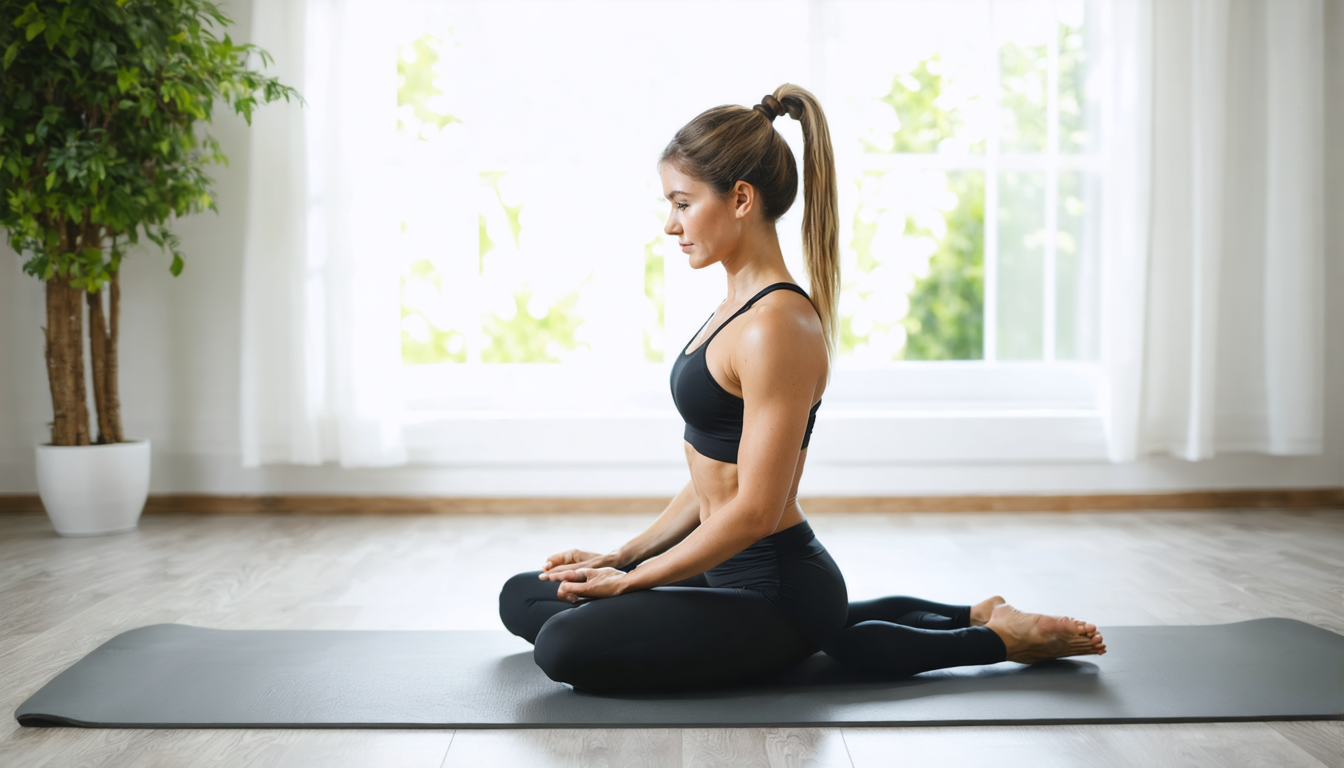
The deep muscles targeted by Pilates for better fat burning
Pilates primarily stimulates the transverse, the rectus abdominis, and the obliques. These muscles play a central role in trunk stabilization and the formation of a flat stomach. For example, working the transverse through specific exercises allows natural compression of the abdomen, promoting better posture and a slimmed silhouette.
Another important aspect of Pilates is the synchronization between breathing and movement. Lateral thoracic breathing increases available oxygen for the muscles, which optimizes metabolism and stimulates the fat-burning process. This technical subtlety is sometimes overlooked in other forms of exercise but makes all the difference in Pilates, particularly to target abdominal fat at home.
This deep muscle activation, combined with regular practice, creates a significant localized calorie burn in the abdominal area, where fat is often the most stubborn. Thus, Pilates is not simply a gentle sport: it is a powerful ally to reshape the silhouette and slim the waist, respecting the body and avoiding injuries.
Understanding abdominal fat: types, risks, and health impact
Before detailing specific Pilates exercises, it is essential to distinguish the different types of abdominal fat. Indeed, fat located in this area can have far more serious consequences than one might imagine, especially in 2026 where health prevention is at the heart of concerns.
| Type of fat | Location | Associated risks |
|---|---|---|
| Subcutaneous | Directly under the skin | Moderate risks, mainly aesthetic |
| Visceral | Around internal organs | High risks: cardiovascular diseases, diabetes, metabolic disorders |
Visceral fat is particularly dangerous because it negatively impacts health by increasing inflammation and insulin resistance. Therefore, reducing abdominal fat is not just an aesthetic goal: it is a necessity to lower serious health risks.
In 2026, scientific advances confirm that simply reducing abdominal circumference is a key indicator to prevent these diseases, regardless of body mass index (BMI). Thus, specifically targeting this zone through a practice like Pilates represents an approach as effective as it is sustainable.
Pilates, due to its ability to increase deep muscle activation and local circulation, promotes the mobilization of visceral fat. Complemented by a balanced diet and good hygiene of life, it becomes a major lever for a flat stomach and a slimmed silhouette, without compensating with drastic diets or high-intensity training incompatible with all body types.
Pilates Exercise number 1: the “Hundred,” a classic to burn abdominal fat
The “Hundred” is recognized as one of Pilates’ emblematic exercises, especially effective for strengthening the abdominal belt and accelerating fat burning. It is performed lying on the back, with legs either bent or straight depending on your level. This dynamic movement intensely engages the transverse and the rectus abdominis, thus strengthening the whole area around the waist.
The execution consists of lifting the head and shoulders off the floor while performing small arm pumps, parallel to the floor. Breathing is codified: inhale for five pumps, exhale for five more, repeating the cycle ten times to reach one hundred pumps.
- Always keep your navel pulled in, to protect the back and ensure deep engagement
- Keep the shoulders away from the ears, thus avoiding any cervical tension
- Fix a point on the floor to stabilize the neck and prevent any unnecessary neck strain
This movement not only promotes localized muscle strengthening but also improves blood circulation, thereby stimulating toxin elimination and better tissue oxygenation. For Luc, an advertising executive, regularly practicing the “Hundred” while working on his breathing brought a clear improvement in his waist circumference in just two months, demonstrating the effectiveness of this exercise for both beginners and advanced practitioners.
By integrating this movement into your home fitness routine, the “Hundred” becomes a powerful foundation to slim the waist and prepare the body for more dynamic exercises.
Pilates Exercise number 2: the “Roll-up” to tone and lengthen the abdominals
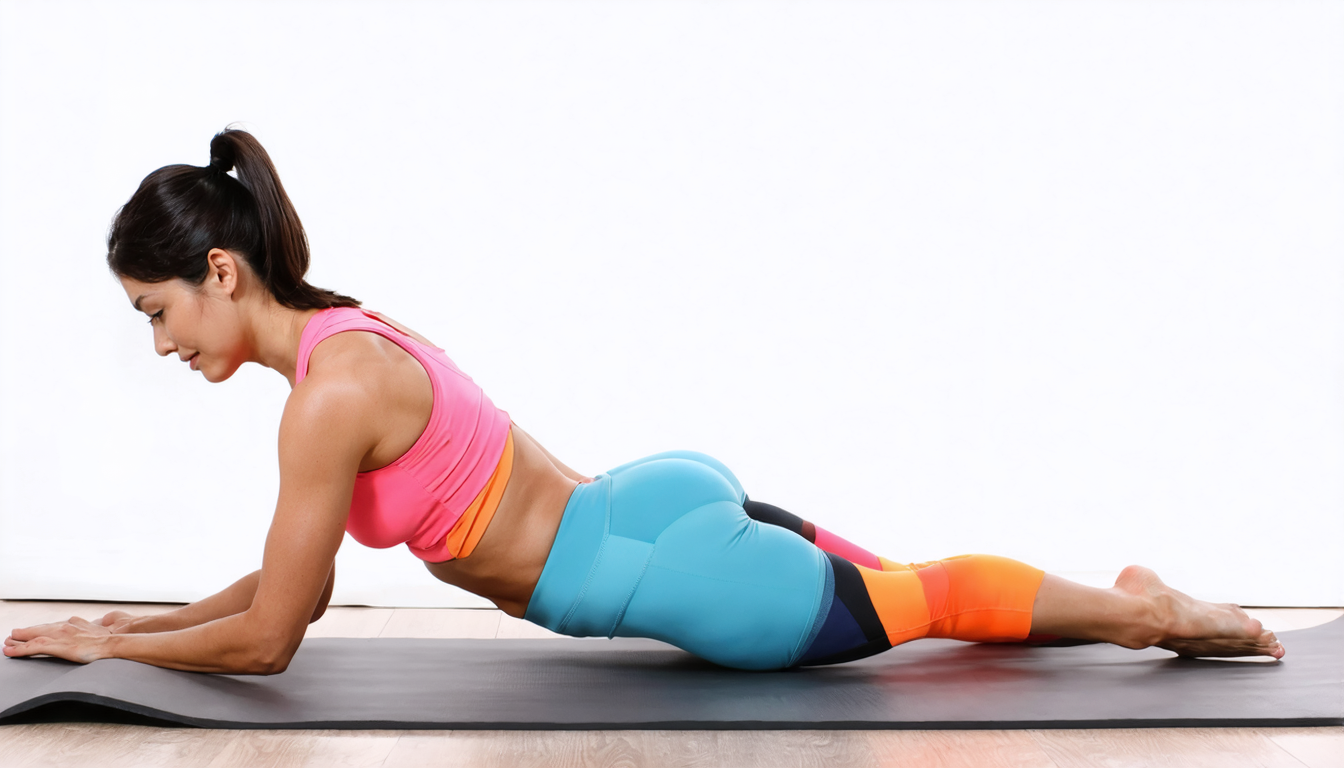
The “Roll-up” is an excellent exercise to work spinal flexibility while intensely engaging the rectus abdominis and transverse. Starting from a lying position, legs straight, arms stretched behind the head, this exercise requires progressively rolling up the back to reach a seated posture with a rounded back.
Control and precision are essential: each vertebra must mobilize the movement, avoiding jerks that could create pain or imbalance. An inhalation accompanies the arms rising towards the ceiling, followed by a slow exhalation to roll down the spine.
This movement promotes dynamic core activation, essential for a flat stomach. It also lengthens the abdominal belt, which improves posture and reduces the “contracted belly” effect often felt after overly static or abrupt exercises.
- Make sure to firmly anchor your feet on the floor without lifting them
- Roll the spine fluidly, vertebra by vertebra
- Maintain deep breathing throughout the exercise
Thanks to this technique, the exercise stimulates fat burning while strengthening the muscular longevity of the abdominals. Sarah, a busy 40-year-old mother, added the “Roll-up” to her Pilates home routine and has noticed a visible improvement not only in her waist but also in her daily posture.
Pilates Exercise number 3: the “Single Leg Stretch” to slim the obliques and waist
This third exercise adds an essential asymmetrical dimension to abdominal work. The “Single Leg Stretch” particularly engages the obliques through a subtle torso rotation, while maintaining strong transverse contraction. It is performed lying down, head and shoulders slightly raised, with one leg pulled towards the chest while the other stretches diagonally.
The arm coordination follows this movement, with hands placed on the bent leg’s knee. A controlled rhythm with adapted breathing (inhale and exhale over two leg alternations) increases cardiovascular and muscular intensity.
| Exercise | Main muscles targeted | Intensity |
|---|---|---|
| Hundred | Transverse, rectus abdominis | Moderate |
| Roll-up | Rectus abdominis, transverse | High |
| Single Leg Stretch | Obliques, transverse | Moderate to high |
This asymmetrical work is especially appreciated for its targeted effect on the waist, allowing progressive and natural slimming of the profile. Regular practice of this exercise at home improves not only the silhouette but also overall stability, often overlooked in classic activities.
David, passionate about fitness for several years, performs this Pilates sequence including the “Single Leg Stretch” every morning. He notices visible firming around his obliques as well as a noticeably slimmer waist, proof that this movement is remarkably effective.