
In the vibrant landscape of computer hardware, a new shockwave is shaking the PC market. After several successive waves already affecting RAM, graphics cards, and even the essential cables for connectivity, a new key component is seeing its price soar dramatically. Previously considered relatively stable, the SSD is now emerging as the next sector to undergo a surge in prices, marking a major turning point that will impact gamers, professionals, and assemblers. The cause lies in strategic choices by the NAND memory giants, Samsung and SK Hynix, who are reducing their production to prioritize more profitable segments such as DRAM and HBM memory, essential for artificial intelligence infrastructures. This industrial reorganization, combined with exponential demand notably driven by the rise of AI and data centers, creates a gap between supply and demand that increases price pressure.
This inflation in SSD prices occurs in a context where RAM prices have already exploded, as have GPU prices and even components as ancillary as cables, where price increases are beginning to be felt within complete PC configurations. Storage, once seen as the most affordable and budget-stabilizing PC component, is thus becoming a sensitive expense item, calling into question the financial balances of users and professionals in the sector. Understanding the mechanisms at play and anticipating the consequences of this increase are therefore essential for all players in the computer market in 2026.
- 1 Why SSD Becomes the Next Key Component with a Sharp Price Increase
- 2 The Strategic Reasons Behind Samsung and SK Hynix’s NAND Production Reduction
- 3 How the Rise of AI Intensifies Pressure on Key PC Components
- 4 Consequences for Consumers and Professionals Facing the SSD Price Surge
- 5 Summary Table of the Consequences of SSD Price Increase on Different Market Players
- 6 Strategies to Limit the Impact of Price Increases on Your Next PC
- 7 List of Practical Tips to Limit the Impact of Price Increases on Your PC Configuration
Why SSD Becomes the Next Key Component with a Sharp Price Increase
For a long time, the SSD represented the perfect compromise between performance and cost in a PC setup. Its democratization allowed surpassing the limits of mechanical hard drives, offering ultra-fast loading and transfer times at a continuously decreasing price. This trend has deeply structured the acquisition chain for video games, production, or the simple daily use of PCs.
However, this era of falling prices might be coming to an end. The main NAND flash memory manufacturers such as Samsung and SK Hynix, which together control more than 60% of global production, announced a significant reduction in production volumes for 2026. Samsung plans to cut its NAND production by 4.5%, while SK Hynix projects a more marked drop, around 10.5%, according to Omdia data.
This contraction of supply is all the more critical as demand continues to increase, notably driven by the enormous storage needs of data centers and applications linked to artificial intelligence. With an increasingly massive storage capacity required for AI systems — such as Nvidia’s future Vera Rubin accelerator capable of housing over 1,150 terabytes of SSD — the pressure on the NAND market is rapidly intensifying.
This unprecedented imbalance therefore generates price tension that will inevitably result in increased SSD costs in PCs, tablets, and professional equipment. This new situation complicates the task of assemblers and disrupts consumer habits, who now have to deal with a more expensive key component within their budgets.
The Strategic Reasons Behind Samsung and SK Hynix’s NAND Production Reduction
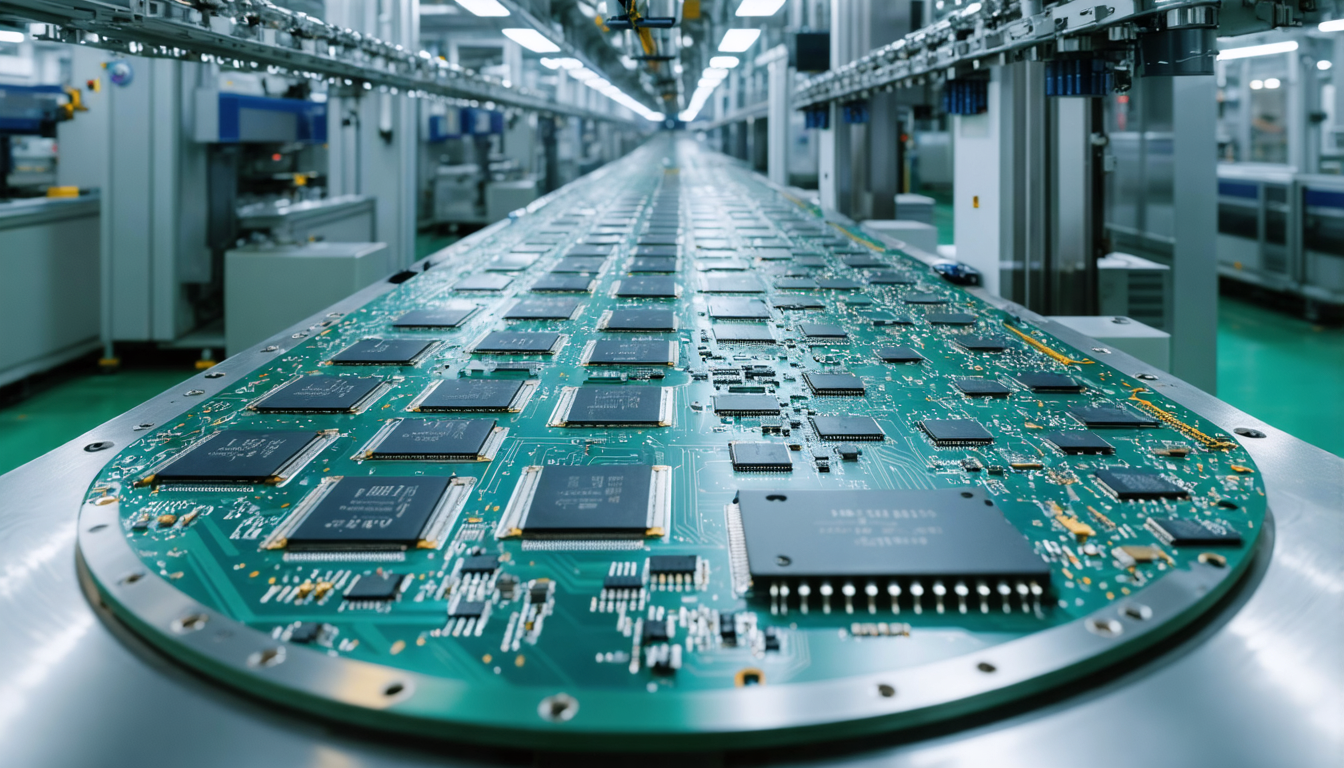
The decision by Samsung and SK Hynix to reduce their NAND flash memory production is not just a coincidence but fits into a well-thought-out industrial strategy. NAND, essential for SSDs and other storage devices, has recently become less profitable than certain other memory segments, notably DRAM and HBM (High Bandwidth Memory).
The decreasing profitability of NAND is pushing these giants to redirect their investments. The growing demand for memory for AI accelerators, graphic systems, and server infrastructures encourages a shift towards more lucrative technologies. For example, Samsung plans to reduce its NAND production by 4.5%, lowering the annual wafer volume from 4.9 million to 4.68 million, while SK Hynix intends to cut production by 10.5%, going from 1.9 to 1.7 million wafers annually.
This industrial reallocation is also linked to the technological transition that storage is undergoing. The rise of QLC (Quad-Level Cell) storage, adapted to data centers, causes instability phases in production lines that temporarily affect overall yield. The shift from TLC (Triple-Level Cell) technology to QLC leads to an additional slowdown, weighing more heavily on availability than the simple production cut might suggest.
This combination of a complex technological change and a strategic repositioning explains why, despite growing demand for NAND, the two companies prefer to voluntarily limit their production. This positioning allows them to maintain or even increase prices due to limited supply, while investing in more profitable and strategically important memory types for the future.
Comparative Table of NAND Production Volumes (2025 vs 2026)
| Manufacturer | Production 2025 (millions of wafers) | Projected Production 2026 (millions of wafers) | Change in % |
|---|---|---|---|
| Samsung | 4.9 | 4.68 | -4.5% |
| SK Hynix | 1.9 | 1.7 | -10.5% |
How the Rise of AI Intensifies Pressure on Key PC Components
Artificial intelligence plays a catalytic role in the surge in demand for hardware components. AI accelerators, which require massive memory volumes, help concentrate demand on specialized technologies, indirectly amplifying pressure on the consumer market.
For example, Nvidia’s Vera Rubin project, a future AI accelerator, will house an astronomical amount of SSD storage, estimated at over 1,152 terabytes. This demand, which anticipates the shipment of 30,000 units in 2026 and more than 100,000 units in 2027, translates into additional NAND memory needs estimated at 34.6 million then 115.2 million terabytes respectively.
In the face of these impressive figures, traditional computer hardware sectors, such as desktop and laptop PCs, must now compete with AI giants for limited access to NAND memory. This phenomenon does not only concern storage: RAM and GPUs are also experiencing a significant price increase, reflecting intense competition exacerbated by manufacturers’ economic priorities.
This competition also affects another category of components: cables and accessories, essential for modern configuration connectivity, see their costs rise due to disruptions in supply chains. Consumers’ budgets are thus directly impacted on multiple fronts, disrupting the very notion of accessibility to a high-performance PC.
Main Factors of AI’s Impact on PC Components
- Exponential SSD storage demand linked to massive AI accelerators
- Industrial reallocation of production capacities towards specialized memories (DRAM, HBM)
- Rising raw material costs affecting component production
- Supply chain pressure causing price increases for cables and accessories
- Increased competition with professional markets and hyperscale data centers
Consequences for Consumers and Professionals Facing the SSD Price Surge
This context of rising prices and component scarcity creates a real headache for all players involved in acquiring or upgrading a PC. Whether for demanding gamers or professionals whose jobs rely on computing power and storage speed, the hardware budget must now include a larger share allocated to SSDs.
Moreover, suppliers and assemblers see their margins compressed, which sometimes pushes them to pass the increase on to the final computer prices. This trend calls into question the “golden age” of economical configurations, where performance increased while prices fell or stagnated.
This period demands more than ever increased vigilance in purchase strategies. Consumers are encouraged to anticipate their needs to avoid suffering from future fluctuations. Some opt for more modest but faster storage capacities or turn to hybrid solutions combining SSD and external storage to control their budgets.
For professionals, the consequences are also strategic. The growing importance of fast storage in the production and data processing chain requires revisiting budget priorities, which can delay projects or force a review of technological choices.
Summary Table of the Consequences of SSD Price Increase on Different Market Players
| Actor | Main Impact | Possible Adaptation |
|---|---|---|
| Gamers | Increased costs for building and upgrading PCs | Favor SSDs with a good performance/price ratio, wait for promotions |
| Professionals | Increased budget pressure on fast storage solutions | Evaluate hybrid alternatives, optimize the use of storage space |
| Assemblers | Margin compression, increased costs of complete PCs | Negotiate with suppliers, adjust product ranges |
| General public | Reduced accessibility to high-performance configurations | Anticipate purchases, favor upgradable hardware |
Strategies to Limit the Impact of Price Increases on Your Next PC
Faced with rising costs of essential components such as RAM, GPUs, cables, and now SSDs, consumers have several avenues to mitigate the effect of this inflation. First of all, anticipating and planning the purchase or upgrade of their equipment allows leveraging the right timing for promotions or launches.
Next, considering a gradual upgrade rather than a full acquisition can keep the budget under control. For example, initially favor SSD capacities that are more modest but can be extended later through the addition of extra modules or external storage.
It is also advised to compare brands and ranges, as some manufacturers offer more competitive deals, and the development of QLC versions, despite yield constraints, may open the way to economically more accessible solutions.
Finally, staying informed about technological trends allows seizing good opportunities and avoiding purchases during cycles of strong price tension, a key factor for those who build or upgrade custom PCs.
List of Practical Tips to Limit the Impact of Price Increases on Your PC Configuration
- Anticipate purchases by staying informed of trends
- Explore hybrid options between SSD and external storage
- Choose SSDs with a good quality/price ratio, favoring TLC or QLC models
- Favor recognized brands with good after-sales service and warranties
- Watch for promotion periods like Black Friday or seasonal sales
- Opt for upgradable configurations allowing for gradual upgrades
- Negotiate with assemblers or choose optimized pre-built systems