

The revolution in the field of conversational artificial intelligences is now taking a major new step with the launch by OpenAI of GPT-5.3 Instant. This version, which stands as a true technological turning point, promises to radically change the way users interact with language models. Gone are the convoluted speeches, unsolicited social sermons, and responses heavy with forced kindness. GPT-5.3 focuses on a direct, precise, and tailored response to each request, without getting trapped in awkward or moralizing detours.
For several years, progress in artificial intelligence has mainly been measured by impressive benchmarks tied to scores like MMLU, HumanEval, or GSM8K. However, in daily reality, these academic performances have little influence if the user consistently encounters patronizing or off-topic answers. OpenAI recognized this disconnect and responded with technical and conceptual innovation through GPT-5.3 Instant, an AI technology designed to offer natural, smooth, and effective communication. The model avoids unnecessary answers, it does not multiply words nor replace a psychological coach, but refocuses on what matters: the expected answer.
This new step reflects a deep understanding of the real needs of users and marks a genuine turning point in the user experience of AI technology. It reflects, in 2026, the desire to go beyond mere technical advances, to create more human, more direct, and above all more efficient interfaces. The promise is clear: a language model that better understands context, delivers precise information without superfluous content, and makes performance and relevance the cornerstone of every exchange.
- 1 GPT-5.3 Instant: an efficient response without unnecessary detours in AI communication
- 2 The language model in the era of speech economy: goodbye to useless sermons
- 3 Sharpened performance: how GPT-5.3 optimizes contextual understanding
- 4 How GPT-5.3 AI technology transforms the user experience
- 5 OpenAI challenges excessive conversational alignment and refocuses AI technology
- 6 Technical innovations of GPT-5.3 that improve performance and natural communication
- 7 The impact of GPT-5.3 on daily and professional uses of artificial intelligence
- 8 Debates and perspectives: how GPT-5.3 redefines the relationship between humans and artificial intelligence
- 8.1 How does GPT-5.3 improve natural communication compared to previous versions?
- 8.2 Why did OpenAI choose to reduce moralizing messages in GPT-5.3?
- 8.3 Is GPT-5.3 suited for professional uses?
- 8.4 What are the key technical innovations of GPT-5.3?
- 8.5 How does GPT-5.3 impact the daily user experience?
GPT-5.3 Instant: an efficient response without unnecessary detours in AI communication
Since its launch, OpenAI’s GPT-5.3 Instant has established itself as a fundamental evolution in the way artificial intelligences respond to requests. Where previous versions could sometimes get lost in long, well-meaning but often inappropriate speeches, this new iteration finally meets users’ need for a clear, direct, and fast response.
A striking example is that of a user requesting a simple “pip install requests” in a programming context. Previously, GPT might respond with surprising emotional validation: “Know that you are not broken, it’s normal to feel overwhelmed,” etc. OpenAI understood that this tone, although potentially useful to some, could quickly exasperate those expecting a pragmatic answer. With GPT-5.3, the tone changes. The model provides the command line straightforwardly, focusing its resources on the answer and not on unsolicited psychological support.
This renewed efficiency also relies on a finer contextual understanding. The model quickly differentiates the nature of the request to adapt its tone and complexity. In a dialogue flow where precision matters, GPT-5.3 adopts a concise and quick style. It drastically reduces interruptions related to useless warnings, overly cautious refusals, or redundant explanations often perceived as barriers by experienced users.
Concretely, this approach improves the overall performance of the model while enhancing the flow of discussion and increasing user satisfaction. GPT-5.3 makes efficient and adapted response the priority, reinventing how artificial intelligences participate in natural communication with humans.

The language model in the era of speech economy: goodbye to useless sermons
OpenAI’s basic premise with GPT-5.3 is very clear: users no longer want to endure moralizing speeches, unsolicited emotional validations, or a flood of warnings. This philosophy reflects a major evolution in the human-machine relationship. Where previous models tried to align answers with a form of sensitive social awareness, this strategy sometimes ended up hindering ease of use.
What the GPT-5.3 model establishes is a speech economy. It minimizes excess to focus on the essential. It can be seen as a waiter who, instead of worrying about your mood before giving you the menu, simply serves what you asked for. This approach is a pragmatic response to the massive demand for efficiency, characteristic of common digital uses in 2026.
This radical transformation takes into account the many criticisms addressed to previous artificial intelligences which, influenced by a need for “overalignment conversational,” gave the impression of being more self-esteem coaches than search engines or technical assistants. Yet, for the majority of users, it is essential to get a solution, information, or advice without being accompanied by a moralizing speech.
This revolution even influences the design of new underlying algorithms. The model issues fewer preventive alerts or long disclaimers, which reduces the “cringe” often associated with overly aligned AI. To illustrate this, here is a list of notable changes made in GPT-5.3 Instant :
- Reduction of unsolicited “paternalistic” messages.
- Removal of systematic emotional validations.
- Lightening of excessive caution warnings.
- Increased focus on the immediate question asked.
- Better adaptation to the technical level of the request.
- Automatic tone adjustment depending on context and audience.
This list perfectly illustrates the shift taken by OpenAI to improve user satisfaction by offering an AI that operates more as a pragmatic tool rather than as a moralistic interlocutor.
Sharpened performance: how GPT-5.3 optimizes contextual understanding
The major innovation of GPT-5.3 lies in its enhanced ability to quickly analyze and understand the context of requests. This allows the model to avoid misunderstandings, digressions, and especially systematic refusals that can harm the user experience. This improvement brings a more natural fluidity and better coherence in the conversation.
The AI technology behind GPT-5.3 is based on refined algorithms to accurately interpret requests, even when they are formulated concisely or unusually. For example, in technical requests or those addressing complex subjects, the model adjusts its level of detail and vocabulary to provide an immediately usable response.
In practical translation, this means the model no longer just extracts data but better understands the underlying need. An inquiry about a legal, technical, or creative problem will be treated with an unprecedented balance between accuracy and simplicity, thus avoiding answers that are either too summary or too cluttered with disclaimers.
Progress is also visible in multi-turn interactions, where GPT-5.3 better maintains the thread and adapts its responses based on previous exchanges. This advanced contextual understanding makes the AI technology a truly intelligent assistant, capable of guiding without detours or distractions.
The following table summarizes these key points of GPT-5.3’s contextual optimization:
| Criterion | Description | User Impact |
|---|---|---|
| Rapid context analysis | Efficient evaluation of elements surrounding the request | Precise answers adapted to each situation |
| Reduction of excessive refusals | Fewer unnecessary dead ends in the conversation | Smoother, less frustrating dialogue |
| Dynamic stylistic adaptation | Automatic tone modification according to the request | Better understanding and engagement |
| More effective memory of exchanges | Improved tracking over multiple discussion turns | More coherent and relevant AI assistant |
This optimization strengthens the impression that GPT-5.3 becomes a true user ally, combining speed and finesse in every interaction. In 2026, it is a significant step towards natural communication between humans and language models.

How GPT-5.3 AI technology transforms the user experience
The average user today expects more from an artificial intelligence than just a source of information. They want a tool capable of quickly understanding their requests, adapting to their style, and providing a useful answer immediately. GPT-5.3, thanks to its cutting-edge technology, fulfills this promise by delivering an improved and smooth user experience.
The shift from previous versions that were too talkative and sometimes condescending to GPT-5.3 marks a major advance in this field. The user is no longer in a situation of having to “endure” a dialogue weighed down by emotional messages or caution reminders, but benefits from a pragmatic and efficient interaction.
This transformation is also observed in the professional domain where speed of response, technical precision, and relevance are crucial. For example, in sectors such as software development, legal consulting, or project management, GPT-5.3 acts as a true digital assistant, accelerating decision-making and reducing information search time.
A concrete case perfectly illustrates this impact. A tech startup, faced with the need to optimize its processes, integrated GPT-5.3 Instant into its daily workflow. Result: engineers get fast answers to their technical questions, without unnecessary distractions. The time gained and increased efficiency have led to better overall productivity.
These benefits clearly show that GPT-5.3 is not content to be faster or more precise. It deeply renews the way users perceive and leverage AI technology, placing performance at the heart of every interaction.
OpenAI challenges excessive conversational alignment and refocuses AI technology
For years, most labs have focused on regulating and limiting potentially dangerous or inappropriate responses from language models. This focus on “overalignment conversational” led to AIs that were sometimes too cautious, refusing to answer simple questions without a warning or intrusive caution.
GPT-5.3 breaks radically with this trend. OpenAI here adopts a clear stance: better a direct AI, capable of responding quickly even to complex or sensitive requests, than a machine paralyzed by fear of offending or doing wrong. This position is expressed through a drastic reduction in warning speeches and systematic refusals.
This change has been welcomed enthusiastically by a large community of users and developers on platforms like Reddit and X. The meme “You are not broken. You are debugging” perfectly sums up this liberation. GPT-5.3 finally puts an end to overprotection pushed to the extreme, focusing on what users really expect: concrete and actionable responses.
The impact goes beyond mere comfort of use. By enabling more direct dialogues, GPT-5.3 increases the perceived reliability of the tool and opens the way to more varied uses, especially in professional environments where precision and speed are crucial.
The new AI war is now playing on this ground: the level of cringe, meaning the degree of discomfort caused by overly paternalistic or overly cautious responses, becomes a determining criterion in the choice of an artificial intelligence solution.
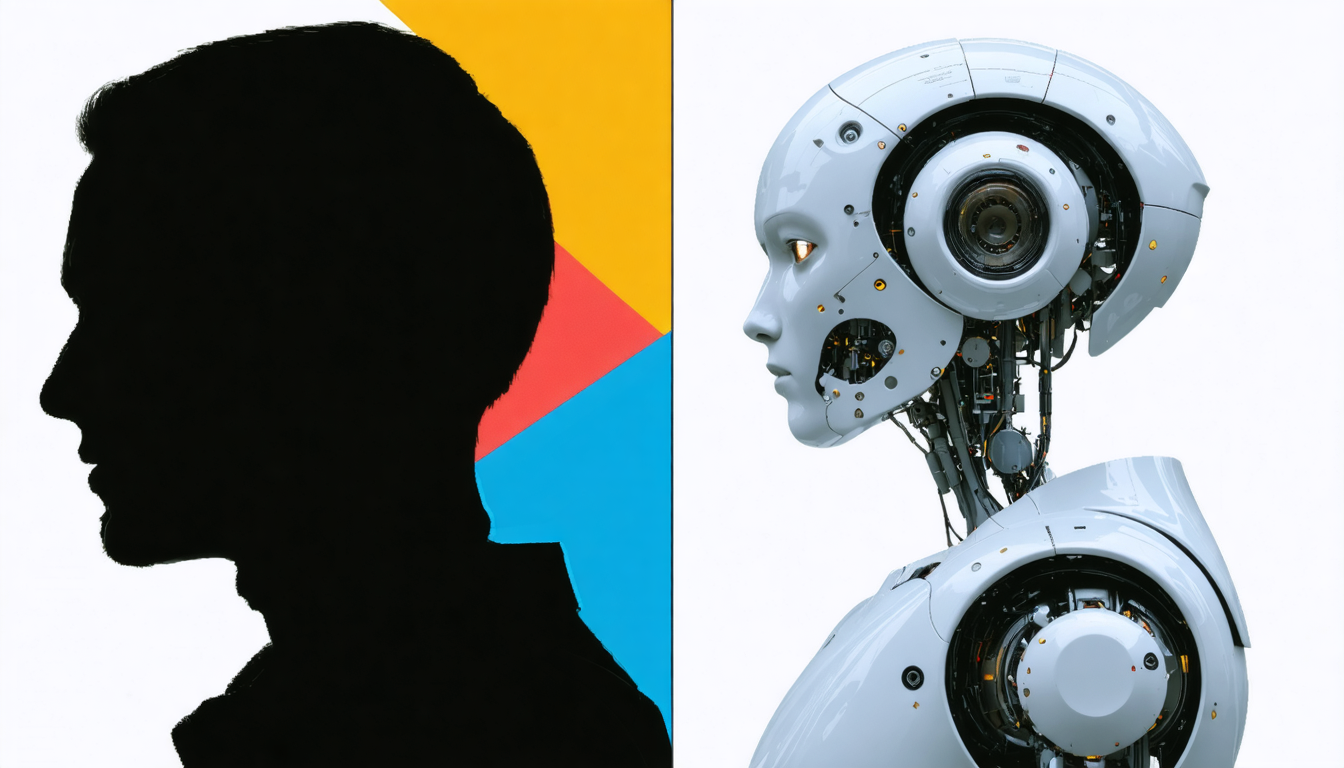
Technical innovations of GPT-5.3 that improve performance and natural communication
The innovation in GPT-5.3 is not only about its conversational orientation. Behind this new version lie several crucial technical advances that reinforce the model’s performance and its ability to offer natural, smooth, and effective communication.
Here is an overview of the key integrated innovations:
- Optimization of contextual understanding algorithms: The model integrates better analysis of contextual data to avoid breaks in coherence and misunderstandings.
- Reduction of biases related to “overalignment”: The model’s training has been recalibrated to avoid excessive caution and moralizing discourse.
- Improvement of concise and relevant text generation: Priority is given to clarity and conciseness without sacrificing accuracy.
- Increased tone adaptability: GPT-5.3 automatically adjusts its tone depending on the context, whether technical, informal, or scientific.
- Optimization of integrated web searches: When conducting real-time searches, GPT-5.3 provides richer and better contextualized results.
These technical innovations, combined with a simplified response strategy, make GPT-5.3 a reliable, robust, and pleasant-to-use model. They also reflect the increasing maturity of AI technology, which now knows how to better listen to the real needs of its users.
The impact of GPT-5.3 on daily and professional uses of artificial intelligence
In 2026, GPT-5.3 has largely established itself as an essential tool, both for individuals and professionals. Its capacity to provide effective, rapid answers without awkward speeches opens up new possibilities for use.
In the professional sphere, GPT-5.3 optimizes business processes by accelerating problem resolution and facilitating decision-making. For example, in software development, technical teams can now rely on an AI that precisely understands their questions, without wasted time or unnecessary detours.
The healthcare, legal, marketing, and content writing sectors also benefit from this improved technology. It allows for productivity gains while limiting frustrations related to previously too talkative or overly cautious models.
This evolution also changes the way artificial intelligence is perceived. It becomes a true daily partner, capable of adapting to different contexts and needs. This versatility is a key factor to accelerate wide adoption of AI technology in several fields.
To summarize, here is a table illustrating some typical uses improved by GPT-5.3:
| Field | Specific Use | Impact of GPT-5.3 |
|---|---|---|
| Software development | Precise and rapid technical answers | Reduction of debugging time and faster development cycles |
| Writing and communication | Clear writing without emotional overload | Better clarity, time-saving, adapted style |
| Healthcare | Factual information without emotional interpretation | Greater trust and speed |
| Law | Accurate analysis of legal texts | Enhanced quality of recommendations |
Debates and perspectives: how GPT-5.3 redefines the relationship between humans and artificial intelligence
The arrival of GPT-5.3 also raises new questions about how machines and humans coexist in the realm of digital exchanges. Its direct approach, free of superfluous speeches, repositions AI technology primarily as a pragmatic tool.
This raises reflections on the delicate balance between utility and empathy. While some regret the “loss” of a certain form of digital kindness, many welcome this adjustment as a return to the original meaning of language models: to provide clear and quick information without detours.
Moreover, this evolution encourages a certain maturity in the use of these technologies. It invites users to conceive AI not as an emotional substitute, but as an assistant capable of responding efficiently to their concrete needs. This refocus could well guide future innovations towards a strengthened pragmatic orientation.
Furthermore, GPT-5.3 fits into a global dynamic where artificial intelligence becomes more integrated into digital environments, supporting users in their daily tasks without unnecessary hindrances. The continuous improvement of natural communication thanks to contextual understanding fully contributes to this transformation.
How does GPT-5.3 improve natural communication compared to previous versions?
GPT-5.3 optimizes contextual understanding and reduces unnecessary speeches, offering more direct and adapted answers to the request, making exchanges smoother and more natural.
Why did OpenAI choose to reduce moralizing messages in GPT-5.3?
OpenAI wanted to respond to user frustration with paternalistic speeches and unsolicited emotional validations by offering a more pragmatic and efficient model.
Is GPT-5.3 suited for professional uses?
Yes, GPT-5.3 delivers precise, rapid answers without awkward speeches, making it particularly suitable for professional environments where performance and clarity are essential.
What are the key technical innovations of GPT-5.3?
GPT-5.3 integrates better contextual analysis, reduces overalignment biases, generates concise texts, automatically adapts tone, and improves the quality of web searches.
How does GPT-5.3 impact the daily user experience?
Thanks to its speed and relevance, GPT-5.3 improves interaction with AI by avoiding unnecessary speeches, increasing satisfaction and efficiency in daily uses.




