As artificial intelligence continues its exponential growth, OpenAI is deploying new strategies to optimize the efficiency of its models. The recent initiative involving Neptune.ai marks a major milestone in this quest. Specialized in tracking and detailed analysis of machine learning processes, Neptune.ai provides a platform that transforms how researchers visualize and understand complex trainings. This collaboration promises to amplify OpenAI’s ability to decode the internal mechanisms of its advanced models, thereby allowing real-time adjustments and continuous improvement through data.
Since its inception, OpenAI has sought to push the boundaries of technological performance, relying on robust and innovative infrastructures. By integrating the tools offered by Neptune.ai, teams benefit from a clearer and more precise vision of each training stage. The result? Accelerated optimization of algorithms, better anomaly management, and an increased ability to anticipate model behaviors. This partnership perfectly illustrates the synergy between technological innovation and scientific rigor, necessary to maintain the leading position in the artificial intelligence market.

- 1 The strategic role of Neptune.ai in optimizing OpenAI models
- 2 Advanced visualization for better understanding of learning processes
- 3 The impact of this alliance on research and innovation in artificial intelligence
- 4 Continuous optimization: how Neptune.ai revolutionizes OpenAI model training
- 5 Enhancing the performance and robustness of future OpenAI models with Neptune.ai
The strategic role of Neptune.ai in optimizing OpenAI models
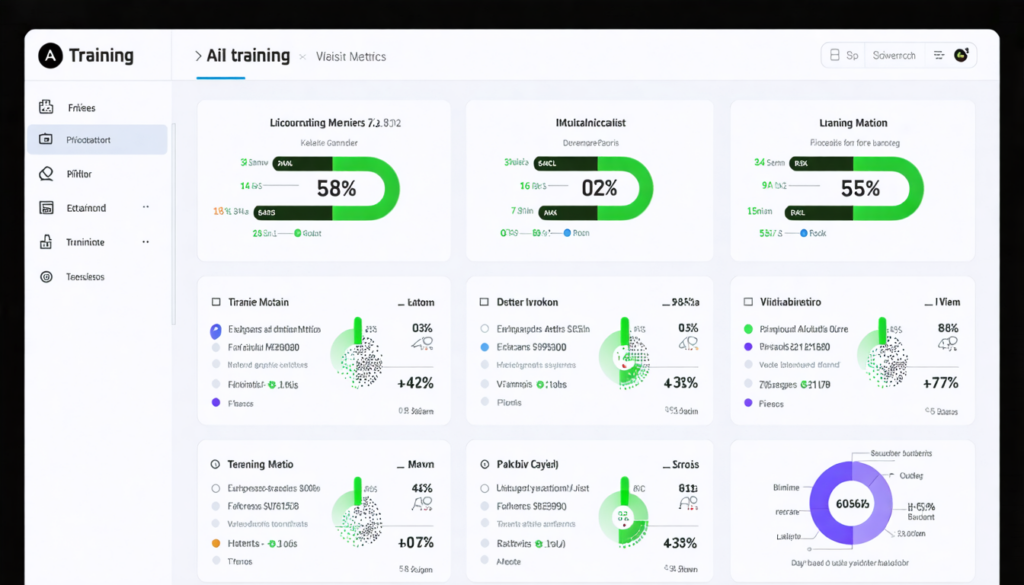
In today’s context of machine learning, mastering training processes is crucial. Neptune.ai has established itself as a key player by offering advanced experiment tracking solutions. These tools allow OpenAI researchers to have comprehensive visibility over metrics, logs, and hyperparameters, gathered within a unified interface. This integration facilitates comparative analysis of thousands of training sessions, thus simplifying the detection of anomalies and inefficiencies.
Real-time monitoring of models is a considerable asset. Imagine a team of researchers able to visualize the evolution of an algorithm’s internal behaviors throughout the entire duration of a training. This transparency opens the door to early corrections, limiting resource losses and ensuring optimal performance. Moreover, adjustments are no longer made blindly, but based on solid and detailed data.
Detecting anomalies to guarantee performance
One of the major challenges in training AI models is managing anomalies. These can range from overfitting to malfunctions caused by poorly configured hyperparameters. The Neptune.ai platform stands out in its ability to identify these abnormal deviations by analyzing metrics at every layer of the model. This granularity allows OpenAI teams to instantly correct deviating trajectories, thus preventing small technical issues from resulting in major failures in production.
By using Neptune.ai, OpenAI not only improves the overall performance of its models, but also significantly reduces costs associated with prolonged errors during the training cycle. Indeed, each error detected late can generate significant expenses in time and computing power. This early warning system therefore becomes a lever for technological and economic optimization, essential in a field where every fraction of performance counts.
On OpenAI’s side, Jakub Pachocki, chief scientist, has often expressed the company’s interest in the model developed by Neptune.ai. According to him, the speed and precision of the tools enable a better understanding of how complex systems learn and evolve. The integration of this platform within the OpenAI ecosystem reflects a desire to fully exploit these technological advances to strengthen model robustness.
Piotr Niedźwiedź, founder of Neptune.ai, sees this acquisition as a natural evolution. The opportunity to collaborate with a leading entity like OpenAI opens unprecedented prospects for the platform, which sees its mission expanded to a broader audience. Together, these two teams plan to design new tools dedicated to training, making learning processes even more precise, efficient, and responsive.
Advanced visualization for better understanding of learning processes
At the heart of this synergy’s success lies Neptune.ai’s ability to offer an intuitive and comprehensive visualization interface capable of mapping every stage of the training. This aspect is fundamental for OpenAI, which seeks to deepen understanding of the internal dynamics of models, sometimes described as black boxes. The ability to observe and finely interpret these mechanisms is considered a revolution in the field of artificial intelligence.
The visualization technologies employed by Neptune.ai allow exploration not only of overall performance, but also fluctuations at the level of individual layers in a neural network. This granularity informs researchers about areas needing adjustments or the application of new learning strategies, such as regularization or learning rate modification. This proactive approach reduces risks related to inefficient trainings and maximizes the exploitation of learning data.
Concrete examples of application
Consider a team working on a natural language processing model. Thanks to the Neptune.ai platform, they can observe how certain layers respond to specific inputs and accordingly adjust parameters, reducing bias or improving contextual accuracy. This real-time monitoring also prevents repeating unsuccessful experiments, leading to a valuable time saving.
The same principle applies to generative models, where the detail level observed during training helps refine the coherence of produced results. This detailed analytical capacity represents a significant competitive advantage in a market where result quality directly influences technological adoption by end users.

The impact of this alliance on research and innovation in artificial intelligence
The merger between OpenAI and Neptune.ai goes beyond a simple technical acquisition. It represents a turning point in artificial intelligence research by combining computing power with analytical finesse. This new phase enables the seamless integration of critical data collection into decision-making during training, thus accelerating the model development cycle.
Indeed, this integration paves the way for faster innovation while reducing uncertainties linked to complex processing. Research teams can test new architectures, explore bolder hypotheses, all with unprecedented mastery of their processes. Resource savings and continuous improvement in model performance are powerful drivers to compete in the global market.
Comparative table of expected benefits before and after Neptune.ai integration
| Key aspect | Before Neptune.ai integration | After Neptune.ai integration |
|---|---|---|
| Visibility of training metrics | Fragmented, manual | Centralized in real time |
| Anomaly detection | Reactive, late | Proactive, early |
| Hyperparameter optimization | Based on intuition | Supported by analytical data |
| Reduction of training costs | Limited | Significant |
| Experimentation speed | Slow, iterative | Accelerated, real time |
The synergy between OpenAI and Neptune.ai will have a considerable ripple effect across the AI ecosystem, fostering an accelerated innovation climate on a global scale. This partnership fits within a dynamic where technology evolves to become ever more efficient, agile, and transparent.
Continuous optimization: how Neptune.ai revolutionizes OpenAI model training
The traditional method of training artificial intelligence models often faces limits related to increasing architecture complexity and the massive volume of data. Neptune.ai offers a disruptive solution by providing continuous and automated monitoring, enabling instant parameter adjustments and performance optimization.
Thanks to this technology, OpenAI can experiment at large scale without losing precision or control. For example, hyperparameters, often set by trial and error, can now be refined thanks to immediate feedback derived from granular real-time analyses. This practice drastically reduces testing cycles, limiting bottlenecks that slow down innovation.
List of main advantages of the Neptune.ai platform for OpenAI:
- Centralized and detailed tracking of training experiments, facilitating comparison and duplication of results.
- Rapid anomaly detection that can save months of intensive and costly computing.
- Real-time optimization of hyperparameters and network architectures.
- Seamless collaboration between teams through a unified platform, promoting data sharing and collective innovation.
- Storage and historization of metrics, ensuring complete traceability indispensable for audits and future research.
Furthermore, Neptune.ai encourages a more scientific approach to training, where decisions are no longer based on intuition but on a deep understanding of parameters and internal dynamics. This opens the door to greater creativity, as researchers have a safe environment to explore freely without fearing significant losses.

Enhancing the performance and robustness of future OpenAI models with Neptune.ai
The robustness of artificial intelligence models is a fundamental criterion for OpenAI, especially in a context where these technologies are increasingly integrated into critical sectors such as health, education, or security. The partnership with Neptune.ai specifically aims to strengthen this quality by quickly detecting and correcting potential flaws from the training phases onward.
For example, in the health field, an imprecise model can lead to serious consequences. With Neptune.ai, teams can meticulously analyze performance on different input data, ensuring that the model remains reliable and consistent regardless of variations in the processed information. This heightened vigilance provides increased confidence in the real deployments of developed technologies.
Example of application in cybersecurity
Cybersecurity is another sector where OpenAI seeks to intensify its efforts. By using Neptune.ai to model suspicious behaviors in networks, researchers can refine algorithms detecting intrusions. Precision is imperative to avoid false positives, which can disrupt operations, and false negatives, which let real threats pass through. The real-time monitoring system provides detailed visibility of each change made, guaranteeing rapid adaptation to new threats.